Jericoacoara: Sand Dunes, Lagoons, and Wind in Northeast Brazil
Table of Contents
Prices in this guide are approximate and change often. Check with the hotel, airline or operator before you book.
Jericoacoara: A Beach Town Built on Sand
Jericoacoara — Jeri to everyone who visits — sits on the coast of Ceará state in northeast Brazil. The town has sand streets. Not "sandy" streets, but actual deep sand that swallows your flip-flops with every step. There's no pavement. Cars are mostly banned from the center. Donkeys still carry supplies through the village. Yet somehow, Jeri has excellent restaurants, boutique pousadas, and reliable Wi-Fi. It's a place that resists modernization while quietly embracing the parts that matter.
The setting is dramatic. Massive dunes rise behind the town. A freshwater lagoon system stretches inland. The wind blows hard and consistent from July through December, turning the coast into a world-class destination for kitesurfing and windsurfing. When the wind drops (January through June), the beaches calm down for swimming and the lagoons fill up for the wet season.
Getting to Jericoacoara Brazil
Reaching Jeri is part of the experience. The nearest airport is in Jijoca de Jericoacoara (JJD), served by small regional flights from Fortaleza. From Jijoca, a jardineira — an open-sided 4x4 truck — bounces over the dunes for about an hour to reach the village. The ride costs 50-70 reais ($10-14) per person and is genuinely fun, with sand flying and passengers gripping the rails.
From Fortaleza (the nearest major city), the drive takes about 5-6 hours. Several shuttle companies run daily transfers for 100-150 reais ($20-30) per person. You can also fly to Fortaleza and connect on a short regional hop to Jijoca. Either way, when you arrive in Jericoacoara, the sand streets and ocean breeze hit you immediately.
The Main Beach and Sunset Dune
Jeri's main beach runs along the north side of the village, facing open ocean. The water is warm year-round (26-28°C), but the wind creates choppy conditions from mid-morning onward during the windy season. Early morning is the calmest swimming window. Beach vendors sell caipirinhas (12-15 reais), agua de coco (coconut water, 5-8 reais), and grilled queijo coalho on sticks.
The Duna do Pôr do Sol (Sunset Dune) is a massive sand hill at the western edge of town. Every evening, the entire tourist population climbs to the top to watch the sun drop into the Atlantic. It's become almost ceremonial — capoeira performers, fire dancers, and vendors selling cold beers create a festival atmosphere. The climb takes 10 minutes. Get there 30-40 minutes before sunset for a spot.
Pedra Furada: The Pierced Rock
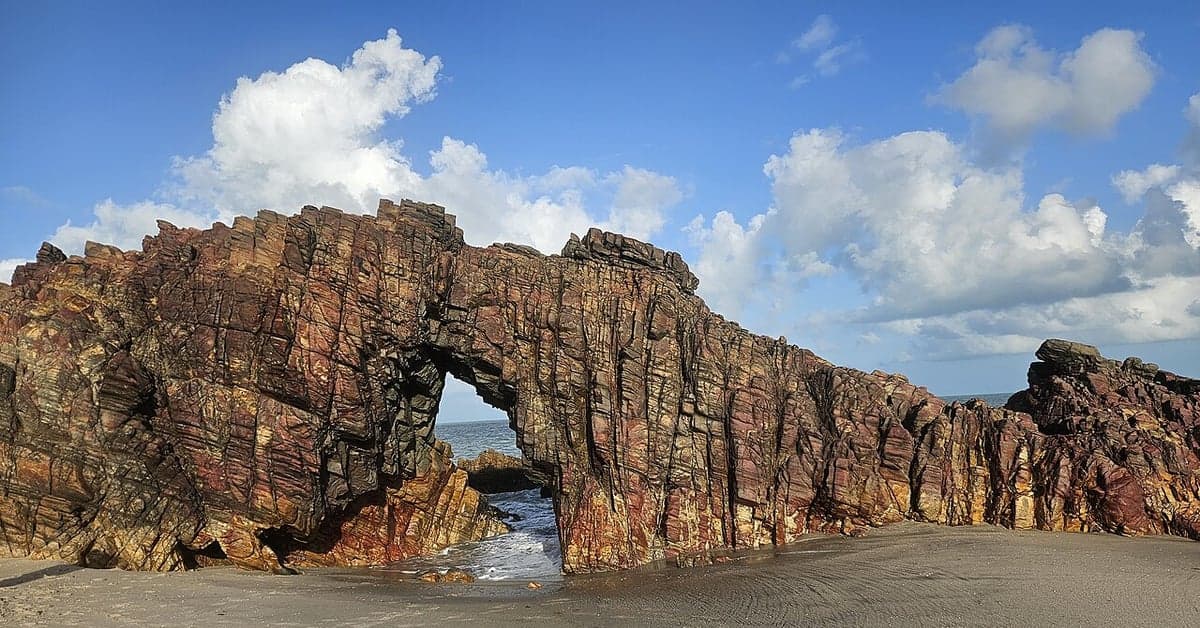
Pedra Furada is a natural stone arch on the beach east of town, formed by centuries of wave erosion. It's the symbol of Jericoacoara — you'll see it on every postcard and restaurant menu. The walk from town takes about 30 minutes along the beach at low tide. At high tide, the path around the rocks gets cut off, so time your visit using the local tide tables posted at most pousadas.
The arch is photogenic at any time, but sunrise is the money shot when the light comes through the opening and illuminates the wet sand. Few tourists make the early walk, so you'll mostly share it with fishermen heading out.
Lagoa do Paraíso and Lagoa Azul
The freshwater lagoons inland from Jeri are arguably the main attraction. Lagoa do Paraíso is a large, shallow lake with impossibly clear water and a sandy bottom. Wooden decks and hammocks extend over the water from beach clubs along the shore. You can lie in a hammock with your feet in the water while someone brings you a caipirinha. The setting is surreal.
Lagoa Azul (Blue Lagoon) is smaller and slightly deeper, with a more vivid blue-green color. Both lagoons are about 20-30 minutes from Jeri by buggy or 4x4 transfer. Day trips to both run 80-120 reais ($16-24) per person. Alchymist Beach Club on Lagoa do Paraíso has the best setup — hammocks, loungers, a full bar, and a restaurant with grilled fish plates for 50-70 reais.
The lagoons are at their fullest during and just after the rainy season (February-June). By November, water levels drop and some lagoons partially dry up. Visit between March and August for the best lagoon conditions.
Kitesurfing and Windsurfing
The wind in Jericoacoara blows from the east-southeast at 15-25 knots from July through December, making it one of the world's top destinations for kitesurfing. The flat water of the lagoons is ideal for beginners, while the ocean provides wave riding for advanced kiters.
A three-day beginner kitesurfing course costs 1,200-1,800 reais at schools like Club Ventos or Rancho do Kite. Equipment rental for experienced kiters runs about 200-300 reais ($40-60) per day. Windsurf lessons and rentals are available at similar prices. The beach break in front of town has a designated kite zone to separate riders from swimmers.
Where to Stay
Jeri's accommodation ranges from basic hammock hostels to polished boutique pousadas. Budget travelers can find dorm beds for 50-80 reais ($10-16) and private rooms for 120-200 reais ($24-40). Mid-range pousadas with pools, breakfast, and garden settings run 250-500 reais — Vila Kalango and Pousada Jeribá are two of the best in this range.
The high-end option is Hurricane Hotel, built on the hillside with infinity pool views over the beach. Rates start at 800 reais ($160) per night. For a village with sand streets and no traffic lights, the quality of accommodation in Jericoacoara is remarkably high.
Where to Eat
The food in Jeri ranges from simple to excellent. Restaurante do Nené serves half a grilled lobster with rice and beans for about 70 reais ($14) — an absurd value. Tamarindo has creative seafood dishes in a candlelit garden setting (mains 60-100 reais). For pizza, Pizzaria Romagna does proper wood-fired pies for 40-60 reais.
The fresh lobster here is wild-caught by local fishermen. It's available at almost every restaurant from February through June (the legal fishing season) and costs a fraction of what you'd pay in Rio or São Paulo. A full lobster dinner with sides and a couple of drinks runs about 120-160 reais ($24-32).
Browse our articles for more on Northeast Brazil's beach towns and coastal cuisine.
Day Trips from Jericoacoara
The Tatajuba dunes and mangrove lagoon, about 20 minutes west by buggy, offer sandboarding, zip-lining over a lagoon, and swimming in calm water surrounded by mangroves. A half-day trip costs about 100-150 reais ($20-30) per person.
For a longer adventure, the Rota das Emoções is a multi-day route connecting Jeri to the Lençóis Maranhenses dunes and the Delta do Parnaíba. The full trip takes 3-4 days by 4x4, boat, and on foot, covering some of Brazil's most spectacular and least-visited landscapes. Packages run 2,000-3,500 reais ($400-700) per person including accommodation and meals. The Visit Brasil tourism portal has route details and licensed operators.
When to Visit Jericoacoara Brazil
July through December for wind sports — consistent 15-25 knot winds and dry weather. January through June for swimming and full lagoons — less wind, warmer water, and the lagoons at their peak. February through April is the sweet spot if you want swimable beaches and full lagoons without the kite crowds. Avoid Carnival week and New Year's unless you've booked months ahead — Jeri fills to capacity and prices triple.
The town's magic is in its simplicity. No shoes required, no cars honking, no concrete boardwalk. Just sand between your toes from breakfast to dinner, and a sunset that stops the whole village in its tracks every single evening.
Frequently Asked Questions
How do you get to Jericoacoara?
Fly to Jijoca de Jericoacoara (JJD) via regional flight from Fortaleza, then take a jardineira (open-sided 4x4 truck) over the dunes for about 1 hour (50-70 reais). Alternatively, shuttle services from Fortaleza take 5-6 hours and cost 100-150 reais per person.
When is the best time to visit Jericoacoara?
July through December for kitesurfing and windsurfing (consistent 15-25 knot winds). January through June for swimming and full lagoons. February through April is the sweet spot — swimable conditions and lagoons at their peak without kite season crowds.
How much does a kitesurfing course cost in Jericoacoara?
A three-day beginner course costs 1,200-1,800 reais at schools like Club Ventos or Rancho do Kite. Equipment rental for experienced kiters runs about 200-300 reais ($40-60) per day. The lagoons provide ideal flat-water conditions for learning.
What are the best lagoons near Jericoacoara?
Lagoa do Paraíso is the largest and most popular, with hammocks over clear water and beach clubs. Lagoa Azul is smaller with a vivid blue-green color. Both are 20-30 minutes from town by buggy. Day trips to both cost 80-120 reais ($16-24) per person.
How much does accommodation cost in Jericoacoara?
Dorm beds start at 50-80 reais ($10-16) per night. Private rooms run 120-200 reais ($24-40). Mid-range pousadas with pools cost 250-500 reais ($50-100). The top-end Hurricane Hotel starts at 800 reais per night. Prices double or triple during Carnival and New Year's.
Is Jericoacoara good for families?
Yes, especially during the calmer months (January-June). The lagoons are shallow and warm, perfect for kids. The town is car-free and safe to walk. Many pousadas have family rooms and pools. The main beach can be rough during windy season, but the lagoons provide a calm alternative.
What is Pedra Furada?
Pedra Furada (Pierced Rock) is a natural stone arch on the beach east of Jeri, formed by wave erosion. It's the town's iconic symbol. The walk takes about 30 minutes at low tide. Visit at sunrise for the best light through the arch opening.
How much does lobster cost in Jericoacoara?
Half a grilled lobster with rice and beans costs about 70 reais ($14) at Restaurante do Nené. A full lobster dinner with sides and drinks runs 120-160 reais ($24-32). Lobster is wild-caught by local fishermen and available February through June during the legal fishing season.