Table of Contents
Prices in this guide are approximate and change often. Check with the hotel, airline or operator before you book.
Beach Houses vs Hotels: A Different Kind of Trip
A beach house rental changes the rhythm of a vacation. Instead of hotel lobbies, room service, and daily housekeeping, you get a kitchen, a living room, a porch, and the responsibility of making your own breakfast. The tradeoff is space, privacy, and the feeling of living at the beach rather than visiting it. Families with children, groups of friends, and couples staying longer than a few nights often find that a rental house delivers more comfort per dollar than a hotel, especially at beach destinations where hotel rates spike in peak season.
But renting a beach house for the first time comes with learning curves. Listings can be misleading, cleaning fees add up, and the distance between “ocean view” and “oceanfront” can be a quarter mile. This guide walks through every step, from searching to checkout.
Where to Search
Major Platforms
Airbnb and Vrbo (Vacation Rentals by Owner) dominate the beach rental market. Airbnb tends to have more individual properties and apartments; Vrbo skews toward larger houses and condo units. Both charge service fees (typically 5-15% of the booking total). Booking.com has expanded into vacation rentals and sometimes offers properties not listed on the other two platforms.
For specific beach destinations, local property management companies often have the best inventory. The Outer Banks has companies like Sun Realty and Twiddy. Gulf Shores has Brett/Robinson and Kaiser Realty. These local managers handle check-in, maintenance, and cleaning, and their properties are often better maintained than individually managed listings. Search “[destination name] vacation rentals” to find regional specialists.
Direct Booking vs Platform Booking
Some owners offer discounts (5-10%) for booking directly through their website rather than through a platform, because they avoid the platform’s commission. The tradeoff is weaker cancellation protection and no platform-mediated dispute resolution. For first-time renters, booking through a platform provides a safety net worth paying for. Once you have a relationship with a property or management company, direct booking makes financial sense.
Reading Listings Accurately
Distance to Beach
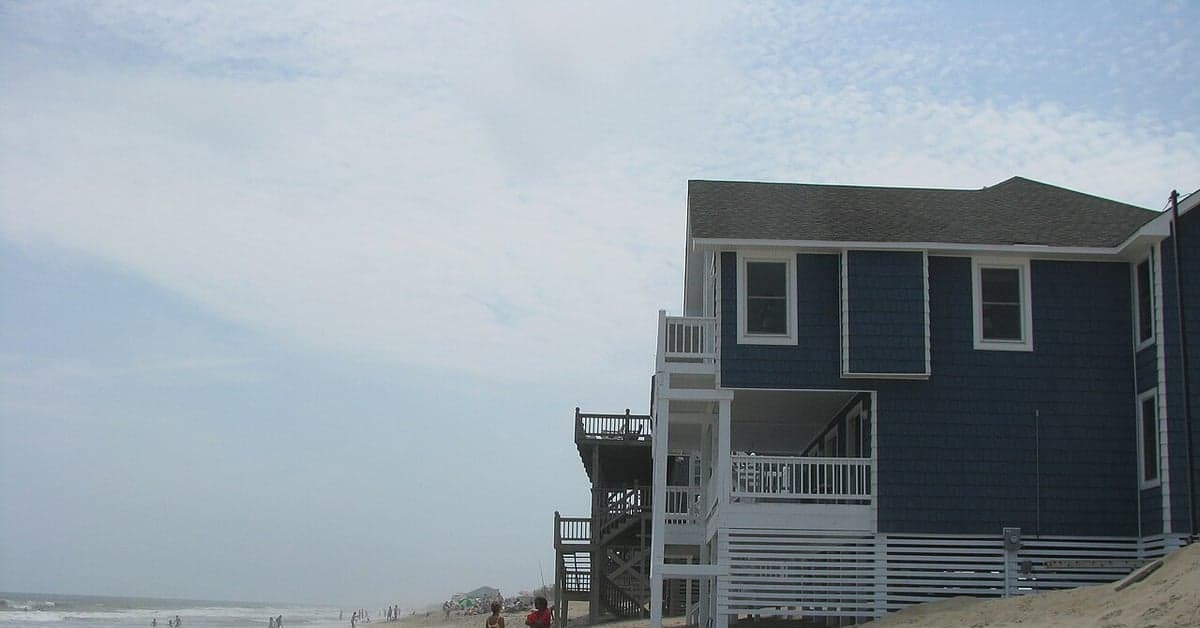
“Beachfront” means the property sits directly on the sand. “Ocean view” means you can see the ocean from the property, which might be across a road, behind a dune, or up a hill. “Beach access” means there is a path to the beach, possibly a long one. “Steps from the beach” is unregulated and can mean 20 steps or 200. Always check the map pin on the listing and use Google Maps street view to verify the actual walking distance and terrain.
Photos and Reviews
Listing photos are taken with wide-angle lenses at optimal angles. Rooms look larger than they are. Outdoor spaces look more manicured than they are. The ocean visible through the window may require standing on tiptoe. Read reviews for the ground truth. Pay particular attention to reviews that mention cleanliness, the accuracy of photos, and the responsiveness of the host or management company. A property with 50+ reviews averaging 4.5+ stars is generally reliable. A property with fewer than 10 reviews is a gamble.
Hidden Costs
The nightly rate is not the final price. Budget for: cleaning fee ($100-300, charged once per stay), service fee (5-15% of subtotal), taxes (varies by jurisdiction, 6-15%), and possibly a damage deposit ($200-500, usually refundable). A $200/night listing for a 7-night stay can easily total $2,000+ after fees. Always calculate the total before comparing properties.
What to Look For
For Families
A fenced yard or enclosed deck prevents toddler escapes. A property on the ground floor avoids stair hazards with small children. Proximity to a calm swimming beach (not a surf beach) matters more than proximity to restaurants. A full kitchen saves thousands on restaurant meals over a week-long stay. Check whether the listing includes a high chair, crib, or beach toys — many family-oriented properties provide them.
For Groups
Count the actual beds, not the listed “sleeps X” number. Listings inflate capacity by counting sofa beds and air mattresses. For a comfortable group trip, every adult should have a real bed. Multiple bathrooms are critical — a group of 8 sharing one bathroom will generate conflict by day two. A large common area (living room, deck, or porch) with good seating is where the group will spend most of its time; prioritize this over bedroom size.
For Couples
Privacy and atmosphere matter more than space. Look for properties with outdoor showers, private balconies or patios, and proximity to restaurants within walking or short driving distance. A hot tub adds value on cool-evening beach trips (Pacific Northwest, off-season East Coast, Northern Europe). For warm destinations, a private plunge pool or rooftop deck is the equivalent luxury.
Booking Timing and Pricing
Beach house demand is intensely seasonal. At popular US beach destinations (Outer Banks, Gulf Shores, Jersey Shore, Florida Gulf Coast), peak-season weeks (late June through mid-August) book 3-6 months in advance. The best properties book a year out. Off-peak (September-May, excluding holiday weeks) offers 30-50% discounts and last-minute availability.
Weekly rentals (Saturday-to-Saturday) are standard at traditional beach towns. Nightly rentals with 2-3 night minimums are more common on Airbnb and at urban-adjacent beaches. Weekly rentals often offer a per-night discount of 20-30% compared to the nightly rate.
Check-In and First Night
Document the property’s condition with photos when you arrive — any existing damage, stains, or broken items. Send these to the host or management company immediately. This protects you from damage claims at checkout. Test the air conditioning, hot water, and kitchen appliances. Check that the smoke and CO detectors work. Locate the breaker box, water shutoff, and fire extinguisher.
Stock the kitchen on your first evening or the next morning. A basic beach house pantry: coffee, bread, eggs, butter, fruit, snacks, sunscreen, bottled water, trash bags, and dish soap. Many management companies provide a starter kit (paper towels, dish soap, trash bags, a roll of toilet paper per bathroom), but assume you need to buy everything and be pleasantly surprised if it is provided.
Checkout Etiquette
Most beach rentals require guests to start the dishwasher, take out trash, strip the beds, and leave the property in reasonable condition. A professional cleaning team handles the deep clean between guests (that’s what the cleaning fee covers). Do not leave the property filthy and assume the cleaners will handle it — extreme mess can result in additional charges. A 30-minute cleanup on your last morning prevents disputes and protects your deposit.
Insurance and Damage Protection
Most platforms offer damage protection plans ($50-150 per stay) that cover accidental damage up to a set amount. These are worth considering for properties with expensive furnishings, especially if traveling with children or pets. Read the terms carefully — some plans exclude pets, outdoor furniture, and damage caused by weather events.
Homeowner’s insurance or renter’s insurance policies sometimes cover liability during vacation stays — check with your insurer before adding duplicate coverage through the rental platform. For high-value bookings (over $3,000), a comprehensive travel insurance policy that covers trip cancellation, property damage, and liability provides the most complete protection. Companies like Allianz, World Nomads, and Travelex offer vacation-specific policies starting at $75-150 per trip.
Pet-Friendly and Accessibility Considerations
If traveling with pets, filter rental searches for pet-friendly properties from the start. Pet fees range from $25-75 per night or a flat $100-200 per stay. Some listings restrict pet size or breed. Always disclose pets at booking — undisclosed pets discovered at checkout can result in forfeited deposits and additional cleaning charges of $200-500.
For guests with mobility needs, beach house accessibility varies widely. Ground-floor units and single-story homes eliminate stair concerns. Some beach communities offer beach wheelchair programs (free or low-cost). Properties with roll-in showers and wide doorways exist but require specific searching. Contact the host or management company directly to confirm accessibility features — listing descriptions are not always accurate or detailed on this point. ADA-compliant vacation rentals are becoming more common at established beach destinations but remain limited at smaller or more remote coastal locations.
Frequently Asked Questions
How far in advance should I book a beach house?
For peak summer season at popular US destinations, book 3-6 months in advance. The best properties book a year out for prime weeks (July 4th, Thanksgiving, Christmas). Off-season rentals can often be booked 2-4 weeks ahead with good availability and 30-50% lower rates.
Is a beach house cheaper than a hotel?
For groups and families, almost always. A 3-bedroom beach house at $300/night split among 6 people costs $50/person. The equivalent — three hotel rooms at $150 each — costs $450/night. The kitchen saves additional money on meals. For couples, a hotel may offer better value unless you are staying a week or more.
What does the cleaning fee cover?
The cleaning fee ($100-300 per stay) pays for professional cleaning between guests — deep-cleaning kitchens, bathrooms, and living areas, laundering all linens and towels, and restocking supplies. You are expected to leave the property in reasonable condition (dishes done, trash out, beds stripped) but not spotless.
What does beachfront really mean?
Beachfront means the property sits directly on the sand with no roads, buildings, or significant distance between it and the water. Ocean view means you can see the ocean but may be across a road or up a hill. Always check the map pin and use Google Street View to verify actual walking distance to the beach.
Should I buy rental insurance?
Trip cancellation insurance is worth considering for expensive peak-season bookings. Most platforms offer it at checkout for 5-10% of the booking total. It typically covers cancellation due to illness, weather events, and other unforeseen circumstances. Read the policy details — coverage varies significantly.
What should I bring to a beach house?
Most rentals provide linens, towels, basic kitchen equipment, and a starter supply of paper goods and soap. Bring your own beach towels (bath towels provided are for indoor use), sunscreen, groceries, coffee, personal toiletries, and any specialty kitchen items. Check the listing for what is and is not provided.
How do I avoid scams on rental platforms?
Book through established platforms (Airbnb, Vrbo, Booking.com) that hold payment in escrow. Never wire money or pay via Venmo to an owner directly. Verify the listing address on Google Maps. Read reviews carefully. Be skeptical of properties with no reviews, unusually low prices, or hosts who pressure you to communicate off-platform.