Hidden Beaches in Spain (2026): 8 Secluded Coves + Access Rules
Table of Contents
The hidden beaches in Spain worth the detour in 2026: Gulpiyuri and Playa del Silencio in Asturias, Praia das Catedrais and Praia de Rodas on the Cies Islands in Galicia, Cala Macarelleta on Menorca, Playa de los Muertos in Almeria, Platja de Castell on the Costa Brava, and Coll Baix on Mallorca. Three now require a free permit or a shuttle bus in summer, and most have no toilets, shade or lifeguard.
What "Hidden" Actually Means in Spain Now
It does not mean empty. Every beach on this list has been photographed several million times, and the ones that were genuinely secret ten years ago are the ones that now have a booking system. What separates them from Benidorm is friction: a 500-metre staircase, a permit window that opens 30 days out, a car ban from June to September, or a footpath that rules out anyone carrying a cool box and two children.
That friction is the product. If you are unwilling to walk 25 minutes downhill on loose rock, or to check a tide table before you set off, these are not your beaches and you will have a better day on the developed coast. The honest framing matters here, because most "secret Spain" lists quietly omit that four of the best spots are pebble, one has no sea view at all, and several are unsafe to swim from when the wind gets up.
The Hidden Beaches in Spain That Actually Deliver
Playa de Gulpiyuri, Llanes, Asturias
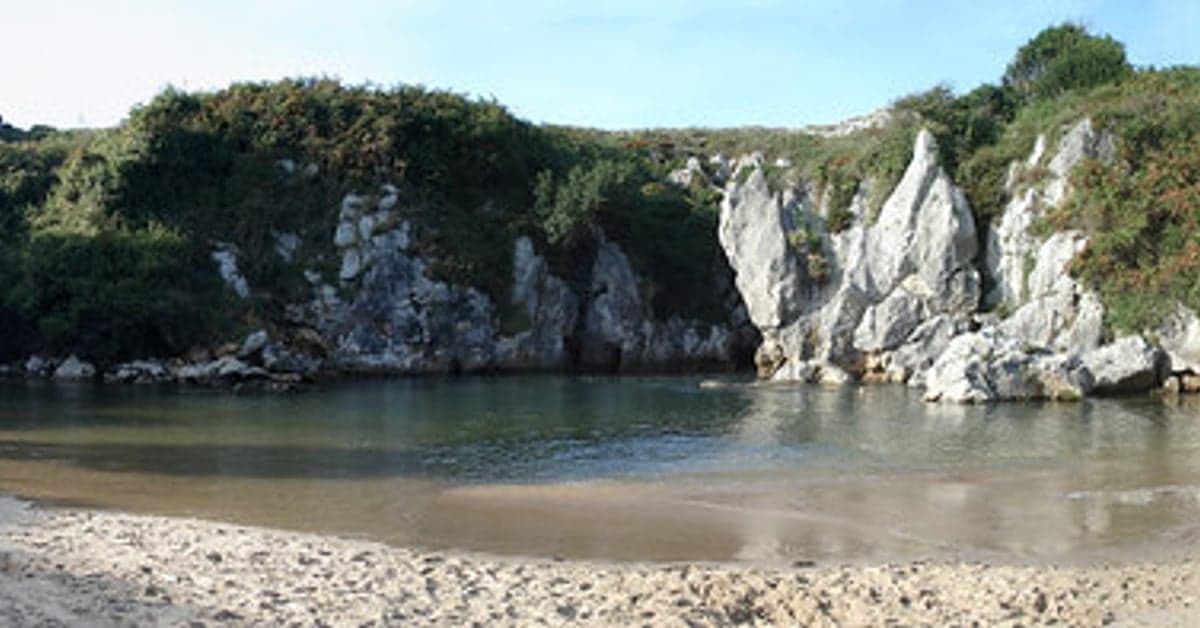
A 40-metre beach in the middle of a cow field, more than 100 metres inland from the Cantabrian Sea. It formed when a limestone cave collapsed into a sinkhole that is still connected to the ocean by underground tunnels, so the tide floods in and produces small waves on a beach with no horizon. It is a protected natural monument within Asturias's regional network of protected areas, and the regional tourism board lists it as such.
The practical reality: roughly 40 metres long and 15 wide, so a dozen people fill it. Go at high tide if you want water deep enough to swim in — at low tide it is largely rock and damp sand. There is no parking at the beach itself; you walk in across farmland from the Naves or Guadamia side, about 10 to 15 minutes.
Playa del Silencio (Gavieiro), Cudillero, Asturias
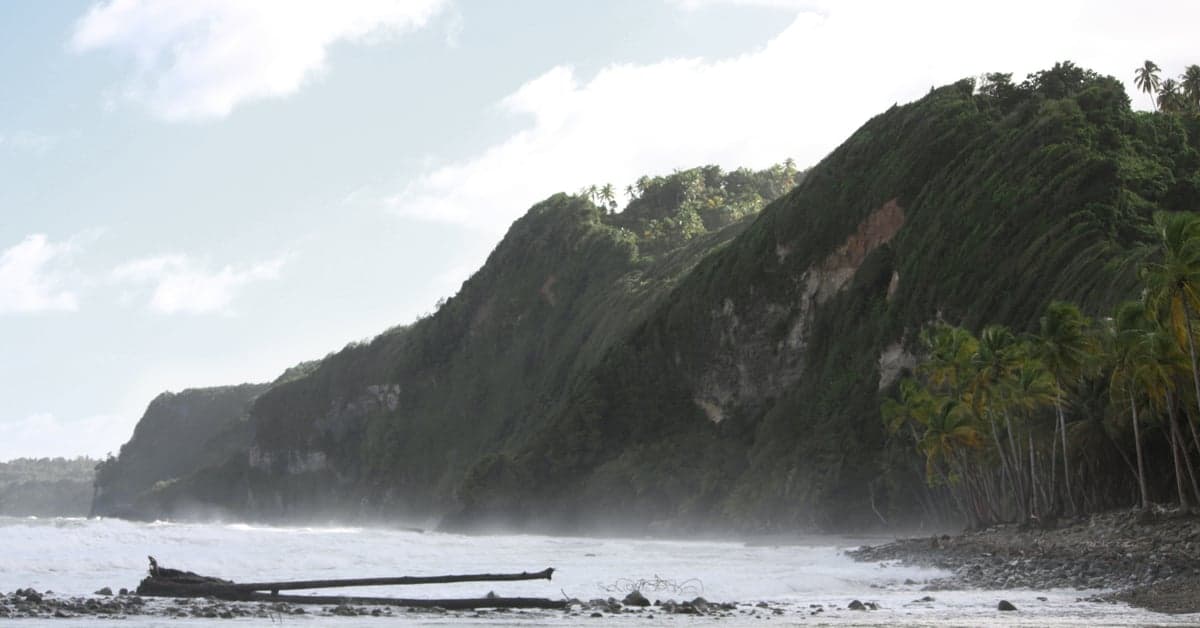
The most photographed cove in Asturias and still one of the quietest, because the access filters people out: roughly 500 metres on foot from the car park, most of it down stairs, and back up again at the end of the day. The payoff is an amphitheatre of cliffs around clear water and a beach of pale pebbles — not sand, which surprises a lot of first-time visitors.
There are no services at all: no toilets, no showers, no bar, no lifeguard. The seabed is rocky, so swimming is comfortable only when the sea is genuinely calm, and the water is cold even in August. Dogs are prohibited on the beach from 1 June to 30 September. For the wider stretch of coast either side of it, see our guide to the best beaches in northern Spain.
Praia das Catedrais, Ribadeo, Galicia
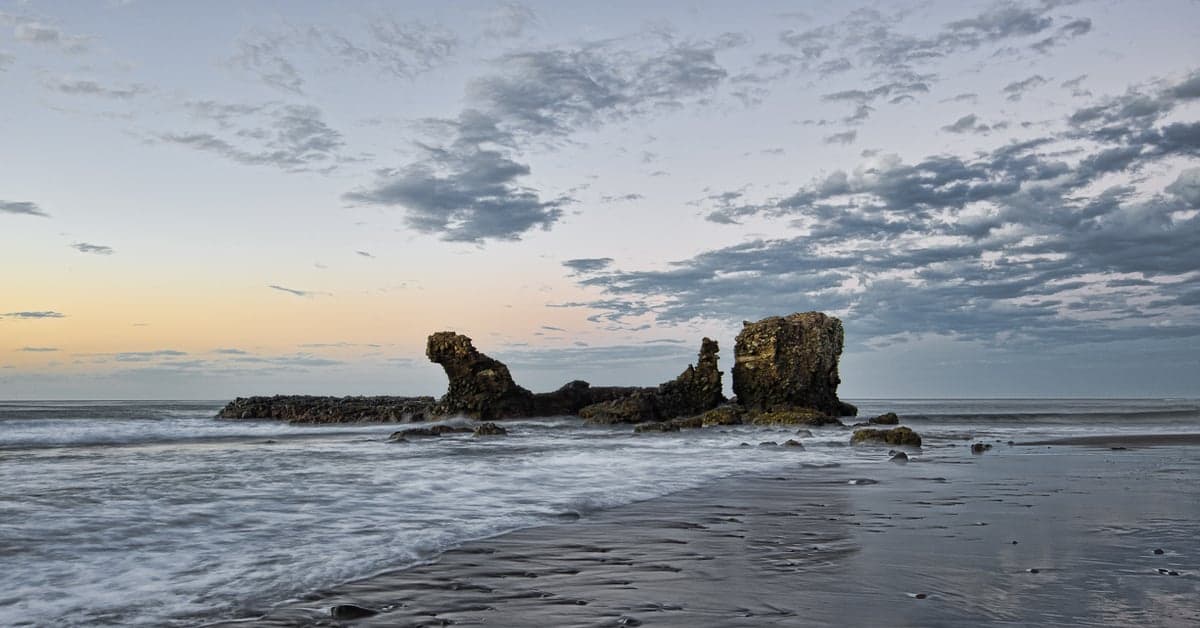
The rock arches that give it the name are only walkable at low tide — at high tide the beach is underwater and the arches are inaccessible, which is the single fact most day-trippers get wrong. Check a tide table before you commit to the drive.
Access is capped. At Easter and from 1 July to 30 September the Xunta de Galicia requires a free authorisation, with a daily ceiling of 4,812 visitors; permits are issued through the official booking site and are worth requesting well in advance for peak August dates. Guests staying in Ribadeo can request one through their accommodation, and shuttle-bus passengers have access included. The Ribadeo tourist office access-permit page sets out the current procedure.
Praia de Rodas, Cies Islands, Galicia
The best sand on this list, and the hardest to reach on a whim. Rodas is the long white crescent linking two of the Cies Islands, inside the Atlantic Islands of Galicia National Park, reached by ferry from Vigo, Cangas or Baiona. There are no cars, no hotels and no shops beyond a campsite and a couple of seasonal kiosks.
You need a free, personal, named authorisation from the Xunta before a ferry company will sell you a ticket, and daily visitor numbers to the archipelago are strictly capped — a limit in the low thousands in high season, far lower out of season. Permits can be requested up to 45 days ahead. The national park's own visitor page is the authoritative source; third-party sites quote conflicting numbers.
Cala Macarelleta, Menorca
The smaller twin of Cala Macarella, reached by a footpath cut into the cliff between the two. It is the postcard Menorcan cove — pine to the waterline, turquoise shallows, limestone on both sides — and in July it is not remotely secluded by lunchtime.
The access rule is the thing to plan around: the official car park is closed to private vehicles from 1 June to 30 September, and in season the only road access is the shuttle bus from Ciutadella. The alternative is to drive to Cala Galdana and walk about 45 minutes along Stage 13 of the Cami de Cavalls, which is the better option if you want the cove before the shuttle crowd arrives. Our guide to the best beaches in Menorca covers the rest of the south coast.
Playa de los Muertos, Carboneras, Almeria
A kilometre of pale pebble and coarse sand inside the Cabo de Gata-Nijar natural park, backed by cliffs with nothing built on them. The name means "beach of the dead" and refers to bodies from shipwrecks that historically washed ashore here on the currents — which is a useful thing to remember before swimming.
Access is a steep 10 to 15 minute walk down from the car park; there are two paths, and the shorter one from the far end of the parking area is noticeably steeper. It is not suitable for small children, anyone with mobility problems, or flip-flops. No bar, no toilets, no shade, no lifeguard. The shore shelves quickly and the water gets rough in wind, so entry and exit can be genuinely awkward. Parking is paid in summer and free the rest of the year.
Platja de Castell, Palamos, Costa Brava
The one beach on this list that is undeveloped because people voted for it. On 12 June 1994, Palamos held a referendum on a plan for around 400 homes, a hotel and a golf course behind the beach; just under 70 per cent voted against, and the land went into Catalonia's PEIN network of protected natural areas instead. What sits behind the sand today is pine wood.
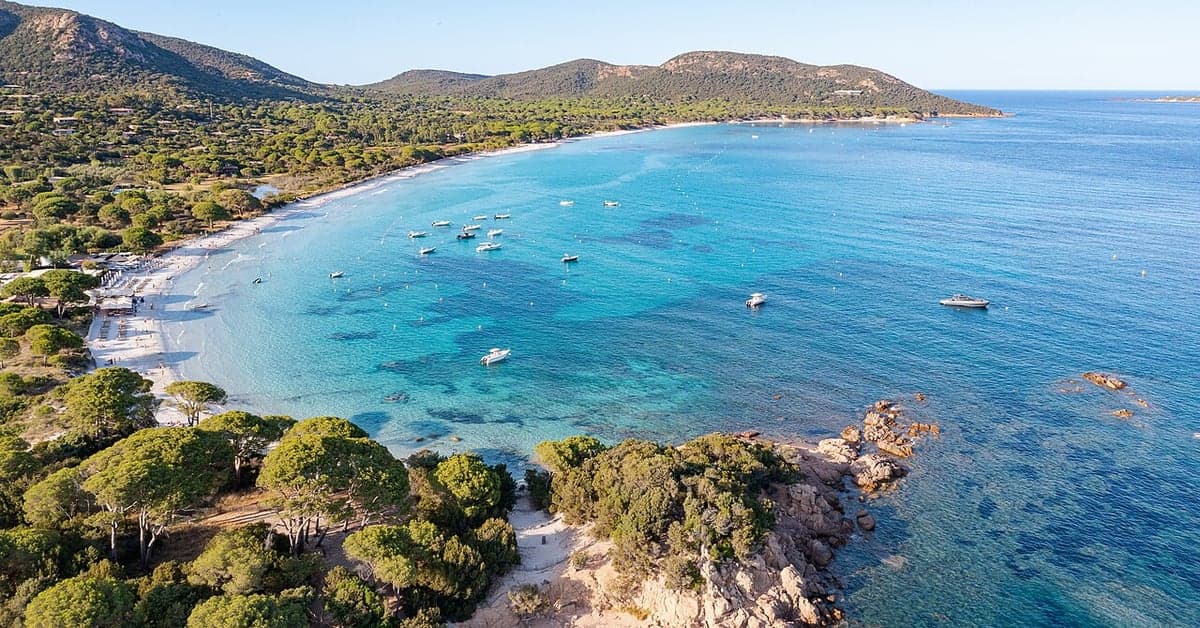
It is routinely described as the last large undeveloped beach on the central Costa Brava, and unlike most of this list it is actual sand with an easy approach. Services, toilets and lifeguard cover are seasonal and can be absent entirely outside summer, and there is very little shade. If you are working the wider coastline, our guide to Spain's beaches from the Costa Brava to the Costa del Sol puts it in context.
Platja des Coll Baix, Alcudia, Mallorca
Mallorca's genuine hike-in beach, on the Alcudia peninsula. From the recreational-area car park it is roughly 25 to 40 minutes downhill on a rocky mountain path, with a short scramble near the end — and the same climb in reverse when you are tired and out of water. Wear closed shoes; this is not a flip-flop walk.
The beach itself is pebble and coarse sand under high cliffs, with cold, very clear water, no lifeguard and no services of any kind. Shade is limited until late afternoon. The car park is small, so arrive early even outside July and August.
The Permit and Access Rules You Have to Plan Around
Three of these eight are gated, and the gates are the most common reason a trip fails. Praia das Catedrais needs a free authorisation at Easter and from 1 July to 30 September, and needs low tide regardless of season. The Cies Islands need a free named authorisation before you can buy a ferry ticket, requestable up to 45 days ahead, against a hard daily cap. Cala Macarelleta bans private cars from its car park from 1 June to 30 September, leaving the Ciutadella shuttle or the walk from Cala Galdana.
Rules and quotas are revised year to year. Confirm the current numbers on the official page before travelling rather than trusting a blog table — including this one.
What to Skip
Skip anything sold to you as a "secret beach" that has a car park within 100 metres of the sand — the phrase has become a marketing term for coves that are merely inconvenient rather than quiet. Skip Praia das Catedrais entirely at high tide in August: without the tide and the permit lined up you will have driven a long way to look at water from a clifftop viewpoint.
Skip Gulpiyuri if what you want is a swim rather than a curiosity — it is a remarkable geological feature and a poor beach day. And skip all eight in a single trip. They sit in six different regions strung across roughly 1,000 kilometres of coast; two or three per trip, grouped by region, is the realistic plan.
Where to Base Yourself
For the Asturian pair, Llanes and Cudillero are the obvious bases — Gulpiyuri sits just outside Llanes, and Playa del Silencio is a short drive west of Cudillero. Both are working fishing towns with enough beds that you do not need to stay in Oviedo and drive an hour each way.
For Menorca, stay in Ciutadella. It is the terminus for the summer shuttle to Macarella and Macarelleta, which in high season is the only way to arrive by road, and it puts Cala Galdana within easy reach for the walk-in approach.
For Galicia, Ribadeo is the base for Catedrais — and staying there lets you request the beach permit through your accommodation. For the Cies, base yourself in Vigo for the ferry. For Almeria, Carboneras or Agua Amarga; for Coll Baix, Alcudia or Port de Pollenca.
Practical Tips
When to go. Late May to mid-June and mid-September to early October. The permit systems are either off or uncontested, the car bans on Menorca have not started or have just ended, and the northern water — which is cold in Asturias and Galicia in any month — is at its warmest in September, not July.
What to bring. Water and shade, because six of the eight have neither. Closed shoes with grip for Coll Baix, Los Muertos and the Silencio stairs. Water shoes for the pebble beaches, which are hard on bare feet at the waterline. A tide app for Catedrais and Gulpiyuri, both of which are tide-dependent in opposite directions: Catedrais wants low water, Gulpiyuri wants high.
Getting there. A car is close to mandatory for the mainland beaches; none of the Asturian or Almerian spots is served usefully by public transport. The two exceptions are the Cies, which are boat-only, and Macarelleta in summer, which is shuttle-only.
Leave no trace. These are protected sites — a natural monument, a national park, a natural park and a PEIN area between them. There are no bins at most of them because there is no one to empty them.
Final Thoughts
The best of these is Praia de Rodas on the Cies for pure quality of beach, and Playa del Silencio for the ratio of drama to effort. The one most likely to disappoint is Gulpiyuri, which is a genuinely strange and worthwhile thing to see and a 40-metre puddle to swim in.
The common thread is that Spain has largely stopped leaving its best coastline unmanaged. Permits, caps and summer car bans are why these places still look the way the photographs promise. Plan around them a month ahead and you get the beach; turn up in August without checking and you get a viewpoint and a long drive home.
Frequently Asked Questions
Do you need a permit to visit hidden beaches in Spain?
For most, no. But Praia das Catedrais requires a free authorisation at Easter and from 1 July to 30 September, capped at 4,812 visitors a day, and the Cies Islands require a free named authorisation before a ferry company will sell you a ticket. Both are free and requested online in advance. The other beaches on this list have no permit requirement.
What is the most secluded beach in Spain?
Platja des Coll Baix on Mallorca and Playa de los Muertos in Almeria are the most genuinely secluded, because both require a steep 15 to 40 minute walk from the nearest parking with no facilities at the other end. Praia de Rodas on the Cies Islands is quieter still in absolute visitor numbers, but only because access is capped rather than difficult.
Is Playa de Gulpiyuri worth visiting?
It is worth seeing once as a geological curiosity — a 40-metre tidal beach sitting more than 100 metres inland, fed by underground tunnels from the Cantabrian Sea. It is not worth a trip if you want a swimming beach. At roughly 40 by 15 metres it fills with a dozen people, and at low tide there is little water to swim in.
When is the best time to visit Spain's secluded beaches?
Late May to mid-June, or mid-September to early October. Menorca's summer car ban runs 1 June to 30 September and Galicia's permit season runs 1 July to 30 September, so shoulder season sidesteps both. Northern Spanish water is also warmest in September rather than July.
Are Spain's hidden beaches safe to swim at?
Not uniformly. Playa de los Muertos is named for shipwreck victims who washed ashore on its currents, shelves steeply and gets rough in wind. Playa del Silencio has a rocky seabed where swimming is only comfortable in calm conditions. None of the eight beaches here has lifeguard cover outside limited seasonal arrangements at Platja de Castell.
Can you reach Cala Macarelleta by car in summer?
No. The official car park is closed to private vehicles from 1 June to 30 September. In that window the only road access is the Avanza shuttle bus from Ciutadella. The alternative is to park at Cala Galdana and walk about 45 minutes along Stage 13 of the Cami de Cavalls coastal path.
Are these beaches sand or pebble?
Mostly pebble, which catches people out. Playa del Silencio and Coll Baix are pebble, Playa de los Muertos is pale pebble and coarse sand, and Gulpiyuri is quartz sand but tiny. Praia de Rodas on the Cies and Platja de Castell on the Costa Brava are the two proper sand beaches on the list.
How many of these beaches can you visit in one trip?
Two or three, grouped by region. The eight are spread across Asturias, Galicia, Menorca, Almeria, Catalonia and Mallorca — roughly 1,000 kilometres of coastline plus two island flights. Sensible pairings are Gulpiyuri with Playa del Silencio in Asturias, or Praia das Catedrais with the Cies Islands in Galicia.