The Best Beaches in El Salvador: Central America's Surf Capital
Table of Contents
Prices in this guide are approximate and change often. Check with the hotel, airline or operator before you book.
Why El Salvador Deserves Your Attention
El Salvador is the smallest country in Central America, roughly the size of Massachusetts, and it packs more quality surf breaks per mile of coastline than anywhere else in the region. The Pacific-facing coast runs about 190 miles, lined with volcanic black sand, rocky point breaks, and warm water that rarely dips below 78°F.
The country's reputation for violence kept tourists away for decades, and that's precisely why the beaches remain relatively undeveloped. Gang truces, government crackdowns, and a genuine transformation in public safety since 2019 have changed the calculus. Tourist areas along the coast — particularly the La Libertad corridor and the eastern beaches — feel safe, relaxed, and nothing like the horror stories from a decade ago. Common sense still applies: don't flash cash, avoid isolated areas after dark, use registered taxis. But the surfers, backpackers, and digital nomads who've been coming here for years will tell you the same thing: the fear is outdated.
Flights into El Salvador International Airport (SAL) near San Salvador are cheap from US cities — often $250-350 round trip from Houston, Miami, or LA on Avianca, Spirit, or Volaris. From the airport, the coast is 45 minutes to an hour by car.
La Libertad and the Surf Corridor
El Tunco
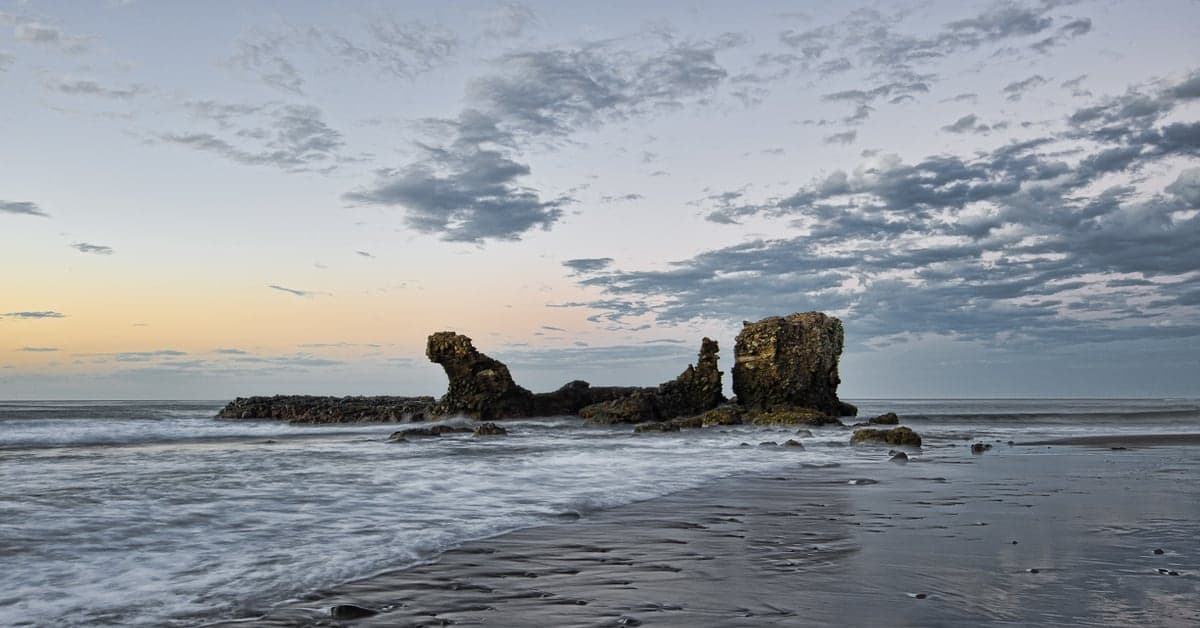
El Tunco is the main event for most visitors. This small village about 40 minutes from the airport has become the unofficial backpacker capital of El Salvador's coast. The name comes from a pig-shaped rock formation ("tunco" means pig in Salvadoran slang) visible at low tide near the river mouth.
The beach itself is rocky and not great for swimming, but the surf breaks on either side of the point deliver consistent waves from April through October, with the biggest swells hitting between May and August. The main right-hander breaks over a cobblestone bottom and produces head-high walls that are fast but forgiving enough for intermediates. More advanced surfers paddle to La Bocana, a powerful left at the river mouth that gets hollow and heavy on bigger days.
El Tunco's nightlife is the liveliest on the coast. Café Sunzal serves wood-fired pizza and has a pool overlooking the break. Dale Dale is the late-night spot where the $2 Pilsener beers flow until 2 AM. Monkey La La does decent cocktails on a rooftop terrace. On weekends, Salvadorans from San Salvador flood in, and the single main street gets genuinely packed.
Accommodation runs cheap. Papaya's Lodge charges $18-25 for a private room with air conditioning. Tunco Veloz has dorms for $10-12. At the higher end, Boca Olas charges around $90 for a pool-view room, which would cost triple in Costa Rica.
El Sunzal
Five minutes west of El Tunco, El Sunzal is the wave that put El Salvador on the surf map. This right-hand point break peels over a rocky reef for 200-plus meters on a good day, producing long, carving walls with the occasional barrel section on the inside. It handles swell from 3 to 10 feet and rarely closes out. See Surfline for current guidance.
El Sunzal works best on mid to high tide with a south or southwest swell. The paddle out is straightforward — enter from the channel on the west side and you avoid the impact zone entirely. The lineup gets crowded on weekends when surfers from the capital arrive, but midweek sessions with only five or six people out are common.
The ASP (now WSL) ran events here for years, and the wave has hosted multiple ISA World Surfing Games. El Salvador's consistent, warm-water point breaks were a major factor in the country's push to bring international surf competitions to Central America.
La Libertad and Punta Roca
The port town of La Libertad is gritty, loud, and home to one of the best right-hand point breaks in the Americas. Punta Roca starts breaking off the rocky headland next to the fish market and runs for 300 meters along the seawall when the swell is pumping. The wave is fast, hollow, and breaks over rock and sea urchins — booties are recommended.
The town itself isn't where you'd want to stay. The fish market (Mercado de Mariscos) is worth a stop for $5-8 plates of ceviche, fried whole fish, or shrimp cocktails served in plastic cups with Valentina hot sauce. Eat at the stalls upstairs where the locals eat — the ground-floor vendors charge tourist prices.
Punta Roca is a 15-minute walk from the market. Respect the local surfers here — this wave has a pecking order, and dropping in on a local is a fast way to have a bad day. If you're an intermediate surfer, head to the inside section where the wave is smaller and less competitive.
The Bitcoin Beach Zone
Playa El Zonte
El Zonte became internationally famous as "Bitcoin Beach" after a community project in 2019 started encouraging businesses to accept Bitcoin as payment. The experiment drew crypto enthusiasts, journalists, and eventually influenced El Salvador's decision to make Bitcoin legal tender in 2021.
Beyond the cryptocurrency story, El Zonte is a beautiful, mellow beach town that moves at half the speed of El Tunco. The black sand beach sits in a cove flanked by rocky headlands, and the river mouth creates a sand-bottom break that's excellent for beginners and longboarders. When a solid south swell arrives, the point on the east side produces a fast right that holds up to double overhead.
Galo Surf Camp runs board rentals ($10/day for a longboard) and lessons ($25 for 90 minutes). Restaurante Olas Permanentes does a killer pupusa breakfast — four pupusas de queso con loroco with curtido and tomato sauce for $3. Horizon Surf Resort offers clean private rooms for $30-45, including an infinity pool overlooking the break.
You can still pay with Bitcoin at many businesses here, though most tourists just use dollars (the official currency since 2001). The Lightning Network ATM near the main intersection lets you convert if you're curious.
Eastern Beaches
Playa Las Flores
Playa Las Flores sits near the town of El Cuco in eastern El Salvador, about three hours from the airport. The drive is worth it. This right-hand point break is arguably the best wave in El Salvador, producing long, mechanical walls that peel for 150 meters over a sand and rock bottom. It picks up every swell that comes through, works on all tides, and rarely goes flat between March and November.
The Las Flores Surf Club, perched on the cliff above the break, offers rooms starting around $60/night and has a direct view of the lineup — you can literally check the waves from your hammock. The restaurant serves fresh fish tacos and cold Toña beers with that view included.
The surrounding area is quiet and rural. This isn't a party destination. It's a place where you surf three times a day, eat ceviche, read a book, and go to bed at 9 PM. The nearest town, El Cuco, has a few tiendas and comedores but not much else.
El Cuco
The town beach at El Cuco is a long, gentle crescent of dark sand where local families spend Sundays. The water is calm and warm, making it one of the better swimming beaches in El Salvador. Fishing pangas line the shore, and you can arrange a boat trip to the mangrove estuary at Bahía de Jiquilisco — a UNESCO Biosphere Reserve where hawksbill sea turtles nest between July and October.
Budget lodging here is rock-bottom cheap. Leatherback Hotel offers basic rooms for $15/night. You eat where the fishermen eat: comedores along the beachfront serving fried fish, rice, beans, and tortillas for $3-4.
Costa del Sol
Costa del Sol is a 15-kilometer sand spit southeast of San Salvador, and it's where Salvadoran families go for weekend beach trips. The beach is wide and flat with gentle waves suitable for kids, and the estuary behind the spit is dotted with mangrove-lined channels popular for boat tours.
This isn't a surf destination. It's a Salvadoran family beach with a distinctly local vibe — vendors walking the sand selling mangos with lime and chili powder, groups blasting cumbia from portable speakers, and kids chasing each other through the shallows. Hotel Pacific Paradise runs all-inclusive packages starting around $80/night that include meals, pool access, and beach chairs, making it the go-to for Salvadoran middle-class families.
For travelers, Costa del Sol works as a day trip from San Salvador or a change of pace from the surf-focused western beaches. The seafood here is excellent — the whole fried mojarra (tilapia) with tajadas and ensalada at any of the thatched-roof restaurants along the main road runs about $8-10.
Food, Drink, and the Pupusa Economy
You cannot write about El Salvador without writing about pupusas. These thick corn tortillas stuffed with cheese, beans, pork (chicharrón), or loroco (a native flower bud) are the national dish, and they cost between $0.35 and $0.75 each depending on filling. You'll eat them for breakfast, lunch, and dinner, and you'll be happy about it.
Every beach town has a pupusería, usually a woman with a plancha (flat griddle) set up near the road. The best pupusas are revueltas — stuffed with a mix of cheese, beans, and chicharrón. They come with curtido (a vinegary cabbage slaw) and thin tomato sauce on the side. Eating four or five pupusas constitutes a full meal for under $3.
Beer is cheap. A Pilsener or Golden tall boy from a tienda costs $1-1.50. At a bar, expect $2-2.50. Rum is the spirit of choice — Cihuatán, a Salvadoran craft rum distillery, produces bottles that have won international awards, available at bars along the coast for $3-4 per cocktail.
Fresh seafood ceviche made with shrimp, fish, or mixed mariscos costs $4-8 depending on location. The best ceviches use limón criollo (a smaller, more aromatic lime) and come with tostadas or saltine crackers.
Getting Around and Practical Details
Transport
The surf corridor between La Libertad and El Zonte is best navigated by rental car ($25-35/day for a basic sedan) or motorcycle ($15-20/day from shops in El Tunco). Chicken buses connect San Salvador to La Libertad for $0.50, and from there, local buses run along the coast road, but they're slow and stop constantly.
For the eastern beaches, you'll want a car. The Litoral highway runs the length of the coast, and while the road surface ranges from decent to questionable, a 4x4 isn't strictly necessary unless you're going off the main road.
When to Go
The surf season runs from March through October, with the biggest swells arriving between May and August. The dry season (November through April) offers less consistent surf but sunnier skies. Water temperatures stay between 78-84°F year-round. The rainy season means afternoon thunderstorms — mornings are typically clear, so early sessions are rarely affected.
Budget Breakdown
El Salvador is one of the cheapest surf destinations in the Americas. A backpacker living on pupusas, hostel dorms, and local buses can scrape by on $25-35/day. A comfortable trip with private rooms, rental car, and restaurant meals runs $50-80/day. Even the nicest beachfront hotels rarely exceed $120/night. Compare that to Costa Rica, where $120 gets you a mid-range room in Nosara, and the value proposition is clear.
Safety
The tourist coast is genuinely safe. The government's crackdown on gang activity since 2022 has produced a dramatic drop in crime rates, and tourism infrastructure has grown rapidly in response. That said, petty theft happens — don't leave valuables unattended on the beach. In San Salvador, stick to well-trafficked areas and use Uber (which works well in the capital). The surf towns along the coast have a small-community feel where everyone knows everyone, which creates its own layer of security.
Frequently Asked Questions
Is El Salvador safe for beach vacations?
El Salvador's beach towns are considerably safer than the country's overall reputation suggests. Surf destinations like El Tunco, El Zonte, and El Cuco have established tourist infrastructure. Use common sense -- avoid displaying expensive items, use registered transport, and don't walk isolated beaches alone at night.
What is the best month to visit El Salvador beaches?
November through April is the dry season with consistent sunshine and offshore winds that clean up the surf. The rainy season (May-October) brings afternoon thunderstorms but also bigger swells -- serious surfers prefer March through October. Water temperature stays warm at 78-84°F year-round.
How much does El Salvador cost per day?
El Salvador is one of Central America's cheapest beach destinations. Hostels cost $8-15/night, guesthouses $25-50. Street food pupusas cost $0.50-1 each. Restaurant meals run $5-12. Surf board rental is $10-15/day and lessons cost $25-35 for 2 hours. El Salvador uses the US dollar.
Is El Tunco or El Zonte better for surfing?
El Tunco has more nightlife, restaurants, and a bigger backpacker scene but the beach is rocky. El Zonte is quieter with a better beach for swimming and a growing community of expats and digital nomads. Both have consistent surf breaks for all levels. They're only 15 minutes apart, so you can easily visit both.
Can beginners surf in El Salvador?
Yes. El Tunco's La Bocana break and El Zonte's inside break are friendly for beginners, with sandy bottoms and manageable waves of 2-4 feet most of the year. Surf schools are everywhere, charging $25-35 for a 2-hour lesson with board included. The warm water (80°F+) means no wetsuit needed.
How do you get to El Salvador beaches from the airport?
El Salvador's international airport (SAL) is about 45 minutes to an hour from the surf beaches on the La Libertad coast. Private shuttle services charge $25-35 per person to El Tunco or El Zonte. Uber works from the airport but availability drops near the beaches. Shared shuttles and hotel pickups are the most affordable option.