The Best Beaches in Northern Spain: Basque Country to Galicia
Table of Contents
Northern Spain: A Different Kind of Beach Destination
Forget the concrete high-rises of the Costa del Sol. Northern Spain's coastline runs roughly 800 kilometers from the French border to the Atlantic edge of Galicia, delivering rugged cliffs, emerald water, and beaches backed by green mountains rather than apartment blocks. The water is cooler (15-22 degrees Celsius depending on season), the food is arguably the best in Europe, and the crowds are predominantly Spanish and French rather than international package tourists.
The tradeoff is weather. Northern Spain gets rain. Even in July and August, you might lose a day or two to overcast skies. But when the sun comes out along the Cantabrian coast, the beaches rival anything in the Mediterranean for sheer beauty, and the surrounding landscape adds a dimension that flat, arid southern coasts simply cannot match.
This guide moves west to east, from the Basque Country through Cantabria and Asturias to Galicia, covering the beaches worth building a road trip around.
Basque Country: Where Mountains Meet the Sea
La Concha, San Sebastian
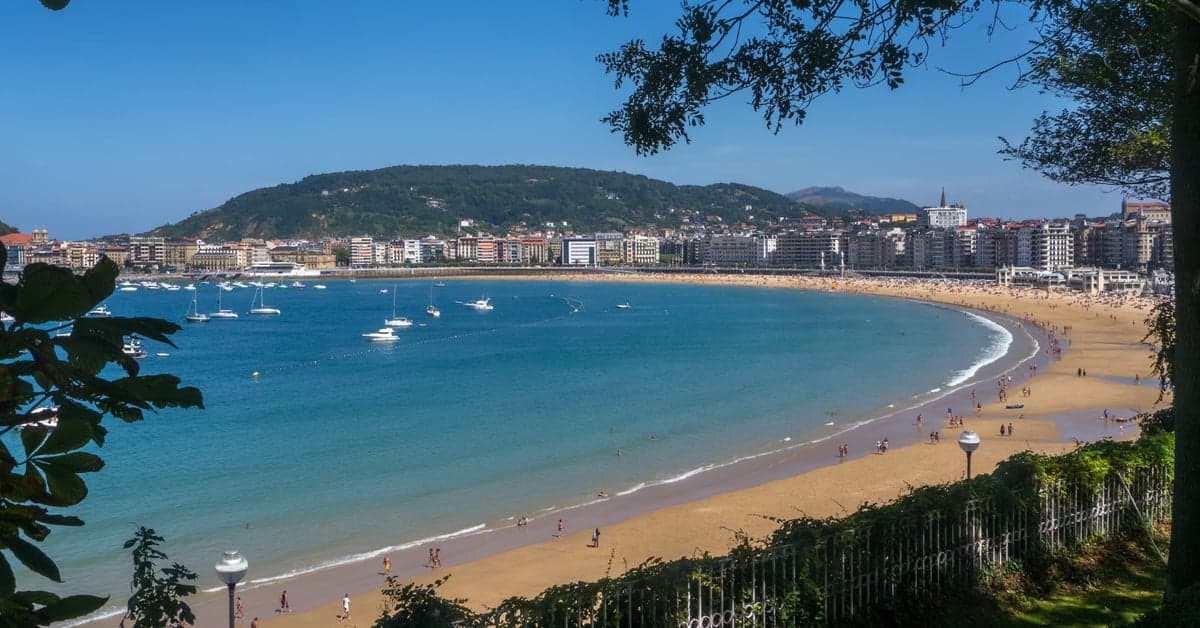
La Concha is routinely ranked among Europe's best urban beaches, and the reputation is earned. A perfect shell-shaped bay sits between Monte Urgull and Monte Igueldo, with fine golden sand and calm water protected by the island of Santa Clara in the center of the bay. The beach is a 30-second walk from the old town (Parte Vieja), and San Sebastián has one of the highest concentrations of Michelin-starred restaurants per person in the world.
The downside: La Concha is popular. Peak summer weekends bring serious crowds. Visit in June or September for warm weather and breathing room, or go early in the morning before the beach fills up. The water stays swimmable from June through October, though even August temperatures hover around 20-22 degrees Celsius.
Laga Beach, Urdaibai
Laga sits within the Urdaibai Biosphere Reserve, a protected estuary system about 45 minutes east of Bilbao. The beach is wide, backed by forested hills, and picks up consistent surf swells that make it popular with Basque surfers. Facilities include a lifeguard station, a small parking lot (arrive before 11 AM in summer), and a beach bar serving pintxos and cold beer.
The Urdaibai reserve is worth exploring beyond the beach. The marshlands attract migratory birds, and the villages of Mundaka (famous among surfers for its left-hand river mouth wave) and Bermeo offer waterfront restaurants and a pace of life that feels decades removed from nearby Bilbao.
Zarautz
Zarautz has the longest beach in the Basque Country at 2.5 kilometers, a lively boardwalk, and consistent waves that make it one of the top surf towns in northern Spain. The World Surf League holds events here, and local surf schools offer lessons from around 40 EUR for a two-hour session. The town itself has excellent restaurants and a relaxed atmosphere that combines surf culture with Basque gastronomy.
Cantabria: Underrated and Uncrowded
Playa de Langre
Langre is a long, cliff-backed beach accessible via a steep staircase from a hilltop parking area. The descent filters out the casual visitors, leaving a wide stretch of golden sand that rarely feels crowded even in August. The water is clean, the waves are moderate, and the vertical cliffs behind the beach create a natural amphitheater effect that makes the setting feel dramatic and enclosed.
The beach has no facilities beyond a seasonal lifeguard, so bring water and food. Santander is 20 minutes east by car, providing a convenient base with full urban amenities.
Playa de El Sardinero, Santander
Santander's main beach stretches along the north side of the city with views of the Cantabrian Sea. The sand is fine and pale, the promenade is lined with Belle Epoque architecture, and the overall atmosphere is more elegant than resort-like. El Sardinero is divided into two connected beaches, with the first (closer to the headland) being slightly more sheltered and better for swimming.
Playa de Oyambre
Oyambre sits within a nature park west of Comillas, a small town famous for its Gaudi-designed El Capricho building. The beach is broad, wild, and backed by dunes and marshland rather than development. Surfers use the west end, swimmers stick to the sheltered east end, and walkers take the path along the dune system that connects to the adjacent Playa de Merón. This stretch of coast represents Cantabria at its most unspoiled.
Asturias: The Green Coast
Playa de Gulpiyuri
Gulpiyuri is one of Spain's most unusual beaches: a tiny inland beach roughly 100 meters from the actual sea. Seawater flows through underground channels in the limestone karst to fill a small sinkhole surrounded by meadows. The result is a patch of sand and saltwater in the middle of a green field. It is more of a curiosity than a beach day destination (the swimming area is tiny), but it is genuinely remarkable and worth the short detour from the coast road.
Playa del Silencio
Playa del Silencio (Beach of Silence) lives up to its name. A horseshoe-shaped cove of gray pebbles and dark sand sits at the base of steep green cliffs, with rock formations jutting from turquoise water. Access is by foot down a maintained path with wooden stairs. There are no facilities, no vendors, and no music. Bring a towel, a book, and an appreciation for dramatic natural scenery.
The beach is near the village of Castaneras, about an hour west of Gijon. Arrive early in summer, as the small parking area fills up by mid-morning and there is no overflow lot.
Playa de Torimbia
Torimbia is a clothing-optional beach in a near-circular cove near Llanes. The walk down from the parking area takes about 15 minutes on a dirt path through farmland, and the beach itself is a wide crescent of white sand in water that shifts between green and blue depending on the light. It feels more Caribbean than Cantabrian on a sunny day, minus the warm water. The naturist tradition is well-established but not enforced; textile beachgoers are equally welcome.
Galicia: Atlantic Power
Praia das Catedrais (Beach of the Cathedrals)
The Beach of the Cathedrals near Ribadeo is named for its massive rock arches and buttresses, carved by the Atlantic into formations that resemble Gothic cathedral flying buttresses. At low tide, you can walk among these structures on the sand; at high tide, the beach largely disappears. Timing your visit around the tide table is essential. Check the Spain tourism site for current access information, as the regional government limits daily visitors during peak season and requires a free reservation.
Islas Cies
The Cies Islands sit at the mouth of the Ria de Vigo and are part of the Atlantic Islands National Park. Praia de Rodas, the main beach, connects two of the three islands with a white sand tombolo and crystal-clear water that looks transplanted from the Caribbean. Access is by ferry from Vigo (about 45 minutes), and daily visitor numbers are capped, so book your ferry and park permit well in advance during summer.
The islands have a campsite but no hotels. Day trippers should bring lunch, as the single restaurant fills up quickly. The snorkeling around the rocky shores is surprisingly good for Atlantic water, with visibility reaching 10-15 meters on calm days. For more European beach content, see our guide to Sardinia's best beaches.
Praia de Carnota
Carnota is Galicia's longest beach at seven kilometers, backed by a freshwater lagoon and dune system. The sand is white, the water is cold (14-18 degrees even in summer), and the beach feels genuinely wild. On windy days, the Atlantic rollers are impressive. On calm summer mornings, the combination of empty white sand and still water creates a meditative atmosphere found nowhere else on the Spanish coast.
Planning a Northern Spain Beach Road Trip
Route and Timing
The full drive from San Sebastian to Finisterre in Galicia covers roughly 900 kilometers along the coast, with detours to beaches adding distance. Allow 10-14 days to do it properly, spending 2-3 nights in each region. July and August offer the warmest water and longest days but also the most competition for parking and accommodation. June and September are the best compromise months.
Budget
Northern Spain is cheaper than the Mediterranean coast for accommodation but pricier for food, because the food is better and you will eat more of it. A comfortable mid-range daily budget runs 100-140 EUR for two people, covering a double room in a small hotel or guesthouse, three meals (including one restaurant dinner with local wine), fuel, and parking fees.
Frequently Asked Questions
What is the best time to visit northern Spain's beaches?
July and August are the warmest months with water temperatures of 19-22 degrees Celsius and the most sunshine. June and September offer pleasant weather with fewer crowds. May and October are hit-or-miss but can produce beautiful beach days. The Basque Country and Cantabria get rain year-round, so pack a light rain jacket even in summer.
Is the water warm enough for swimming in northern Spain?
Atlantic water temperatures in northern Spain range from 14 degrees Celsius in winter to 22 degrees in late August. Most people swim comfortably from mid-June through September. If you are used to Mediterranean or Caribbean temperatures, it will feel cold initially. A thin wetsuit or rash guard extends the comfortable swimming season significantly.
How do you get to the Cies Islands?
Ferries to the Cies Islands depart from Vigo, Cangas, and Baiona, with the Vigo route being the most frequent (roughly 45 minutes each way). During peak season (June-September), you need both a ferry ticket and a free visitor permit from the Xunta de Galicia. Daily visitors are capped at around 1,800 people. Book both the permit and ferry at least a week ahead in summer.
Do you need a car to visit northern Spain's beaches?
A car is strongly recommended. Public transportation connects the major cities (San Sebastian, Bilbao, Santander, Gijon, A Coruna) but rarely reaches the best beaches directly. Rental cars cost 30-50 EUR per day from major airports. Roads are well-maintained, though coastal routes are often narrow and winding. Parking at popular beaches fills up early in summer.
Is northern Spain expensive compared to the south?
Accommodation in northern Spain is comparable to or slightly cheaper than the Costa del Sol, with fewer large resorts and more small hotels and guesthouses. Food costs more because the culinary quality is higher, particularly in the Basque Country where even casual pintxo bars use premium ingredients. Overall daily spending for a couple runs 100-150 EUR for a comfortable mid-range trip.
What food should you try at northern Spain's beach towns?
Basque pintxos (small plates on bread) in San Sebastian are a must. Cantabria is known for anchovies from Santona and sobao pasiego cake. Asturias serves fabada (bean stew) and cider poured from height. Galicia is the seafood capital: pulpo a feira (octopus), percebes (barnacles), and Albarino white wine. Budget 15-25 EUR per person for a proper sit-down lunch with wine.
Can you surf in northern Spain?
Northern Spain has some of Europe's best surf. Mundaka in the Basque Country produces a world-class left-hander. Zarautz, Sopelana, and Razo in Galicia all have consistent beach breaks. Water temperatures require a 3/2mm wetsuit in summer and a 4/3mm or 5/4mm in winter. Surf schools operate in all the main towns, with two-hour beginner lessons running 35-50 EUR.