Nude Beaches in India (2026): There Are No Legal Ones
Table of Contents
India Has No Legal Nude Beaches
There is no legal nude beach anywhere in India. No beach is designated for nudity, and no state or local authority grants an exemption. Since July 1, 2024, public indecency has been covered by Section 296 of the Bharatiya Nyaya Sanhita, 2023 (BNS), the criminal code that replaced the Indian Penal Code. Section 296 punishes anyone who, "to the annoyance of others," does "any obscene act in any public place" with up to three months' imprisonment, a fine of up to ₹1,000, or both. A public beach is a public place, and that applies in Goa exactly as it does everywhere else in the country.
Online lists still describe one Goa beach, Arambol, as India's nude beach. That is a reputation from the hippie era, not a legal status. This guide explains what the law says, where that reputation comes from, why the usual "regional alternatives" do not work either, and what to expect on India's beaches.
The Law: Section 296 BNS (Formerly Section 294 IPC)
The Bharatiya Nyaya Sanhita came into force on July 1, 2024. Its Section 296 carries over the old Section 294 of the Indian Penal Code almost word for word: the same offence ("obscene acts and songs"), the same three-month maximum prison term, and now a stated fine of up to ₹1,000 where the old section left the fine open. Offences committed before July 1, 2024 are still dealt with under the IPC, which is why older articles and news reports cite Section 294.
Three points matter for a traveler:
- "Obscene" is not defined in the Act. Whether nudity on a beach counts is decided by the police and, if it goes that far, the courts. There is no beach, time of day or level of remoteness that makes it lawful.
- The offence turns on annoying other people. In practice that means a complaint from another beachgoer, a shack owner or a local resident is what usually brings the police.
- There is no exception for topless sunbathing. Women going topless falls under the same section, and it is not socially accepted on any Indian beach, including the foreign-tourist beaches of north Goa.
Arambol: The Beach With the Reputation
Arambol is the northernmost of Goa's main beaches, roughly 45 km north of Panaji. It became a stop on the overland hippie trail in the late 1960s and 1970s, and some of those travelers stayed. That history is why travel blogs and naturist forums still call the far north end of the beach, around the freshwater "Sweet Lake" lagoon behind the dunes, a nude beach.
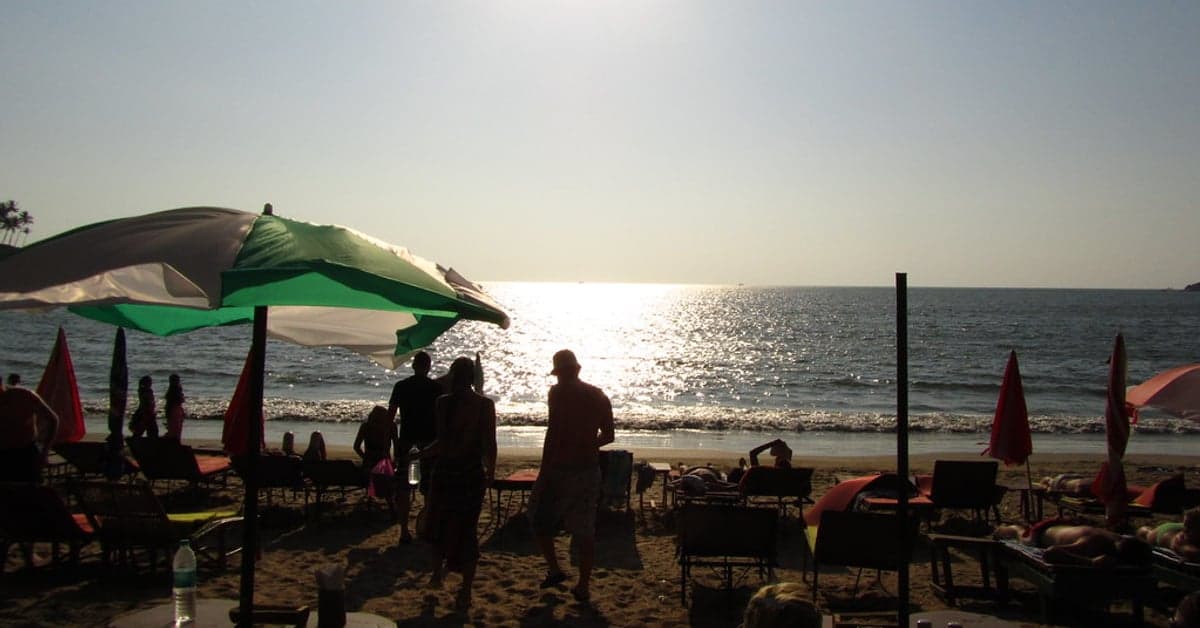
It is not one. Section 296 applies at Arambol as it does anywhere in India, and neither the Goa government nor Goa's tourism department designates any part of the beach for nudity. Arambol today is a long, busy beach with guesthouses, yoga schools and beach shacks, used by domestic tourists and families as well as long-stay foreigners. It is worth visiting in swimwear: the walk north to the Sweet Lake lagoon and the cliffs beyond is one of the prettier stretches of the Goa coast.
The Rest of Goa and India's Other Coasts
North Goa's foreign-tourist beaches (Anjuna, Vagator, Morjim, Ashwem, Mandrem) are more relaxed about Western swimwear than most of India, but relaxed is not permissive: nudity and toplessness are still offences there. Central and south Goa beaches such as Calangute, Baga, Colva and Palolem draw large numbers of Indian families and are more conservative again. Goa also bans drinking on the open beach: the UK government's travel advice for India notes that drinking alcohol in public places in Goa is illegal, and that you can drink inside a registered beach shack or bar but not on an open beach or road.
Outside Goa the picture is the same or stricter. Kerala's beach towns (Varkala, Kovalam) and Gokarna in Karnataka have backpacker scenes but conservative local communities. Lakshadweep requires an entry permit from its administration for anyone who is not a resident, and the UK travel advice lists it among the places where alcohol is illegal. In the Andaman and Nicobar Islands, tribal reserves are off-limits to visitors.
Hotel Pools and Private Beaches
Section 296 is about public places, but a hotel pool or a resort's beach frontage is shared with other guests and staff, and Indian hotels expect swimwear there. Do not assume a five-star resort will look the other way; guests who strip off can expect to be asked to dress, and a complaint from another guest is exactly what the law turns on.
The "Regional Alternatives" Do Not Work Either
Older guides often suggest the Maldives or Sri Lanka as easier options. Official advice says otherwise:
- Maldives: the UK government's Maldives travel advice states that "nudism and topless sunbathing are not allowed anywhere, including on resort islands."
- Sri Lanka: the UK government's Sri Lanka travel advice states that "nude or topless sunbathing is not allowed."
There is no legal nude beach anywhere in South Asia. Travelers who want naturism as part of a trip need to look at countries where it is lawful at designated beaches, such as parts of Europe and Australia; our guide to where nude beaches are legal covers the options.
Practical Tips for a Goa Beach Trip
Go Between November and March
Goa's dry season runs from about November to March, with December and January the busiest and most expensive months. The southwest monsoon (roughly June to September) brings rough, dangerous seas, and many beach shacks close. April and May are very hot and humid.
Fly Into Mopa for North Goa
Goa has two airports: Manohar International Airport at Mopa (GOX) in the north, much closer to Arambol and the other north Goa beaches, and Dabolim (GOI) near Vasco da Gama, which is more convenient for central and south Goa. Konkan Railway trains from Mumbai are scenic but take most of a day.
Stay Safe on Quiet Beaches
The UK travel advice for India recommends avoiding isolated areas, including beaches, when you are alone, at any time of day. Swim only where lifeguards are posted and never during the monsoon, and ask before photographing other people on the beach.
Final Thoughts
India is not a naturist destination. The law is clear (Section 296 BNS, formerly Section 294 IPC), no beach is exempt, and the one beach still sold online as a "nude beach" has a history, not a legal carve-out. Goa is a good beach destination on its own terms between November and March, in swimwear. For legal naturism, plan a different trip.
This series: The World's Best Nude Beaches
Frequently Asked Questions
Are there any legal nude beaches in India?
No. No beach in India is designated for nudity or exempt from the law. Since July 1, 2024, Section 296 of the Bharatiya Nyaya Sanhita punishes obscene acts in a public place, to the annoyance of others, with up to three months in prison, a fine of up to ₹1,000, or both. It replaced Section 294 of the Indian Penal Code.
Is Arambol Beach in Goa a nude beach?
No. Arambol has a reputation as a nude beach from its hippie-trail history in the 1960s and 1970s, and some websites still list it that way, but there is no legal designation or exemption. Section 296 applies at Arambol the same as anywhere else in India.
Is topless sunbathing legal in Goa?
No. There is no exception for topless sunbathing in Indian law, and it is not socially accepted on Indian beaches, including the foreign-tourist beaches of north Goa. Hotel pools and resort beaches are shared spaces where swimwear is expected.
What law covers public nudity in India now that the IPC has been replaced?
Section 296 of the Bharatiya Nyaya Sanhita, 2023, in force since July 1, 2024. It covers anyone who, to the annoyance of others, does any obscene act in any public place. Offences committed before that date are still dealt with under Section 294 of the old Indian Penal Code.
Are the Maldives or Sri Lanka legal alternatives for nude sunbathing?
No. UK government travel advice states that nudism and topless sunbathing are not allowed anywhere in the Maldives, including on resort islands, and that nude or topless sunbathing is not allowed in Sri Lanka. There is no legal nude beach anywhere in South Asia.
When is the best time to visit Goa's beaches?
November to March is the dry season, with December and January the busiest. The southwest monsoon, roughly June to September, brings dangerous seas and many beach shacks close. April and May are very hot and humid.
Can I drink alcohol on Goa's beaches?
Not on the open beach. UK government travel advice notes that drinking alcohol in public places in Goa is illegal; you can drink inside a registered beach shack or bar, but not on an open beach or road.