Best Nude Beaches in Vietnam (2026): The Honest Guide
Table of Contents
The Reality of Nude Beaches in Vietnam
There are no official nude beaches in Vietnam in 2026, no clothing-optional resorts, and a conservative socialist culture that treats public nudity as an offence against public decency. Da Nang's My Khe, Nha Trang, Mui Ne, and Phu Quoc are uniformly textile, and topless sunbathing draws prompt attention. The one genuine naturist tradition is inland — Hanoi's decades-old "Banana Island" men's swimming community on the Red River — not on any coast. For true beach naturism, fly to Thailand.
This guide covers what does and does not exist, the legal framework that keeps every stretch of coast textile, the one genuinely established naturist tradition in the country (which is not a beach), the forum claims worth treating with caution, and the short-flight regional alternatives that actually deliver clothing-optional beach time.
The Legal Framework: Why Every Beach Stays Textile
Vietnam is a one-party socialist republic with a conservative public culture, and public nudity is handled as an administrative decency violation rather than tolerated anywhere on the coast. Enforcement runs through Decree 144/2021/ND-CP, the administrative-penalties regime covering social order and safety; obscene or sexually suggestive acts in public places are commonly cited in the VND 5-8 million fine band, and gross indecency can escalate to the Penal Code. The practical takeaway for a visitor is simpler than the legal detail: there is no informal cove, no quietly tolerated resort beach, and no local naturist scene at the shore. The country profile — Communist Party governance, a strong emphasis on public morality, and a tourism economy built on beaches, food, and heritage rather than beach nudity — explains why the answer is consistent from Ha Long Bay to the Mekong Delta.
Foreign visitors get some latitude on beachwear — bikinis are normal at tourist beaches in Da Nang, Nha Trang, and Phu Quoc — but that latitude ends firmly at toplessness. The UK's FCDO local-laws guidance frames the general expectation clearly: dress modestly, respect local sensibilities, and expect conservative norms outside the main tourist zones.
Hanoi's "Banana Island": The Country's One Real Naturist Tradition
The honest surprise is that Vietnam's most established naturist scene is not coastal at all. Bai Giua — the "middle island" sandbar in the Red River in central Hanoi, nicknamed "Banana Island" for its banana plantations — has hosted a community of (mostly older, mostly male) nude swimmers for around four decades, as documented by local outlets such as Saigoneer and Urbanist Hanoi. The men started gathering here when Hanoi's lakes became too polluted to swim in; today they swim, exercise, and sunbathe naked on the riverbank, and some have been coming for eighteen years or more.
It is worth being precise about what this is and is not. It is a genuine, decades-old, informally tolerated naturist tradition — rare anywhere in Southeast Asia. It is not a beach, not clothing-optional for mixed groups, not aimed at tourists, and not a place to sunbathe with a partner. Women and couples turning up in swimwear would be conspicuous; foreigners stripping off would be more so. Treat it as a fascinating cultural footnote and a genuinely interesting Hanoi walk (the island is also a green refuge from the city's traffic), not as a naturist destination to plan a trip around.
The Coastal Beaches: What Is and Isn't Tolerated
Da Nang and My Khe
My Khe (the "China Beach" of the American War era) and the long Da Nang municipal strip are the country's flagship city beaches — wide, clean, well-patrolled, and thoroughly textile. The Furama, the Hyatt Regency, and the InterContinental Sun Peninsula down toward Son Tra hold private beach frontage, but house rules mirror the public norm: swimwear yes, topless no. Da Nang is the best base for a beach-plus-heritage trip (Hoi An is 30 minutes south, the Marble Mountains are on the doorstep), and precisely none of that involves clothing-optional bathing.
Nha Trang
Nha Trang is Vietnam's most developed beach-resort city and its most Russian-tourist-heavy, which sometimes fuels rumours of a more relaxed topless culture. On the ground the main municipal beach is textile and policed, and the offshore islands (Hon Mun, Hon Tam) and the resort enclaves at Bai Dai to the south follow the same rule. The tolerance visitors notice is for skimpy swimwear and party atmosphere, not for nudity.
Mui Ne and Phu Quoc
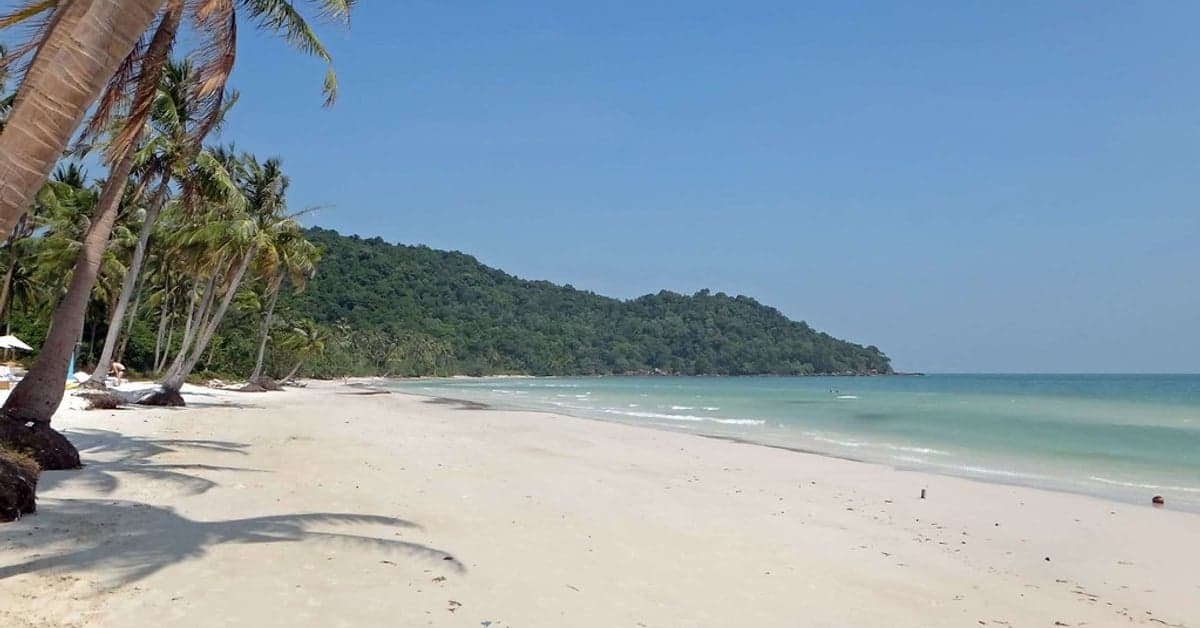
Mui Ne (the kitesurfing coast near Phan Thiet) and Phu Quoc (the large island off the Cambodian coast) are the other two big beach names, and both are textile in practice. Phu Quoc is where you will find the internet's most persistent naturist rumour: scattered traveler-forum posts describe informal nude tanning at the quiet north-western Vung Bau and Bai Dai stretches. Treat this as unverified forum chatter, not a designated or reliably tolerated spot — the beaches are increasingly developed with resorts, there is no official clothing-optional status, and the legal framework above applies. If discretion at a quiet stretch is your plan, understand you are taking a legal risk, not visiting a nude beach.
Con Dao
The Con Dao archipelago is Vietnam's most remote and beautiful beach destination — a former prison island group now protected as a national park with sea-turtle nesting and superb diving. Its isolation makes it the country's most plausible place for genuine solitude, but it is a strict national park with a conservation focus and a small, watchful local community; it is not a naturist destination, and its value is the diving, the wildlife, and the near-empty sand, all enjoyed textile.
The Closest Regional Alternatives
Thailand's Southern Islands
Thailand is the natural pairing for a Southeast Asian trip that includes clothing-optional beach time. The southern end of Haad Yuan on Koh Phangan, secluded coves on Koh Adang near Koh Lipe, and a handful of Krabi-area islands have a long informal naturist tradition among long-stay foreign visitors. Direct flights from Ho Chi Minh City or Hanoi to Bangkok run 90 minutes to two hours, with onward hops to Phuket or Krabi. See our Thailand guide for the specifics.
Bali's Private Villas
Indonesia's overall framework resembles Vietnam's, but Bali's walled private-pool villa market is the unspoken accommodation that Vietnam does not have — a private compound where discreet naturism happens out of public view. Direct flights from Ho Chi Minh City to Denpasar run around four hours (often via a hub). Detailed in our Indonesia guide.
Practical Tips for Travellers
Plan Vietnam for What It Does Best
Vietnam is one of Asia's strongest destinations for food, heritage, and scenery — Ha Long Bay, the Hoi An old town, the Hue citadel, the Ha Giang loop, and the Mekong Delta are the trip, and the beach days are a textile bonus rather than the point. Anchor the itinerary in those and treat the coast as swimming, seafood, and sunset time. Vietnam Tourism publishes the canonical regional and seasonal guidance.
When to Visit
Vietnam has three climates. The north (Hanoi, Ha Long) is best October to April, cool and dry. The centre (Da Nang, Hoi An, Nha Trang) is best February to August, with a wet, storm-prone September to December. The south (Ho Chi Minh City, Phu Quoc, Con Dao) has a dry season November to April and a wet season May to October. Phu Quoc and Con Dao are at their calmest and clearest in the November-April window.
What to Pack
Regular swimwear (bikinis are fine at tourist beaches), a light cover-up for walks to and from the sand and into beachfront restaurants, reef-safe SPF 50+ sunscreen, water shoes for rocky entries on the islands, and modest clothing (shoulders and knees covered) for temples and pagodas. Leave the naturism plans for the Thailand or Bali leg.
Final Thoughts
Vietnam has no nude beaches, no clothing-optional resorts, and a legal framework that keeps every stretch of coast textile — but it also has, unusually for the region, one genuine and decades-old naturist tradition in Hanoi's Banana Island river swimmers, which is a cultural curiosity rather than a beach you visit. The honest plan is to come for the food, heritage, and scenery, enjoy the coast in swimwear, and add a Thai or Balinese leg if clothing-optional beach time is part of the trip. For the wider regional picture, see our Asia-wide nude beach guide.
Frequently Asked Questions
Are there any nude beaches in Vietnam?
No. Vietnam has no officially designated clothing-optional beaches and no naturist resorts. Public nudity is treated as an administrative decency violation under Decree 144/2021/ND-CP, and coastal enforcement is consistent from Da Nang to Phu Quoc. Bikinis are accepted at tourist beaches, but toplessness and full nudity are not tolerated anywhere on the coast.
Is topless sunbathing allowed on Vietnamese beaches?
No. Even at the most tourist-heavy beaches — Da Nang's My Khe, Nha Trang, Mui Ne, and Phu Quoc — topless sunbathing draws prompt attention from staff or local authorities. Foreign visitors get latitude on skimpy swimwear, but that latitude ends at toplessness. The luxury resorts hold private beach frontage, but their house rules mirror the public textile norm.
What is Hanoi's Banana Island and can I visit it?
Bai Giua, nicknamed Banana Island, is a sandbar in the Red River in central Hanoi where a community of mostly older, mostly male nude swimmers has gathered for around four decades, as documented by local outlets like Saigoneer. You can walk the island — it is a green escape from city traffic — but it is not a beach, not a mixed clothing-optional space, and not aimed at tourists. Treat it as a cultural footnote, not a naturist destination.
Is there a nude beach on Phu Quoc?
Not officially. Scattered traveler-forum posts describe informal nude tanning at the quieter north-western Vung Bau and Bai Dai stretches, but this is unverified chatter rather than a designated or reliably tolerated spot. Phu Quoc is increasingly developed with resorts and there is no clothing-optional status; anyone attempting nudity there is taking a legal risk under Decree 144/2021, not visiting a nude beach.
What are the penalties for public nudity in Vietnam?
Public nudity is handled primarily as an administrative offence under Decree 144/2021/ND-CP, which covers social order and safety. Obscene or sexually suggestive acts in public places are commonly cited in the VND 5-8 million fine band, and gross indecency can escalate to the Penal Code. Beyond the legal penalty, the bigger practical consequence for a visitor is drawing unwanted attention in a conservative public culture.
What is the closest place to Vietnam with real nude beaches?
Thailand's southern islands. Direct flights from Hanoi or Ho Chi Minh City to Bangkok take 90 minutes to two hours, with onward hops to Phuket or Krabi. The southern end of Haad Yuan on Koh Phangan and secluded coves near Koh Lipe have a long informal naturist tradition. Bali's private-pool villas (Indonesia) are the other regional option, about four hours' flight away.
Can I sunbathe topless as a foreign woman in Vietnam?
It is not advisable. While enforcement against foreigners is usually a request to cover up rather than an immediate fine, toplessness is outside the accepted norm at every Vietnamese beach and marks you out sharply in a conservative culture. At quiet or remote stretches you may go unnoticed, but there is no beach where topless sunbathing is officially permitted or reliably tolerated.
When is the best time to visit Vietnam's beaches?
It depends on the region. Central-coast beaches (Da Nang, Hoi An, Nha Trang) are best February to August. Southern beaches and islands (Phu Quoc, Con Dao) have their dry, calm season November to April. The north's short beach window at Ha Long is roughly October to April. Central Vietnam sees storms September to December, so avoid that window for a beach-focused trip.