The Science of Sand: Why Some Beaches Are White, Black, Pink, or Green
Table of Contents
Prices in this guide are approximate and change often. Check with the hotel, airline or operator before you book.
Sand Is Not One Thing
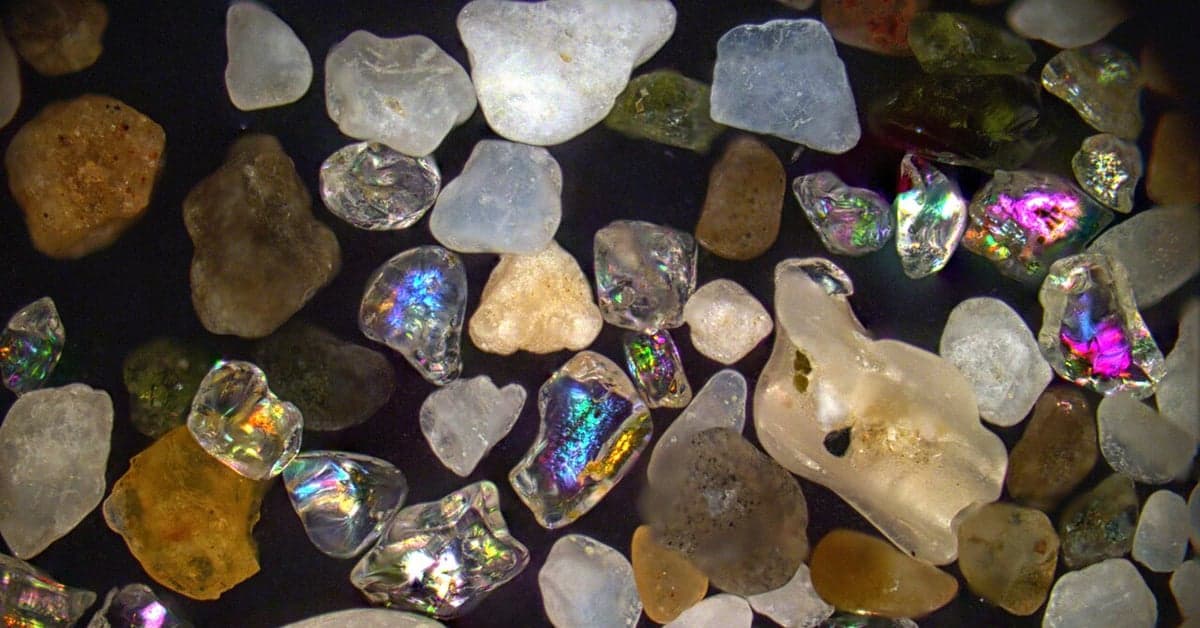
Pick up a handful of sand at any beach and you're holding the biography of that coastline — its geology, its marine life, its volcanic history, and the forces that have been grinding rock and shell into fragments for thousands of years. Sand color tells you exactly what a beach is made of, and the answer varies wildly depending on where you are.
The technical definition of sand is any loose granular material between 0.1 and 2 millimeters in diameter. That's a size classification, not a composition one. Sand can be made of rock, shell, coral, volcanic glass, gemstone minerals, or the skeletal remains of organisms. The composition determines the color, and the color is the first thing you notice when you step onto a beach that isn't the generic tan-white you expected.
Sand Colours at a Glance
| Colour | What makes it | Where to see it |
|---|---|---|
| White (quartz) | Quartz weathered out of granite over millions of years | Siesta Key, Florida |
| White (coral and shell) | Crushed coral, shell, sea urchin and calcareous algae (calcium carbonate) | The Maldives, the Seychelles, much of the Caribbean |
| Black | Volcanic basalt and glass shattered by lava meeting the sea | Punalu'u (Hawaii), Reynisfjara (Iceland), Perissa and Kamari (Santorini) |
| Pink | Foraminifera shells (Homotrema rubrum) mixed with coral; crushed shell in the Mediterranean | Horseshoe Bay (Bermuda), Pink Sands (Harbour Island), Elafonissi (Crete) |
| Green | Olivine crystals from volcanic rock | Papakolea (Hawaii), Talofofo (Guam), Punta Cormorant (Galápagos) |
| Red | Iron-rich volcanic cinders, oxidised | Kaihalulu (Maui), Red Beach (Santorini) |
| Sea glass | Waste from a 1949 to 1967 dump, worn smooth by the waves | Glass Beach, Fort Bragg, California |
White Sand: Quartz and Coral
Quartz-Based White Beaches
The whitest sand beaches in the continental United States owe their color to quartz — specifically, to the weathering of Appalachian granite over tens of millions of years. Siesta Key Beach in Sarasota, Florida, consistently ranks among the whitest beaches in the world. Its sand is 99% pure quartz crystal, ground fine enough to feel like powdered sugar. The quartz originated in the Appalachian Mountains, was carried south by rivers and coastal currents, and accumulated along the Gulf Coast over millennia.
Quartz is silicon dioxide (SiO2), one of the most abundant minerals on Earth and one of the most resistant to chemical weathering. It's the reason quartz sand beaches stay white — the mineral doesn't rust, doesn't dissolve easily in seawater, and doesn't break down into colored byproducts. The grains just get smaller over time, maintaining their colorless-to-white appearance.
Hyams Beach in New South Wales, Australia, is often said to hold a Guinness record for the whitest sand; no such record exists, but the sand really is brilliant white. Like Siesta Key, it's nearly pure quartz. The grains are so fine and so uniformly white that the beach is almost painful to look at in direct sunlight without polarized sunglasses.
Coral and Shell White Beaches
In the tropics, white sand is more often biogenic — made from the crushed skeletons of corals, mollusks, sea urchins, and calcareous algae rather than quartz. The Maldives, Seychelles, and many Caribbean beaches fall into this category. The calcium carbonate (CaCO3) that makes up coral and shell is naturally white to cream-colored.
And here's the detail that gets repeated at every resort dinner table: a significant portion of white Caribbean beach sand passed through the digestive system of parrotfish. This is true. Parrotfish eat coral, grinding it with pharyngeal teeth (a second set of teeth in their throat). They digest the algae growing inside the coral and excrete the calcium carbonate as fine white sand. A single large parrotfish produces up to 800 pounds of sand per year. Multiply that by the millions of parrotfish on a reef system and the math adds up to entire beaches.
The parrotfish contribution varies by location. On Hawaiian reefs, parrotfish (called uhu) produce a large share of the white sand on some beaches. Elsewhere, wave-crushed coral and shell fragments also contribute.
Black Sand: Volcanic Basalt
Black sand beaches form where volcanic basalt meets the ocean. When lava flows into the sea, the thermal shock shatters the rock into fragments. Wave action then grinds these fragments into sand-sized particles over years. The result is a beach made of tiny pieces of volcanic glass and basalt minerals — primarily pyroxene, magnetite, and olivine — that absorb light and appear jet black.
Punalu'u Beach, Big Island, Hawaii
One of the most photographed black sand beaches in the world. Punalu'u's sand comes from the Kilauea and Mauna Loa lava flows that reached the coast. The beach is also famous for its resident green sea turtles (honu) that haul out on the warm black sand to bask. The sand absorbs solar heat efficiently — it can reach 150°F on a sunny afternoon, which is why the turtles love it and why you need footwear to cross it.
Important: taking sand from Punalu'u is illegal under Hawaii state law (Hawaii Revised Statutes 171-58.5) and culturally offensive. The beach is sacred in Native Hawaiian tradition. Park rangers report that hundreds of pounds of sand are mailed back to Hawaii each year by tourists overcome with guilt — sometimes with apologetic letters about the "Pele's Curse" superstition.
Reynisfjara, Iceland
Iceland's most famous beach, near the village of Vik on the south coast. The black sand stretches for miles beneath basalt column cliffs (Reynisdrangar sea stacks). The sand is fine-grained and almost metallic-looking. The beach is beautiful and genuinely dangerous — sneaker waves (unusually large waves that arrive without warning) have killed multiple tourists here. The Icelandic coast guard posts warning signs that visitors routinely ignore.
Other Notable Black Sand Beaches
- Perissa and Kamari, Santorini: Volcanic black sand beaches at the base of the ancient Thera caldera. Lined with sunbed-rental operations and tavernas. The sand is coarser than Hawaii's and gets brutally hot in the Greek summer.
- Anse Couleuvre, Martinique: A remote black sand beach on the volcanic north coast, accessible by a 20-minute hike through rainforest.
- Lovina Beach, Bali: The north coast of Bali faces away from the tourist centers and has dark volcanic sand beaches where dolphin-watching tours depart at dawn.
Pink Sand: Crushed Coral and Foraminifera
Pink sand beaches get their color from a specific organism: Foraminifera, single-celled marine creatures with bright red or pink calcium carbonate shells. The species most responsible is Homotrema rubrum, which lives on the undersides of reef surfaces. When the organism dies, its pink shell fragments mix with white coral and shell sand, tinting the beach various shades of rose, salmon, and blush.
Horseshoe Bay, Bermuda
Bermuda's signature beach. The pink tint is subtle — more visible when the sand is wet — and varies in intensity depending on the section of beach and the season. The pink is most pronounced near the rock formations at the edges of the bay, where wave action concentrates the heavier foraminifera fragments. Horseshoe Bay is public, free to access, and one of the most visited beaches in the Atlantic. The South Shore trail connects it to several smaller, less crowded pink sand coves (Jobson's Cove, Warwick Long Bay) that are worth the short walk.
Pink Sands Beach, Harbour Island, Bahamas
A three-mile stretch of sand on the eastern shore of Harbour Island (a small cay off the north tip of Eleuthera). The pink here is more vivid than Bermuda's — the high concentration of Homotrema rubrum in the surrounding reefs produces a distinctly rosy hue. Harbour Island is an upscale destination with boutique hotels starting around $400/night, but day trips from Eleuthera (10-minute water taxi, $10 each way) make the beach accessible on a budget.
Elafonissi, Crete
A lagoon beach on Crete's southwest coast where pink-tinted sand patches appear among the white. The pink comes from crushed shells and coral fragments rather than foraminifera — the Mediterranean has different marine biology than the Caribbean — but the effect is similar. The beach is shallow, warm, and popular with families. Parking fills by 10 AM in July and August. Arrive early or take the bus from Chania (2 hours, €10).
Green Sand: Olivine Crystal
Green sand beaches are rare, and the well-known ones are all volcanic. The mineral responsible is olivine (also known as peridot in its gem-quality form) — a magnesium iron silicate that forms deep in the Earth's mantle and reaches the surface through volcanic eruptions. Olivine crystals are dense, hard, and olive-green. When a basalt lava flow rich in olivine erodes, the lighter minerals wash away and the heavy olivine concentrates on the beach.
Papakolea Beach, Big Island, Hawaii
The most accessible green sand beach, though "accessible" is relative. Papakolea sits at the base of Pu'u Mahana, a cinder cone on the southernmost point of the Big Island. Reaching it requires a 2.5-mile hike each way over exposed, windy terrain with no shade and no trail markers — just tire tracks across the coastal plain. The hike takes 45-60 minutes. Local operators offer rides in lifted 4WD trucks for $15-20/person, which many visitors take on the return trip when the novelty of the walk has worn off.
The green is vivid and unmistakable — the sand looks like crushed emeralds. Olivine crystals are visible individually in the palm of your hand, mixed with black basalt fragments. The beach is small (about 100 yards long) and sits in a partially collapsed cinder cone, with steep walls on three sides and rough surf on the fourth. Swimming is risky due to strong currents.
The Other Green Beaches
- Talofofo Beach, Guam: A less-visited green sand beach on Guam's southeast coast, also olivine-derived from ancient volcanic activity.
- Punta Cormorant, Floreana Island, Galapagos: A green-tinged beach on one of the smaller Galapagos islands. Access is by guided tour boat only — independent visits aren't permitted.
Red Sand: Iron Oxide and Volcanic Cinders
Red sand forms from iron-rich minerals oxidizing — essentially, the sand is rusting. Two famous examples:
Kaihalulu (Red Sand Beach), Maui, Hawaii
A small cove near the town of Hana, formed inside a partially eroded cinder cone. The red comes from iron-rich volcanic cinders that crumble from the surrounding cliff. The access trail is steep, narrow, and eroded — it crosses a crumbling cliff face with a significant fall hazard. People regularly injure themselves on this trail. Wear proper shoes (not flip-flops) and assess the trail condition before committing. The beach itself is spectacular — deep red sand in a protected cove with a natural lava rock barrier that creates a calm swimming pool.
Red Beach (Kokkini Paralia), Santorini
A small beach below towering red volcanic cliffs on Santorini's south coast, near the ancient ruins of Akrotiri. The red comes from iron-rich scoria (volcanic cinder) eroding from the cliff. Access is a short but rocky walk from the parking area. The cliff face is unstable and rockfalls have injured visitors — pay attention to warning signs and don't linger directly beneath the cliff face.
Glass Beach: Human-Made Sand
Glass Beach in Fort Bragg, California, is a stretch of coastline where decades of dumped household garbage — bottles, ceramics, car parts — were ground by wave action into smooth, rounded fragments. The dump operated from 1949 to 1967. In the decades since closure, the ocean has done what it does: broken everything down. The result is a beach covered in sea glass — smooth, frosted pebbles of green, brown, white, and blue glass mixed with natural sand.
The beach is now part of MacKerricher State Park. Collecting sea glass is technically prohibited, though enforcement is inconsistent. The quantity of glass has diminished significantly since the beach became famous — between collectors and natural attrition, the coverage is a fraction of what it was 20 years ago. Visit with realistic expectations. You'll find glass, but not the ankle-deep rainbow carpet that older photos show.
Similar glass beaches exist at Ussuri Bay near Vladivostok, Russia (formed from Soviet-era bottle dumps) and Seaham Beach in County Durham, England (from Victorian glass factory waste).
How Long Does It Take to Make Sand?
The short answer: thousands to millions of years for most natural sand, and as little as decades for biogenic sand.
Quartz sand on continental beaches often traces back millions of years. The quartz grains on Florida's Gulf Coast started as part of Appalachian granite that was uplifted around 300 million years ago. Weathering, river transport, and coastal processes slowly ground that granite into its component minerals. The feldspars and micas broke down chemically. The quartz survived and accumulated. Each grain of sand at Siesta Key represents an unimaginably long journey from mountain to beach.
Volcanic black sand forms much faster. When Kilauea sends lava into the ocean, new black sand appears within months as wave action breaks down the fresh basalt. The creation of Punalu'u-type beaches can happen in human timescales — years to decades.
Biogenic sand (coral, shell, foraminifera) regenerates continuously as marine organisms live, die, and are ground by waves and parrotfish. A healthy reef system can produce measurable quantities of new sand annually, which is why coral islands and atolls can maintain their beaches as long as the reef ecosystem is intact.
Why Some Beaches Are Disappearing
Sand is being removed from beaches faster than it's being replaced in many parts of the world. The causes are interconnected:
- Dam construction: Rivers supply most of the sand on many continental beaches. Dams trap sediment upstream, cutting off the supply. Dams on California rivers such as the Santa Clara and Santa Ynez trap sand that would otherwise reach the coast.
- Coastal development: Seawalls, jetties, and harbors interrupt the natural lateral movement of sand (longshore drift). Sand accumulates on one side of a structure and erodes from the other.
- Sand mining: Industrial sand extraction for concrete production removes enormous quantities from beaches, rivers, and seafloors. The UN Environment Programme estimates that about 50 billion tonnes of sand and gravel are used each year, making it the most extracted natural resource after water.
- Coral reef degradation: On tropical islands, dead reefs stop producing new sand. Bleaching, ocean acidification, and overfishing all reduce reef productivity and, by extension, beach replenishment.
- Sea level rise: Rising seas push the shoreline landward. On beaches backed by development (buildings, roads, seawalls), there's nowhere for the beach to migrate, so it simply narrows and eventually disappears.
Beach nourishment — pumping sand from offshore deposits onto eroded beaches — is a temporary fix that many coastal cities rely on. Miami Beach, like many developed shorelines, depends on periodic beach replenishment. The sand washes away and the cycle repeats. It's a holding action, not a solution, and the offshore sand deposits that supply the projects are finite.
The next time you're on a beach, look down. What you're standing on isn't just dirt — it's a geological record, a biological product, and an increasingly scarce resource, all compressed into something you can hold in your fist.
Frequently Asked Questions
What is beach sand made of?
Most beach sand is composed of quartz (silicon dioxide) from weathered rocks, which is why it appears white or tan. Tropical beach sand often contains crushed coral and shell fragments. Hawaii's green sand beaches get their color from olivine crystals, and black sand beaches come from volcanic basalt.
Why is some sand white and some sand black?
White sand comes mainly from quartz and coral fragments, common in tropical and subtropical beaches. Black sand forms from volcanic basalt rock, found in Hawaii, Iceland, and the Canary Islands. Pink sand (Bermuda, Bahamas) gets its color from crushed red foraminifera shells.
Why does sand get hot in the sun?
Sand heats up quickly because it has low specific heat capacity and low thermal conductivity. It absorbs solar radiation at the surface but doesn't transfer that heat deeper efficiently. Dry sand can reach 150°F (65°C) on a hot day, while wet sand stays much cooler because water absorbs and distributes heat.
Is it true that beaches are running out of sand?
Yes, sand scarcity is a real global issue. About 50 billion tonnes of sand and gravel are used each year, far more than nature replenishes. Coastal erosion, dam construction (which traps river sediment), and rising sea levels are also shrinking beaches worldwide.
What determines the size of sand grains?
Wave energy and distance from the source rock are the main factors. High-energy beaches with strong waves tend to have coarser sand because fine particles wash away. Low-energy sheltered beaches retain fine sand. Grains become smaller and rounder the farther they travel from their origin.
Why do some beaches squeak when you walk on them?
Squeaking or 'singing' sand occurs when round, uniform-sized quartz grains rub against each other. The grains must be clean, dry, and within a narrow size range (0.1-0.5mm). Pollution and mixed grain sizes eliminate the squeaking effect. Only about 30 beaches worldwide consistently produce this sound.