How to Choose the Right Beach Tent or Shade Structure
Table of Contents
Prices in this guide are approximate and change often. Check with the hotel, airline or operator before you book.
Why Beach Shade Matters More Than You Think
Spending a full day at the beach without shade is a sunburn waiting to happen, regardless of how much sunscreen you apply. SPF 50 sunscreen blocks 98% of UVB rays, but it needs reapplication every 80-90 minutes (less if you're swimming), and most people apply only 25-50% of the recommended amount. A shade structure — whether a beach tent, canopy, or umbrella — provides passive UV protection that doesn't wash off, doesn't need reapplication, and lets you spend more time at the beach without cooking yourself.
The right shade structure depends on your specific situation: how many people, how much gear, how windy the beach, how far you need to carry it, and whether you're dealing with sand, grass, or rocky ground. This guide covers every common option with honest assessments of what works and what doesn't.
Beach Umbrellas
Standard Beach Umbrellas
The classic beach umbrella (6-7 foot diameter, center pole, manual open) is the most familiar shade option and the cheapest, with decent models available for $25-$60. The advantages: lightweight (3-6 lbs), quick to set up, and compact when folded. The disadvantages: limited shade coverage (one umbrella covers 1-2 people), poor wind resistance (they blow away or invert in winds above 15 mph), and they don't block angled sun effectively — as the sun moves, you need to reposition the umbrella.
If you're going to use a beach umbrella, invest in a sand anchor rather than just jamming the pole into the sand. A screw-type sand anchor (BeachBub, Sand Anchor brands) grips into compacted sand and dramatically reduces the risk of your umbrella becoming a projectile. A loose umbrella blown by wind can cause serious injuries — this is not a theoretical risk. Emergency rooms near beaches see umbrella-related injuries every summer.
Commercial-Grade Beach Umbrellas
If you prefer the umbrella format, commercial-grade models (7.5-8 foot diameter, aluminum or fiberglass frame, tilt mechanism, sand anchor included) provide significantly better coverage and wind resistance. The Sport-Brella and BeachBub brands both make models built to stay put in stronger wind; check the maker's own wind rating before you buy. Prices run $60-$120. These are heavier (8-12 lbs) and bulkier than standard umbrellas but represent the best umbrella option for consistent beach use.
Pop-Up Beach Tents
Small Pop-Up Shelters (1-2 Person)
Small pop-up beach tents (Coleman, Pacific Breeze, Neso brands) spring open from a folded disc into a half-dome shape that provides shade for one or two people. Setup time: under 30 seconds. No poles, no assembly. The tent collapses back into a flat disc for carrying (18-24 inches diameter). Weight: 3-5 lbs. Price: $30-$70.
These work well for solo beachgoers or couples who want personal shade without a major setup process. The interior is shaded but can get hot in still air — the open front provides ventilation, but on windless days the tent acts as a heat trap. Models with mesh rear windows (like the Pacific Breeze XL) allow cross-ventilation. Sand pockets on the base (fill with sand for ballast) keep the tent grounded in moderate wind, but strong wind (20+ mph) can still flip them. UPF ratings of 50+ are standard on name-brand models.
Family-Size Pop-Up Tents (3-5 Person)
Larger pop-up tents (Quechua, Coleman Sundome, WhiteFang brands) provide enough covered space for a family with gear. These typically require basic pole assembly (5-10 minutes) rather than true pop-up deployment. Interior dimensions of 8-10 feet wide and 5-6 feet deep comfortably shelter 3-4 adults or 2 adults and 2-3 children with coolers and bags. Weight: 8-15 lbs. Price: $60-$150.
The best family beach tents have a front porch overhang that extends shade beyond the tent footprint, mesh walls for ventilation, a floor (to keep sand out of the interior), and multiple stake points for wind resistance. The Quechua 2 Seconds Easy family tent and the Pacific Breeze Easy Setup Beach Tent are consistently well-reviewed. Look for tents with silver-coated fabric on the roof, which reflects heat and provides better cooling than dark-colored tents.
Beach Canopies and Sun Shelters
Pole-Supported Canopies
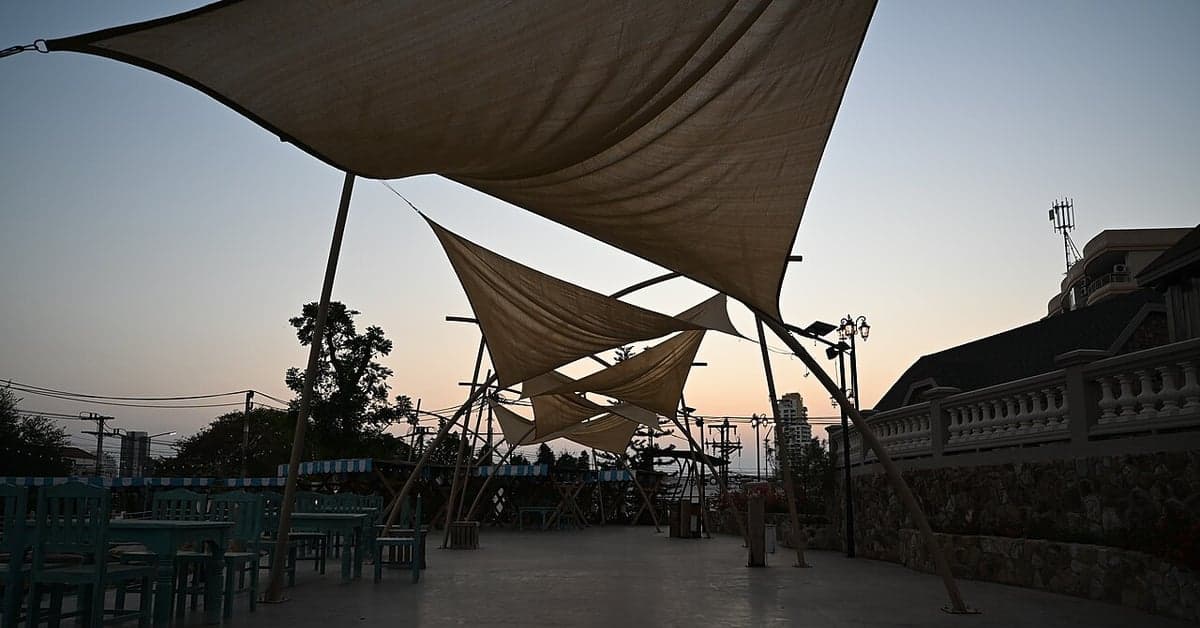
Beach canopies (Neso, Shibumi, Otentik brands) use a different approach: a large fabric shade suspended between poles without walls. The Neso Sideline and Shibumi Shade are the most popular examples. The Neso uses two aluminum poles at the back and sand anchor bags at the front corners, creating a lean-to shade that covers 7-9 feet wide and 7 feet deep — enough for 4-5 people. Weight: 4-7 lbs. Price: $70-$130. The Shibumi Shade uses a single vertical pole and catches the wind like a sail to hold itself up — no stakes, no anchors. It only works in wind (10+ mph), which limits its usefulness on calm days.
Canopies provide the best ventilation of any beach shade option because they have no walls trapping heat. The open sides also provide the best ocean views from under the shade. The trade-off is that they don't block angled sun (early morning or late afternoon) and provide no privacy or wind protection. For midday beach shade with maximum airflow, canopies are the best option.
Cabana-Style Beach Tents
Cabana tents split the difference between a tent and a canopy. They have a full roof for overhead shade, a back wall for wind protection and privacy, and an open front for views and ventilation. The CoolCabanas brand has become popular for this format — their models fold flat for transport and set up with four poles in about 5 minutes. Size: 8 feet wide, 5 feet deep. Weight: 8-10 lbs. Price: $90-$150. UPF 50+ rated.
Cabanas work well for couples and small families who want shade plus wind protection without the enclosed, stuffy feeling of a full tent. The back wall is particularly useful at beaches where the wind comes from behind you (offshore wind) — it blocks sand spray and wind chill while keeping the front open to the ocean view.
Choosing the Right Option
For Solo Travelers or Couples
A small pop-up tent (Pacific Breeze, Neso tent) for calm beaches, or a Neso canopy for breezy beaches. Total weight under 5 lbs, fits in a bag, sets up in seconds. Budget: $40-$80. If you prefer the umbrella format, a Sport-Brella with a sand anchor is the best option at $60-$80.
For Families with Young Children
A family-size tent with a floor (to create a clean, shaded play area for infants and toddlers) is the best choice. The floor keeps sand, insects, and small debris away from babies. Look for models with zip-up mesh sides that allow ventilation while keeping the interior protected. Budget: $80-$150. Weight: 10-15 lbs.
For Windy Beaches
On consistently windy beaches (Atlantic coast, Pacific coast, any beach exposed to trade winds), prioritize sand anchor systems and low-profile designs. Canopies with sand-filled anchor bags handle wind better than tall pop-up tents. Avoid standard beach umbrellas without sand anchors — they're dangerous in wind. The Shibumi Shade actually performs better in wind since it's designed to catch the breeze.
For Long Walks to the Beach
If you're carrying shade gear a significant distance (more than a quarter mile), weight is the primary factor. A Neso canopy (4 lbs), a small pop-up tent (3-5 lbs), or a compact beach umbrella with a shoulder bag (5-6 lbs) are the only practical options. Family-size tents at 10-15 lbs become unpleasant to carry long distances, especially in sand. Check our beach destination guides to find beaches with easy access that won't require long carries.
Care and Durability
Extending the Life of Your Beach Shade
Rinse your shade structure with fresh water after each use to remove salt, sand, and sunscreen residue. Let it dry completely before storing — folding up a damp tent or canopy leads to mold and mildew that weakens the fabric and smells terrible. Store in a cool, dry place out of direct sunlight when not in use. UV-protective coatings on fabric degrade over time (2-3 seasons of regular use), and once the UPF rating drops, the shade provides less UV protection even though it still blocks visible light.
Carry a repair kit with spare stakes (they break), small zip ties (for frame repairs), and duct tape (for fabric tears). A $100 tent that lasts three seasons is better value than a $30 tent that disintegrates in one season. Read reviews specifically mentioning durability and wind performance rather than just ease of setup. The Outdoor Gear Lab tests and ranks beach tents and shade structures with rigorous methodology.
Frequently Asked Questions
What is the best beach shade for families?
A family-size beach tent with a floor is the best option for families with young children. The floor creates a clean, shaded play area for babies and toddlers. Look for models with zip-up mesh sides for ventilation and UPF 50+ rated fabric. The Pacific Breeze Easy Setup and Quechua 2 Seconds Easy are consistently well-reviewed. Budget: $80-150.
Are pop-up beach tents better than umbrellas?
For most people, yes. Pop-up tents provide more consistent shade coverage (they don't need repositioning as the sun moves), better wind resistance with sand anchor pockets, and more versatile use (changing, napping, storing gear). Umbrellas are lighter and cheaper but provide less coverage and can be dangerous in wind. A quality pop-up tent is worth the $20-40 premium over a basic umbrella.
What UPF rating should I look for in a beach tent?
UPF 50+ is the standard for quality beach shade products, blocking 98%+ of UV radiation. Anything below UPF 30 provides insufficient sun protection. Check that the UPF rating is tested and certified, not just claimed. Note that UPF coatings degrade over 2-3 seasons of regular use, so replace or retreat the fabric when it fades significantly.
Which beach tent works best in wind?
Low-profile canopy systems with sand-filled anchor bags (Neso, CoolCabanas) handle wind better than tall pop-up tents. The Shibumi Shade is designed specifically for windy conditions and uses wind to stay upright. For tent-style shelters, models with multiple stake points and sand pockets rated for 25+ mph winds are the safest choice. Avoid standard umbrellas without sand anchors on windy beaches.
How heavy should a beach tent be for carrying?
For short walks from the car to the beach (under 5 minutes), weight up to 15 lbs is manageable. For longer walks (quarter mile or more through sand), stay under 5-7 lbs. A Neso canopy at 4 lbs or a small pop-up tent at 3-5 lbs are the most portable options. Consider a beach cart if you're carrying heavy shade gear with other beach supplies.
How do I keep my beach tent from blowing away?
Fill all sand pockets with sand (pack them tight), use all provided stakes, and consider adding extra weight with gear bags or a cooler inside the tent. Screw-type sand anchors provide stronger hold than standard stakes. Face the open side away from the wind direction. In winds above 25 mph, consider whether any portable shade structure is safe to use.
How long do beach tents last?
A quality beach tent ($80-$150) lasts 2-4 seasons of regular use. The UPF coating degrades first, followed by fabric weakening at stress points and pole joint wear. Rinse with fresh water after each use, dry completely before storing, and avoid storing in direct sunlight to extend life. Budget tents ($30-$50) typically last 1-2 seasons before fabric or frame failure.