How Beaches Are Formed: The Geology Behind Your Favorite Shores
Table of Contents
Prices in this guide are approximate and change often. Check with the hotel, airline or operator before you book.
Sand Is Not Just Sand
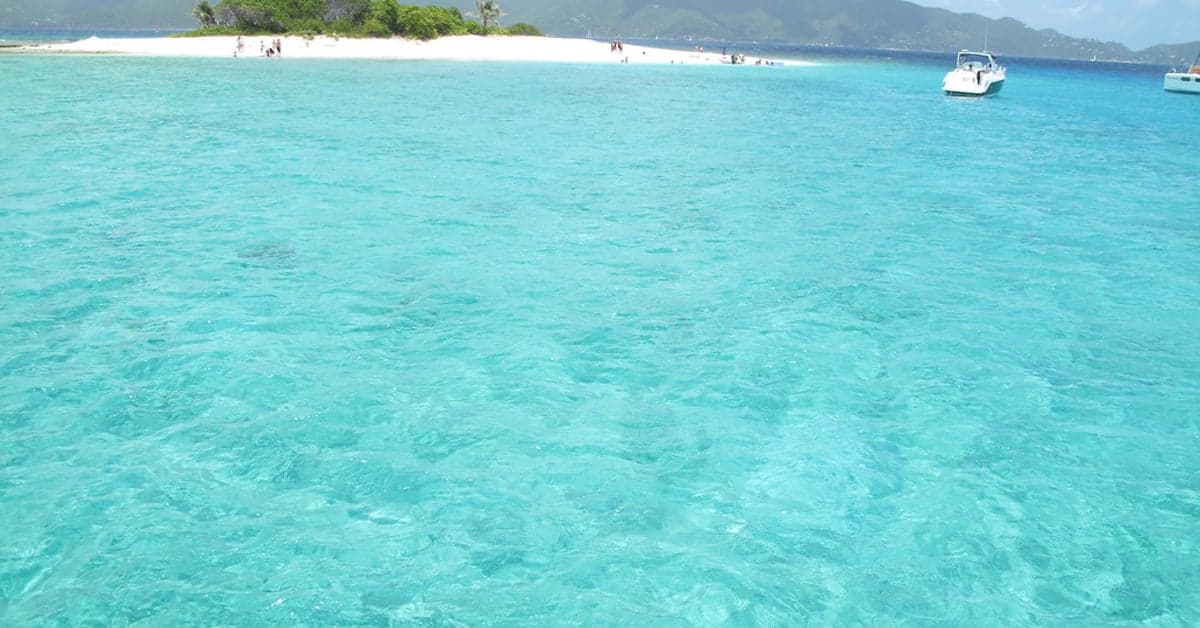
Pick up a handful of beach sand anywhere in the world and you're holding a geological autobiography. The color, grain size, mineral composition, and shape of each particle tells the story of where it came from and how far it traveled. White sand in the Caribbean is primarily calcium carbonate — ground-up coral skeletons, shells, and the calcified remains of Halimeda algae, processed through the digestive systems of parrotfish. A single adult parrotfish produces up to 840 pounds of white sand per year by eating coral, extracting nutrients, and excreting the calcium carbonate as fine particles. Much of the white sand on Maui's beaches passed through a parrotfish first.
Black sand beaches in Iceland and Hawaii are pulverized basalt — volcanic rock shattered by waves and thermal stress. The sand at Punalu'u Beach on Hawaii's Big Island is jet black because the basaltic lava from Kilauea flows directly into the ocean, where thermal shock shatters it into fragments that waves grind into sand over decades. Green sand beaches, like Papakolea Beach (also on the Big Island), are colored by olivine crystals — dense, green minerals embedded in basalt that resist erosion longer than the surrounding rock.
Pink sand beaches, found in Bermuda, the Bahamas, and Sardinia, get their color from foraminifera — single-celled organisms with red-pink calcium carbonate shells. When they die, their shells mix with white coral sand to produce the blush tone. The pink fades inland and intensifies near the waterline, where wave action concentrates the denser foraminifera shells.
The Erosion and Deposition Cycle
Every beach exists in a dynamic balance between sediment arriving and sediment leaving. The sources of new sand include:
- Rivers: The largest supplier globally. Rivers carry weathered rock fragments from mountains and plains to the coast. The Mississippi River delivers about 200 million tons of sediment to the Gulf of Mexico annually — a number that's dropped dramatically since dam construction in the 20th century trapped sediment upstream. Louisiana's beaches and wetlands are eroding partly because the sediment that built them is now piling up behind dams in Montana, Nebraska, and Missouri.
- Cliff erosion: Waves undercut sea cliffs, causing rockfalls that supply local beaches. The white cliffs of Dover lose an average of 12 inches per year to wave erosion, feeding the pebble and chalk beaches below. Coastal California's bluffs supply sand to the narrow beaches at their base in the same way.
- Reef breakdown: In tropical environments, dead coral, shells, and calcareous algae are the primary sand source. Biological erosion (parrotfish, sea urchins, boring sponges) and wave energy break reef material into sand-sized particles.
- Volcanic activity: Fresh lava entering the ocean creates new sand rapidly. After Kilauea's 2018 eruption, new black sand beaches formed within months where lava met the sea.
Longshore Drift: Why Sand Moves Sideways
Waves rarely hit a beach straight on. They approach at an angle determined by the prevailing wind direction. When a wave washes up the beach, it carries sand with it at that angle. When the water retreats, gravity pulls it straight back down the slope. The net effect: sand zigzags along the beach in the direction of the prevailing wave approach. This is longshore drift, and it moves enormous volumes of sediment — on the US East Coast, drift rates can exceed 500,000 cubic yards per year at some locations.
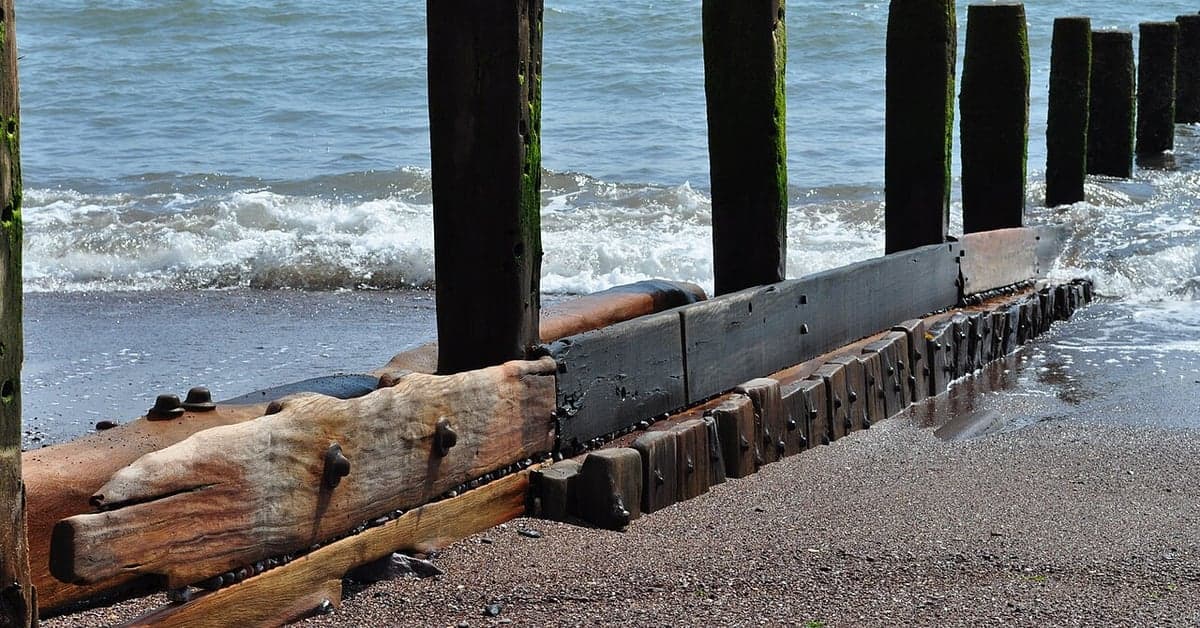
Longshore drift is why jetties (rock walls built perpendicular to the shore) create sand buildup on one side and erosion on the other. The jetty interrupts the sand's lateral movement, trapping it on the updrift side. The downdrift side, starved of incoming sand, erodes. Cape May, New Jersey, lost much of its beach after jetty construction at the mouth of Delaware Bay interrupted the longshore drift that had been supplying its sand for centuries. The Army Corps of Engineers now pumps sand from offshore deposits to replace what the jetties block — at a cost of $20-40 million per replenishment cycle.
Barrier Islands: Sand That Moves
Barrier islands — the long, narrow sand islands that line much of the US Atlantic and Gulf coasts — are not fixed features. They migrate. Storms wash sand from the ocean side over the island to the bay side (a process called overwash), gradually rolling the island landward. Sea level rise accelerates this process. The Outer Banks of North Carolina have migrated landward by as much as two miles since European colonization.
Cape Hatteras Lighthouse, built in 1870 at a distance of 1,500 feet from the shore, stood only 120 feet from the water by 1999. Rather than letting it fall into the Atlantic, the National Park Service moved the 4,830-ton structure 2,900 feet inland on hydraulic jacks — a feat of engineering that took 23 days. The ocean will eventually reach it again.
The entire chain of barrier islands from Long Island to Texas is migrating, and the $1+ billion spent annually on beach replenishment along these coasts is fighting a geological process that will ultimately win.
Why Beaches Change Seasonally
Visit a beach in August and it may be wide, flat, and gently sloped. Visit the same beach in February and it might be steep, narrow, and backed by a sand cliff. This seasonal cycle is driven by wave energy.
Winter storms generate large, steep waves with short periods (the time between crests). These waves have high energy and erode sand from the beach face, carrying it offshore and depositing it in underwater bars. The beach narrows and steepens. In summer, gentle swells with long periods push that sand back onshore, widening the beach and creating a gradual slope.
California's beaches demonstrate this dramatically. Malibu's beaches can be 100+ feet wide in August and reduced to a thin strip against the sea wall in January. The sand isn't gone — it's sitting in a bar 200-400 feet offshore, waiting for summer waves to push it back. This is why coastal construction that's "safe" in summer can be undermined by winter erosion.
Famous Geology: Places Where the Process Is Visible
The White Cliffs of Dover, England
The cliffs are composed of chalk — soft limestone formed from the compressed shells of coccolithophores, single-celled algae that lived in the shallow sea covering this area during the Cretaceous period (66-100 million years ago). The chalk is layered with bands of flint, a hard siliceous rock that erodes more slowly, creating the distinctive horizontal dark lines across the white face. Wave erosion undercuts the base, and the cliff face above collapses, maintaining the vertical profile. The debris at the base is quickly broken down by waves into fine particles that cloud the water and wash away.
Na Pali Coast, Kauai, Hawaii
The fluted cliffs of Na Pali reach 4,000 feet above sea level and were carved by rainfall erosion over roughly 5 million years — the time since this section of Kauai's shield volcano became inactive. The vertical ridges (called amphitheater valleys) form because rainfall concentrates in channels, cutting deep V-shaped valleys that widen into U-shapes over time. The small pocket beaches at the base of Na Pali (like Kalalau Beach, accessible only by an 11-mile trail or by boat) exist because streams carry eroded basalt to the coast, where waves grind it into coarse dark sand.
The Twelve Apostles, Victoria, Australia
These limestone sea stacks along the Great Ocean Road started as part of the mainland cliff. Wave erosion carved caves, which became arches, which collapsed to leave freestanding pillars. The process is ongoing: one of the Apostles collapsed in 2005, observed by tourists who watched a 50-meter column disintegrate in about 10 seconds. Only seven stacks remain (there were never actually twelve; the grander name replaced the older "Sow and Piglets" to draw tourists).
Man-Made Beaches
Waikiki, Honolulu, Hawaii
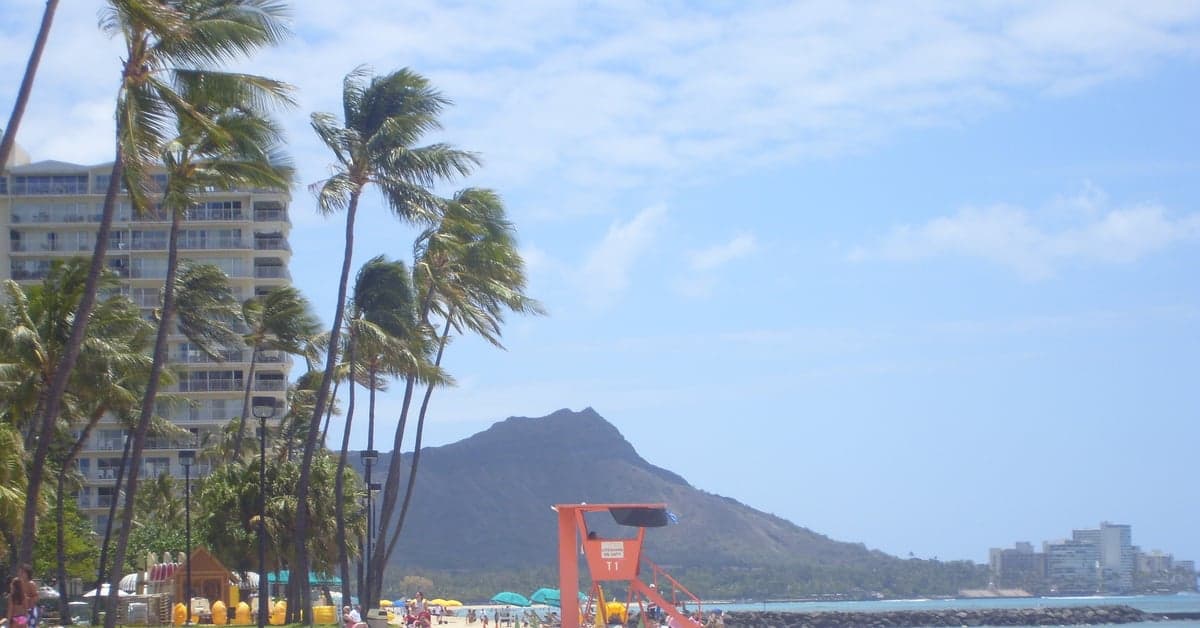
Waikiki's famous white sand beach is largely artificial. The original beach was a narrow strip of reef rubble backed by wetlands and rice paddies. In the early 1900s, hotels filled the wetlands and began importing sand — first from nearby Mokuleia Beach on Oahu's North Shore, then from Manhattan Beach in California, and later from offshore dredging. Today, the beach requires periodic renourishment to maintain its width, as the underlying reef platform provides no natural sand supply. The sand you sit on at Waikiki is maintained infrastructure, not a natural feature.
Paris Plages, France
Every July and August since 2002, the city of Paris transforms a 2-mile stretch of the Right Bank expressway along the Seine into an artificial beach. Workers truck in 5,000 tons of sand, install palm trees, lounge chairs, and misting stations. It costs the city about €2.5 million annually and draws 4 million visitors over the two-month season. It's beach as municipal performance art — the Seine is not swimmable (though the 2024 Olympics hosted open-water events in the river after a €1.4 billion cleanup investment).
Dubai's Palm Islands
The Palm Jumeirah, completed in 2006, used 94 million cubic meters of sand dredged from the Persian Gulf floor to create 78 kilometers of new coastline. The sand was sprayed into position by trailing suction hopper dredgers and then armored with rock to prevent wave erosion. The project altered local marine currents, reduced water quality in surrounding areas, and cost an estimated $12 billion. It's the most extreme example of humans manufacturing coastline — and a case study in the unintended consequences of doing so.
How Climate Change Affects Coastlines
Sea level rise of 1-3 feet by 2100 (the range in current IPCC projections depending on emissions scenarios) will permanently flood low-lying beaches and accelerate the erosion of elevated ones. A 2020 study in Nature Climate Change projected that half the world's sandy beaches could disappear by 2100 under high-emission scenarios.
More intense storms — a consequence of warmer ocean temperatures — amplify the erosion cycle. Hurricane storm surge can remove a decade's worth of sand in a single event. Increased ocean acidity (from absorbed CO2) slows coral growth rates, reducing the biological sand production that sustains tropical beaches.
Some beaches will adapt. Barrier islands will migrate landward. River deltas will shift. New beaches will form in places where retreating glaciers expose new coastline (already happening in Greenland and Alaska). But the beaches that exist today — the ones resorts are built on, the ones in your vacation photos — many of those are on borrowed time, maintained by expensive engineering or slowly surrendering to a process that human infrastructure can delay but not reverse.
Frequently Asked Questions
How are beaches formed?
Beaches form when waves, rivers, and wind deposit sediment along coastlines over thousands of years. Waves erode coastal rock and cliffs into sand and gravel. Rivers carry sediment from inland mountains to the coast. Coral reefs, shellfish, and marine organisms contribute calcium carbonate that becomes white sand in tropical regions.
Why is beach sand different colors?
Sand color depends on its source material. White sand comes from crushed coral and shells (Caribbean, Maldives). Golden sand is quartz-based (most US beaches). Black sand forms from volcanic basalt rock (Hawaii, Iceland). Pink sand contains fragments of red foraminifera organisms (Bermuda, Bahamas). Green sand comes from olivine mineral crystals (rare, found at Papakolea in Hawaii).
Why do some beaches have rocks instead of sand?
Rocky beaches form where strong wave energy prevents fine sediment from accumulating. Waves continuously wash away sand but cannot move larger rocks and pebbles. Coastlines with hard metamorphic or igneous rock (like granite in Maine or basalt in the UK) erode into cobbles and pebbles rather than fine sand.
Are beaches getting smaller?
Yes. A 2020 Nature Climate Change study estimated half of the world's sandy beaches could erode away by 2100 due to rising sea levels and reduced sediment supply. Coastal development, damming of rivers (which traps sediment), and sand mining accelerate the problem. Many popular beaches already require artificial sand replenishment.
How long does it take for a beach to form?
Natural beach formation takes thousands to millions of years. Sand grains are created through gradual rock erosion by waves, wind, and chemical weathering. A single grain of quartz sand may take 1,000-10,000 years to form from its parent rock. Coral sand beaches form faster since living organisms continuously produce new material.
What is beach erosion and why does it happen?
Beach erosion is the loss of sand from a beach due to waves, currents, wind, and human activity. Natural causes include storms, sea level rise, and longshore drift (currents that carry sand along the coast). Human causes include coastal construction that blocks sediment flow, dredging, and damming rivers that supply sand.