The Best Beach Music Playlists and Songs for Your Vacation
Table of Contents
Prices in this guide are approximate and change often. Check with the hotel, airline or operator before you book.
The Problem with Most Beach Playlists
Search "beach playlist" on Spotify and you'll get 10,000 results that all sound the same: Jack Johnson's "Banana Pancakes," Bob Marley's "Three Little Birds," and some vague acoustic guitar filler that could soundtrack a sunscreen commercial. These playlists aren't bad — they're just lazy. They default to the same 30 songs that have been stapled to the concept of "beach" since the early 2000s, and they ignore entire genres that were literally created by coastal cultures.
A good beach playlist does what the ocean does: it shifts. Morning calls for something gentle and spacious. Afternoon needs energy — something to match the sun at its peak and the water at its warmest. Sunset demands a downshift, music that matches the light going amber and the air cooling. Getting this arc right transforms a day at the beach from background noise to soundtrack.
Reggae: Beyond Three Little Birds
Bob Marley recorded over 200 songs across 13 studio albums, and most beach playlists use three of them. The deep cuts are where the real beach listening lives:
- "Sun Is Shining" (1971, from the Lee "Scratch" Perry sessions): A slow, hypnotic groove that Perry drenched in reverb and phaser effects. The Kaya version (1978) is more polished; the original Jamaican single has a rawer, spacier feel. Both work.
- "Satisfy My Soul" (1978, Kaya): A love song with one of the smoothest bass lines Carlton Barrett ever played. Underrated, never overplayed.
- "Stir It Up" (1973, Catch a Fire): The live version from the 1975 London concert is better than the studio cut — looser, longer, with extended instrumental passages.
- "Turn Your Lights Down Low" (1977, Exodus): Quiet, intimate, and ideal for sunset. The duet version with Lauryn Hill (1999) is good but the original has more warmth.
Beyond Marley, the genre runs deep:
- Jimmy Cliff: "Many Rivers to Cross" and "Sitting in Limbo" — both from the 1972 film The Harder They Come, the movie that introduced reggae to international audiences. Cliff's voice has a clarity that cuts through wind and wave noise on portable speakers.
- Peter Tosh: "Legalize It" and "Equal Rights" — harder-edged than Marley, politically sharper, with guitar work that borrows from rock without losing the reggae pulse.
- Toots and the Maytals: "Pressure Drop" and "54-46 That's My Number." Toots Hibbert's vocals are raw, gospel-influenced, and impossibly energetic. This is the reggae you put on when the energy needs to come up.
- Steel Pulse: "Taxi Driver" and "Roller Skates" — UK roots reggae with dub production, perfect for the driftier parts of the afternoon.
Surf Rock: The Original Beach Music
Surf rock was born in Southern California in the early 1960s, built on reverb-drenched electric guitar, driving drums, and the specific sonic quality of a Fender Stratocaster through a spring reverb unit. The genre peaked between 1961 and 1965, died when the British Invasion redirected American taste, and has been revived multiple times since.
The Originals
- Dick Dale: "Misirlou" (1962) — the song Quentin Tarantino used to open Pulp Fiction. Dale played at ear-splitting volume, picking so fast that Fender had to design a custom amplifier (the Dual Showman) that could handle his attack. His live shows at the Rendezvous Ballroom in Balboa, California, drew 4,000 surfers per night. "Let's Go Trippin'" (1961) is the other essential Dale track.
- The Ventures: "Walk Don't Run" (1960) — technically pre-surf rock, but the blueprint for the instrumental guitar sound the genre adopted. "Pipeline" (1963) is their purest surf track.
- The Surfaris: "Wipe Out" (1963) — the drum intro alone is one of the most recognizable 10 seconds in rock history.
- The Chantays: "Pipeline" (1963) — the song that best captures what a wave looks like in musical form: the build, the curl, the crash, the fade.
Modern Surf Rock
- Best Coast: Bethany Cosentino's lo-fi California pop draws directly from surf rock and 60s girl groups. "Boyfriend" and "When I'm With You" are the accessible entry points; the album Crazy for You (2010) is the complete statement.
- Wavves: Nathan Williams' project blends surf rock with punk energy and heavy distortion. "King of the Beach" is the obvious beach pick.
- La Luz: All-female surf rock band from Seattle. "Sure as Spring" and "Call Me in the Day" have the reverb and the swagger. Their album Floating Features (2018) is the best modern surf rock album most people haven't heard.
Tropical House
Tropical house emerged around 2014-2015 as a subgenre of deep house, characterized by steel drum samples, marimba, clean guitar loops, and a tempo range of 100-115 BPM — uptempo enough for energy but not so fast it becomes a workout. The genre was essentially invented by Kygo, whose remix of Ed Sheeran's "I See Fire" and original track "Firestone" defined the sound.
- Kygo: "Stole the Show," "It Ain't Me" (with Selena Gomez), "Remind Me to Forget" (with Miguel). His Cloud Nine album (2016) is pure beach listening from start to finish.
- Thomas Jack: The Australian DJ who arguably coined the term "tropical house" before Kygo took it mainstream. His Boiler Room set from 2014 is still one of the best examples of the genre played live.
- Sam Feldt: "Show Me Love" (2015) — the song that proved tropical house could chart. Clean, warm, and propulsive.
Bossa Nova for Sunset
Bossa nova was created in the late 1950s in Rio de Janeiro's beachside neighborhoods — specifically Copacabana and Ipanema — by musicians who fused cool jazz harmonics with samba rhythms played at a whisper. It is, literally, beach music in its origin.
- Antonio Carlos Jobim: "The Girl from Ipanema" is the obvious entry (and one of the most recorded songs in history), but "Corcovado (Quiet Nights of Quiet Stars)," "Wave," and "Desafinado" are better for extended listening. The album Wave (1967) is Jobim at his most atmospheric — strings, flute, and guitar over a rhythm so gentle it barely announces itself.
- Joao Gilberto: The vocalist and guitarist who essentially invented the bossa nova guitar style — a fingerpicking pattern that layers syncopated bass notes with chord stabs. His 1959 album Chega de Saudade is the foundational bossa nova record.
- Astrud Gilberto: Her vocals on "The Girl from Ipanema" with Stan Getz were recorded almost by accident (she was Joao Gilberto's wife and happened to be in the studio). Her voice — breathy, slightly flat, profoundly relaxed — became the sonic template for bossa nova vocals.
- Marcos Valle: More funk and psychedelia in his bossa nova, especially on albums like Previsao do Tempo (1973). "Estrelar" (1983) is a synthpop-bossa hybrid that sounds like it was made for a beach bar in 2025.
Soca and Dancehall for Caribbean Energy
If your beach day involves a beach bar, rum punch, and dancing in the sand, you need soca or dancehall — high-energy Caribbean genres designed for movement.
Soca
Born in Trinidad and Tobago as an evolution of calypso, soca runs at 140-160 BPM with call-and-response vocals, brass hits, and percussion patterns that make standing still genuinely difficult.
- Machel Montano: "Like Ah Boss" and "Fast Wine." Montano has been the king of soca since the 1990s. His live performances at Trinidad Carnival are the standard against which all party music is measured.
- Bunji Garlin: "Differentology" (2013) — the song that broke soca out of the Caribbean and into international playlists. The horn riff is pure adrenaline.
- Kes the Band: "Savannah Grass" and "Hello." More melodic than most soca, accessible to listeners who find pure soca rhythms overwhelming at first.
Dancehall
Jamaican dancehall runs at a wider tempo range (90-110 BPM typically), with heavier bass and more prominent vocals. It's the sound of Kingston's sound systems, beach parties, and late-night rum bars.
- Sean Paul: "Get Busy" and "Temperature" are pop-dancehall crossovers; "Deport Dem" and "Gimme the Light" are closer to the raw sound.
- Popcaan: "Family" and "Unruly." Popcaan's voice — high, melodic, slightly nasal — carries across any beach speaker. His album Forever (2018) is a solid full-play.
- Koffee: "Toast" (2019) — the Grammy-winning track from the Jamaican artist who was 19 when she recorded it. Positive, energetic, and the guitar riff is an instant mood lifter.
Jack Johnson's Full Catalog
Johnson gets dismissed as background music, and that's partly fair — his sound is so consistently mellow that albums blur together on casual listen. But there's craft in the guitar work that rewards attention, and his catalog goes deeper than "Banana Pancakes" and "Better Together."
- In Between Dreams (2005): The album most people know, and legitimately his best. "Sitting, Waiting, Wishing" has more rhythmic complexity than his reputation suggests. "Constellations" is the underrated gem.
- On and On (2003): Rawer production, more acoustic guitar and less studio polish. "The Horizon Has Been Defeated" is one of his best songs and almost nobody knows it.
- Brushfire Fairytales (2001): His debut. "Flake" and "Bubble Toes" made him famous on surf-film circuits before mainstream radio caught on. Recorded largely in a mobile studio at a beach house on the North Shore of Oahu.
- Thicker Than Water (2003, soundtrack): Johnson scored this surf film, and it's more instrumental and ambient than his vocal albums. Ideal for the last hour of beach daylight when conversation fades.
Spotify Playlists Worth Following
- "Beach Vibes" (Spotify editorial): 2M+ followers. Updated weekly. Leans pop and tropical house. Solid for afternoon energy but lacks depth in any single genre.
- "Reggae Classics" (Spotify editorial): The best algorithmic reggae playlist on the platform. Goes well beyond Marley into roots, dub, and lovers rock.
- "Bossa Nova Dinner" (Spotify editorial): Despite the name, this is a well-curated bossa nova and MPB (Musica Popular Brasileira) playlist that works as well at sunset on sand as it does over dinner.
- "Surf Rock Is Dead" (user playlist by @surfisntdead): 45K followers. Mixes classic and modern surf rock. Updated regularly. The best single playlist for the genre.
- "Soca Madness" (user playlist, multiple versions): Search for playlists updated for the current Carnival season (usually refreshed January through March). The energy level is extreme — save this for peak afternoon.
Building the Perfect Beach Day Playlist
The Arc
A full beach day runs 6-8 hours. The playlist should match the energy curve of the day:
- Morning arrival (8-10 AM): Bossa nova and acoustic singer-songwriter. Joao Gilberto, Astrud Gilberto, Jack Johnson's quieter tracks, Marcos Valle. Tempo: 80-100 BPM. The music should feel like the day unfolding, not like an event starting.
- Late morning (10 AM-12 PM): Reggae — roots and dub. Bob Marley deep cuts, Jimmy Cliff, Steel Pulse. Tempo: 70-90 BPM but with more rhythmic drive. The bass should be present but not dominant.
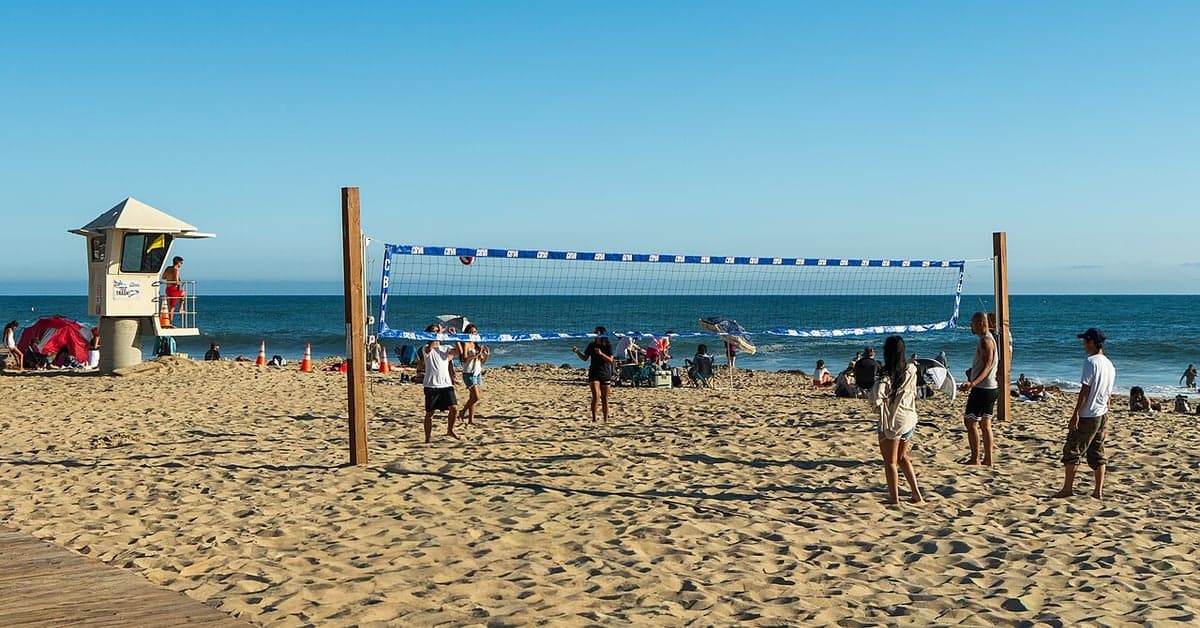
- Afternoon peak (12-3 PM): Energy up. Tropical house, soca, dancehall, modern surf rock. Kygo, Best Coast, Machel Montano, Koffee. Tempo: 100-150 BPM. This is the segment where people are swimming, playing volleyball, ordering the second round of drinks.
- Late afternoon (3-5 PM): Bring it back down. Dub reggae, chill electronic, acoustic. Lee "Scratch" Perry, Bonobo, Iron & Wine. Tempo: 85-100 BPM. The transition from peak energy to sunset mode.
- Sunset (5-7 PM): Bossa nova returns. Jobim's Wave album. Gilberto's whisper-quiet vocals. Maybe Nina Simone's "Feeling Good" or Chet Baker's "Almost Blue" if the sunset warrants jazz. Tempo: 70-90 BPM. The music should be quieter than the waves.
Speaker Considerations
The JBL Flip 6 ($130) and JBL Charge 5 ($180) remain the default beach speakers: waterproof (IP67), sand-resistant, and loud enough for a small group without distorting. The Ultimate Ears Wonderboom 3 ($100) is smaller and cheaper, with surprisingly full bass for its size. The Sonos Roam 2 ($180) has better sound quality than any JBL but is less rugged.
Keep volume reasonable. Your playlist is for your group, not for the entire beach. Sound carries across sand and water with almost no absorption — what sounds moderate at your towel is clearly audible 100 feet away. A good rule: if someone 30 feet away can identify the song, it's too loud.
Frequently Asked Questions
What are the best songs for a beach playlist?
The best beach playlist mixes reggae (Bob Marley's "Sun Is Shining," Toots and the Maytals' "Pressure Drop"), bossa nova (Jobim's "Wave"), surf rock (Dick Dale's "Misirlou"), and tropical house (Kygo's "Firestone"). Varying genres keeps the energy matching your day from morning calm to afternoon peak.
What is the best portable speaker for the beach?
The JBL Flip 6 ($130) and JBL Charge 5 ($180) are the top beach speakers — both are IP67 waterproof and sand-resistant. The Ultimate Ears Wonderboom 3 ($100) is a solid budget option with surprisingly full bass for its size.
What genre of music is best for the beach?
Reggae, bossa nova, surf rock, tropical house, and soca are all built for coastal listening. Start with bossa nova and acoustic in the morning, shift to reggae by late morning, bring in tropical house and soca for afternoon energy, then wind down with bossa nova at sunset.
What is tropical house music?
Tropical house emerged around 2014-2015 as a subgenre of deep house, characterized by steel drum samples, marimba, clean guitar loops, and a tempo of 100-115 BPM. Kygo essentially invented the sound with tracks like "Firestone" and "Stole the Show."
What is the best beach playlist on Spotify?
Spotify's editorial "Beach Vibes" playlist has over 2 million followers and is updated weekly. For deeper genre dives, try "Reggae Classics" for roots and dub, "Bossa Nova Dinner" for Brazilian jazz, or the user-curated "Surf Rock Is Dead" for classic and modern surf rock.
Is bossa nova good beach music?
Bossa nova is literally beach music — it was created in Rio de Janeiro's beachside neighborhoods of Copacabana and Ipanema in the late 1950s. Its gentle fingerpicked guitar and whisper-quiet vocals are perfect for morning arrivals and sunset listening.