Beach Etiquette Around the World: Unwritten Rules Every Traveler Should Know
Table of Contents
Prices in this guide are approximate and change often. Check with the hotel, airline or operator before you book.
Why Beach Etiquette Varies So Wildly
A beach in Barcelona and a beach in Okinawa are both strips of sand next to water, but the social rules governing behavior at each are so different they might as well be different activities. What's completely normal in one place — going topless in France, wearing a thong in Brazil, reserving a sunbed at dawn in Italy — can get you fined, shamed, or asked to leave in another. These rules are almost never posted. You're expected to absorb them by observation, which works for locals but leaves tourists guessing.
This is a country-by-country breakdown of the unwritten (and occasionally written) rules that matter most.
Nudity and Dress Codes
Europe: Toplessness Is Unremarkable
In France, Spain, Croatia, Greece, and Italy, women going topless on the beach is completely normal and has been for decades. Nobody stares. Nobody comments. It's not a statement — it's just how people sunbathe. At beaches like Barceloneta in Barcelona, Playa de las Teresitas in Tenerife, or any beach along the Côte d'Azur, toplessness is so common that keeping your top on is equally accepted without drawing attention.
Full nudity is a different matter. Designated nudist (FKK in Germany, naturiste in France) beaches are common throughout Europe. Cap d'Agde in southern France is essentially a nudist city. Plakias on Crete's south coast has a well-known nudist section at the far western end. In Croatia, many islands have naturist-designated beaches marked with "FKK" signs. At these spots, nudity is expected and clothing optional. Outside designated areas, full nudity can result in fines — Barcelona started issuing €300 fines for nude sunbathing on non-designated beaches in 2020.
Japan: Conservative, With Specific Rules
Japanese beaches follow different norms than Western beaches. Bikinis are standard, but toplessness is not practiced and would draw immediate attention. More notably, many beach areas, public pools, and onsen-adjacent waterfront facilities prohibit visible tattoos. This rule comes from tattoo associations with organized crime (yakuza) and is enforced at some beaches on Okinawa and at most public pools nationwide. Rash guards or tattoo cover-up bandages are the practical solution.
Japanese beachgoers also tend to be considerably quieter than their Western counterparts. Loud music, shouting, and rowdy behavior are frowned upon. Many families bring elaborate shade tents and prepare for the beach like a full production — coolers, grills (where permitted), tarps, and windbreaks.
Thailand and Southeast Asia: Modesty Matters More Than You Think
Thailand's tourist beaches (Patong, Chaweng, Koh Phi Phi) have adapted to Western beachwear norms, and bikinis are entirely fine. But toplessness is illegal in Thailand and can technically result in a fine under public indecency laws. In practice, enforcement is rare on tourist beaches but real on more local beaches.
Away from the tourist strips, Thai cultural norms lean conservative. On beaches near temples or in Muslim-majority southern provinces (Krabi, Satun, Narathiwat), modest swimwear shows respect. In Indonesia, particularly in areas outside Bali, local women swim fully clothed, and Western beachwear can draw uncomfortable levels of attention. Bali itself is relaxed about swimwear at beach clubs and resort beaches, but inland temple pools require sarongs and covered shoulders.
Brazil: Bodies Are Celebrated
Brazilian beach culture treats the body with a straightforwardness that can surprise first-time visitors. The fio dental (dental floss) bikini bottom, barely wider than string, is standard daywear at Copacabana, Ipanema, and beaches throughout the country. Sunga speedos for men are more common than board shorts. None of this is considered provocative — it's simply the local swimwear standard.
What does matter in Brazil: wearing beach attire off the beach. Walking into a restaurant or shop in a bikini top and sarong is fine at beachfront establishments but inappropriate a few blocks inland. Cariocas (Rio locals) change into regular clothes when leaving the sand.
Middle East: Cover Up Significantly
In Dubai and Abu Dhabi, public beaches have dress codes. Women should wear one-piece swimsuits or conservative bikinis (no thongs). Men should avoid speedo-style swimwear. Beach clubs at hotels (Jumeirah, Saadiyat Island) are more relaxed. In Oman and Saudi Arabia, public beach rules are stricter — women's swimwear should cover shoulders and thighs on public beaches, though private resort beaches have relaxed standards.
The Sunbed Wars
Mediterranean beach culture has produced one of travel's pettiest ongoing conflicts: the reserved sunbed. In Spain, Italy, Greece, and Turkey, it's common for beachgoers to place towels on sunbeds at 6:00 AM and return at 10:00 AM to claim their spot. Some resorts officially discourage this; most guests ignore the policy.
In Greece and Italy, many public beaches are dominated by commercial operators who rent sunbeds and umbrellas. Prices range from €5 in off-season Greece to €30+ at popular Italian beaches in August. Showing up with your own towel and laying it on the sand between the rented beds is technically your legal right on public beaches (in countries such as Spain and Italy the shoreline itself is public by law) but can generate hostile looks from the operator and neighboring renters. In Positano, beach space not occupied by commercial operators is genuinely scarce during peak summer.
In Bali, beach clubs (Potato Head, Ku De Ta, Finns) operate on a minimum-spend model rather than entry fees. You get a daybed or sunbed for free if you spend a certain amount on food and drinks — typically $25-$50 per person. Arriving at opening time (usually 10:00 or 11:00 AM) guarantees the best spots. By 1:00 PM on weekends, the popular clubs fill completely.
Music and Sound
Bluetooth speakers on the beach have become one of the most divisive etiquette issues worldwide. The general rule: most people don't want to hear your music. Use headphones or earbuds. If you do play speakers, keep the volume low enough that it's not audible more than 3-4 meters away.
Several destinations have formalized this. Barcelona restricts amplified music on its city beaches, and local police can fine offenders. Some Thai beaches, particularly near residential areas on Koh Samui and Koh Phangan, have noise restrictions. Many California state beaches prohibit amplified sound.
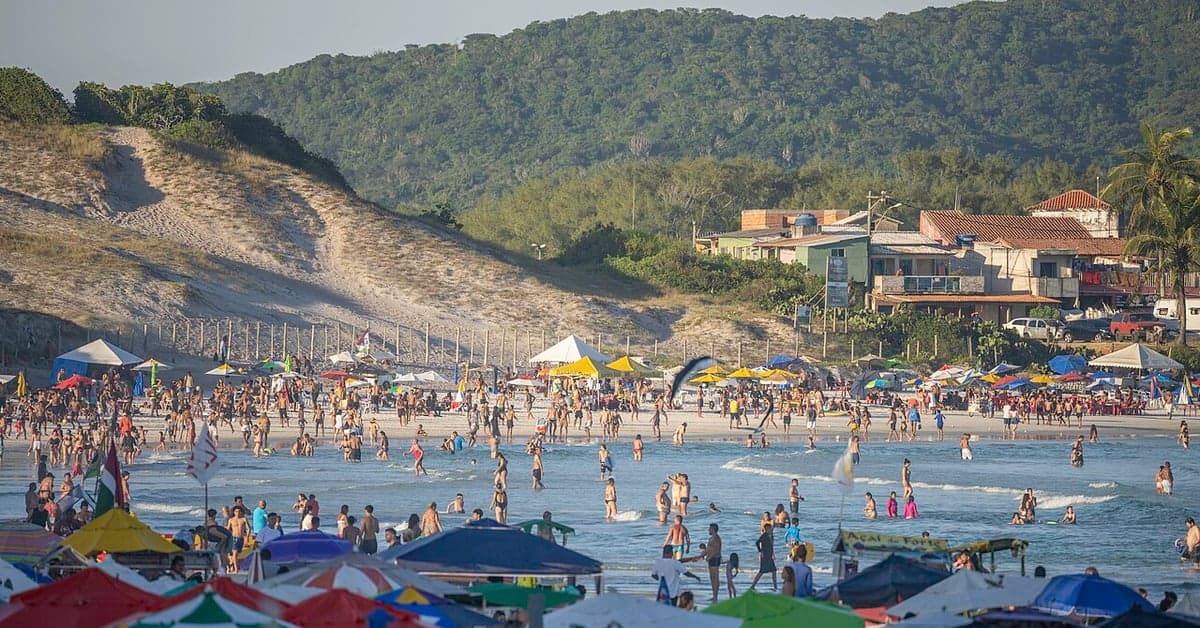
In contrast, Brazilian beaches are inherently musical. Vendors walk the sand selling caipirinhas while portable speakers play pagode and funk carioca. Miami's South Beach has a persistent soundtrack of competing music from beach bars and beachgoers. In these settings, silence isn't the expectation, and contributing to the soundscape is fine.
Read the room. If the beach is quiet and people are reading books, don't be the person who introduces bass-heavy reggaeton. If the beach already has a party atmosphere, nobody will notice your playlist.
Trash and Environmental Behavior
The baseline expectation everywhere: leave nothing on the beach. Pack out everything you bring. This is obvious but violated constantly — cigarette butts alone account for an estimated 4.5 trillion pieces of beach litter globally per year, according to the Ocean Conservancy.
Some specific rules worth noting:
- Smoking: Banned on many of Thailand's most popular beaches, with fines of up to 100,000 baht. Banned on Barcelona's beaches (€30 fine). Banned on most Australian beaches. Banned in designated sections of many Italian beaches. If you smoke, check local rules before lighting up on the sand.
- Glass bottles: Prohibited on most public beaches in Mexico, the U.S., and Australia. Use cans or plastic (and take them with you).
- Coral and shells: Removing coral, shells, and sand is illegal in Hawaii, Thailand, the Maldives, Fiji, and many other destinations. Enforcement varies, but Hawaiian airport security regularly catches tourists with bags of sand in their luggage.
- Sea turtles: On nesting beaches (Costa Rica, Mexico's Pacific coast, Florida, Oman, Greek islands), artificial light after dark disrupts nesting and hatchling behavior. Turn off flashlights and phone screens. Stay behind marked nest boundaries. Never touch a nest, a hatchling, or a nesting female.
Drone Restrictions
Flying drones over beaches is regulated almost everywhere and prohibited in many popular destinations:
- U.S. National Parks: Complete drone ban. This includes Cape Cod National Seashore, Point Reyes, Haleakalā, and beaches within National Park Service boundaries.
- Thailand: Flying over people without authorization is illegal. Many beach areas fall within airport restriction zones (Phuket, Koh Samui). National marine parks (Similan Islands, Ang Thong) are drone-free zones.
- Spain: Flying over crowded beaches is restricted, and many beaches have local bans; check the aviation authority AESA's rules and the town's bylaws before you fly.
- Greece: Archaeological sites (most of Santorini, Crete's major sites) are no-fly zones. Military areas, which include many island coastlines, also prohibit drones.
Beyond legality, the social dimension matters. A buzzing drone 20 meters above sunbathers is intrusive. Most people at the beach don't want to be photographed from above without consent. Even where drones are legal, flying them over populated beach sections during busy hours is poor etiquette.
Photography Consent
Taking photos of the beach, the ocean, and the scenery is universally fine. Photographing strangers — particularly children, people in swimwear, and people at rest — requires more care.
In France, publishing a recognizable photo of a person without their consent violates the droit à l'image (right to one's image) and can result in civil penalties up to €45,000. In Germany, similar laws protect individuals' image rights. In practice, a crowd shot of a busy beach is fine, but pointing a telephoto lens at a specific person is not — legally or socially.
In most countries, photographing children you don't know on the beach is considered suspicious regardless of intent. This is a hard rule: don't do it. If your own children are playing near other kids and other children end up in your frame, that's generally understood. But deliberately photographing strangers' children will, at minimum, result in a confrontation.
Tipping Beach Vendors
Beach vendor culture varies widely:
- Mexico: Vendors walking the beach selling jewelry, blankets, hats, and snacks are a permanent feature of resort beaches. Politely declining with "No, gracias" is fine. Haggling is expected if you're buying. For beach waiters at resort beach areas, tipping 15-20% on food and drinks is standard.
- Thailand: Beach massage vendors on popular beaches (Patong, Kata, Railay) charge posted prices — typically 300-500 THB ($8-$14) for a one-hour massage. Tipping 50-100 THB is appreciated but not expected.
- Bali: Beach vendors at Kuta and Seminyak can be persistent. A firm "no thank you" works. For beach masseuses, 20,000-50,000 IDR ($1.25-$3) tip is appreciated.
- Caribbean: Beach vendors vary by island. In Jamaica, vendors can be very persistent — firm but friendly refusal is the approach. In the Bahamas, straw market vendors expect bargaining. Tipping beach attendants and water sports operators $5-$10 is standard throughout the Caribbean.
General Principles
When in doubt, watch what locals do. Not tourists — locals. The family that lives in the town and comes to the beach on Saturday has internalized rules that no guidebook covers. Where they lay their towels, how they dress, how they manage noise, and when they leave all provide cues worth following.
Give people space. On a crowded beach, this means setting up at least 2-3 meters from the nearest group. On an empty beach, don't plant yourself directly next to the only other person there. This sounds obvious, but the number of tourists who set up camp 5 feet from strangers on a 200-meter empty beach is genuinely confusing.
Clean up completely. Don't bury trash in the sand. Don't leave cigarette butts. Don't abandon beer cans in the water. The beach was there before you arrived and should look the same after you leave.
Frequently Asked Questions
Is it legal to go topless on European beaches?
Toplessness is completely normal and legal at beaches in France, Spain, Croatia, Greece, and Italy. Nobody stares or comments. Full nudity is restricted to designated nudist beaches (marked FKK in Germany, naturiste in France). Barcelona started issuing 300 euro fines for nude sunbathing on non-designated beaches in 2020.
Can you smoke on the beach in Thailand?
No. Smoking is banned on all beaches in Thailand, with fines up to 100,000 baht (approximately $2,800). Barcelona, most Australian beaches, and many Italian beach sections also ban smoking. Always check local regulations before lighting up on the sand.
Is it illegal to take shells from the beach?
Removing coral, shells, and sand is illegal in Hawaii, Thailand, the Maldives, Fiji, and many other destinations. Hawaiian airport security regularly catches tourists with bags of sand in their luggage. Penalties vary from fines to confiscation, depending on the country.
Can you fly a drone on the beach?
Most popular beach destinations restrict or ban drones. US National Parks prohibit them entirely. Spain bans drones over beaches during bathing season (May-October). Thailand restricts flying over people without authorization. Greece prohibits drones near military areas, which includes many island coastlines.
Do you tip beach vendors in Mexico?
For beach waiters at resort beach areas, tipping 15-20% on food and drinks is standard. Haggling with walking vendors selling jewelry, blankets, and hats is expected. A polite 'no, gracias' is sufficient to decline if you are not interested in buying.
Are Bluetooth speakers allowed on the beach?
Several destinations now ban or restrict them. Barcelona fined speakers on all city beaches starting in 2022, with penalties from 150 euros. Some Thai and California beaches also prohibit amplified sound. As a general rule, use headphones unless the beach already has a party atmosphere.