Turks and Caicos: Why Grace Bay is the World's Best Beach
Table of Contents
Prices in this guide are approximate and change often. Check with the hotel, airline or operator before you book.
The Case for Grace Bay
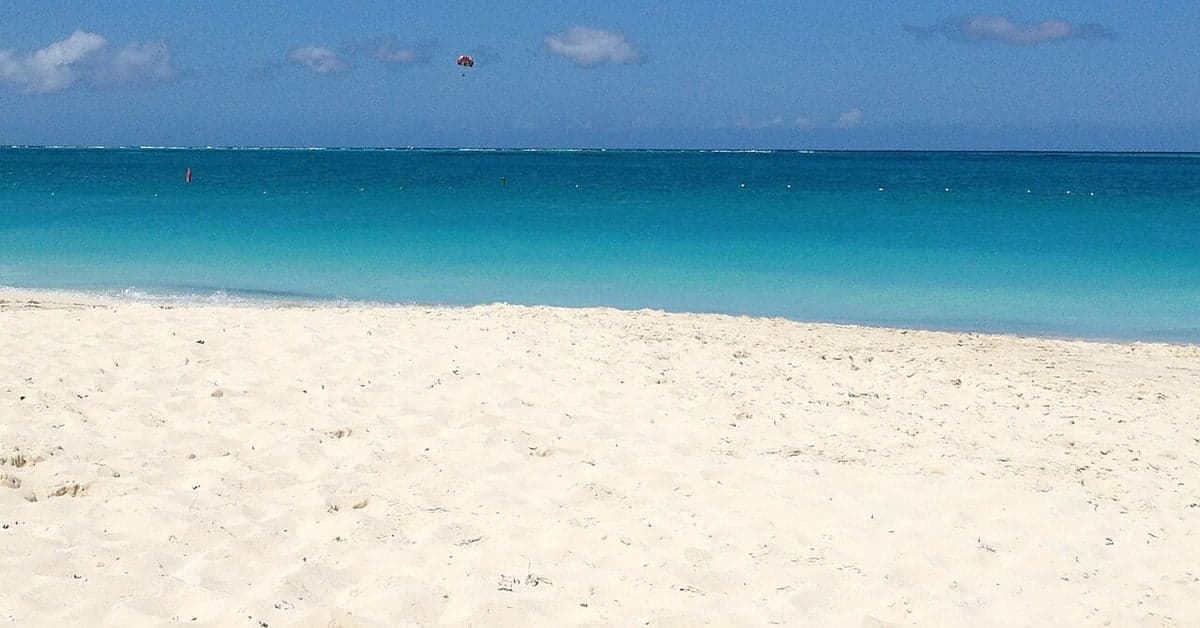
Grace Bay Beach on Providenciales has won TripAdvisor's Travelers' Choice Award for "World's Best Beach" several times. The title invites skepticism — how can any single beach be the objective best? — but spending time on Grace Bay makes the case convincingly. The sand is a fine, white powder that does not burn your feet. The water is clear to a depth of 20+ feet and stays turquoise for as far as you can see. The reef that runs parallel to shore about a quarter mile out blocks large waves, creating a permanent calm that makes the beach swimmable for everyone from toddlers to grandparents.
What separates Grace Bay from other excellent Caribbean beaches is consistency. The sand quality does not degrade from section to section. The water clarity does not depend on tides or recent weather. The beach is 12 miles long, so there is always space even during peak season. And the island's building codes limit construction to 4 stories, preventing the wall-of-concrete effect that ruins beachfronts in Cancun and Miami.
Walking Grace Bay: Section by Section
The Resort Strip (Central Grace Bay)
The central section, roughly from Club Med to The Somerset, is where most resorts sit. The sand here is maintained daily by resort staff, and the beach is wide (50-100 feet from water to property line depending on the tide). Resorts include The Palms, Grace Bay Club, and Seven Stars. All offer beachside service — loungers, towels, food and drink delivery to your chair. Non-guests can walk the beach freely (all Turks and Caicos beaches are public below the high-water mark) but cannot use resort loungers or order from resort bars.
Bight Beach (Eastern End)
The Bight area has the island's most accessible public beach section, with free parking at the Bight Park and Children's Park (playground, basketball courts). The Thursday Night Fish Fry takes place here — a weekly street food market with grilled conch, jerk chicken, ribs, and live music. Plates cost $10-15 and the atmosphere is more local than the resort strip. The sand and water quality here are identical to the resort section — you are just accessing the same beach from a public entry point.
Leeward Beach (Western End)
West of the resort strip, Leeward Beach has some of the quietest and widest sand on Providenciales. The area is more residential, with condo rentals ($200-500/night for a 1-bedroom) and fewer services. The water is exceptionally clear here, and at low tide you can wade 200+ meters from shore in waist-deep water. Leeward Going Through, the channel between Providenciales and Mangrove Cay, has strong currents — stay away from the channel if swimming.
Beyond Grace Bay: Other Providenciales Beaches
Sapodilla Bay
Sapodilla Bay on the island's south coast has the calmest water on Providenciales — a shallow, protected bay where the water stays ankle-to-knee-deep for 100+ meters. This is the best beach for young children on the island. The sand is soft and the setting is quiet, with a few local homes and a small park. Bring your own shade and supplies — there are no vendors or restaurants on this beach. Parking is limited to about 10 spots at the end of the road.
Taylor Bay
Taylor Bay is Sapodilla's neighbor and shares its ultra-calm, shallow character. The beach is smaller and accessed via a short trail from the parking area. Like Sapodilla, it is excellent for families with small children and for anyone who wants peaceful floating in bath-warm, crystal-clear water. The lack of development keeps it genuinely tranquil. Read our Bahamas beach guide for more top Caribbean sand.
Malcolm's Road Beach
The longest beach on Providenciales, Malcolm's Road runs for about 3 miles along the island's northwest coast. Access requires a 4WD vehicle for the last stretch of road (or a 20-minute walk from the paved road). The beach is completely undeveloped — no buildings, no vendors, no one. The south-facing orientation gives it calmer conditions than the exposed north coast. If you want the "deserted island" experience within Turks and Caicos, this is it. Bring everything you need; there is nothing here.
Activities and Excursions
Snorkeling the Reef
The barrier reef protecting Grace Bay is a snorkeling destination in its own right. Boat trips from the Bight Marina take snorkelers to the reef. Smith's Reef, accessible by swimming from the shore at the east end of Grace Bay (enter at Turtle Cove area), is the best shore-snorkel option — follow the reef line and look for sea turtles, eagle rays, and reef fish. Bring your own gear or rent from local shops ($10-15/day).
Conch Farming and Tasting
The Caicos Conch Farm in Leeward, long billed as the world's only commercial conch farm, has run guided tours on the conch lifecycle and conservation; check that it is open before you go. For eating conch, Da Conch Shack on Blue Hills Beach is the island's most famous restaurant — fresh conch salad, cracked conch, and conch fritters served at picnic tables on the sand. The conch is harvested locally and prepared in front of you.
Island Day Trips
Half Moon Bay on the uninhabited island between Providenciales and North Caicos is a stunning sandbar accessible by boat ($80-120 per person for a half-day trip). At low tide, the sandbar creates a long, narrow beach surrounded by turquoise water — one of the most photogenic spots in the country. Big Blue Unlimited and Caicos Adventures run regular excursions. North Caicos and Middle Caicos, connected by a causeway, offer the ruins of Wade's Green Plantation, Mudjin Harbour (dramatic cliff-lined beach), and Conch Bar Caves (the largest cave system in the Caribbean). A day trip by car ferry ($25/person plus $35/car round trip) covers the highlights.
Practical Information
Getting There
Providenciales International Airport (PLS) has direct flights from New York (JFK and Newark on JetBlue and United, 3.5 hours), Miami (American, 3 hours), Charlotte (American, 3 hours), Atlanta (Delta, 3 hours), and Toronto (Air Canada, 4 hours). Round-trip fares from the US East Coast average $350-550. The airport is 15 minutes from the Grace Bay resort area; taxis charge $25-35 to the hotels.
Costs
Turks and Caicos is expensive. Hotel rooms along Grace Bay start at $200/night in shoulder season and $400+ in winter. Restaurant meals run $25-45 for mains at resort restaurants, $15-20 at local spots like Da Conch Shack. Grocery prices are roughly double US prices (most food is imported). A rental car costs $50-75/day and is recommended for exploring beyond Grace Bay. The currency is the US dollar, and US citizens do not need a passport card or visa for stays under 90 days (standard passport required). Explore Expedia's Turks and Caicos packages for combined flight and hotel deals.
When to Visit
Weather is warm year-round (80-90°F). January through April is peak season with the driest weather and highest prices. May, early June, and November are excellent shoulder months with good weather and lower rates (20-30% savings). Hurricane season runs June through November, with September and October being the highest-risk months. Our 2026 hurricane tracker has the full timeline.
Frequently Asked Questions
Why is Grace Bay considered the world's best beach?
Grace Bay combines several factors: 12 miles of consistently fine white sand, crystal-clear water with 20+ feet visibility, a barrier reef that keeps the surf calm, warm temperatures year-round (80°F water), and building codes that limit development to 4 stories. The consistency along its entire length — no bad sections — is what separates it from other top beaches.
How much does a trip to Turks and Caicos cost?
Turks and Caicos is a premium Caribbean destination. Budget travelers can manage on $200-250/day staying at vacation rentals and eating at local restaurants. Mid-range travelers should budget $400-600/day for resort stays and dining. Luxury resort packages range from $500-1,500+/night. Flights from the US East Coast average $350-550 round trip.
Is Grace Bay Beach crowded?
The central resort section gets moderately busy during peak season (January-April), but the beach's 12-mile length means you can always find quieter sections by walking east or west. Leeward Beach and Malcolm's Road Beach offer solitude even during the busiest weeks. Compared to popular Caribbean beaches of similar fame, Grace Bay is remarkably uncrowded.
When is the best time to visit Turks and Caicos?
January through April offers the driest weather and peak conditions but highest prices. May and November are excellent shoulder months with good weather and 20-30% savings. Summer (June-August) is warmer and can have brief afternoon showers but is otherwise pleasant. Avoid September-October for hurricane risk.
Do I need a passport for Turks and Caicos?
Yes, a valid passport is required for all visitors. US citizens do not need a visa for stays under 90 days. The country is a British Overseas Territory and uses the US dollar as its official currency. There is no entry fee or tourist tax beyond what may be included in your airline ticket.
What is the best snorkeling spot in Turks and Caicos?
Smith's Reef, accessible by shore entry at the east end of Grace Bay, is the best free snorkeling spot with sea turtles, reef fish, and eagle rays. For boat-based snorkeling, trips to the barrier reef ($60-80/half day) and Half Moon Bay offer clearer water and more marine diversity. The wall dives off West Caicos are the best for advanced snorkelers and divers.