How to Travel with Kids to Beach Destinations: Age by Age Guide
Table of Contents
Prices in this guide are approximate and change often. Check with the hotel, airline or operator before you book.
The Beach Trip Calculus Changes Every Few Years
A beach vacation with a 6-month-old is a fundamentally different undertaking than one with a 6-year-old, which is again completely different from one with a 13-year-old. The destination that works perfectly for toddlers (shallow, calm water, contained space) may bore a 10-year-old senseless. The resort that thrills a teenager (water slides, snorkeling, freedom) may terrify the parent of an infant. And the dream trip you took as a childless couple — that adults-only boutique hotel on a cliff with a steep stairway to a rocky cove — is now physically impossible for several years.
This guide breaks down beach travel by age group, covering what each stage actually requires, what works, what does not, and where to go. The advice comes from accumulated experience rather than marketing copy — no resort was paid to appear here, and the challenges of each age are presented honestly.
Babies (0-18 Months): Shade, Shade, More Shade
What Actually Matters
Babies under 6 months should not be in direct sun at all, and sunscreen is not recommended for infants under that age. From 6-18 months, you can use mineral sunscreen (zinc oxide or titanium dioxide) and provide shade, but the beach window is short — an hour or two before heat and UV become too much. The beach trip at this age is really for the parents, not the baby. The baby does not care where they nap.
What matters logistically: proximity of accommodation to the beach (you will make multiple trips back for naps, diaper changes, and feedings), a room with blackout capability for naps, access to a fridge for milk or formula storage, and a beach with natural shade (palm trees, rock overhangs) or space to set up a tent or umbrella.
Where to Go
Stay close to home for the first trip. A beach within driving distance — no flights, no car seats on planes, no disrupted schedules — lets you test the logistics without commitment. In the US, Gulf Coast beaches (Destin, 30A, Gulf Shores) offer calm, warm, shallow water with easy access. In Europe, the Algarve, Menorca, and Sicily have family-friendly infrastructure and warm water from June through September.
All-inclusive resorts with baby clubs (Club Med, Beaches by Sandals) earn their premium at this age by providing a break for parents. Club Med's Baby Club accepts children from 4 months and includes certified caregivers. That two-hour stretch of adult time on the beach while a professional watches your infant is worth the nightly rate increase.
Essential Gear
A pop-up beach tent (UV-protective, the kind that folds into a circle — $30-50) is non-negotiable. A lightweight stroller that handles sand (fat wheels or an off-road model) saves your back. Swim diapers prevent public health incidents. A portable white noise machine helps with naps in unfamiliar rooms. And accept now that you will pack twice as much as you did pre-baby and use half of it.
Toddlers (18 Months - 3 Years): The Sandbox Phase
What Actually Matters
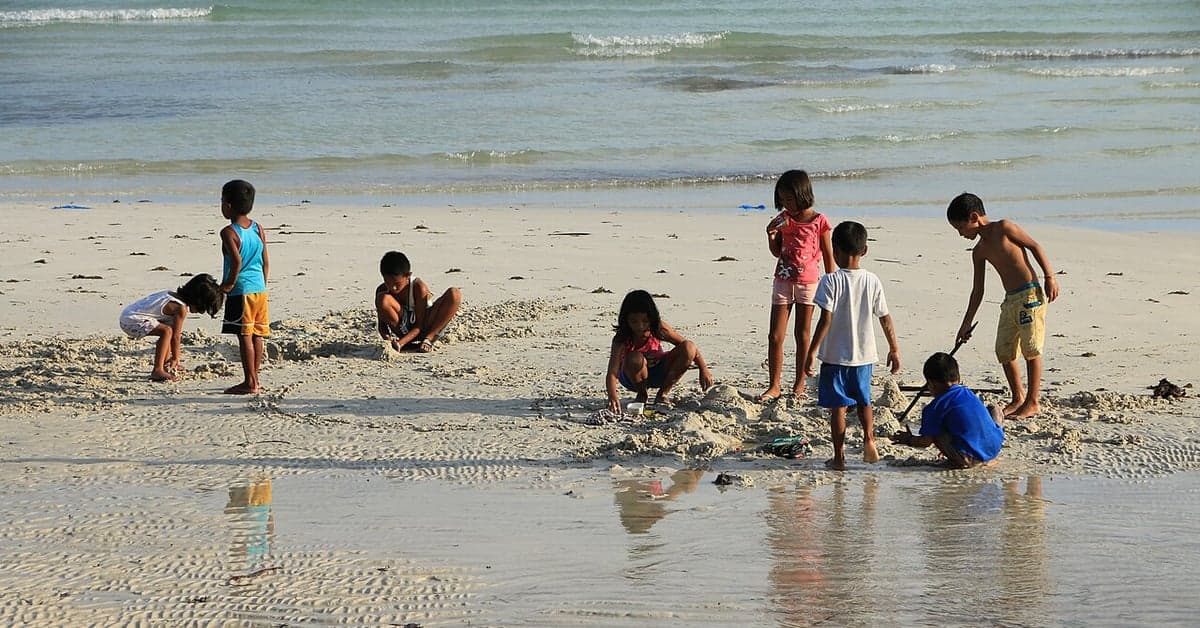
Toddlers love the beach. Sand is the world's largest sandbox. Waves are endlessly fascinating. Shells are collectible treasure. A toddler can be happily occupied on a beach for hours with nothing more than a bucket and shovel (bring your own — the ones sold at beach shops break immediately and cost five times what they should).
The danger zone is the water. Toddlers have no concept of wave force, undertow, or their own buoyancy. Drowning is the leading cause of death for children aged 1-4 in the US. At the beach with a toddler, one adult is dedicated to water supervision at all times — not reading, not on their phone, not chatting. This is non-negotiable and exhausting, which is why traveling with another couple or grandparents at this age is a practical strategy, not just a social one.
Where to Go
Beaches with calm, shallow water that stays wadeable for a long distance. The Caribbean's west-facing beaches (Aruba's Palm Beach, Turks and Caicos' Grace Bay, Barbados' Paynes Bay) are ideal. In the Mediterranean, Menorca's south coast calas and Sardinia's east coast beaches have shallow, warm, crystal-clear water with sandy bottoms.
Avoid beaches with waves, rocks, steep drop-offs, or strong currents. The perfect surfing beach is the worst toddler beach. Enclosed bays and lagoons are your friends.
Young Kids (4-7 Years): The Golden Age of Beach Travel
What Actually Matters
This is it. The sweet spot. Kids aged 4-7 are old enough to play independently (with supervision), young enough to find the beach genuinely magical, and thrilled by simple pleasures — building sandcastles, catching crabs in rock pools, learning to bodyboard, snorkeling in shallow water with a mask. They can walk to the beach, carry their own bucket, eat at restaurants without melting down, and fall asleep in the car on the way home.
They are also old enough to swim (or learn to swim, which is the best investment you will make before any beach trip). Swimming lessons before the vacation are far more valuable than any piece of gear you can buy.
Where to Go
Destinations with activities beyond the beach become important. Kids this age want variety: a morning on the beach, a boat ride after lunch, snorkeling in the afternoon, ice cream in a town in the evening. Hawaii (Maui, Kauai), the Greek islands (Crete, Naxos), and the Riviera Maya in Mexico all deliver the beach-plus-activities combination well.
This is also the age where all-inclusive resorts with kids' clubs genuinely work. The child gets organized activities, swimming pools, and new friends. The parents get four uninterrupted hours. Everyone wins. Beaches by Sandals, Club Med, and the Hard Rock resorts in the Caribbean have good programs for this age group.
Tweens (8-12 Years): The Adventure Window
What Actually Matters
Kids aged 8-12 are ready for real activities. Snorkeling on actual reefs. Surfing lessons where they stand up. Kayaking to sea caves. Junior PADI scuba diving (available from age 10). This is the age when the beach destination can double as an adventure destination, and the memories you create now are the ones your kids will reference for decades.
The beach alone is no longer enough. A full day of just sitting on sand will produce boredom by 11 AM and complaints by noon. Build the itinerary around activities and use the beach as the recovery period between them.
Where to Go
Destinations with water sports infrastructure: the Gili Islands in Indonesia (snorkeling with turtles), the Whitsunday Islands in Australia (Great Barrier Reef), Kauai in Hawaii (kayaking the Na Pali Coast), and Belize (snorkeling the barrier reef). The Riviera Maya in Mexico combines cenote swimming, snorkeling, and Mayan ruins in a way that keeps this age group engaged for a full week.
Consider destinations where the family can learn something together. A surf camp in Costa Rica, a sailing course in the Greek islands, or a marine biology program in the Maldives gives the trip a narrative beyond "we went to the beach."
Teenagers (13-17 Years): Autonomy and Wi-Fi
What Actually Matters
Teenagers want two things that exist in tension with family beach vacations: independence and connectivity. The first means they need spaces and activities that do not require parental presence — a pool area where they can hang out, a beach within walking distance of accommodation, access to food without needing a parent to order for them. The second means Wi-Fi, because a teenager without Instagram access at a beach resort is a teenager in active suffering.
The family dynamic shifts at this age. The best approach is a destination where parents and teens can pursue separate activities during the day and come together for meals and evenings. Resorts with teen clubs, water sports centers, and town-walkable locations work better than isolated properties where everyone is trapped together 24/7.
Where to Go
Surf destinations work well — teenagers are the prime age for learning to surf, and the surf culture (music, fashion, social scene) appeals to the demographic. Bali's Canggu, Portugal's Algarve, and Southern California are all surf-friendly with enough off-beach activity to keep teens engaged.
Multi-activity destinations like Hawaii, the Whitsundays, and the Riviera Maya work at every age, which makes them safe choices for families with kids spanning multiple age groups. The infrastructure exists for everyone to find their own speed.
Universal Packing Principles
Sun Protection
SPF 50+ mineral sunscreen for kids under 5, broad-spectrum SPF 30-50 for older kids. Rash guards are the single most effective sun protection tool — they eliminate the sunscreen-application battle and protect the highest-exposure area (back and shoulders). Hats with neck flaps for babies and toddlers. Reapply sunscreen every 2 hours and after swimming, regardless of what the label claims.
Entertainment
A set of beach toys (bucket, shovel, molds) for young kids. Snorkel gear sized for your child rather than rented (rental masks leak and kill the experience). A waterproof phone case. And one physical book or activity for the inevitable restaurant wait or rainy afternoon — screens are fine as backup, but a deck of cards or a travel board game creates better memories.
Safety
Research the nearest hospital or medical clinic before you arrive at any international beach destination. Carry a basic first aid kit with reef-safe antiseptic, hydrocortisone for stings, and children's ibuprofen. Know the local emergency number. And if your children cannot swim confidently in open water, USCG-approved life jackets (not water wings, not inflatable rings) are the only responsible option.
Frequently Asked Questions
What is the best age to take a child to the beach?
Ages 4-7 are the golden age of beach travel. Kids are old enough to play independently, carry their own gear, and eat at restaurants without meltdowns, but young enough to find the beach genuinely magical. That said, every age works with the right destination and expectations — babies need shade and logistics, teens need activities and autonomy.
When can babies go to the beach?
Babies can visit the beach at any age, but those under 6 months should not be in direct sunlight at all, and sunscreen is not recommended until 6 months. Use a UV-protective pop-up tent, keep beach sessions short (1-2 hours), and plan around nap and feeding schedules. The trip at this age is really for the parents; the baby does not care where they nap.
What are the best beach destinations for families?
For toddlers and young kids: Aruba, Turks and Caicos, and Menorca have calm, shallow water with sandy bottoms. For tweens: the Gili Islands, Whitsunday Islands, and Riviera Maya offer snorkeling and adventure activities. For mixed ages: Hawaii, the Algarve, and the Riviera Maya have infrastructure that works for every age group simultaneously.
Are all-inclusive resorts worth it for families?
At certain ages, yes. For babies (4+ months at Club Med's Baby Club), the professional childcare gives parents essential breaks. For ages 4-7, kids' clubs with organized activities and pools provide structured fun while parents get uninterrupted time. For teenagers, resorts with teen clubs and water sports centers offer the independence they crave within a safe environment.
What sun protection do kids need at the beach?
SPF 50+ mineral sunscreen for kids under 5, broad-spectrum SPF 30-50 for older kids, reapplied every 2 hours and after swimming. Rash guards are the most effective tool — they eliminate the sunscreen battle and protect high-exposure areas. Hats with neck flaps for babies and toddlers. UV-protective pop-up tents provide essential shade for infants.
How do you keep toddlers safe at the beach?
One adult must be dedicated to water supervision at all times — not reading, not on a phone. Drowning is the leading cause of death for children aged 1-4 in the US. Choose beaches with calm, shallow water and sandy bottoms. Avoid waves, rocks, and currents. USCG-approved life jackets (not water wings or inflatable rings) are the safe choice for non-swimmers.
What should you pack for a beach trip with kids?
UV-protective pop-up tent, mineral sunscreen, rash guards, properly sized snorkel gear for older kids, a set of beach toys (bucket and shovel), reef-safe first aid supplies, children's ibuprofen, waterproof phone case, and one non-screen entertainment item per child. If your children cannot swim confidently in open water, bring USCG-approved life jackets.