The Best Dog-Friendly Beaches in the US
Table of Contents
Prices in this guide are approximate and change often. Check with the hotel, airline or operator before you book.
The best dog-friendly beaches in the US for off-leash running are Huntington Dog Beach and Carmel Beach in California, Fort De Soto's dog beach and Jupiter Dog Beach in Florida, and Montrose Dog Beach in Chicago. Cannon Beach, the Outer Banks and Nantucket welcome dogs too, but with leash rules that a lot of guides gloss over. Rules below come from each managing city, county or park agency; they change, so check the linked page before you go.
What Makes a Beach Truly Dog-Friendly
A "dog-friendly" label gets put on beaches that barely tolerate dogs: leash-only rules, restricted hours, tiny designated zones. The beaches on this list have either a designated off-leash area or a long stretch where leashed dogs are welcome year-round, plus waste bags, parking and a town that is easy to visit with a dog.
Before you load up the car, check local ordinances. Many beaches change their dog rules by season, and some close sections for nesting shorebirds or sea turtles. Always bring waste bags, fresh water and a collapsible bowl. Hot sand burns paw pads fast, so test it with the back of your hand before letting your dog run.
The Rules at a Glance
| Beach | State | Off leash? | Good to know | Rules set by |
|---|---|---|---|---|
| Huntington Dog Beach | California | Yes, under control on the sand; no fence | Open 5 a.m. to 10 p.m.; free entry, parking $2 an hour (card only) | Preservation Society of Huntington Dog Beach |
| Carmel Beach | California | Yes, under voice control | Leashes required everywhere else in town | City of Carmel-by-the-Sea |
| Fort De Soto dog beach and Paw Playground | Florida | Yes, in two fenced areas (large and small dogs) | Open 7 a.m. to sunset; parking $6; dogs barred from the park's other beaches | Pinellas County |
| Montrose Dog Beach | Illinois | Yes, in the fenced section | City dog licence and a dog-friendly area tag required | Chicago Park District |
| Jupiter Dog Beach | Florida | Leashed or under control | About 2.5 miles, crossovers 25 to 59; leashed at the crossovers | Town of Jupiter, supported by Friends of Jupiter Beach |
| Cannon Beach | Oregon | Under control | Keep dogs off Haystack Rock and out of the tidepools | City of Cannon Beach; state park beaches set their own |
| Nantucket town beaches | Massachusetts | No, leashed and licensed | Stay out of dunes, marsh grass and fenced wildlife areas | Town of Nantucket |
| Cape Hatteras National Seashore (Outer Banks) | North Carolina | No, 6-foot leash at all times | Barred from designated swim beaches and nesting closures; town rules vary outside the Seashore | National Park Service |
Huntington Dog Beach, Huntington Beach, California
Huntington Dog Beach runs along Pacific Coast Highway between Seapoint Street and Goldenwest Street, and it is the best-known dog beach in the country. According to the Preservation Society of Huntington Dog Beach, it is open daily from 5 a.m. to 10 p.m., dogs must be leashed coming and going but may be off leash on the sand if they are under control, and there is no fence, so reliable recall matters. Puppies must be at least four months old, dogs must be licensed and vaccinated, and aggressive dogs and females in heat are not allowed.
There is no entry fee. The two parking lots between Seapoint and Goldenwest have card-only meters at $2 an hour. The Surf City Surf Dog competition, held on this beach each September, draws big crowds; go early that weekend or pick another day.
Fort De Soto Park Dog Beach, Pinellas County, Florida
Fort De Soto, a 1,136-acre county park made up of five islands south of St. Petersburg, is the only Pinellas County park with a designated beach area where dogs are allowed on the sand and in the water. According to Pinellas County, the park's Paw Playground adds two fenced off-leash areas, one for large dogs and one for small dogs, with water stations. The park is open from 7 a.m. to sunset and parking costs $6.
The water off the dog beach is calm and shallow, which suits dogs that are nervous swimmers. The rest of the park is worth the trip, including the main beaches and kayak trails through the mangroves. Note that dogs are not allowed on the park's other beaches.
Cannon Beach, Oregon
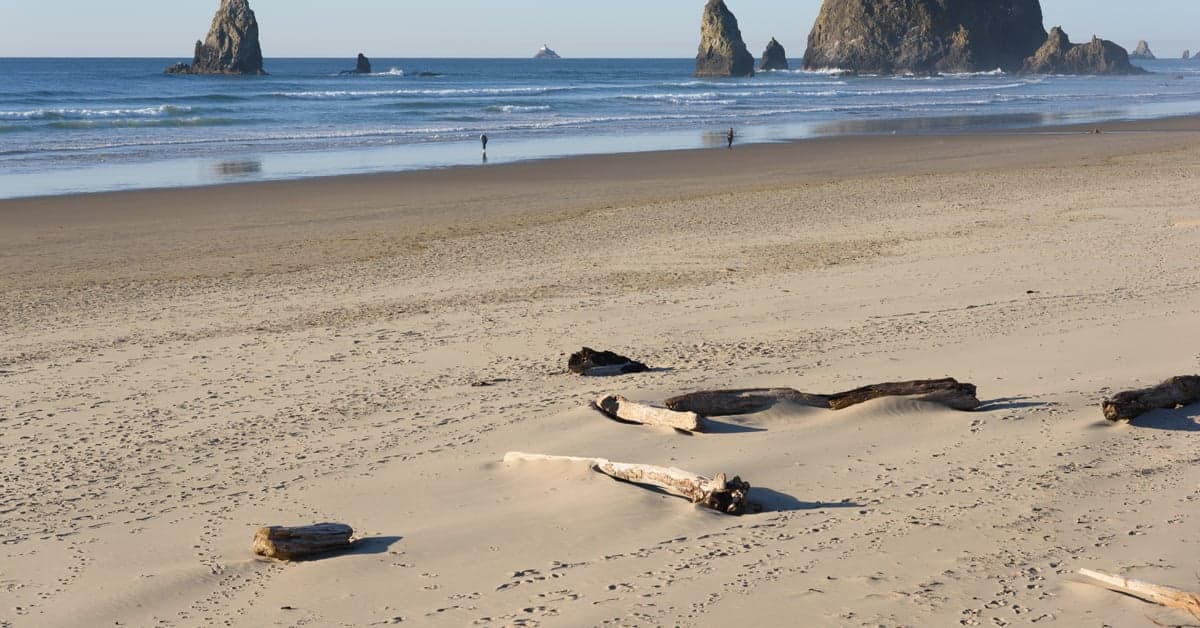
Oregon's 1967 Beach Bill made the state's ocean shore public, and Cannon Beach's wide, flat sand stretches for miles, so even on summer weekends there is space. Dogs are welcome on the beach, but they must be under their owner's control, and Haystack Rock is a protected marine garden and seabird nesting site: keep dogs off the rocks, out of the tidepools and away from nesting birds. Leash rules can differ between the city beach and nearby state park beaches such as Ecola and Tolovana, so check the posted rules where you enter. For tidepool etiquette, see our guide to tidal pools.
The water is cold year-round, roughly in the 50s Fahrenheit, so most dogs splash more than swim. The town of Cannon Beach is walkable and many shops and cafes welcome dogs on their patios.
Montrose Dog Beach, Chicago, Illinois
Chicago's main off-leash dog beach is a fenced section at the north end of Montrose Beach on Lake Michigan, managed by the Chicago Park District. The Park District's dog-friendly areas require a current city dog license and a dog-friendly area (DFA) tag, which carries a small annual fee; ask your vet or the Park District how to get one before you go.
Lake Michigan's water quality varies, especially after heavy rain, so check the Park District's swim status before letting your dog in. When the water is clean, there is no salt or jellyfish to worry about. Parking near Montrose is pay-and-display or street parking.
Carmel Beach, Carmel-by-the-Sea, California
Carmel is famous for welcoming dogs. According to the City of Carmel-by-the-Sea, dogs are allowed on Carmel Beach without a leash as long as they are under voice control; leashes are required everywhere else in town, including the Scenic Road pathway above the sand. The beach runs along Scenic Road, backed by Monterey cypress, and parking is at the foot of Ocean Avenue and along Scenic Road.
Many restaurants in town have dog-friendly patios, and several hotels cater to dogs, including the Cypress Inn, co-owned for decades by the late Doris Day, an animal-welfare advocate. Wood fires are banned on the beach; only propane devices are allowed, and only south of 10th Avenue.
Outer Banks Beaches, North Carolina
The Outer Banks is one of the more dog-friendly vacation stretches on the East Coast, mainly because so many rental houses accept pets (usually with a pet fee), which makes a full week with your dog easy. Leash rules differ by town, and some towns limit dogs on the beach during summer daytime hours, so check the rules for the town where you are staying.
Inside Cape Hatteras National Seashore, from Bodie Island to Ocracoke, the National Park Service requires pets to be on a leash no longer than 6 feet at all times and bans them from designated swim beaches and resource closure areas (usually shorebird and sea turtle nesting sites). In the four-wheel-drive beaches north of Corolla, keep dogs leashed and well away from the wild horses.
Jupiter Dog Beach, Jupiter, Florida
Jupiter's dog beach stretches about 2.5 miles along A1A, from dune crossover 25 at the south end to crossover 59 at the north end. According to Friends of Jupiter Beach, the nonprofit that supports it, dogs must be on a leash or under control and supervised at all times, and leashed from the car to the beach, at the crossovers, at the water fountains and around small children. The group stocks free waste bags at 29 crossovers.
The beach is wide and the water is warm much of the year. Go early or late in the day in summer, when the sand is cooler and the beach less crowded.
Nantucket Beaches, Massachusetts
Nantucket's town beaches allow dogs, but on a leash. The town's pages for Dionis Beach and Surfside Beach say dogs are allowed provided they are leashed and licensed, and that dogs and owners must stay out of dune vegetation, marsh grass and fenced wildlife areas at all times. Fall and spring are the easiest time to visit with a dog: fewer people, mild weather and plenty of empty sand.
Dionis Beach on the north shore has calmer, warmer water and a gentle entry. Surfside on the south shore has rolling surf over sandbars and can have rip currents. Accommodation on Nantucket is expensive even in the off-season, but many rental homes accept pets.
Essential Gear for Beach Dogs
- Fresh water and a collapsible bowl: Drinking salt water can cause vomiting and diarrhea, and large amounts can be dangerous. Offer fresh water often so your dog is not tempted.
- Dog-specific sunscreen: Dogs with pink noses or thin coats can sunburn. Use a sunscreen made for dogs; zinc oxide products made for people are toxic if licked off and swallowed.
- Paw wax: Products such as Musher's Secret help protect paw pads from hot sand and salt irritation.
- Long line: A 30-foot training lead gives your dog room to run while keeping control, but check local rules first: Cape Hatteras, for example, caps leashes at 6 feet.
- Life jacket: Not every dog is a natural swimmer, and a dog life jacket with a handle on top makes it easy to lift a tired dog out of the water.
Water Safety for Dogs
Strong currents, exhaustion from chasing waves and cold water are real risks. Keep swim sessions short, with regular breaks, and watch for signs of fatigue: slower swimming, a lower tail, labored breathing. Blue-green algae (cyanobacteria) blooms in lakes, bays and some lagoons can be fatal to dogs, so check local water advisories and keep your dog out of discolored or scummy water.
Rinse your dog with fresh water after a saltwater swim. Salt dries and irritates skin, and sand trapped in ears can cause irritation and infection.
Frequently Asked Questions
What is the best dog-friendly beach in the US?
Huntington Dog Beach in Huntington Beach, California is the best known. Dogs may be off leash on the sand if under control, it is open daily from 5 a.m. to 10 p.m., and there is no entry fee, though the lots between Seapoint and Goldenwest Streets charge $2 an hour.
Are dogs allowed on Florida beaches?
It varies by county and city. Fort De Soto Park in Pinellas County has a designated dog beach plus fenced off-leash areas, and Jupiter Dog Beach in Palm Beach County runs about 2.5 miles where dogs may be leashed or under control. Many other Florida beaches ban dogs, especially during sea turtle nesting season, so check local ordinances before visiting.
Can dogs swim in salt water safely?
Yes, with precautions. Dogs should not drink salt water, which can cause vomiting and diarrhea. Keep fresh water available, keep swim sessions short, and rinse your dog with fresh water afterward to prevent skin irritation.
Do you need a permit to bring a dog to the beach?
Most dog beaches need no dog permit, though parking often costs money (for example $2 an hour at Huntington Dog Beach and $6 at Fort De Soto). Chicago is an exception: the Park District's dog-friendly areas, including Montrose Dog Beach, require a city dog license and an annual dog-friendly area tag.
What time of year is best for dog beaches?
Fall is usually best. Summer crowds thin out, sand temperatures drop, and some beaches that restrict dogs in summer relax their rules. Check for seasonal closures for nesting birds or sea turtles, which can run from spring through fall in many coastal areas.
How do I protect my dog's paws from hot sand?
Test the sand with the back of your hand; if you cannot hold it there for about seven seconds, it is too hot for paw pads. Go early in the morning or late in the afternoon in summer. Paw wax provides a protective barrier, and dog booties work, though many dogs dislike wearing them on sand.
Are dog beaches safe for puppies?
Wait until your puppy has finished its vaccination series, which your vet will time, usually around 16 weeks. Young puppies are vulnerable to parvovirus and other diseases spread through feces in busy dog areas. Some beaches set a minimum age: Huntington Dog Beach requires puppies to be at least four months old.