The Best Beaches Within Driving Distance of London
Table of Contents
London to Sand in Under Three Hours
London sits 60-100 miles from some of the best coastline in Britain. The southeast coast (Kent, Sussex) is the closest, with beaches reachable in 90 minutes. The south coast (Dorset, Hampshire) offers more dramatic scenery at 2-2.5 hours. And if you push to 3 hours, Devon and the Jurassic Coast deliver beaches that belong on any European shortlist. The common assumption that British beaches aren't worth visiting is wrong — the sand is fine, the water is clean, the coastal walking is superb, and on a warm summer day, a beach like Camber Sands or Lulworth Cove holds its own against anything in northern France.
The British catch is weather. You'll get 15-20 genuinely warm beach days per year in southeast England (June-August), and the water temperature tops out at 17-19°C. But British beach culture isn't really about swimming — it's about walking, rock-pooling, fish and chips, pub gardens with sea views, and the particular pleasure of a coast that doesn't look like anyone else's.
Under 90 Minutes from London
Camber Sands, East Sussex (1 hour 30 minutes)
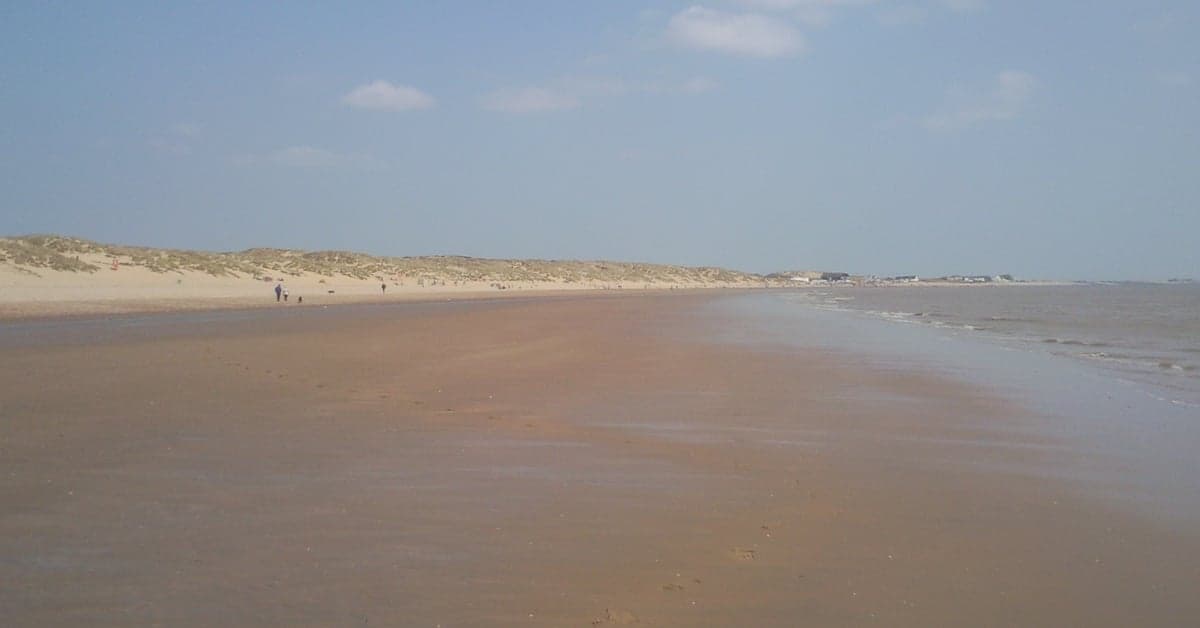
The closest proper sandy beach to London, Camber Sands is 5 km of flat, golden sand backed by dunes at the eastern end of the Sussex coast. At low tide, the beach extends 200+ meters, creating an enormous space that absorbs crowds even on the busiest summer weekends. The sand dunes at the western end are part of a protected system — walk through them for views along the coast and toward the medieval town of Rye, 3 miles away.
Rye is the real reason to visit: a perfectly preserved medieval hilltop town with cobbled streets, half-timbered buildings, antique shops, and excellent pubs. The Mermaid Inn (built 1420) serves a good Sunday roast. Fish and chips at the Rye Fish Bar is GBP 8-10. Parking at Camber costs GBP 8-10/day in summer and the lot fills early on sunny weekends — arrive before 10 AM or take the bus from Rye.
Whitstable, Kent (1 hour 20 minutes)
Whitstable is a pebbly beach town famous for its oysters. The beach is shingle (rounded pebbles), not sand — bring a thick towel or mat for sitting. The water is calm and shallow because the Thames Estuary provides shelter. What makes Whitstable worth the drive is the food scene: the Whitstable Oyster Company serves native oysters from GBP 2 each, and the harbor has fish stalls selling fresh crab, whelks, and smoked mackerel.
The high street has independent shops, galleries, and restaurants that punch above the town's weight. The Sportsman in nearby Seasalter holds a Michelin star for its nose-to-tail British cooking (booking essential, 6+ weeks ahead). In July, the Whitstable Oyster Festival is a weekend of music, food, and excessive shellfish consumption.
Broadstairs, Kent (1 hour 40 minutes)
Broadstairs has seven bays within walking distance of the town center, with Viking Bay as the main beach: a sandy cove backed by chalk cliffs and a Victorian seafront promenade. The town has a proper bucket-and-spade English seaside atmosphere — ice cream shops, donkey rides on the beach, and fish and chips wrapped in paper. Charles Dickens wrote several novels here and the Bleak House museum overlooks Viking Bay.
Botany Bay, a 15-minute walk north, is more dramatic: chalk stacks rising from white sand, rock pools at low tide, and significantly fewer people than Viking Bay. Joss Bay, another 10 minutes north, is the best surfing beach in Kent — a sandy beach that picks up Channel swells and has a surf school operating in summer.
Under 2 Hours from London
Brighton, East Sussex (1 hour 15 minutes by train)
Brighton is the default London beach trip and for good reason: the fastest train from London Victoria takes 57 minutes. The beach is pebbly, the water is cold, and the seafront architecture (the burnt-out West Pier, the functioning Palace Pier, the Regency facades) gives it more character than any other seaside town in England. Brighton is also the country's LGBTQ+ capital, with a cultural scene, nightlife, and restaurant quality that no other English beach town matches.
For actual sand, walk west to Hove (the beach becomes sandier) or drive 20 minutes east to Cuckmere Haven — a chalk cliff beach at the mouth of the Cuckmere River, reached by a 30-minute walk from the car park, with the Seven Sisters cliffs as backdrop. The walk along the cliff tops to Beachy Head (England's highest chalk cliff, 162 meters) is one of the best coastal walks in southern England.
West Wittering, West Sussex (1 hour 45 minutes)
West Wittering has the cleanest, most Caribbean-esque water within 2 hours of London. The beach is sandy, the water is surprisingly clear for the English Channel, and at low tide, shallow warm pools form on the sand flats. Chichester Harbour behind the beach is excellent for paddleboarding and kayaking, and the nature reserve at East Head (a sand spit at the harbor mouth) has a beautiful circular walk.
Parking costs GBP 10-12/day and the lot fills by 10:30 AM on summer weekends — arrive early or come on a weekday. The Lamb Inn in nearby Chichester is an excellent lunch stop (GBP 12-18 for a main). West Wittering is the most popular beach in the region and the crowd reflects it — this is the trade-off for the best water quality close to London.
Under 3 Hours from London
Lulworth Cove and Durdle Door, Dorset (2 hours 30 minutes)
Lulworth Cove is a near-perfect circular bay carved into the Jurassic Coast limestone — a geological formation that earned UNESCO World Heritage status. The water inside the cove is sheltered and remarkably clear by English standards. Durdle Door, a natural limestone arch emerging from the sea, is a 30-minute cliff walk west from Lulworth and is one of the most photographed landmarks in England.
The cliff path between Lulworth and Durdle Door is steep in sections but manageable for anyone with reasonable fitness. Jumping off Durdle Door into the sea is dangerous, and the Lulworth Estate, which owns the land, warns visitors not to. The beach below the arch is accessible via a steep staircase. Pack lunch; the food options at both beaches are limited to a small cafe at Lulworth and nothing at Durdle Door.
Studland Bay, Dorset (2 hours 15 minutes)
Studland is 3.5 miles of sand on the Isle of Purbeck's eastern shore, facing Poole Harbour and the open Channel. The beach is divided into four sections: Knoll Beach (National Trust, good facilities, GBP 9 parking), Middle Beach (quieter), South Beach (the most sheltered), and Shell Bay (closest to the Sandbanks ferry crossing). The water is warmer than most English beaches because the shallow Poole Harbour pre-warms incoming water.
The beach backs onto Studland Heath, a nature reserve with all six British reptile species (including smooth snakes and sand lizards). The walk from South Beach to Old Harry Rocks — chalk stacks at the eastern end of the Jurassic Coast — takes 30 minutes and the views are extraordinary. Corfe Castle (a ruined Norman castle, GBP 12 entry) is a 15-minute drive inland. Check our destination guides for more European beach content.
Woolacombe, North Devon (3 hours)
If you're willing to drive 3 hours, Woolacombe delivers a beach that competes with Portugal or Galicia: 3 miles of golden sand facing the Atlantic, with consistent surf, backed by green hills, and voted one of the best beaches in Europe multiple times. The surf is genuine — head-high waves on good days, with surf schools and a strong local surf culture.
The surrounding North Devon coast is spectacular: Croyde Bay (the next cove south, a more challenging surf beach), Baggy Point (a headland walk with sea cave access at low tide), and Lynton/Lynmouth (a cliff railway connecting twin villages). Woolacombe has fish and chip shops, ice cream parlors, and beachfront hotels from GBP 80-150/night. For bank holiday weekends and summer Saturdays, book accommodation well ahead. For travel planning, search Expedia for UK hotels.
Practical Tips
Transport
Trains reach Brighton (57 minutes from Victoria), Whitstable (1 hour 15 minutes from St Pancras), and Broadstairs (1 hour 40 minutes from St Pancras). Everywhere else requires driving or a combination of train and bus. Weekend traffic on the M25 and A3/A23 corridors adds 30-60 minutes to journey times on sunny summer Saturdays — leave London before 8 AM or accept the delay.
What to Bring
A windbreak (GBP 10-20 from any camping shop) transforms the British beach experience by blocking the sea breeze. A thick picnic blanket handles pebble beaches. Pack layers — a sunny morning can become a cold, windy afternoon. Water shoes for pebble beaches. A wetsuit or wetsuit top extends comfortable swimming by two months on either side of summer.
Frequently Asked Questions
What is the closest sandy beach to London?
Camber Sands in East Sussex is the closest large sandy beach, about 90 minutes by car. West Wittering in West Sussex (1 hour 45 minutes) has the clearest water. Brighton (1 hour 15 minutes by train) is the fastest to reach by public transport but has a pebble beach.
Is the water warm enough to swim at English beaches?
Water temperature peaks at 17-19°C in August on the south coast. Most people find this tolerable for 15-30 minute swims without a wetsuit. A wetsuit top or shorty extends comfortable time in the water significantly. Children and cold-water swimmers often stay in longer. The warmest water is at Studland Bay and West Wittering due to shallow, enclosed bays.
When is the best time to visit beaches near London?
Late June through early September offers the warmest weather and water. Weekdays are significantly less crowded than weekends. The warmest water is in August-September (sea temperature lags behind air temperature). May and October can be excellent for coastal walks even if swimming is cold.
Can you surf near London?
Joss Bay in Broadstairs, Kent has a surf school and picks up Channel swells — the closest surfing to London at 1 hour 40 minutes. For proper Atlantic surf, Woolacombe and Croyde in North Devon (3 hours) offer consistent waves and established surf culture with lessons available.
Is Brighton beach worth visiting?
Yes, but for the town rather than the beach itself. Brighton's pebble beach is functional, not beautiful. The appeal is the seafront architecture, the Lanes shopping district, the food scene, and the cultural atmosphere. For actual sand and swimming, combine Brighton with a drive to Cuckmere Haven or the Seven Sisters for cliff-top walks.
What should I bring to a British beach?
A windbreak (blocks sea breeze, GBP 10-20), a thick blanket for pebble beaches, layers of clothing (British weather changes fast), water shoes, reef-safe sunscreen, and a wetsuit top if you plan to swim. A thermos of tea is standard equipment at British beaches and not at all ironic.
Where can I get the best fish and chips near London's beaches?
Maggie's in Whitstable, Rock-a-Nore in Hastings, and the numerous chippies along Broadstairs' seafront all serve excellent fish and chips for GBP 8-12. The key is choosing places that use fresh fish (not frozen) and cook to order. Cod and haddock are the standard choices; look for daily specials with local catches like plaice or Dover sole.