The Best Beaches in Tobago: Caribbean's Best-Kept Calm
Table of Contents
Prices in this guide are approximate and change often. Check with the hotel, airline or operator before you book.
Why Tobago Stays Under the Radar
Tobago is the smaller, quieter half of the twin-island republic of Trinidad and Tobago, sitting at the southern end of the Caribbean chain just 7 miles off the coast of Venezuela. While Trinidad drives the nation's economy through oil, natural gas, and Carnival, Tobago runs on fishing, agriculture, and a modest tourism industry that has never approached the scale of Barbados, Jamaica, or the Dominican Republic.
This relative obscurity is Tobago's greatest asset for beach travelers. The island measures just 26 miles long and 7.5 miles wide, but it packs a remarkable variety of beaches into that compact space: calm Caribbean bays on the western leeward coast, rugged Atlantic shores on the windward east, and a mountainous interior covered in the oldest protected tropical forest in the western hemisphere (the Main Ridge Forest Reserve, designated in 1776). The beaches are clean, warm, and often nearly empty outside of holiday weekends.
The local culture is warm and unhurried. Tobagonians are famously welcoming, the food is excellent (Trinbagonian cuisine blends African, Indian, Chinese, and Creole influences), and the cost of living is significantly lower than on most other Caribbean islands. A beach day in Tobago costs a fraction of what it would in Barbados or St. Barts, with arguably better beaches and certainly fewer people on them.
Leeward (Caribbean) Coast Beaches
Pigeon Point Beach
Pigeon Point is Tobago's postcard beach — the one with the thatched-roof jetty extending into turquoise water that appears on the Trinidad and Tobago $50 bill. The beach occupies the western tip of the Buccoo Bay area and is a managed heritage park with an entrance fee of TT$20 (about $3 USD). Inside, you get white sand, calm shallow water, a bar, food vendors, restrooms, changing rooms, and lifeguards.
The entrance fee keeps the beach maintained and moderately uncrowded on weekdays. On weekends and holidays, it fills with local families, but the atmosphere is festive rather than overwhelmingly touristy. The Buccoo Reef, Tobago's largest coral formation, sits offshore and is accessible by glass-bottom boat tours (TT$100-$150, roughly $15-$22 USD) departing from Pigeon Point. The reef has suffered some degradation from past anchoring damage, but restoration efforts are underway and the snorkeling still reveals parrotfish, brain coral, sea fans, and barracuda.
Store Bay Beach
Store Bay sits adjacent to the Crown Point airport and is one of the first beaches most visitors encounter. The beach is a sheltered crescent of golden sand with calm water and a row of food stalls selling Tobago's signature beach food: crab and dumpling, curry crab, bake and shark, and pelau (a rice and meat dish). The food stalls alone are worth the visit — Miss Jean's and Miss Esmie's are the most popular and have been serving from the same stalls for decades.
The beach has changing rooms, lifeguards, and lounge chair rentals (TT$30/about $4.50). It's more crowded than Pigeon Point on weekends but has no entrance fee. The swimming is safe for all ages in the sheltered bay. Glass-bottom boat tours to the Nylon Pool (a shallow sandbar in the middle of the reef where you can stand in waist-deep crystal water with fish swimming around your feet) depart from Store Bay for TT$80-$120.
Castara Beach
Castara is a fishing village on Tobago's north leeward coast, about 45 minutes from Crown Point along a winding coastal road. Two beaches bracket the village: Big Bay (the main beach, a wide stretch of golden sand with fishing boats pulled up at one end) and Little Bay (a smaller, more secluded cove reached by a short trail through the forest). The village has a handful of guesthouses, two or three restaurants serving fresh-caught fish, and a pace that makes the rest of Tobago seem rushed.
Big Bay has calm, clear water ideal for swimming, and a few Seine fishing operations where you can watch (or help) fishermen pull nets from the water in the early morning. Little Bay is one of the best snorkeling spots on the leeward coast — coral heads close to shore support angelfish, butterflyfish, parrotfish, and the occasional nurse shark resting under a ledge. Castara is the best base for travelers who want a quiet village beach experience rather than a resort setting.
Englishman's Bay
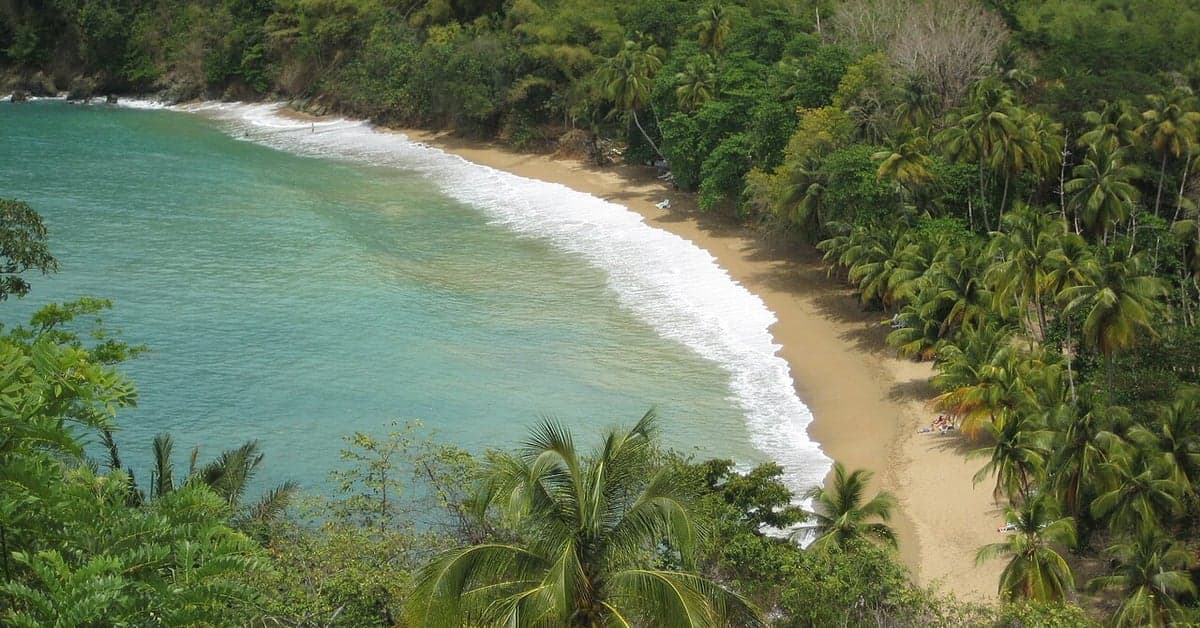
Englishman's Bay is a deep crescent of pale sand set between forested headlands on the north coast, about 10 minutes past Castara. The beach is backed by dense tropical forest that extends right to the sand line, and a small river flows into the bay at the eastern end. The water is calm, warm, and clear — swimming conditions are excellent. A single rustic beach bar operates at one end, selling drinks and basic food.
This is many visitors' pick for the most beautiful beach in Tobago. The setting is pure Caribbean fantasy: jungle behind, turquoise water in front, almost nobody else around. On weekdays outside of holiday periods, you'll often share the beach with fewer than a dozen people. The forest behind the beach is alive with hummingbirds, motmots, and blue-crowned motmots (the national bird of Trinidad and Tobago). Access is by a short paved road from the main north coast highway.
Windward (Atlantic) Coast Beaches
King's Bay
King's Bay is the largest beach on Tobago's Atlantic coast, a wide stretch of coarse golden sand near the village of Delaford. The Atlantic side of the island is wilder than the Caribbean coast — waves are bigger, currents are stronger, and the beaches are less sheltered. King's Bay is one of the safer Atlantic swimming beaches because a protective reef breaks the largest swells before they reach shore. A waterfall (King's Bay Waterfall) feeds into the back of the bay and is accessible by a short walk through a cocoa estate — bring your swimsuit for the natural pool at the base.
Speyside and Batteaux Bay
Speyside is a small town at Tobago's northeastern tip, facing the offshore island of Little Tobago (a bird sanctuary) and Goat Island. The beach in Speyside village is a narrow strip used mainly by fishing boats and dive operators, but the real attraction is the diving and snorkeling. The reefs off Speyside are Tobago's healthiest, benefiting from Atlantic current that brings nutrients and maintains water clarity. The world's largest recorded brain coral (16 feet tall, 10 feet wide) sits off the coast at Kelleston Drain dive site.
Batteaux Bay, a short walk from Speyside, is a sandy beach with calm water in the sheltered channel between Tobago and the offshore islands. Boat trips to Little Tobago (TT$200-$300, about $30-$45) include snorkeling stops and bird watching — the island hosts nesting red-billed tropicbirds, frigate birds, and brown boobies. For a comprehensive look at Caribbean beach options, explore our beach destination guides.
The Rainforest Connection
Main Ridge Forest Reserve
Tobago's interior is covered by the Main Ridge Forest Reserve, the oldest legally protected forest in the western hemisphere (established by the British in 1776 to protect the island's water supply). Trails through the reserve connect to several beach destinations, making it possible to hike through tropical rainforest in the morning and swim at a Caribbean beach in the afternoon. The Gilpin Trace trail is the most popular — a 3-km loop through the forest past giant ferns, bromeliads, and towering immortelle trees. Guided hikes cost TT$200-$400 ($30-$60) and are recommended for first-time visitors who want to spot birds and wildlife.
Practical Information
Getting There
The A.N.R. Robinson International Airport (TAB) in Crown Point receives direct flights from several Caribbean islands, plus seasonal service from London (Virgin Atlantic), Toronto, and New York. Most international connections route through Trinidad's Piarco International Airport (POS), with Caribbean Airlines operating the 20-minute hop between the islands multiple times daily. Round-trip flights between Trinidad and Tobago cost TT$500-$800 ($75-$120 USD).
Getting Around
Rent a car to explore Tobago properly — public transport (route taxis and maxi-taxis) covers main routes but not most beach access roads. Rental cars cost TT$250-$400 per day. Tobago drives on the left (British colonial heritage). The road from Crown Point to Speyside takes about 90 minutes and passes through the Main Ridge Forest Reserve with spectacular views. Gas stations are spaced throughout the island but may close by 8 PM in rural areas.
When to Visit
The dry season (January through May) offers the best beach weather. June through December is the wet season, with afternoon showers that are typically brief but can be heavy. Hurricane season officially runs June through November, but Tobago sits south of the main hurricane belt and is hit far less frequently than the northern Caribbean islands. The water is warm year-round (26-29°C). Carnival in Trinidad (February/March) is a popular time to combine a Trinidad cultural experience with a Tobago beach extension. The Tobago Tourism Agency provides current event listings and travel advisories.
Budget
Tobago is affordable by Caribbean standards. Guesthouses and small hotels run TT$400-$1,200 ($60-$180 USD) per night. Larger resorts cost TT$1,500-$4,000 ($225-$600). Restaurant meals average TT$80-$200. A beach day with food, drinks, and a glass-bottom boat tour costs roughly TT$300-$500 ($45-$75) per person — a fraction of what the same day would cost on Barbados or Antigua.
Frequently Asked Questions
How do I get to Tobago?
Direct flights to Tobago's Crown Point airport (TAB) operate from select Caribbean islands, London (seasonal), Toronto, and New York. Most connections route through Trinidad's Piarco Airport, with Caribbean Airlines offering multiple daily 20-minute flights between the islands. Round-trip Trinidad-Tobago flights cost $75-$120 USD.
What is the best beach in Tobago?
Englishman's Bay is widely considered the most beautiful — a jungle-backed crescent of pale sand with turquoise water and very few people. Pigeon Point is the most iconic and best-maintained. Castara offers the best village beach experience. For snorkeling, Little Bay near Castara and the reefs off Speyside are top choices.
Is Tobago cheaper than other Caribbean islands?
Yes, significantly. Guesthouses run $60-$180/night vs $150-$400+ on Barbados or St. Lucia. Restaurant meals average $12-$30. A full beach day including food, drinks, and a boat tour costs $45-$75 per person. The Trinidad and Tobago dollar offers good value for visitors with US dollars, Euros, or British pounds.
When is the best time to visit Tobago?
January through May (dry season) offers the best beach weather with minimal rain. Tobago sits south of the main hurricane belt, making it safer than northern Caribbean islands during hurricane season (June-November). Water is warm year-round (26-29°C). February/March combines well with Trinidad's Carnival celebrations.
Is the snorkeling good in Tobago?
Yes. The reefs off Speyside are the healthiest in Tobago, including the world's largest recorded brain coral. Little Bay near Castara has excellent shore snorkeling with angelfish, butterflyfish, and nurse sharks. The Buccoo Reef off Pigeon Point offers glass-bottom boat access and swimming at the Nylon Pool sandbar.
Is Tobago safe for tourists?
Tobago is quieter than Trinidad, but take crime seriously: Canada's government advises a high degree of caution for Trinidad and Tobago as a whole (advice updated September 17, 2026), citing armed robberies, assaults and murders, and warns visitors to stay alert in tourist areas. Standard precautions apply: don't leave valuables on the beach, lock your rental car, and avoid isolated areas after dark. The local population is welcoming and accustomed to visitors. The main safety concern is road conditions — some coastal roads are narrow and winding, so drive carefully.
Do I need a car to explore Tobago?
A rental car is strongly recommended. Public route taxis and maxi-taxis cover main routes but don't serve most beach access roads, and schedules are inconsistent. Rental cars cost $37-$60 USD per day. Tobago drives on the left. The entire island can be circumnavigated in about 3 hours, making every beach accessible as a day trip from any base.
What food should I try at Tobago's beaches?
Crab and dumpling is Tobago's signature dish — try it at the food stalls at Store Bay (Miss Jean's and Miss Esmie's are legendary). Bake and shark (fried dough with seasoned shark meat) is a Trinbagonian classic. Curry crab, pelau (rice with meat and pigeon peas), and fresh-caught grilled fish at Castara's village restaurants are all worth seeking out.