Table of Contents
Why Puglia Has Italy's Best Coastline
Puglia occupies the heel of Italy's boot, and its 800 kilometers of coastline deliver something the Amalfi Coast and Sardinia can't: world-class beaches without the crushing crowds. The Adriatic side serves up dramatic limestone cliffs and sea caves. The Ionian coast goes soft and Caribbean-flat. Water clarity here rivals anything in the Mediterranean, and you'll pay half what you would in Positano for a sunbed.
The region runs on a different rhythm. Lunch starts at 1 PM and doesn't end until 3. Beach towns empty out during the afternoon heat, then fill back up around 5 PM when families return with coolers of Peroni and focaccia from the local panificio. If you time your visit for June or September, you'll dodge the August madness when half of Milan decamps south.
The Salento Peninsula: Puglia's Crown Jewel
Baia dei Turchi
About 4 kilometers north of Otranto, Baia dei Turchi sits inside a protected natural area. You park along the road (free in June, around 5 euros in August) and walk 15 minutes through a pine forest before the sand opens up. The beach is broad and white, the water a disorienting shade of turquoise. There's no lido service here — bring your own umbrella. The lack of facilities keeps the crowds manageable even in peak season.
Torre dell'Orso
This crescent bay between two cliff towers is one of Salento's most photographed spots, and for good reason. The sand is fine and pale, the water shallow enough for kids to wade out 30 meters. The famous Due Sorelle sea stacks anchor the southern end. Lido prices run 20-30 euros for two sunbeds and an umbrella in July. Grab lunch at Lido Alma, where a plate of spaghetti alle vongole costs about 14 euros and the tables sit directly on the sand.
Pescoluse (The Maldives of Salento)
Yes, the nickname is overused. But Pescoluse earns it. The beach stretches for nearly a kilometer along the Ionian coast between Torre Vado and Torre Pali, with sand dunes backing into low scrubland. Water is knee-deep for 50 meters out, making it the go-to family beach in all of Puglia. Free sections alternate with lido setups. The Bar del Porto in nearby Torre Vado does excellent rustici — flaky pastry pockets filled with mozzarella, tomato, and bechamel — for 1.50 euros each. Eat three.
Porto Selvaggio
No sand here. Porto Selvaggio is a rocky cove inside a 1,000-hectare nature reserve near Nardo, and reaching it requires a 20-minute downhill hike through pine and eucalyptus forest. The payoff is a small pebble beach framed by cliffs, with water so clear you can count fish from the rocks above. Bring water shoes and a snorkel. The underwater terrain drops off sharply, and visibility regularly exceeds 15 meters. Pack your own food — there's nothing to buy at the beach itself.
The Gargano Peninsula: Puglia's Northern Coast
Baia delle Zagare
Tucked below 100-meter limestone cliffs on the Gargano's eastern shore, Baia delle Zagare features two massive white sea stacks rising from the shallows. Access is technically through the Hotel Baia delle Zagare above (day passes run about 15 euros including elevator access down the cliff), though some swimmers reach it by boat. The beach is small and pebbly, but the setting is theatrical. Morning light hits the stacks perfectly for photos between 8 and 10 AM.
Vignanotica
South of Mattinata, Vignanotica is a 200-meter stretch of white pebbles beneath eroded chalk cliffs that look almost lunar. Getting here means a steep 20-minute trail from the SP53 road. There's no shade and no services, so bring everything. The reward is near-total solitude and some of the most striking coastal geology in Italy. The cliffs glow orange at sunset. Swimming is excellent but watch for rocks near the waterline.
Spiaggia di Mattinatella
Just east of Mattinata proper, this beach sits in a sheltered cove with fine gravel and calm water. Unlike wilder Gargano beaches, Mattinatella has a small beach bar and sunbed rentals (around 15 euros for a pair plus umbrella). It's popular with Italian families but rarely appears in international guides, so you won't hear much English. The snorkeling along the left side of the cove, where rocks meet the cliff face, is surprisingly good.
The Adriatic Coast: Polignano a Mare to Monopoli
Lama Monachile, Polignano a Mare
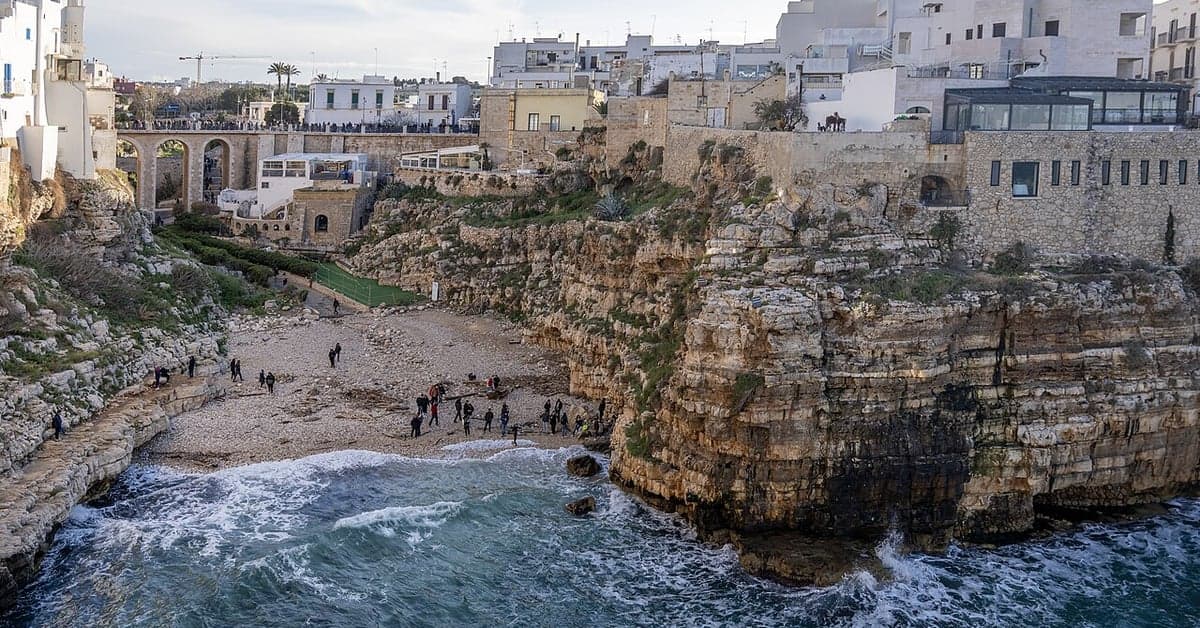
You've seen this beach on Instagram — the tiny pebble cove wedged between Polignano's old town buildings, framed by a Roman bridge. It's genuinely spectacular in person. It's also genuinely tiny. Arrive before 9 AM in summer or you won't find space. The water is deep and cold even in July. After your swim, walk up to Pescaria on Via Roma for their signature raw shrimp sandwich (around 10 euros), which started a food trend that spread across Italy. For official planning information, see Italia.it.
Cala Porta Vecchia, Monopoli
Monopoli's old town hides several small sandy coves between its harbor walls. Cala Porta Vecchia is the best: a pocket of sand and clear water right below the Castello di Carlo V. It fills up fast but empties after 4 PM when day-trippers leave. The old town above is worth the visit alone — less touristic than Polignano, with better restaurants. Try Il Guazzetto on Via Padre Domenico Amalfitano for fresh sea urchin pasta (around 16 euros).
Practical Information for Puglia Beaches
When to Go
June and September offer water temperatures between 22-25°C, manageable crowds, and lower prices. July is busy. August is chaos — Italians take their annual holiday, and every beach from Gallipoli to Vieste packs out. Hotel prices in August can triple compared to June. If you can only travel in summer, target the first two weeks of July before schools fully release.
Getting Around
You need a car. Full stop. Puglia's best beaches sit off minor roads with no public transit connections. Bari airport has all the major rental agencies; expect to pay 25-40 euros per day in summer. Roads are generally good but narrow around the Gargano. Parking near popular beaches costs 3-8 euros per day in summer, and arriving after 10 AM often means parking a kilometer away.
What to Eat at the Beach
Puglia's beach food culture revolves around a few essentials: focaccia barese (thick, oily, topped with tomatoes and olives), rustici leccesi in the south, and panzerotti — deep-fried calzone pockets filled with mozzarella and tomato. Buy these from any bakery before heading to the beach. A full focaccia from Panificio Fiore in Bari Vecchia costs about 5 euros and feeds two people. Bring a bottle of local Negroamaro rosato and you've got the perfect beach lunch.
Lido Culture
Most Puglia beaches split between spiaggia libera (free public sections) and lidi (private beach clubs with sunbeds, umbrellas, and bar service). Lido prices range from 15-40 euros depending on location and season. Gallipoli's flashier lidos charge more. Remote Salento beaches charge less. You don't need to book ahead except in August, when popular lidos like Lido Zen near Porto Cesareo sell out weeks in advance.
Frequently Asked Questions
What is the best time to visit Puglia beaches?
June and September are ideal, with water temperatures of 22-25°C, smaller crowds, and hotel prices up to 60% lower than August. July works well in the first two weeks before Italian school holidays fully begin. Avoid August unless you enjoy packed beaches and triple-rate accommodations.
Do you need a car to visit beaches in Puglia?
Yes, a rental car is essential. Most of Puglia's best beaches are off minor roads with no public transportation. Rentals from Bari airport cost 25-40 euros per day in summer. The alternative is expensive taxi rides or severely limited beach options near town centers.
How much do beach clubs cost in Puglia?
Lido prices in Puglia range from 15-40 euros per day for two sunbeds and an umbrella. Remote Salento beaches sit at the lower end, while popular spots like Gallipoli charge more. Free public beach sections (spiaggia libera) are available at most beaches. August bookings at popular lidos should be made weeks in advance.
Is Puglia good for families with children?
Puglia is excellent for families. Beaches like Pescoluse and Torre dell'Orso have shallow water extending 30-50 meters from shore, making them safe for young children. Many lidos offer children's play areas and shallow pools. The Ionian coast is generally calmer and shallower than the Adriatic side.
What are the best beaches near Lecce?
Torre dell'Orso (25 minutes east) and Baia dei Turchi near Otranto (40 minutes) are the top picks. San Foca (20 minutes) is a closer low-key option with good lido facilities. The entire Salento coast from Otranto to Gallipoli is within a 45-minute drive of Lecce.
Is Pescoluse really like the Maldives?
The comparison is a stretch, but Pescoluse does have remarkably clear, shallow turquoise water over white sand. It lacks the coral reefs and overwater villas, obviously. What it does offer is a kilometer of flat, calm beach ideal for families, with free sections and lido areas available. The nickname mainly refers to the water color and sand quality.
What food should you bring to the beach in Puglia?
Pick up focaccia barese (thick, oily bread topped with tomatoes and olives) from a local bakery — a full one costs about 5 euros and feeds two. In the Salento area, grab rustici leccesi, flaky pastry pockets with mozzarella and tomato filling for about 1.50 euros each. Pair with a chilled bottle of local Negroamaro rosato wine.