The Best Beaches in Bermuda: Pink Sand and Blue Water
Table of Contents
What Creates Bermuda's Pink Sand
Bermuda's beaches get their pink tint from foraminifera ("forams"), tiny single-celled organisms with reddish calcium carbonate shells that live on the undersides of the reefs around the island. When they die, their shells wash ashore and mix with the white sand of coral and shell fragments. The Bermuda Tourism Authority names Horseshoe Bay and Warwick Long Bay as two of the best places to see it.
The color varies from faint blush to clear rose depending on the beach and the light. It shows best on the south shore beaches and is usually strongest in wet sand at the waterline. In flat midday sun the pink can look washed out; early morning and late afternoon light bring it out, which is also when the beaches are quietest.
Bermuda lies about 665 miles east-southeast of Cape Hatteras, North Carolina, well north of the Caribbean. The Gulf Stream keeps the sea warmer than its latitude suggests: average sea temperatures run from about 18.6°C (65.5°F) in February to 28.2°C (82.8°F) in August. The islands total only about 21 square miles of land, so every beach is a short bus, ferry, taxi or scooter ride from wherever you stay.
Bermuda's Beaches Compared
| Beach | Coast | Best for | Pink sand | Facilities | Getting there |
|---|---|---|---|---|---|
| Horseshoe Bay | South, Southampton | The classic beach day; Port Royal Cove for small children | Strong | Bathrooms, changing rooms, showers, food, rentals, lifeguards in season | Route 7 bus, about 25 minutes from Hamilton |
| Warwick Long Bay | South, Warwick | Space, bodysurfing | Strong | Bathrooms, concessions | Route 7; trail to Horseshoe Bay |
| Elbow Beach | South, Paget | Swimming over offshore reefs | Yes | Part of the beach is for hotel guests | Route 7 |
| Jobson's Cove | South, Warwick | Calm, shallow water for young children | - | None (bathrooms at Warwick Long Bay) | On foot from Warwick Long Bay |
| Church Bay | South, Southampton | Snorkeling from shore | - | Bathrooms, picnic areas, snorkel rentals in season | Route 7 |
| Tobacco Bay | East End, St. George's | Calm snorkeling cove | Faint | Restaurant and bar, bathrooms, rentals, roughly 10 AM to 5 PM | 15-minute walk from St. George's |
| Shelly Bay | North, Hamilton Parish | Toddlers: knee-deep a long way out | Little | Playground, bathrooms, picnic tables, wheelchair ramp | - |
South Shore Beaches
Horseshoe Bay Beach
Horseshoe Bay in Southampton Parish is Bermuda's best-known beach: a broad crescent of pale pink sand backed by low limestone cliffs, with a gradual sandy entry. According to the Bermuda Tourism Authority it has bathrooms, changing facilities, showers, food, equipment rentals and lifeguards in season. The Route 7 bus from Hamilton takes about 25 minutes.
The cost of its fame is crowds. When cruise ships are in port, mostly from spring through autumn, the beach fills by mid-morning. Arrive before about 9:30 AM, after 4 PM, or on a day with no ship calls. Port Royal Cove, at the eastern end of Horseshoe Bay, is smaller and more sheltered, and the tourism authority points families with young children there.
Warwick Long Bay
Warwick Long Bay is a half-mile stretch of pink sand, one of the longest on the south shore, backed by dunes and sea grape. It is more exposed than Horseshoe Bay, with more wave action and a steeper entry, so it suits bodysurfing and boogie boarding better than gentle swimming. The payoff is space: even on busy days there is room to spread out. The tourism authority lists bathrooms and beachside concessions.
The rock formations at the western end are most exposed at low tide. Trails through South Shore Park connect Warwick Long Bay with Jobson's Cove, Stonehole Bay and Horseshoe Bay, a walk of roughly 20 to 30 minutes along the dunes and clifftops.
Elbow Beach
Elbow Beach in Paget is a long, wide stretch of pink sand with good swimming and reefs offshore. Part of the beach belongs to the Elbow Beach hotel for its guests, and the rest is open to the public. It is usually less crowded than Horseshoe Bay, and weekday mornings are the quietest.
Jobson's Cove
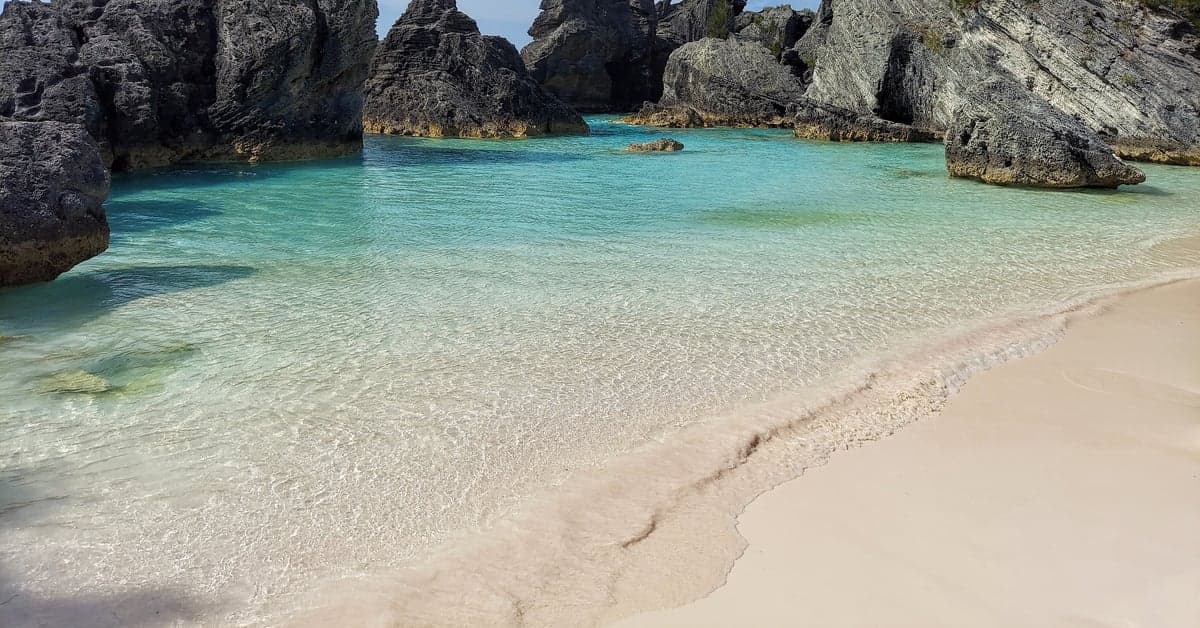
Jobson's Cove sits between Warwick Long Bay and Stonehole Bay. Tall limestone formations almost close it off from the open sea, so the water inside is calm, shallow and clear to the sandy bottom. It is the easiest swimming in Bermuda for young children or anyone who wants no waves.
It is reached on foot from the Warwick Long Bay parking area or the South Shore Park trail. The cove itself has no facilities; the nearest bathrooms are at Warwick Long Bay. It is small and fills quickly when a tour group arrives, so go early.
Church Bay
Church Bay, on South Road in Southampton and also on the Route 7 bus line, is the tourism authority's pick for snorkeling straight from shore, because the reef sits close in. The beach is small and rocky, with bathrooms, picnic areas and snorkel rentals in season. Wear water shoes: the rocks at the entry are slippery.
North Shore and East End Beaches
Tobacco Bay, St. George's
Tobacco Bay is a small, sheltered cove about a 15-minute walk from the town of St. George's at Bermuda's eastern end. Limestone formations around the bay keep the water calm and make good snorkeling. The beach has a restaurant and bar, bathrooms, and rentals from chairs and umbrellas to snorkel gear, open roughly 10 AM to 5 PM according to the tourism authority.
The pink tint is fainter here than on the south shore. Pair it with St. George's itself: the town was Bermuda's capital until 1815, and the Historic Town of St George and Related Fortifications has been a UNESCO World Heritage Site since 2000.
Shelly Bay Beach
Shelly Bay is a north shore beach in Hamilton Parish used mostly by local families. The bay is shallow and calm, with a sandy bottom that stays knee-deep a long way out, which makes it good for small children. The tourism authority lists a playground, bathrooms, picnic tables and a wheelchair ramp. The sand is pale, with little pink.
Practical Information
Getting Around
Visitors cannot rent conventional cars in Bermuda. The only rental vehicles available to visitors are small two-seat electric cars and low-power scooters. Most visitors use the public buses, the SeaExpress ferries (which link Hamilton with Dockyard, St. George's, Southampton, and Paget and Warwick) and taxis. Multi-day transportation passes cover both buses and ferries. Route 7 runs along South Road between Hamilton and Dockyard and stops near Elbow Beach, Warwick Long Bay, Horseshoe Bay and Church Bay.
When to Visit
The beach season runs from about May to October, when the sea is warmest (it peaks near 28°C in August). April and November have pleasant air temperatures but cooler water. From December to March the sea drops to around 19°C, which most visitors find too cool for long swims. Cruise traffic is heaviest in the warmer months, so check the published ship schedule if you want quieter beach days. Hurricane season in the Atlantic runs June 1 to November 30.
Costs
Bermuda is one of the most expensive beach destinations in the Atlantic, with hotel and restaurant prices well above US mainland averages. Beach access itself is free at the public beaches. The island's signature casual meal is the fish sandwich, sold at takeaways and bars across the island. The Bermuda Tourism Authority publishes event calendars and accommodation listings.
Frequently Asked Questions
Why is Bermuda's sand pink?
The pink comes from foraminifera, tiny single-celled organisms with reddish calcium carbonate shells that live on the undersides of Bermuda's reefs. When they die, their shells wash ashore and mix with white coral and shell sand. The color is strongest on the south shore beaches, especially in wet sand at the waterline and in early morning or late afternoon light.
What is the best beach in Bermuda?
Horseshoe Bay is the best known, with lifeguards in season, bathrooms, food and rentals, but it gets crowded when cruise ships are in port. Warwick Long Bay has more space. Jobson's Cove is the calmest, most sheltered swimming. Church Bay is the Bermuda Tourism Authority's pick for snorkeling from shore.
Can I rent a car in Bermuda?
Not a conventional car. The only rental vehicles available to visitors are small two-seat electric cars and low-power scooters. Most visitors use the public buses, the SeaExpress ferries and taxis; multi-day transportation passes cover both buses and ferries. Route 7 runs along South Road past the main south shore beaches.
When is the best time to visit Bermuda's beaches?
May to October, when the sea is warmest. Average sea temperatures peak around 28°C (83°F) in August and drop to about 19°C (65°F) in February. April and November have pleasant air but cooler water. Atlantic hurricane season runs June 1 to November 30. To avoid crowds, visit beaches early, late, or on days with no cruise ship calls.
Are Bermuda's beaches public or private?
Most of the well-known beaches, including Horseshoe Bay, Warwick Long Bay, Church Bay and Shelly Bay, are public. Some beaches or sections belong to hotels and clubs: part of Elbow Beach, for example, is owned by the Elbow Beach hotel for its guests, with public access to the rest.
How expensive is Bermuda?
Bermuda is one of the most expensive beach destinations in the Atlantic, with hotel and restaurant prices well above US mainland averages. Public beaches are free. The fish sandwich, sold at takeaways and bars across the island, is the classic casual meal.
What is the best snorkeling beach in Bermuda?
Church Bay on the south shore, where the reef sits close to shore; it has snorkel rentals in season. Tobacco Bay near St. George's is sheltered by limestone formations and also rents snorkel gear. Wear water shoes at both, because the entries are rocky.