San Juan Beach Guide: Puerto Rico's Best Coastal Escapes
Table of Contents
Prices in this guide are approximate and change often. Check with the hotel, airline or operator before you book.
City Beaches and Caribbean Water
San Juan is one of the few Caribbean capitals where a 16th-century Spanish fortress and a swimmable city beach are a short ride apart. The city runs along Puerto Rico's north coast, facing the Atlantic, and its beaches range from the hotel-lined Condado strip to the local stretches of Ocean Park and the long sand of Isla Verde near the airport. The appeal over most Caribbean beach trips is that the beaches sit inside a real city, with neighborhood restaurants, markets and nightlife a few blocks from the sand.
Puerto Rico is a U.S. territory, so U.S. citizens do not need a passport, the currency is the U.S. dollar and U.S. phone plans work. Flights to and from the mainland are domestic, which means you need a REAL ID-compliant license, a passport or another TSA-accepted ID to board; REAL ID enforcement began May 7, 2025. There is no immigration line, but bags flying from Puerto Rico to the mainland go through a U.S. Department of Agriculture inspection for fruit, plants and soil. Nonstop flights to San Juan run from most large East Coast cities, roughly 2.5 hours from Miami and under 4 hours from New York.
Old San Juan Area
Playa El Escambrón
The closest good swimming beach to Old San Juan is Balneario El Escambrón in Puerta de Tierra, just east of the old city along Avenida Muñoz Rivera. An offshore reef breaks the Atlantic swell, so the water inside is usually calm and clear enough for snorkeling over the rocks and reef, where sergeant majors, blue tangs and parrotfish are common. As a balneario (a government-run public beach) it has lifeguards in season, restrooms, showers and paid parking. It is about a 30-minute walk from the cruise piers in Old San Juan, or a short taxi ride.
Next door, the Caribe Hilton says its bartender Ramón "Monchito" Marrero created the piña colada there in 1954; Barrachina restaurant in Old San Juan says Ramón Portas Mingot created it in 1963. Puerto Rico made the piña colada its official drink in 1978, so you can order one at either and decide for yourself.
The Forts
Castillo San Felipe del Morro and Castillo San Cristóbal, the two great forts of Old San Juan, make up San Juan National Historic Site, a UNESCO World Heritage property run by the National Park Service. According to the park's fee page, one $10 adult ticket covers both forts for 24 hours, children 15 and under enter free, and the park does not accept cash. The lawn in front of El Morro is a popular spot for flying kites in the trade winds.
La Playita del Condado
La Playita del Condado is a small beach beside the Dos Hermanos bridge, where the Condado Lagoon meets the ocean. It is calm and shallow, and popular with families with young children and with paddleboarders heading into the lagoon. Food vendors set up nearby on weekends.
Condado and Ocean Park
Condado Beach
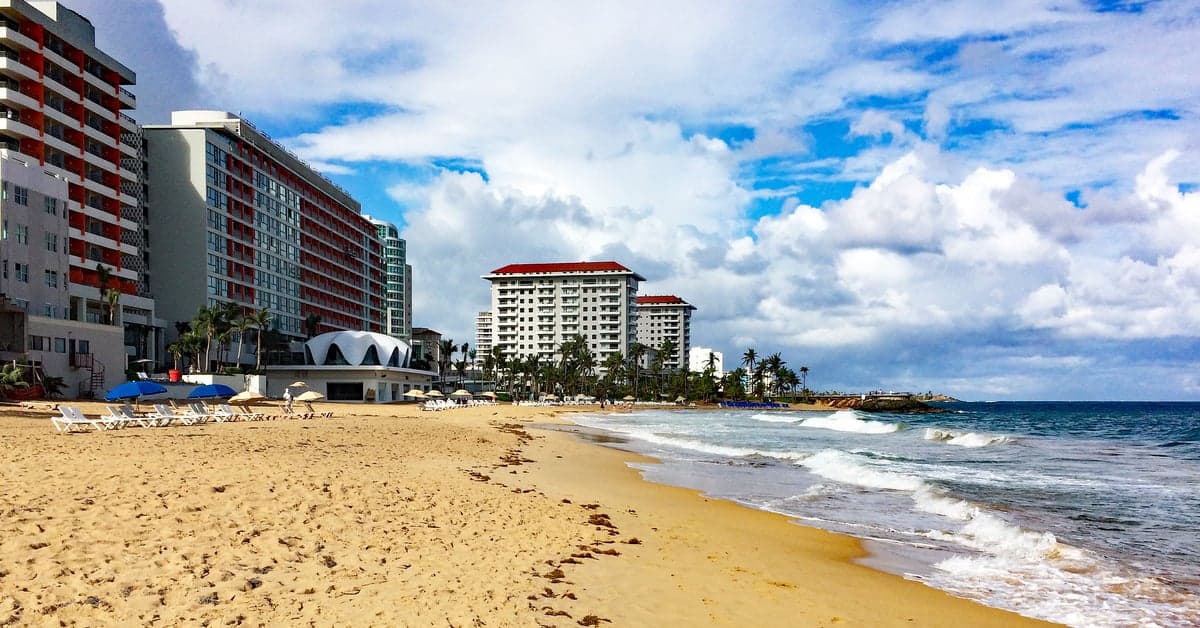
Condado is San Juan's hotel strip, a long beach of golden sand lined with high-rise hotels, condos, restaurants and shops along Ashford Avenue. The water can be rough, with strong currents and a shore break that catches casual swimmers off guard, and lifeguard coverage along the strip is limited. Swim only on calm days, near other people, and stay out of the water when red flags are up.
The location is the trade-off for rougher water: Condado has the densest choice of beachfront hotels, and its restaurants, bars and the Condado Lagoon boardwalk are within walking distance of the sand.
Ocean Park
East of Condado, Ocean Park is residential, with low-rise houses and guesthouses behind a wide, long beach. The crowd is mostly local, and weekends bring beach volleyball, pickup soccer and families under the palms. The steady trade winds make it San Juan's main kitesurfing beach, and local schools run lessons. The water is often calmer than at Condado, but conditions change with the swell, so check them before swimming. Kasalta, the bakery on McLeary Street, is the neighborhood's best-known spot for breakfast and Cuban sandwiches.
Isla Verde
Isla Verde Beach
Isla Verde, a few minutes from Luis Muñoz Marín International Airport in the neighboring municipality of Carolina, has the widest sand and generally the most swimmable water of the major metro beaches. The beach runs for roughly two miles, with calmer sections where offshore reefs and rocks break the waves. Large resort hotels and condo towers line most of it, and the Balneario de Carolina public beach at the eastern end has lifeguards, facilities and parking.
Pine Grove, near the eastern end of Isla Verde, is one of San Juan's most popular spots for surf lessons, with a gentle reef break that suits beginners and longboarders on small days. Just east of Isla Verde, Piñones is a stretch of coastal forest and roadside kiosks along Route 187 that serves fried snacks such as alcapurrias and bacalaítos, plus fresh coconut water. The beaches along Piñones have strong currents in places, so most visitors go there to eat, not to swim.
Day Trip Beaches
Luquillo Beach (Balneario La Monserrate)
About 30 miles east of San Juan (roughly 45 minutes by car outside rush hour), Luquillo is the island's best-known family beach: a long crescent of calm, shallow water backed by palms, with the El Yunque mountains behind it. As a balneario it has lifeguards, showers, picnic areas and paid parking. The kioskos, a row of around 60 food stalls along the highway next to the beach, serve pinchos, alcapurrias, seafood and cold beer, and are busiest on weekends.
Many visitors pair Luquillo with El Yunque National Forest, the only tropical rainforest in the U.S. National Forest System. Access rules, recreation-area fees and trail closures change, so check the Forest Service page before you drive up.
Seven Seas Beach (Fajardo)
About 20 minutes past Luquillo, Balneario Seven Seas in Fajardo is a calm, crescent-shaped beach sheltered from the Atlantic swell by the curve of the bay, with snorkeling over the rocks and reef toward the eastern point. Bring your own snorkel gear if you can. Fajardo is also the base for night kayak tours of Laguna Grande, one of Puerto Rico's bioluminescent lagoons; tours run after dark, and swimming in the lagoon is not allowed.
Culebra and Vieques
The public ferries to Culebra and Vieques now leave from the terminal in Ceiba, south of Fajardo, not from Fajardo itself. Fares are only a few dollars, but space is limited and island residents get priority, so buy tickets in advance through the official ferry ticketing system and arrive early. Small airlines also fly to both islands from San Juan's airports and from Ceiba. Flamenco Beach on Culebra regularly appears on international lists of the world's best beaches.
Surfing in San Juan
San Juan has several surf breaks within the metro area. La Ocho in Condado is a reef break that works on winter swells and is best left to experienced surfers. Pine Grove in Isla Verde is the usual choice for lessons. The bigger surf is in Rincón on the west coast, about two and a half hours from San Juan by car, where North Atlantic swells produce consistent waves from roughly November through March. Board rentals and lessons are widely available in Condado, Ocean Park and Isla Verde.
Food and Nightlife Near the Beaches
Old San Juan has the city's densest concentration of restaurants, from long-running Spanish and Puerto Rican places to chef-driven tasting menus. La Placita de Santurce, a produce market by day, turns into an open-air bar district at night, busiest from Thursday through Saturday. For cheap beach food, the Piñones and Luquillo kiosks serve the most traditional Puerto Rican fried snacks at the lowest prices.
Practical Information
Getting Around
Uber operates throughout the San Juan metro area, and taxis serve the airport and the tourist zones. Old San Juan is compact and walkable but hilly. Public buses run but are infrequent. A rental car is the practical choice for day trips to Luquillo, Fajardo, Ceiba and El Yunque.
Rip Currents and Beach Safety
The north coast faces open Atlantic swell, and rip currents are a real hazard, especially in winter when northerly swells arrive. The National Weather Service office in San Juan issues rip current statements and high surf advisories for Puerto Rico's beaches. Swim at balnearios with lifeguards when you can, and if you are caught in a rip current, do not swim against it: swim parallel to shore or float until it releases you, and wave for help.
When to Visit
December through April is the drier, less humid season, with highs in the 80s °F and sea temperatures around 78 to 82°F. Hotel rates peak over the Christmas holidays and around the Fiestas de la Calle San Sebastián, a multi-day street festival in Old San Juan held in the second half of January. May and June usually bring good beach weather at lower rates. Atlantic hurricane season runs June 1 to November 30, and according to the National Hurricane Center activity peaks from mid-August through mid-October.
Frequently Asked Questions
Do you need a passport to visit San Juan?
Not if you are a U.S. citizen. Puerto Rico is a U.S. territory and flights from the mainland are domestic, so you need a REAL ID-compliant license, a passport or another TSA-accepted ID to board (REAL ID enforcement began May 7, 2025). The currency is the U.S. dollar and U.S. phone plans work. Bags flying back to the mainland go through a USDA agricultural inspection.
Which is the best beach in San Juan for swimming?
Isla Verde generally has the calmest water and widest sand in the metro area, and the Balneario de Carolina at its eastern end has lifeguards. Balneario El Escambrón near Old San Juan is sheltered by an offshore reef and good for snorkeling. Condado has strong currents and a shore break and is the least suited to casual swimmers.
Is Condado Beach safe for swimming?
Only on calm days. Condado has strong currents and a shore break that can catch casual swimmers off guard, and lifeguard coverage is limited. Swim near other people, stay out when red flags are up or the National Weather Service has a rip current statement in effect, and choose Escambrón or Isla Verde for calmer water.
How much does it cost to visit El Morro?
One $10 adult ticket covers both Castillo San Felipe del Morro and Castillo San Cristóbal for 24 hours, and children 15 and under enter free, according to the National Park Service. The park does not accept cash.
What is the best day trip beach from San Juan?
Luquillo Beach (Balneario La Monserrate), about 45 minutes east, has calm water, lifeguards and a row of around 60 food kiosks. Many visitors pair it with El Yunque National Forest; check the Forest Service site for current access rules and closures first. Seven Seas Beach in Fajardo, about 20 minutes farther, is sheltered and good for snorkeling.
How do you get to Culebra and Flamenco Beach from San Juan?
Drive or take a taxi to the ferry terminal in Ceiba, south of Fajardo (the ferries no longer leave from Fajardo), and take the public ferry. Fares are a few dollars, but space is limited and residents get priority, so buy tickets in advance and arrive early. Small airlines also fly to Culebra from San Juan's airports and from Ceiba.
When is the best time to visit San Juan beaches?
December through April is the drier season, with highs in the 80s °F and water around 78 to 82°F. Rates peak over Christmas and around the Fiestas de la Calle San Sebastián in the second half of January. Atlantic hurricane season runs June 1 to November 30, with activity peaking from mid-August through mid-October.
Can you surf in San Juan?
Yes. Pine Grove in Isla Verde is the usual spot for lessons, with a gentle reef break on small days. La Ocho in Condado is a reef break for experienced surfers on winter swells. For bigger waves, Rincón on the west coast, about two and a half hours by car, is consistent from roughly November through March.