San Diego Beach Guide: Year-Round Surf, Tacos, and Coastal Trails
Table of Contents
Prices in this guide are approximate and change often. Check with the hotel, airline or operator before you book.
Seventy Miles of Coast and 266 Days of Sunshine
San Diego sits at the southwestern corner of the continental United States, about 20 miles north of the Mexican border. The city gets an average of 266 sunny days per year, and the ocean temperature rarely drops below 58°F even in winter. That combination makes it one of the most reliable beach destinations in the country -- you can surf in January without heroic suffering, and summer water temperatures hit the low 70s.
The san diego beaches stretch from the cliffs of Torrey Pines in the north to the silver strand of Coronado in the south, covering about 70 miles of varied coastline. Each neighborhood has a different character. Pacific Beach is the young, loud one. La Jolla is the polished one. Ocean Beach is the weird one. Coronado is the classic one. And they're all connected by a coast that rewards exploration.
La Jolla Cove and La Jolla Shores
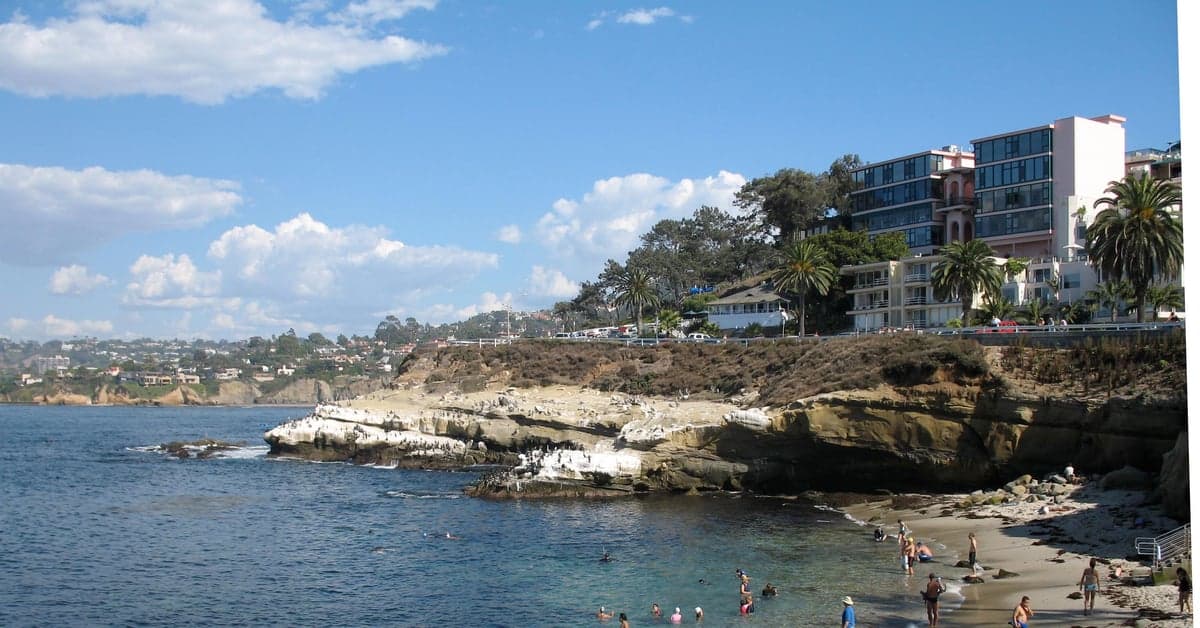
La Jolla Cove is a small, protected inlet surrounded by sandstone cliffs. The water is part of the San Diego-La Jolla Underwater Park Ecological Reserve, which means no fishing and no collecting -- the marine life is dense. Garibaldi (bright orange fish the size of your hand), leopard sharks, and sea lions are common. Visibility on good days reaches 30 feet.
The cove itself is tiny -- maybe 100 yards of sand at low tide. Parking is a nightmare. The lot fills by 9 AM on weekends, and street parking in the village involves circling blocks for 20 minutes. Come early or take the bus (Route 30 from downtown, $2.50).
La Jolla Shores, half a mile north, is the opposite: a wide, flat, sandy beach that stretches for a mile. This is the best learn-to-surf beach in San Diego. The waves are small and the bottom is sandy with no rocks. Surf Diva and La Jolla Surf Sisters run lessons starting at $89 for a two-hour group session. The san diego beaches at La Jolla Shores also offer some of the best kayak launching in the city -- paddle north to the sea caves below Torrey Pines.
Leopard Sharks at La Jolla Shores
From late June through September, leopard sharks aggregate in the shallow water at La Jolla Shores -- sometimes in groups of 50 or more. They're harmless to humans and swim in water as shallow as 3 feet. You can snorkel with them just steps from the beach. Early morning, before the sand gets churned up by swimmers, offers the clearest visibility.
Pacific Beach and Mission Beach
Pacific Beach (PB) is San Diego's party beach. The boardwalk connects it to Mission Beach in a 3.5-mile stretch of concrete path lined with rental shops, bars, and the occasional street performer. Garnet Avenue, the main commercial street, has a density of bars and taco shops that rivals any college town in America.
The surf at PB is consistent and mid-level. Crystal Pier, a working pier with rental cottages built on top, creates a break on both sides that works on most swell directions. The pier cottages rent for $250-475/night depending on the season and book months in advance -- sleeping directly over the ocean is a novelty that's hard to replicate elsewhere. See Surfline for current guidance.
Mission Beach has Belmont Park, a small oceanfront amusement park with a wooden roller coaster (the Giant Dipper, built in 1925) and a wave machine pool. It's kitschy and fun for a couple of hours, especially with kids. Unlimited ride passes cost $34.
The Taco Situation
San Diego's proximity to Tijuana created a taco culture that dominates the local food scene. Oscar's Mexican Seafood in PB does a smoked fish taco ($4.50) that's worth any line. Tacos El Gordo on Mission Bay Drive serves Tijuana-style adobada tacos ($3.25 each) from a perpetually rotating spit. For a sit-down experience, Puesto at The Headquarters downtown does elevated tacos ($5-7 each) with handmade tortillas. The san diego beaches and taco shops exist in a symbiotic relationship -- eat, surf, eat, repeat.
Torrey Pines State Natural Reserve
Torrey Pines sits on the bluffs above the northernmost san diego beaches. The reserve protects the rarest pine species in North America -- only about 3,000 Torrey pines exist in the wild, and most of them grow on these cliffs. Several trails (ranging from 0.7 to 1.5 miles) wind through the reserve to overlook points with views up and down the coast. Parking costs $20-25 per vehicle.
Below the bluffs, Torrey Pines State Beach runs for about a mile -- wide, clean, and backed by eroded sandstone cliffs that glow orange in the late afternoon light. It's a popular spot for paragliders, who launch from the cliffs at the Torrey Pines Gliderport just north of the reserve. Tandem paragliding flights cost $175-225 and last about 20 minutes.
Coronado Beach
Coronado is technically a peninsula connected to the mainland by a narrow strip called the Silver Strand. The main beach stretches for about 1.5 miles in front of the Hotel del Coronado, a wooden Victorian resort built in 1888 that's appeared in movies and hosted presidents. The sand here has a slight mica sparkle that catches sunlight.
The san diego beaches at Coronado are wide and flat, ideal for families with small children. The waves are gentle. The water is clean. And the view back toward downtown San Diego across the bay is one of the best skyline views in the state. You can reach Coronado by car over the bridge or by ferry from downtown ($5 each way, 15 minutes).
The Hotel del Coronado
Even if you don't stay at the "Hotel Del", it's worth walking through the lobby and grounds. The Crown Room restaurant has a sugar pine ceiling built in 1888 without a single nail. Babcock & Story Bar on the ground floor serves cocktails in a dark-wood setting that hasn't changed much in a century. The hotel's beachfront Sunset Bar is a strong sundowner spot.
Ocean Beach
OB is San Diego's funky neighborhood -- tie-dye shops, vintage stores, a Wednesday farmers market that takes over Newport Avenue, and a genuine surf culture that hasn't been polished for tourists. The 1,971-foot pier, long billed as the longest concrete pier on the West Coast, has been closed since storm damage in the winter of 2023, and the city plans to demolish and replace it.
Dog Beach at the north end of Ocean Beach is one of the few leash-free beaches in San Diego. Dogs and their owners take over the sand here, and on weekend afternoons it's pure chaos in the best way. The san diego beaches in OB tend to be less crowded than PB or La Jolla, partly because parking is limited and the neighborhood resists the kind of development that draws bigger crowds.
Sunset Cliffs
Sunset Cliffs Natural Park runs along the western edge of Point Loma, south of OB. The cliffs drop 50-100 feet to the water, and the sunset views are unobstructed all the way to the horizon. A few scramble-down access points lead to small rocky beaches and tide pools, but the footing is tricky and the cliff edges are eroded. Stick to the trails. This is a locals' spot -- bring a cooler, sit on the grass above the cliffs, and watch the sun drop.
Practical Information
Getting Around
San Diego's trolley system connects downtown to Old Town and the border, but for beach-hopping you need a car or the bus system. Route 30 runs the coast from downtown through Pacific Beach to La Jolla ($2.50 per ride). Parking at popular san diego beaches fills early on summer weekends -- arrive before 9 AM or prepare to circle. Bike rentals ($15-30/day) work well along the boardwalk between Mission Beach and PB.
Best Time to Visit
San Diego is a year-round destination, but September and October are the sweet spot -- water is warmest (68-72°F), summer fog has burned off, and the tourist crowds thin after Labor Day. June often brings "May Gray" and "June Gloom," a marine layer that keeps mornings overcast until noon. Hotel rates drop 20-30% from November through March.
Surf Conditions
Summer swells come from the south and hit the southern-facing san diego beaches best. Winter swells from the north and northwest favor north-facing breaks like Blacks Beach and Swamis (in Encinitas, just north of the city). Board rentals run $20-35/day at shops along the coast. Water temperatures: 58-62°F in winter (3/2mm wetsuit), 66-72°F in summer (spring suit or boardshorts).
Budget Tips
Free things that are excellent: walking the Torrey Pines trails (if you walk or bike in, the $20 parking fee is waived), snorkeling La Jolla Cove, watching sunset from Sunset Cliffs, walking the Coronado beach, and fishing from OB Pier. A fish taco at a street shop costs $3-5. A hotel room downtown starts around $150/night off-season. Check flight deals to San Diego International (SAN), which is just 3 miles from downtown and has views of the bay on approach.
Frequently Asked Questions
What is the best beach in San Diego?
La Jolla Cove has the best snorkeling and marine life. Coronado Beach is the best for families with small children. Pacific Beach has the most energy and nightlife. Torrey Pines State Beach has the most dramatic scenery. It depends on what you want from a beach day.
Can you swim with leopard sharks in San Diego?
Yes. Leopard sharks gather at La Jolla Shores from late June through September in water as shallow as 3 feet. They're harmless to humans. Snorkel early in the morning for the clearest visibility before swimmers stir up the sand.
What is the water temperature in San Diego?
Ocean temperatures range from 58-62°F in winter to 66-72°F in summer. September and October are the warmest months. A 3/2mm wetsuit handles winter comfortably. Summer surfing works in board shorts or a spring suit.
When is the best time to visit San Diego beaches?
September and October offer the warmest water, clearest skies, and thinner crowds after Labor Day. June mornings often have marine fog (called June Gloom) that burns off by noon. Hotel rates drop 20-30% from November through March.
How much does it cost to learn to surf in San Diego?
Group surf lessons at La Jolla Shores start at $89 for a two-hour session through schools like Surf Diva and La Jolla Surf Sisters. Board rentals alone cost $20-35 per day. La Jolla Shores is the best beginner beach with small waves and a sandy bottom.
Is parking difficult at San Diego beaches?
Yes, especially on summer weekends. La Jolla Cove's lot fills by 9 AM. Torrey Pines charges $20-25 per vehicle. Arrive before 9 AM at popular spots. Bus Route 30 runs the coast for $2.50 per ride, and bike rentals ($15-30/day) work well along the boardwalk.
Where are the best fish tacos in San Diego?
Oscar's Mexican Seafood in Pacific Beach does a smoked fish taco for $4.50. Tacos El Gordo on Mission Bay Drive serves Tijuana-style adobada tacos for $3.25 each. Puesto at The Headquarters downtown offers elevated tacos ($5-7) with handmade tortillas.
Can you take a ferry to Coronado?
Yes. The Coronado Ferry runs from downtown San Diego's Broadway Pier to Coronado Landing. It costs $5 each way and takes 15 minutes. You can also drive across the Coronado Bridge, which is free and offers skyline views.