Samoa Beach Guide: Ocean Trenches, Fale Stays, and Polynesian Culture
Table of Contents
Prices in this guide are approximate and change often. Check with the hotel, airline or operator before you book.
Samoa Beaches: Where Polynesia Stays Authentic
Samoa is two main islands — Upolu and Savai'i — plus several smaller ones, sitting in the South Pacific roughly halfway between New Zealand and Hawaii. The population is about 200,000. Tourism exists but has never dominated the economy the way it has in Fiji or French Polynesia. The result: samoa beaches feel genuinely local. Villages control beach access. Families run the accommodation. The rhythms of church, fishing, and communal life set the pace, not resort schedules.
The islands are volcanic, ringed by coral reefs, and covered in tropical rainforest. Water temperature sits at 26-29°C year-round. The reef creates calm lagoons on most coasts while the outer reef face draws surfers. The Samoan culture — fa'a Samoa, "the Samoan way" — is one of the oldest continuous Polynesian traditions, and it permeates every aspect of a visit, from where you sleep (open-sided fales on the beach) to how you eat (communal meals of taro, breadfruit, and fresh fish).
Getting to Samoa
Faleolo International Airport (APW) on Upolu receives flights from Auckland (3.5 hours, NZ$400-800 round trip on Air New Zealand or Samoa Airways), Sydney (5.5 hours via Auckland or Fiji), and Fiji's Nadi airport (2 hours on Fiji Airways, $250-450 round trip). American Samoa's Pago Pago airport connects by small prop plane (30 minutes, $150-200 round trip on Talofa Airways).
The ferry between Upolu and Savai'i departs from Mulifanua Wharf on Upolu to Salelologa on Savai'i (1 hour, WST 14 / $5.20 per person, WST 100 / $37 per vehicle). Ferries run 4-6 times daily. Book vehicle spots in advance for weekend crossings. Check our flight comparison tool for the best routing to Apia.
Best Samoa Beaches on Upolu
Lalomanu Beach
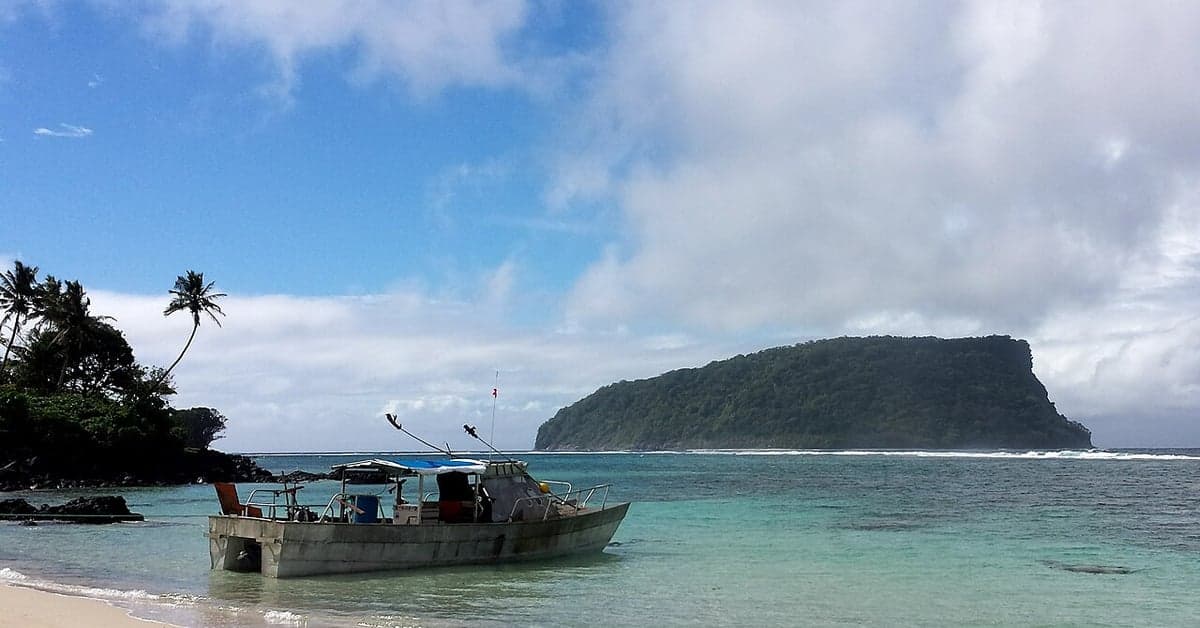
Lalomanu, on Upolu's southeastern tip, is consistently cited as Samoa's most photogenic beach. The sand is white and powdery. The water grades from pale green in the shallows to deep blue beyond the reef. Offshore, the tiny Nu'utele and Nu'ulua islands (bird sanctuaries) frame the view. Beach fale accommodation lines the shore — open-sided Samoan sleeping platforms with thatched roofs, mattresses, mosquito nets, and the ocean 10 meters from your pillow. Fales cost WST 80-150 ($30-56) per person including dinner and breakfast.
The 2009 tsunami hit Lalomanu hard, and the village rebuilt with remarkable resilience. The beach fales are back, the snorkeling is excellent (reef fish, sea cucumbers, occasional turtles), and the communal atmosphere — shared meals, kava ceremonies at dusk — makes this more cultural experience than beach vacation.
Namua Island
A tiny island off Upolu's southeast coast, reached by a 5-minute outrigger canoe from the mainland (WST 30 / $11 round trip). Namua has a handful of basic fales (WST 100-130 / $37-48 per person full board) and some of the best snorkeling in Samoa. The reef drops off sharply on the south side, attracting schools of trevally, barracuda, and reef sharks. Power is limited and there's little or no Wi-Fi. This is samoa beaches at their most stripped-back.
Return to Paradise Beach
Named after the 1953 Gary Cooper film shot here, Return to Paradise Beach is on Upolu's south coast, 35 kilometers from Apia. The beach is scenic — golden sand between volcanic rock formations — but the real draw is the surf break. A consistent left-hander works on south swells from April to October. Non-surfers pay WST 10 ($3.70) beach entry. A restaurant at the entrance serves fish and chips (WST 35 / $13) and cold Vailima beer (WST 8 / $3).
Best Samoa Beaches on Savai'i
Manase Beach
Savai'i's main tourist beach runs for several kilometers along the north coast. Beach fales here are the most established on Savai'i — Tanu Beach Fales (WST 90-130 / $33-48 per person full board), Vacations Beach Fales (WST 80-120 / $30-44), and Jane's Beach Fales (WST 70-100 / $26-37) are the main operators. The reef is close to shore with good snorkeling directly off the beach. Village life carries on around you — kids play in the lagoon, fishermen repair nets, church bells ring on Sunday morning.
Aganoa Beach
On Savai'i's remote south coast, Aganoa is a black volcanic sand beach flanked by lava fields. The surf here is powerful and largely unridden — experienced surfers only. Aganoa Lodge, a small surf lodge with a handful of bungalows and meal service, is the place to stay. The isolation is the point.
Beyond the Beach
To Sua Ocean Trench
This is samoa beaches' most famous non-beach attraction. To Sua is a 30-meter-deep natural swimming hole connected to the ocean by a lava tube, surrounded by manicured gardens. A wooden ladder descends to the emerald water. Entry costs WST 20 ($7.40) per person. Go early (opens 8 AM) to avoid crowds. The trench is on Upolu's south coast near Lotofaga village, about 1 hour from Apia.
Alofaaga Blowholes
On Savai'i's southern coast, waves force through lava tubes and erupt 20 meters into the air. Local guides throw coconuts into the holes to demonstrate the force — the coconuts launch skyward like cannonballs. Entry WST 5 ($1.85). The blowholes are most spectacular during high swell (April-October). See Surfline for current guidance.
Lava Fields
Savai'i's Saleaula Lava Fields are the result of volcanic eruptions between 1905 and 1911. The lava buried an entire village, including a church now half-engulfed in black rock — an eerie and photogenic sight. A small museum (WST 10 / $3.70) tells the story. The Peapea Cave (Dwarf's Cave) in the lava field requires a flashlight and some crawling but opens into a large chamber.
Where to Stay in Samoa
Beach Fales (Budget)
Beach fales are Samoa's signature accommodation — open-sided platforms on the beach, WST 70-150 ($26-56) per person including dinner and breakfast. They are simple: mattress, mosquito net, pillow. Walls are roll-down blinds for rain. The communal dining and kava ceremonies are the cultural payoff. Bring earplugs (roosters start at 4:30 AM) and accept that privacy is limited.
Mid-Range
Coconuts Beach Club on Upolu's south coast has beachfront rooms from $180/night with a pool, restaurant, and overwater fales for dining. Saletoga Sands Resort has a lagoon pool and sits near Lalomanu. Le Vasa Resort on Upolu's northwest coast charges $120-200/night with direct reef access.
Luxury
Sheraton Samoa Aggie Grey's Hotel in Apia is the main upscale option, a historic property that started as a bar in the 1930s. Seabreeze Resort on Upolu's southeast coast offers villa accommodation from $300/night. For current rates, check our hotel comparison page.
Food, Culture, and Practical Tips
Samoan Food
The traditional umu (earth oven) is the centerpiece of Samoan cooking. Taro, breadfruit, banana, chicken, pork, and fish are wrapped in banana leaves and slow-cooked over hot stones for hours. Sunday umu is a family institution — many beach fales include a Sunday feast. Oka (raw fish in coconut cream with lime and onion) is Samoa's ceviche and costs WST 25-40 ($9.25-14.80) at restaurants. Palusami — taro leaves filled with coconut cream and baked in the umu — is rich, smoky, and addictive.
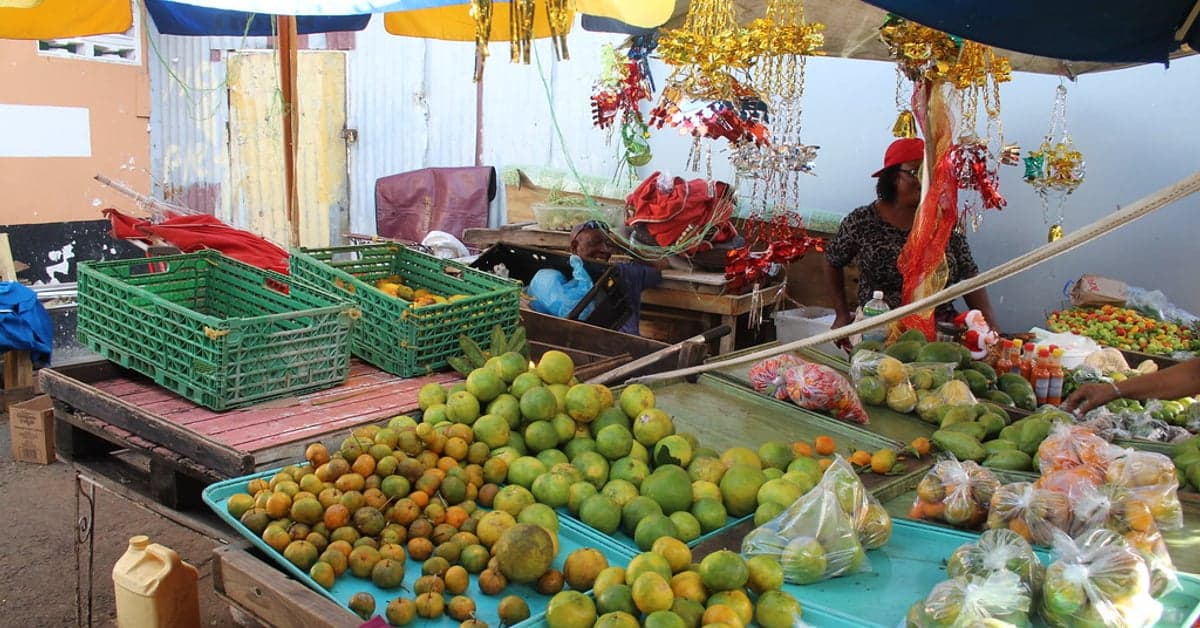
In Apia, Paddles restaurant serves Italian-Samoan fusion at WST 40-70 ($14.80-25.90) per main. The Apia fish market (open early mornings, Monday-Saturday) sells fresh tuna steaks for WST 15-25 ($5.55-9.25) per kilo. Street-side BBQ stalls sell chicken quarters for WST 5-10 ($1.85-3.70).
Cultural Etiquette
Samoa follows fa'a Samoa — the Samoan way. Key points: ask permission before entering a village or using a beach (most charge WST 5-20 entry). Remove shoes before entering a fale. Sit cross-legged on the mat, never with legs outstretched toward others. Sunday is sacred — most villages prohibit swimming, loud music, and work. Dress modestly in villages (cover knees and shoulders). Respect these norms and you will be welcomed warmly.
Practical Information
Currency is the Samoan tala (WST), roughly 2.70 WST to $1. ATMs are available in Apia and Salelologa. Credit cards work at hotels and larger restaurants but cash is essential for fales, markets, and village fees. Tap water is generally safe in Apia but bottled water (WST 3-5 / $1.10-1.85) is recommended elsewhere. The best time to visit samoa beaches is May to October (dry season, 24-29°C). November to April is wetter and warmer with occasional cyclone risk. Samoa Tourism Authority has current event listings and travel advisories.
Frequently Asked Questions
How do I get to Samoa?
Fly to Faleolo International Airport on Upolu from Auckland (3.5 hours, NZ$400-800 round trip on Air New Zealand or Samoa Airways), Sydney (via Auckland or Fiji), or Nadi, Fiji (2 hours, $250-450 round trip). The inter-island ferry to Savai'i runs 4-6 times daily (1 hour, WST 14 / $5.20 per person).
What are beach fales in Samoa?
Beach fales are open-sided thatched-roof sleeping platforms directly on the beach. They cost WST 70-150 ($26-56) per person per night including dinner and breakfast. Amenities are basic: mattress, mosquito net, pillow. Roll-down blinds for rain. The communal dining and kava ceremonies make them a cultural experience as much as accommodation.
What is To Sua Ocean Trench?
A 30-meter-deep natural swimming hole on Upolu's south coast, connected to the ocean by an underground lava tube. A wooden ladder descends to the emerald-green water. Entry costs WST 20 ($7.40). Opens at 8 AM — arrive early to avoid crowds. Located near Lotofaga village, about 1 hour from Apia.
What is the best time to visit Samoa?
May to October is the dry season with temperatures of 24-29°C, lower humidity, and minimal rain. November to April is warmer and wetter with occasional cyclone risk. Water temperature stays at 26-29°C year-round. Surf season runs April to October with south swells reaching the reef breaks.
Is Samoa expensive to visit?
Samoa is affordable by Pacific Island standards. Beach fales cost WST 70-150 ($26-56) per person with meals. Restaurant meals run WST 25-70 ($9.25-25.90). Village and beach entry fees are WST 5-20 ($1.85-7.40). The main expense is airfare. Budget travelers can manage on $50-80/day. Mid-range expect $100-200/day.
What is the best beach in Samoa?
Lalomanu Beach on Upolu's southeast tip is consistently rated Samoa's best — white sand, turquoise water, offshore island views, and established beach fale accommodation. For a more isolated experience, Namua Island (5-minute canoe ride from Upolu) has excellent snorkeling and no electricity. Manase Beach on Savai'i is the best option on the larger island.
What cultural etiquette should I follow in Samoa?
Ask permission before entering villages or using beaches (most charge WST 5-20 entry). Remove shoes before entering a fale. Sit cross-legged, never with legs outstretched toward others. Cover knees and shoulders in villages. Sunday is sacred — no swimming, loud music, or work in most villages. Respectful visitors are welcomed warmly.
Can I surf in Samoa?
Yes. Return to Paradise Beach on Upolu has a consistent left-hander on south swells (April-October). Aganoa Beach on Savai'i has powerful waves for experienced surfers. Several reef breaks around both islands work on different swell directions. Aganoa Lodge is a small dedicated surf lodge.