Punta del Este: Uruguay's Glamorous Beach Peninsula
Table of Contents
Prices in this guide are approximate and change often. Check with the hotel, airline or operator before you book.
Punta del Este: South America's Riviera
Punta del Este occupies a narrow peninsula on Uruguay's Atlantic coast, 130 kilometers east of Montevideo. During the southern summer (December through February), it transforms from a quiet resort town of 25,000 into a destination for 500,000 people — Argentine socialites, Brazilian beachgoers, European tourists, and Uruguayan families. The prices rise accordingly. A beachfront apartment that rents for $800 per month in winter goes for $800 per week in January.
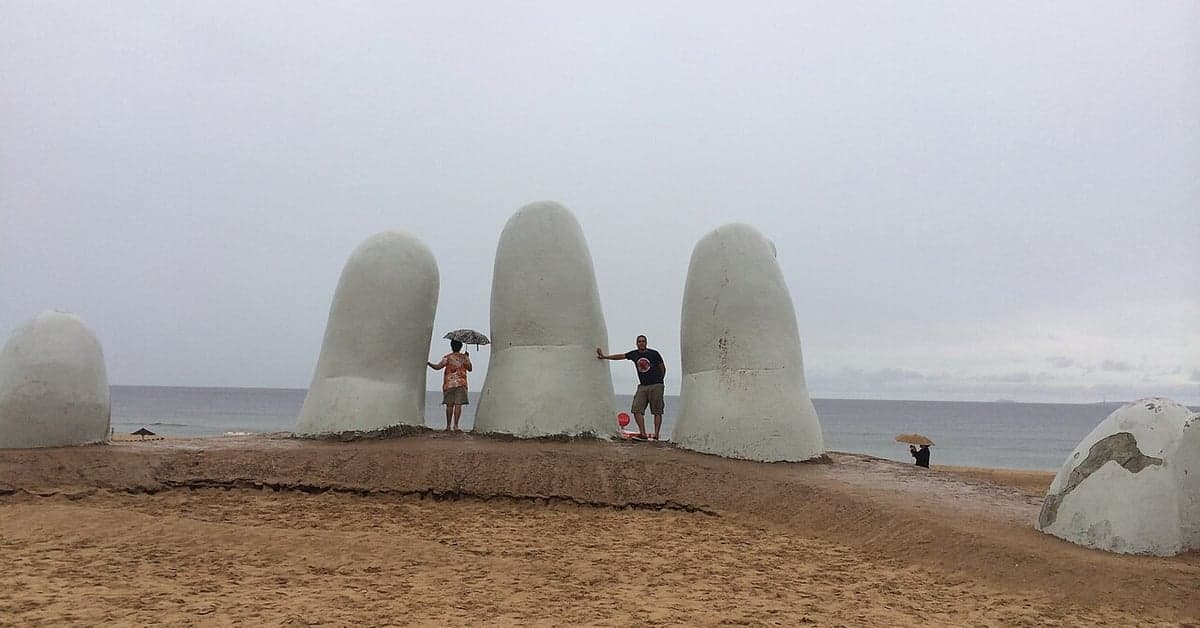
The geography defines the experience. The peninsula has two distinct coasts: the Río de la Plata side (Playa Mansa) with calm, brown-tinted water, and the Atlantic side (Playa Brava) with bigger waves and cleaner blue water. The famous "La Mano" sculpture — a giant concrete hand emerging from the sand — sits on Playa Brava and has become the most photographed thing in Uruguay. The punta del este beaches stretch for kilometers in both directions from the peninsula tip.
Playa Mansa: The Calm Side
Playa Mansa faces the Río de la Plata estuary and runs west from the peninsula. The water is warm (20-24°C in summer), calm, and shallow — you can walk 100 meters out and still be waist-deep. The tint is brownish from river sediment, which puts off some visitors, but the swimming conditions are excellent for children and anyone who doesn't want to fight surf.
The Mansa side has the highest concentration of beachfront restaurants and paradores (beach clubs). Parador Ovo on the Mansa waterfront is the scene — cocktails, international DJ sets, and a crowd that dresses up for the beach. A day bed runs $40-80 depending on the day. More relaxed paradores line the beach at Paradas (stops) 1 through 12, each with a different vibe. Beach chair and umbrella rental costs about 300-500 Uruguayan pesos ($7-12) at most locations.
The punta del este beaches on the Mansa side extend toward the suburb of Punta Ballena, where the Casapueblo museum and hotel (built by artist Carlos Páez Vilaró) perches dramatically on a cliff. The sunset viewing from Casapueblo costs about 400 pesos ($10) and includes a ceremony with music as the sun drops — overproduced but worth seeing once.
Playa Brava: The Wild Side
Playa Brava faces the open Atlantic and runs east from the peninsula. The waves are stronger, the water bluer and colder, and the beach wider. La Mano sculpture sits at Parada 1 of Brava — every tourist takes a photo, and the sand around it is perpetually crowded. Walk a few paradas east and the density drops quickly.
Brava attracts surfers, body-boarders, and a younger crowd. The waves are most consistent from March through September when Atlantic swells arrive more regularly. Summer surf tends to be smaller and choppier. Board rentals from shops near Parada 5 cost about 500-800 pesos ($12-19) for two hours.
Parada 12 and beyond, the beach becomes less urban and more natural. The dunes behind the beach are protected, and the development thins out. This is where you go if you want punta del este beaches without the social scene.
José Ignacio: The Village That Became Famous
José Ignacio is a tiny fishing village 35 kilometers east of Punta del Este that has become one of South America's most exclusive beach destinations. The permanent population is about 300. In January, that number swells with celebrities, fashion designers, and wealthy Argentines who've built minimalist concrete houses among the dunes.
The beach is gorgeous — wide, clean, and backed by low scrub rather than buildings. A white lighthouse marks the village center. The surf on the east-facing beach is decent when the swell is up. But the real draw is the food. See Surfline for current guidance.
Restaurante Parador La Huella on the beach is consistently ranked among the best restaurants in Latin America. Wood-fired seafood, exceptional wine list, sand floor, and a reservation wait of weeks during January. A meal for two with wine runs about 5,000-8,000 pesos ($120-190). Mostrador Santa Teresita and La Susana at Bahia Vik hotel are also excellent.
José Ignacio has become so upscale that budget options are essentially nonexistent. The cheapest rooms start around $150 per night in summer. But you can day-trip from Punta del Este by car (30 minutes) or bus (45 minutes, 100 pesos / $2.40).
La Barra and Manantiales
La Barra is the bohemian-artistic neighborhood about 5 kilometers east of the peninsula, identifiable by its undulating bridge over Arroyo Maldonado. The main street has galleries, surf shops, design stores, and restaurants that lean artsy. Playa Montoya, the main beach, has solid surf and a younger crowd than the punta del este beaches closer to the peninsula.
Manantiales, just past La Barra, has the area's best restaurant concentration. Capi Bar does excellent grilled meats and salads in a garden setting. El Chiringuito serves Spanish tapas with a South American twist. Baby Gouda has creative burgers and craft beer. Dinner in Manantiales is the nightly ritual for the La Barra crowd.
Cabo Polonio: The Off-Grid Alternative
Cabo Polonio is 60 kilometers northeast of Punta del Este and feels like a different planet. This small settlement has no paved roads, no running water, and no electricity grid — power comes from solar panels and generators. Access is by 4x4 truck across the dunes (150 pesos / $3.60 each way from the Route 10 drop-off). A massive sea lion colony occupies the rocks below the lighthouse.
The beach at Cabo Polonio is wild and windswept, with powerful surf and strong currents. The south-facing Playa Sur is more sheltered. Basic cabins rent for $30-60 per night. Restaurants serve fresh fish and cold beer by candlelight. If Punta del Este's glamour feels excessive, Cabo Polonio is the antidote — raw, stripped-down, and beautiful. Check our destination guides for more South American coastal escapes.
Where to Stay
Punta del Este accommodation spans hostel dorms ($15-25 in summer) to five-star resorts ($400-1,000+ per night). The best mid-range value is renting an apartment — a two-bedroom near the peninsula costs $80-200 per night in peak summer. Hotels like Awa Boutique + Design Hotel, Hotel L'Auberge, and Fasano Las Piedras cover the upper range.
Off-season (April through November), prices drop 50-70%. A hotel room that costs $250 in January goes for $80 in June. The weather is cool (10-18°C) and many restaurants close, but the punta del este beaches are empty and the light is beautiful for long walks.
Practical Information
Getting There
Fly to Montevideo's Carrasco Airport (MVD) and drive or bus to Punta del Este (1.5-2 hours). Direct flights from Buenos Aires to Punta del Este's small airport (PDP) run in summer for $100-250 one way. The Buquebus ferry from Buenos Aires to Montevideo takes 2.5-3 hours and costs $50-120, plus a 2-hour bus connection. The Uruguay Natural tourism site has ferry schedules and event listings.
Getting Around
A rental car is helpful but not essential. Local buses connect the peninsula to La Barra, Manantiales, and José Ignacio for 50-100 pesos ($1.20-2.40). Uber operates in the area. Taxis from the peninsula to José Ignacio run about 1,500-2,000 pesos ($36-48).
Best Months
December through February is peak season — hot weather (25-32°C), warm water, full restaurants, and maximum prices. March is the sweet spot: still warm, fewer crowds, lower prices. April through November is off-season with cool weather and quieter beaches. The punta del este beaches atmosphere depends entirely on when you visit.
Currency
Uruguay uses the peso uruguayo. US dollars are widely accepted at hotels and restaurants, often at favorable rates. Credit cards work everywhere in Punta del Este but may not be accepted in Cabo Polonio or small José Ignacio shops. ATMs are available in the peninsula area.
Frequently Asked Questions
When is the best time to visit Punta del Este?
December through February is peak season with hot weather (25-32°C), warm water, and full social scene. March offers warmth with fewer crowds and lower prices. April through November is off-season — cool weather (10-18°C) and prices drop 50-70%. Most restaurants in José Ignacio close off-season.
What is the difference between Playa Mansa and Playa Brava?
Playa Mansa faces the Río de la Plata with calm, warm, brownish water — ideal for families and swimming. Playa Brava faces the Atlantic with bigger waves, bluer water, and a younger, more active crowd. The famous La Mano sculpture is on Playa Brava.
How do you get to Punta del Este from Buenos Aires?
Buquebus ferry to Montevideo takes 2.5-3 hours ($50-120), plus a 2-hour bus to Punta del Este. Direct summer flights from Buenos Aires to Punta del Este airport (PDP) cost $100-250 one way. The total journey by ferry and bus takes 4.5-5 hours.
How expensive is Punta del Este?
Peak summer is expensive: hotel rooms $150-500+ per night, restaurant mains $15-40, beach club day beds $40-80. Off-season prices drop 50-70%. Budget travelers can manage with hostels ($15-25), local restaurants ($8-15 per meal), and free beach access.
What is José Ignacio?
A tiny fishing village (300 residents) 35 km east of Punta del Este that has become one of Latin America's most exclusive beach destinations. La Huella restaurant is ranked among the continent's best. Summer rooms start at $150 per night. Day-trip by car (30 min) or bus (45 min, $2.40).
Can you surf at Punta del Este?
Playa Brava and Playa Montoya in La Barra have surfable waves, best from March through September. Board rentals cost 500-800 pesos ($12-19) for two hours. The waves are inconsistent in summer but can produce 1-2 meter faces on good days.
What is Cabo Polonio?
An off-grid settlement 60 km northeast of Punta del Este with no paved roads, no running water, and no electricity grid. Access is by 4x4 truck across dunes ($3.60 each way). A sea lion colony lives on the rocks. Basic cabins rent for $30-60 per night.
Do I need a car in Punta del Este?
Not essential. Local buses connect the peninsula, La Barra, Manantiales, and José Ignacio for $1.20-2.40. Uber operates in the area. A car helps for day trips to Cabo Polonio and for flexibility, especially with children. Rental costs about $40-70 per day in summer.