New Zealand's Most Beautiful Beaches: A Complete Guide
Table of Contents
Prices in this guide are approximate and change often. Check with the hotel, airline or operator before you book.
Beaches at the Bottom of the World
New Zealand sits between 34° and 47° south latitude, which means its beaches range from subtropical at the top of the North Island to genuinely cold at the bottom of the South Island. The country has over 9,000 miles of coastline — more per capita than almost any nation on earth — with black volcanic sand, white silica beaches, golden sand, and everything in between. The Pacific Ocean lies to the east, the Tasman Sea to the west, and the Southern Ocean below.
Beach culture in New Zealand revolves around the Kiwi "bach" (a basic holiday cottage, pronounced "batch") and a democratic approach to the coast. All New Zealand beaches are public, and the country's relatively small population (5.2 million) means even popular beaches have breathing room compared to European or Asian equivalents. Water temperatures range from 60-68°F in the north (November-March) to 50-57°F in the south — wetsuits are standard equipment south of Auckland.
North Island Beaches
Cathedral Cove, Coromandel Peninsula
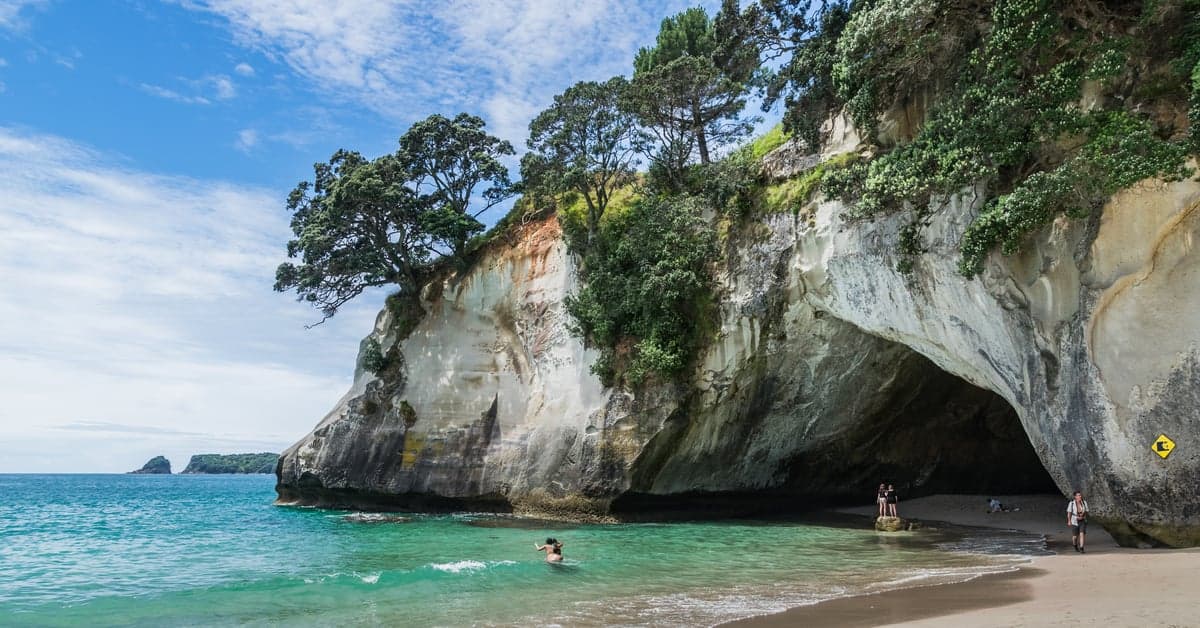
Cathedral Cove is New Zealand's most iconic beach, featuring a massive natural rock archway that frames a white sand cove with pohutukawa trees (New Zealand's "Christmas tree") growing on the cliffs. Access is via a 45-minute walk from the Hahei village car park ($10 parking fee), or by kayak or water taxi from Hahei Beach ($25-40 per person round trip). The walk follows a coastal trail through native bush with several viewpoints.
The beach is small and gets busy between 10 AM and 3 PM in summer (December-February). Visit early morning or late afternoon for photos without crowds. Swimming is good in the sheltered cove, and the snorkeling at the adjacent Te Whanganui-A-Hei Marine Reserve is decent with blue maomao and snapper around the rocks. Hot Water Beach, where geothermal springs bubble up through the sand at low tide, is a 15-minute drive south — bring a spade and dig your own hot pool ($8 rental if you did not bring one).
Piha Beach, Auckland
Piha is Auckland's most famous surf beach, 40 minutes from the city center on a winding road through the Waitakere Ranges. The beach is wild — powerful black sand surf, Lion Rock (a dramatic volcanic outcrop splitting the beach in two), and a history of rescues that inspired the TV show "Piha Rescue." Swimming is only safe between the flags when lifeguards are on duty (October-April weekends, daily during peak summer). Rip currents are serious and claim lives every year.
For surfers, the north end produces consistent left-handers, while the south beach has a variety of peaks. Surf lessons from Piha Surf School cost $80 for a 2-hour group session. The black sand absorbs heat and can burn bare feet in summer — bring footwear for the walk to the water. The Piha Cafe at the top of the hill does excellent flat whites and bacon-and-egg rolls.
Ninety Mile Beach, Far North
Ninety Mile Beach (actually 55 miles long) runs along the western coast of the Far North district, from Ahipara to Scott Point near Cape Reinga. The beach is literally a legal highway — you can drive on it, though rental car insurance typically does not cover beach driving. The sand is hard-packed at low tide and soft at high tide. Getting stuck is common; check tide charts and stay near the water's edge.
The beach is remote and largely deserted. Te Paki sand dunes at the northern end rise 150 meters and are popular for sandboarding (BYO board or rent from hostels in Ahipara for $15). The drive or bus trip to Cape Reinga, New Zealand's northernmost point where the Tasman Sea meets the Pacific Ocean, is a classic Kiwi road trip. Explore more Pacific beach destinations on our destinations page.
Mount Maunganui, Bay of Plenty
"The Mount" is a 232-meter volcanic cone that creates a perfect surf beach on its ocean side and a calm harbor beach on its sheltered side. The main beach (Ocean Beach) stretches for miles with consistent surf breaks and golden sand. The walk to the summit of Mount Maunganui takes 30-40 minutes and provides 360-degree views of the coast. The base track (45 minutes around the mountain) passes through pohutukawa forest and rocky swimming coves on the harbor side.
The town of Mount Maunganui has a strong cafe culture — Egmont Street has some of the best coffee and brunch options in the Bay of Plenty. Mount Hot Pools ($8 entry) at the base of the mountain offers saltwater hot pools with views of the ocean. The main beach has lifeguard patrol from late November through Easter.
South Island Beaches
Abel Tasman National Park
The Abel Tasman coast at the top of the South Island has the country's warmest and most sheltered beaches — golden sand coves separated by granite headlands, with native bush growing to the waterline. The Abel Tasman Coast Track is one of New Zealand's Great Walks — a 3-5 day tramp (60 km) that passes beach after beach, with DOC (Department of Conservation) huts and campsites along the route ($25-40/night, booking required).
For day visitors, water taxis from Kaiteriteri or Marahau ($40-55 per person) drop you at specific beaches along the track. Torrent Bay, Bark Bay, and Awaroa are particularly beautiful. Sea kayaking is the other major activity — full-day guided trips cost $150-180 per person and paddle past fur seal colonies and through coastal caves. The water is famously clear, with visibility reaching 15+ meters on calm days.
Wharariki Beach, Golden Bay
Wharariki is a wild, remote beach at the very top of the South Island, reached by a 20-minute walk through farmland (watch for fur seal pups in the dunes from November to January — maintain a 10-meter distance). The beach features dramatic rock arches, sea caves, and enormous sand dunes. Swimming is dangerous due to strong currents, but the landscape photography opportunities are exceptional, especially at sunset when the archways frame the Tasman Sea.
Koekohe Beach (Moeraki Boulders)
The Moeraki Boulders are spherical geological formations scattered across Koekohe Beach on the Otago coast. Some boulders are 2 meters in diameter and weigh several tons. They formed on the ancient sea floor 60 million years ago through a process similar to how pearls form, and have been exposed by coastal erosion. The boulders are free to visit at any time, though the adjacent cafe charges $2 for parking. The beach itself is not a swimming destination but is worth a stop on the east coast drive between Christchurch and Dunedin.
Practical Information
Water Safety
New Zealand beaches demand respect. Rip currents are common at surf beaches, and even experienced swimmers get caught. Always swim between the red-and-yellow flags where lifeguards patrol. If caught in a rip, swim parallel to the shore rather than fighting the current. Lifeguard season runs roughly November through Easter at popular beaches; outside these months, many beaches are unpatrolled. Check Surf Life Saving New Zealand for current patrol schedules and beach safety information.
Getting Around
Renting a car or campervan is the most practical way to explore New Zealand's beaches. Campervans start at $50-80/day in low season and $100-150/day in peak summer. Freedom camping (sleeping in your vehicle at designated sites) is legal in certified self-contained vehicles. Many beach car parks have freedom camping restrictions, so check the CamperMate app for legal overnight spots. Fuel costs approximately NZ$2.50-3.00 per liter ($6-7 per gallon).
Frequently Asked Questions
When is the best time to visit New Zealand beaches?
December through February is summer with the warmest water (62-70°F in the north) and longest days. January is peak holiday season when Kiwis take their summer break — popular beaches get busy. March and April offer warm weather with smaller crowds. Water south of Cook Strait is cold year-round (50-62°F) and requires a wetsuit.
Are New Zealand beaches safe for swimming?
Many beaches have dangerous rip currents, especially west coast surf beaches. Always swim between the red-and-yellow lifeguard flags. Lifeguard patrols operate from November through Easter at popular beaches. Check Surf Life Saving NZ for patrol schedules. Some beaches (like Wharariki) are not suitable for swimming due to permanent strong currents.
How much does a beach holiday in New Zealand cost?
New Zealand is moderately expensive. Budget travelers in campervans can manage on NZ$80-120/day ($50-75 USD). Mid-range travelers spending NZ$200-350/day get motels, restaurant meals, and activities. Abel Tasman water taxis cost NZ$40-55/person, surf lessons NZ$80-120, and DOC campsite fees NZ$15-25/night.
Can I drive on Ninety Mile Beach?
Legally yes — it is a gazetted highway. Practically, it is risky. Most rental car insurance does not cover beach driving, and getting stuck in soft sand is common (towing costs NZ$200+). If you drive, stay on the hard-packed wet sand near the waterline and only drive at low tide. Check tide times before entering from either end.
What is the warmest beach in New Zealand?
The Bay of Islands and Northland beaches (Matapouri, Matauri Bay) have the warmest water, reaching 68-72°F in late February. The Abel Tasman at the top of the South Island is the warmest on that island at 62-66°F in summer. Hot Water Beach on the Coromandel offers geothermal warm water regardless of ocean temperature.
Do I need to bring a wetsuit?
For the North Island north of Auckland, you can swim without a wetsuit from December through March. Everywhere south of Auckland, a wetsuit is recommended for extended time in the water. South Island beaches require at least a 3/2mm wetsuit year-round. Wetsuits are available for rent at most surf shops for NZ$15-25/day.