Greek Island Hopping: A Beach Lover's Itinerary
Table of Contents
Prices in this guide are approximate and change often. Check with the hotel, airline or operator before you book.
How Island Hopping in Greece Actually Works
Greek island hopping sounds romantic, and it can be. But the logistics require planning. Greece has around 200 inhabited islands spread across multiple ferry networks, and not all islands connect directly. The Cyclades (Mykonos, Santorini, Naxos, Paros, Milos) share a well-serviced ferry network. The Dodecanese (Rhodes, Kos, Symi) have their own routes. The Ionian islands (Corfu, Kefalonia) are on the opposite side of the country. You can't casually hop between groups without backtracking to Athens or taking a flight.
The most efficient beach-focused itinerary sticks to one island group and uses 2-3 night stays at each island. Ferries are booked through Ferryhopper or directly with Blue Star Ferries, SeaJets, or Hellenic Seaways. High-speed ferries cost 2-3x more than slow ferries but save hours. Book deck class (not airline seats) on slow ferries — you can sit on the open deck with the wind and the view for half the price.
The Cyclades Route: 14-Day Beach Itinerary
Days 1-3: Naxos
Start with Naxos, not Santorini. The biggest Cycladic island has the best beaches in the chain and none of the cruise-ship crowds. Agios Prokopios and Agia Anna are wide, sandy beaches with shallow water, sun loungers (EUR 8-$12 per set), and beachfront tavernas. Plaka Beach stretches south for 4 km — the further you walk, the emptier it gets, with the southern end being clothing-optional.
Mikri Vigla, 18 km south of Naxos town, splits into two beaches: the west side has flat water for windsurfing (equipment rental is available on the beach), and the east side has waves and fewer people. The drive south to Alyko Beach takes you through an abandoned hotel complex (a genuine ruin, now covered in graffiti art) to a wild sandy cove with cedar trees for shade.
Naxos town (Chora) has the best food options on the island. Meze 2 serves grilled octopus and fava bean puree for EUR 8-$12 per dish. To Elliniko on the waterfront has fresh fish priced by the kilogram (EUR 40-$60/kg, shared between two). Accommodation: Hotel Grotta at EUR 70-$100/night for sea-view rooms, or Naxos Holidays apartments at EUR 50-$70.
Ferry from Piraeus (Athens port): Blue Star Ferries, 5.5 hours, EUR 35-$40 deck class. Or SeaJets high-speed, 3.5 hours, EUR 55-$65.
Days 4-6: Paros and Antiparos
A 40-minute ferry from Naxos (EUR 10). Paros has excellent beaches and a more developed nightlife than Naxos. Kolymbithres Beach, on the north coast, has surreal rounded granite boulders smoothed by erosion that create sheltered swimming pools between the rocks. Santa Maria Beach, at the island's northeast tip, is the windsurfing center with consistent meltemi wind from June through September.
Naoussa, the fishing village turned bar-and-restaurant hub on the north coast, is the place to eat. Sigi's Bar does excellent cocktails (EUR 10-$12). Barbarossa restaurant serves seared tuna with wasabi mayo (EUR 16) in a harborfront setting. For cheaper eats, the gyros stands in Parikia (the main port town) charge EUR 3.50-$4.
Take the 10-minute car ferry from Pounda to Antiparos (EUR 1.50 per person, runs every 30 minutes). Antiparos is smaller, quieter, and cheaper. The main beach south of town is sandy and calm. A 45-minute hike south leads to Faneromeni Beach — a wild cove with no facilities. Tom Hanks owns a house on Antiparos, which tells you something about the island's low-key appeal. Stay at Hotel Camping Antiparos (EUR 30-$40 for a bungalow) or Kouros Village (EUR 80-$120).
Days 7-9: Milos
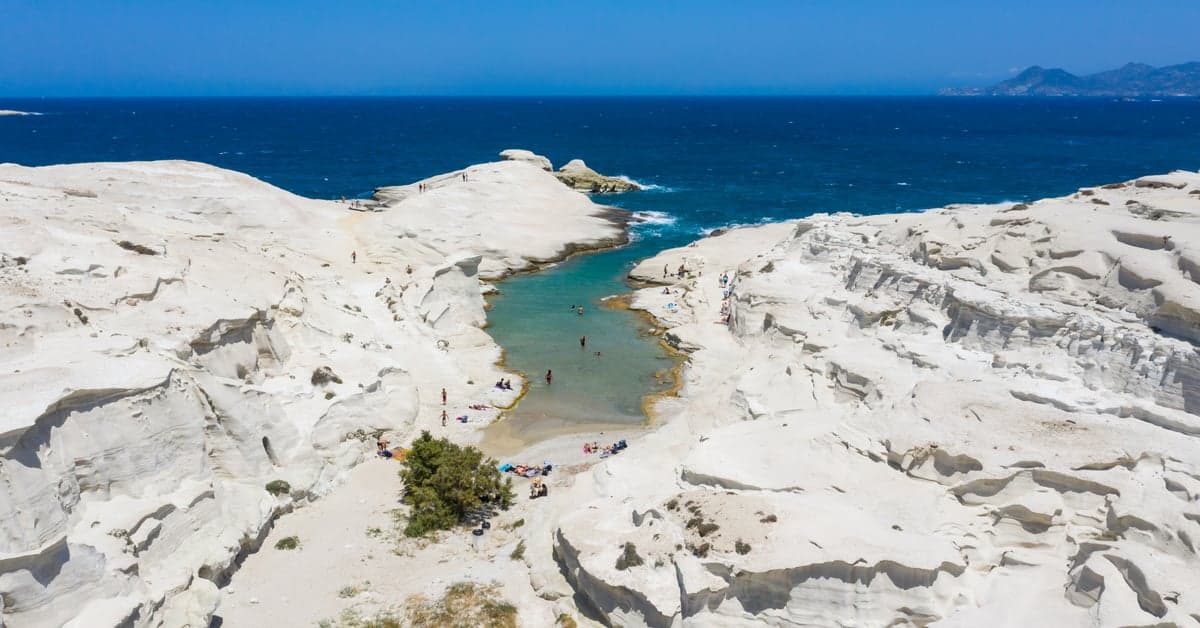
Ferry from Paros to Milos: about 2.5 hours on the fast ferries. Milos is a volcanic island with over 70 beaches. The geology creates beaches that look like they belong on different planets: Sarakiniko is white volcanic rock sculpted into lunar shapes, with swimming in blue pools carved into the stone. No sand, no loungers, no shade — bring everything.
Tsigrado Beach is accessed by climbing down a narrow crevice using ropes and a ladder bolted to the cliff. At the bottom: a tiny pebble cove with water so clear it's almost invisible. Not for anyone with vertigo. Firiplaka has red and white striped cliffs backing a sandy beach with a canteen serving cold beers (EUR 4). Kleftiko, on the southwest coast, is only accessible by boat — a half-day boat tour from Adamas port costs EUR 40-$60 and includes swimming in sea caves and a light lunch.
Milos accommodation has gotten more expensive as the island's popularity has exploded. Studios in Adamas or Plaka start at EUR 80-$100/night in July-August. Book 2-3 months ahead for summer. Rent an ATV (EUR 25-$35/day) to reach the remote beaches — many are on dirt roads unsuitable for regular cars.
Days 10-12: Santorini (With a Beach Focus)
Santorini is famous for its caldera views, not its beaches. But the volcanic island has several interesting options. Perissa and Perivolos on the southeast coast share a long black-sand beach with beach bars, water sports, and lounger rentals (EUR 8-$10 per set). The water deepens quickly — good for swimming but not ideal for small children.
Red Beach near Akrotiri is the most photographed: red volcanic cliffs dropping to a pebble cove. It's small, crowded, and the cliff above has a history of rockfalls (sections were closed in recent years for safety). Go early, stay alert, and don't sit directly below the cliff. White Beach, accessible by boat from Red Beach (EUR 5), is less crowded and equally dramatic.
Accommodation in Santorini is expensive: caldera-view rooms in Oia or Fira start at EUR 200/night and go well beyond EUR 1,000. For beach proximity at sane prices, stay in Perissa or Kamari: Stelios Place in Perissa has rooms at EUR 60-$80/night. Eat at local tavernas rather than caldera restaurants — Captain Octopus in Kamari does grilled seafood for EUR 12-$18.
Days 13-14: Back to Athens via Ferry
The ferry from Santorini to Piraeus takes 5-8 hours depending on the service. Use the last day to explore Athens: swim at Vouliagmeni Lake (a thermal mineral lake with an entry fee), eat at the Central Market fish restaurants, or catch a sunset at Cape Sounion's Temple of Poseidon (EUR 10 entry, 70 km south of Athens). Search flights to Athens for the best deals on getting to Greece.
Budget Tips
Ferry Costs
Budget EUR 150-$250 per person for inter-island ferries on the full Cyclades route. Slow ferries are half the price of high-speed services. Book 2-4 weeks ahead in July-August — popular routes sell out. Shoulder season (May-June, September-October) has lower fares and more availability.
Food
Eat at bakeries (spanakopita for EUR 2-$3), gyros stands (EUR 3.50-$4), and tavernas rather than restaurants with sea-view markup. A taverna meal of grilled fish, Greek salad, and a beer costs EUR 15-$20. The same meal at a waterfront restaurant in Santorini's Oia costs EUR 40-$60. Supermarket shopping for breakfast supplies saves EUR 5-$8 per day. Look for current travel deals to reduce your overall trip cost.
Frequently Asked Questions
How much does Greek island hopping cost?
A 14-day Cyclades trip costs EUR 1,500-$2,500 per person for mid-range travel: EUR 150-$250 for inter-island ferries, EUR 50-$100/night for accommodation, EUR 30-$50/day for food and activities. Budget travelers managing EUR 60-$80/day can do it for EUR 1,000-$1,200. Flights to Athens add EUR 200-$800 depending on origin.
Which Greek island has the best beaches?
Naxos has the best sandy beaches in the Cyclades: Plaka, Agios Prokopios, and Mikri Vigla are all excellent for swimming and sunbathing. Milos has the most unusual beaches (volcanic rock formations at Sarakiniko, sea caves at Kleftiko). For Ionian beaches, Kefalonia's Myrtos is world-class. Crete's south coast has wild, uncrowded options.
When is the best time for Greek island hopping?
Late May through June and September through mid-October offer the best combination of warm weather (25-30 degrees), manageable crowds, lower prices, and reliable ferry schedules. July-August is peak season with meltemi winds (great for windsurfing, less great for ferry crossings), highest prices, and packed beaches. April and November are off-season with reduced ferry service.
How do you book ferries between Greek islands?
Use Ferryhopper or Direct Ferries to search schedules and book online. Blue Star Ferries runs the slow (cheaper) services; SeaJets and Hellenic Seaways run high-speed catamarans. Book 2-4 weeks ahead for July-August travel. Deck class on slow ferries costs 50-60% less than airline-style seats and lets you sit outside.
Is Santorini worth visiting for beaches?
Santorini's beaches are interesting (black and red volcanic sand) but not the island's strongest feature. Perissa and Perivolos have the longest beaches with good facilities. Red Beach is photogenic but small and crowded. If beaches are your priority, spend more time on Naxos or Milos and fewer nights on Santorini. The caldera views and sunset in Oia are the real reason to visit.
Can you island hop in Greece without advance planning?
In May-June or September-October, yes — ferries and accommodation have availability for walk-ups. In July-August, advance booking is essential for both ferries and rooms. Popular routes (Athens to Santorini, Mykonos to Naxos) sell out days ahead. Small islands like Milos and Antiparos have limited accommodation that books up weeks in advance during peak summer.