Galápagos Islands Beach Guide: Wildlife, Diving, and Volcanic Shores
Table of Contents
Prices in this guide are approximate and change often. Check with the hotel, airline or operator before you book.
Galápagos Islands Beaches: Sand Shared with Sea Lions
The Galápagos archipelago sits 1,000 kilometers off Ecuador's coast in the Pacific Ocean. Thirteen major islands and dozens of smaller ones make up the chain, all volcanic in origin. The beaches here come in three colors: white (coral sand), gold (volcanic mineral mix), and red (iron-rich volcanic material). The wildlife is the defining feature. Sea lions sleep on beach towels. Marine iguanas drape themselves across the sand. Blue-footed boobies dive-bomb the surf 10 meters from your head. The animals have no instinctive fear of humans, and park rules mandate a 2-meter distance — though the sea lions clearly haven't read the regulations.
The galapagos islands beaches are managed by the Galápagos National Park, which controls access to most sites. Entry costs $200 for most foreign adults (it doubled from $100 in August 2024) and is paid when you land in the islands, plus a $20 transit control card bought at Quito or Guayaquil airport before you fly. Roughly 300,000 tourists visit a year, and the government actively debates lowering that number.
Santa Cruz Island
Tortuga Bay
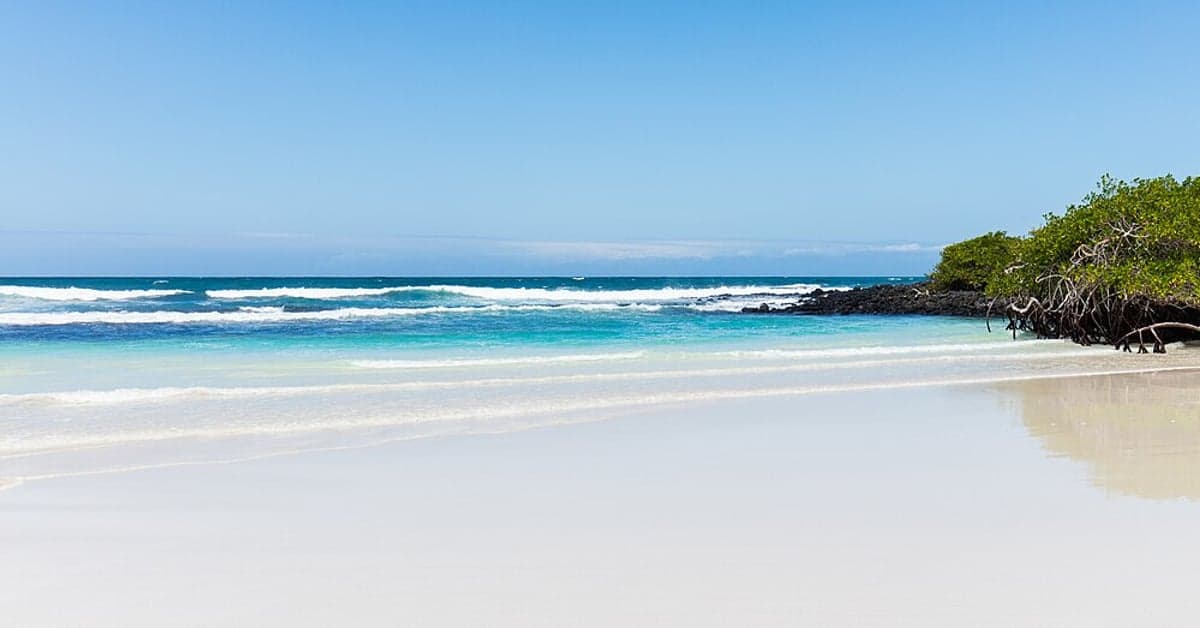
Tortuga Bay is the most accessible great beach in the Galápagos. From Puerto Ayora, the main town on Santa Cruz, a 2.5-kilometer paved trail leads through cactus forest to a vast crescent of white sand. The walk takes 30 minutes. No entrance fee beyond the park pass. The first beach (Playa Brava) faces open ocean with strong surf and currents — no swimming. Continue 10 minutes along a sand path to Playa Mansa, a sheltered mangrove-lined bay with calm, warm water, baby reef sharks cruising the shallows, and marine iguanas sunning on the rocks.
Kayak rentals at Playa Mansa cost $10 per hour. Paddle along the mangrove channels and you'll see sea turtles, rays, and herons. The beach closes at 5 PM — rangers enforce this strictly. Bring water and snacks; there are no vendors. Tortuga Bay is the galapagos islands beaches experience at its purest: white sand, clear water, and wildlife everywhere. It is recognized as a UNESCO World Heritage Site.
Las Bachas
Las Bachas is on the north coast of Santa Cruz, accessible only by boat as part of a day tour or cruise itinerary. The name comes from "barges" — two WWII-era US military barges rusted into the sand near the shore. The beach has fine white sand, a flamingo-inhabited lagoon behind the dunes, and sea turtle nesting sites. Swimming is safe in the calm shallows. Tours from Puerto Ayora that include Las Bachas run $150-200 per person.
Isabela Island
Playa del Amor
Isabela is the largest Galápagos island and the least developed for tourism. The main town, Puerto Villamil, has a long white-sand beach running directly from the waterfront — no trail required. Playa del Amor is the stretch closest to town, where sea lions pile up at all hours and marine iguanas waddle across the sand. The water is cold by tropical standards (18-24°C depending on season) because the Cromwell Current upwells deep, nutrient-rich water along Isabela's coast.
The snorkeling at Concha de Perla, a protected cove in the harbor area, is free and extraordinary. Swim with sea lions, sea turtles, rays, and penguins (yes, penguins — the Galápagos penguin is the only species found north of the equator). The galapagos islands beaches on Isabela combine land and marine wildlife in ways no other destination can match.
Los Túneles
Los Túneles isn't a beach — it's a labyrinth of collapsed lava tunnels filled with ocean water, 30 minutes by boat from Puerto Villamil. The rock formations create arches, bridges, and sheltered pools where sea horses, sea turtles, white-tipped reef sharks, and blue-footed boobies concentrate. A guided tour costs $120-160 per person. The snorkeling here ranks among the best in the Galápagos.
San Cristóbal Island
Playa Mann
Playa Mann is a small beach in Puerto Baquerizo Moreno, San Cristóbal's main town. Walk from any hotel in under 10 minutes. The beach is tiny — maybe 150 meters — but the sea lion colony that calls it home is massive. Dozens of animals lounge on the sand, bark at each other, and occasionally try to share your towel. The water is calm enough for swimming, and sea lions will swim circles around you in the shallows.
Puerto Chino
Puerto Chino is on the south coast of San Cristóbal, reached by a 40-minute drive plus a 20-minute walk. The beach is white sand in a small cove surrounded by dark volcanic rock. Blue-footed boobies nest on the cliffs above. The isolation means you might share it with three other visitors and a dozen sea lions. No facilities, no vendors — bring everything you need. This is galapagos islands beaches solitude at its finest.
Kicker Rock (León Dormido)
Kicker Rock is a towering volcanic formation rising 148 meters from the ocean, split by a narrow channel. It's not a beach, but it's the Galápagos' most famous snorkeling and diving site. The channel between the rock faces drops to 20+ meters, and hammerhead sharks, Galápagos sharks, sea turtles, and eagle rays pass through regularly. Day trips from Puerto Baquerizo Moreno cost $120-180 per person. Diving is for experienced divers only — strong currents and cold water (16-22°C) make it challenging.
Floreana Island
Floreana is the least-visited inhabited island. Post Office Bay has a historical barrel where 18th-century whalers left mail to be carried by passing ships — tourists continue the tradition. The snorkeling at Devil's Crown, a submerged volcanic crater offshore, is world-class. Inside the crater, schools of fish, sea lions, and sea turtles circle in crystal-clear water. Day trips from Santa Cruz include Devil's Crown and cost $150-200.
Diving in the Galápagos
The Galápagos is a top-five dive destination globally. The marine biomass here is staggering — hammerhead sharks in schools of hundreds, whale sharks (June through November), manta rays with 5-meter wingspans, marine iguanas feeding underwater. Water temperature ranges from 16°C (July-November) to 25°C (January-May). A 7mm wetsuit is essential for the cold season.
Two-tank dives from Santa Cruz or San Cristóbal cost $180-250. The premium sites — Wolf and Darwin Islands in the far north — require a liveaboard cruise (7 nights from $3,500-6,000 per person). These sites have the highest concentration of hammerhead and whale sharks. For dive planning, check our destination guides covering the world's top underwater sites.
Practical Information
Getting There
Fly from Quito (2.5 hours) or Guayaquil (1.5 hours) to Baltra (for Santa Cruz) or San Cristóbal. Round-trip flights cost $350-500 on LATAM or Avianca. The $20 transit card is sold at the mainland airport, and the $200 park fee is collected when you land in the islands. The Galápagos Conservancy website has current fee schedules and conservation updates.
How Long to Stay
Five to seven days covers two islands well. Most visitors split time between Santa Cruz and either Isabela or San Cristóbal. Inter-island speedboats cost $25-30 per person (2-2.5 hours, rough rides). A cruise covers more ground but costs significantly more — budget $2,000-5,000+ per person for 5-8 nights.
Budget
The Galápagos is expensive by South American standards. Budget travelers can manage $80-120 per day staying in town, eating locally, and doing free activities (Tortuga Bay, Playa Mann, Concha de Perla). Mid-range travelers spending on guided tours and restaurant meals should budget $150-250 per day. The galapagos islands beaches reward patience and walking — many of the best experiences are free once you've paid the park entry.
Best Months
January through May is the warm/wet season — warmer water (22-25°C), calmer seas, better snorkeling visibility, and more sea turtle nesting. June through December is the cool/dry season — colder water (16-20°C), rougher seas, but peak wildlife activity including whale shark sightings and sea lion pupping.
Frequently Asked Questions
How much does it cost to visit the Galápagos Islands?
The park entry fee is $200 for most foreign adults, plus a $20 transit control card. Round-trip flights from mainland Ecuador cost $350-500. Budget travelers can manage $80-120 per day; mid-range travelers should budget $150-250 per day for tours and meals.
What is the best beach in the Galápagos?
Tortuga Bay on Santa Cruz is the most accessible and impressive — a 30-minute walk from Puerto Ayora leads to white sand, calm water at Playa Mansa, baby reef sharks, and marine iguanas. It's free beyond the park pass and closes at 5 PM.
Can you swim with sea lions in the Galápagos?
Yes — Concha de Perla on Isabela Island is a free, protected cove where sea lions, sea turtles, and even penguins swim alongside snorkelers. Playa Mann on San Cristóbal has dozens of sea lions on the sand and in the shallow water. Maintain the 2-meter park rule when they're on land.
When is the best time to visit the Galápagos Islands?
January through May for warmer water (22-25°C), calmer seas, and better snorkeling. June through December for peak wildlife activity including whale sharks and sea lion pupping, though water drops to 16-20°C. Each season has trade-offs — there's no bad time to visit.
How do you get between Galápagos islands?
Inter-island speedboats run daily between Santa Cruz, Isabela, and San Cristóbal for $25-30 per person (2-2.5 hours). The rides are rough — take motion sickness medication. Alternatively, cruise ships cover multiple islands but cost $2,000-5,000+ for 5-8 nights.
Is diving in the Galápagos worth the cost?
Absolutely — it's a top-five global dive destination. Two-tank dives cost $180-250 from Santa Cruz or San Cristóbal. Wolf and Darwin Islands (liveaboard required, $3,500-6,000 for 7 nights) have schools of hundreds of hammerhead sharks and whale sharks from June through November.
Do you need a guide in the Galápagos?
For national park visitor sites accessible only by boat, a licensed naturalist guide is required by law. Town beaches (Tortuga Bay, Playa Mann, Concha de Perla) and town areas are free to explore independently. Guided tours cost $120-200 per day depending on the site.
How many days do you need in the Galápagos?
Five to seven days covers two islands well. Most visitors split time between Santa Cruz and either Isabela or San Cristóbal. Fewer than four days feels rushed. A week-long cruise covers more ground but at significantly higher cost.