The Complete Guide to Beach Sunrise and Sunset Photography
Table of Contents
Why Beaches Produce the Best Light
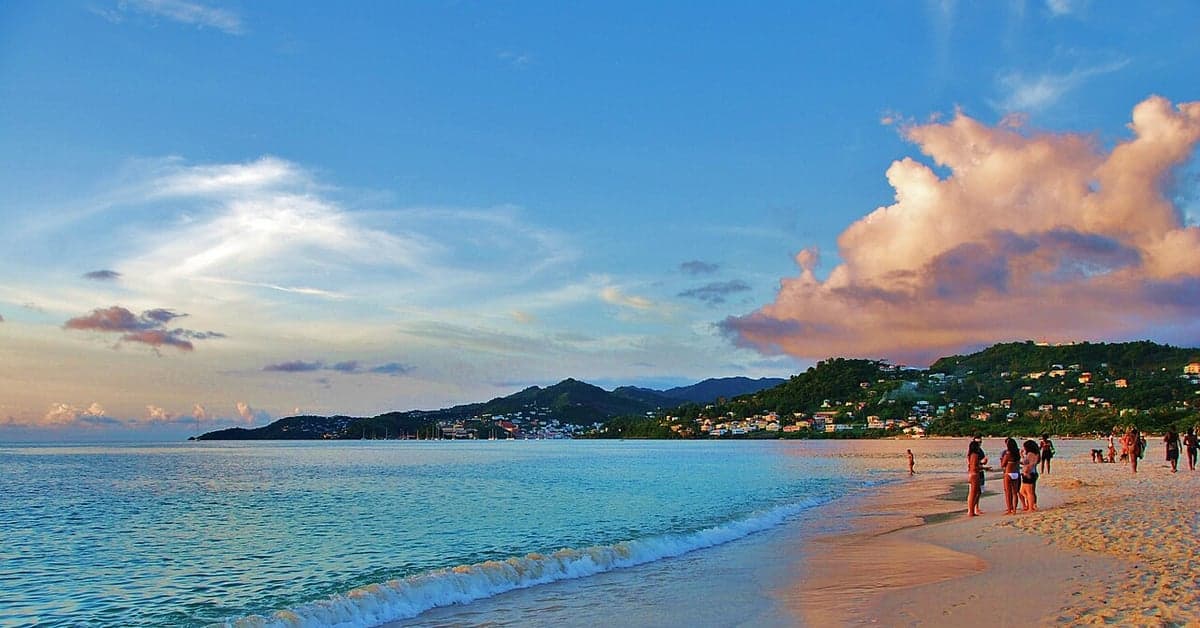
Beaches are natural photography studios. The open horizon provides unobstructed access to sunrise and sunset light. The water acts as a giant reflector, bouncing warm light back into the scene and filling shadows. Wet sand at the waterline becomes a mirror. Clouds over the ocean catch color that inland locations miss because there are no buildings, trees, or mountains blocking the low-angle light. An empty sea horizon also means the sun is visible right down to the moment it touches the water, which inland horizons rarely allow.
But “point the camera at the sunset and press the button” rarely produces a photo worth printing. The difference between a snapshot and a strong image comes down to timing, composition, and understanding how light behaves at the edge of the day. This guide covers the technical and creative decisions that separate the two.
Gear You Actually Need
Camera
Any camera works. Any recent flagship smartphone from Apple, Samsung or Google produces excellent sunrise and sunset shots in the hands of someone who understands composition and timing. A mirrorless or DSLR camera with manual controls gives you more flexibility, but the difference matters less than most gear-focused photographers want to admit. Use what you have.
Tripod
A tripod is the single most impactful upgrade for beach photography. It allows you to shoot long exposures (1-30 seconds) that smooth the water into silk, capture motion-blur in waves, and keep the image sharp in the low light of sunrise and sunset. A full-size tripod works best; a compact travel tripod is an acceptable compromise. If you have no tripod, rest the camera on a stable surface (a rock, a bag, a rolled-up towel) and use the self-timer to avoid shake.
Filters
A graduated neutral density (GND) filter darkens the sky relative to the foreground, helping your camera capture the full brightness range of a sunset scene without blowing out the sky or underexposing the sand. A 3-stop soft GND covers most beach situations. If you shoot on a phone, skip the filter: HDR mode handles the dynamic range reasonably well.
Protection
Sand and saltwater are camera killers. Keep your bag zipped between shots. Change lenses (if applicable) facing away from the wind. Wipe salt spray off the lens front element with a microfiber cloth, not your shirt. If a wave reaches your tripod, rinse the legs with fresh water at the end of the session. A waterproof camera bag or dry bag protects gear during transport to and from the beach.
Timing: The Three Golden Windows
Blue Hour
Blue hour falls inside civil twilight, which the US Naval Observatory defines as the time the center of the sun is between the horizon and 6 degrees below it. In practice the deep-blue window runs roughly 20 to 40 minutes before sunrise or after sunset, while the horizon still glows with residual color. It is an underrated window for beach photography: the light is even, the color is intense, and the long exposures it requires (2 to 15 seconds) produce silky water. Many people pack up as soon as the sun drops below the horizon, and miss it.
Golden Hour
Golden hour has no official definition; photographers generally mean the time the sun sits within about 6 degrees above the horizon. Near the tropics that can be as short as 20 to 30 minutes, while at higher latitudes in summer it can stretch past an hour, so look up your exact sunrise and sunset times with the NOAA Solar Calculator and arrive early. The light is warm, directional, and dramatic. Shadows are long. Textures in the sand and water are amplified. This is the classic beach photography window and the one that produces the postcard shots. At east-facing beaches, the sun itself appears over the water at sunrise; at west-facing beaches, at sunset.
How Long the Windows Last at Each Beach in This Guide
Calculated from each beach's latitude with the standard solar-position formulas, for the two solstices. "Golden hour" here is the sun's descent from 6° above the horizon to sunset (taken as −0.833°, the NOAA convention); "blue hour" is civil twilight, from sunset until the sun is 6° below the horizon. The morning windows at sunrise are the same length.
| Beach | Best for | Golden hour, June | Golden hour, December | Blue hour, June | Blue hour, December |
|---|---|---|---|---|---|
| Sanur, Bali | Sunrise | 30 min | 30 min | 23 min | 23 min |
| Kuta, Bali | Sunset | 30 min | 30 min | 23 min | 23 min |
| Negril, Jamaica | Sunset | 32 min | 32 min | 24 min | 24 min |
| Lanikai, Oahu | Sunrise | 32 min | 33 min | 25 min | 24 min |
| Miami Beach | Sunrise | 34 min | 34 min | 26 min | 25 min |
| Bondi, Sydney | Sunrise | 38 min | 37 min | 28 min | 29 min |
| Pfeiffer Beach, Big Sur | Sunset | 38 min | 40 min | 30 min | 29 min |
| Oia, Santorini | Sunset | 38 min | 40 min | 31 min | 29 min |
| Zadar, Croatia | Sunset | 44 min | 48 min | 37 min | 33 min |
The closer a beach is to the equator, the more steeply the sun drops and the shorter both windows are: in Bali you get about half an hour of golden light, in Zadar closer to three quarters of an hour.
The Green Flash
A brief green spot or rim that appears at the top of the sun as it crosses the horizon, caused by the atmosphere refracting different wavelengths of light by different amounts. According to the standard account of the phenomenon, a visible flash usually lasts no more than about two seconds and needs an unobstructed horizon (a clear ocean horizon is ideal) plus a temperature layering in the air that produces a mirage, which is why it is uncommon. There is no reliable way to predict it. Capturing it takes a telephoto lens (200mm or longer), continuous shooting as the last sliver of sun disappears, and patience. Never look at the sun through a telephoto lens or viewfinder before it has reached the horizon; watch on the camera's rear screen instead.
Composition Techniques
Foreground Interest
The most common mistake in beach sunset photography is pointing the camera at the sky and ignoring the bottom half of the frame. The sky is the light source, but the image needs a subject. Rocks, tide pools, driftwood, footprints, shells, a line of seaweed: any element in the foreground that adds depth and leads the viewer’s eye into the scene. Position yourself low (kneel or even lie in the wet sand) to exaggerate the foreground and create a sense of depth.
Leading Lines
The waterline, a channel of water flowing across the sand, a jetty, a row of rocks: any line that draws the viewer’s eye from the foreground into the distance. Diagonal lines are more dynamic than horizontal ones. A receding wave creates a natural leading line if you time the exposure to capture the water’s motion.
Reflections
Wet sand at the waterline acts as a mirror for the sky. Position yourself where the most recent wave has left a thin film of water on the sand, and shoot low. The reflection doubles the color in your frame and creates a sense of depth. Time your shot for the moment between waves when the water is still and the reflection is sharpest.
Silhouettes
People, palm trees, boats, or rock formations positioned between your camera and the setting sun become silhouettes. Expose for the sky (not the subject) to keep the silhouette dark and the colors vivid. A single person walking along the waterline at sunset is one of the most reliable compositions in beach photography: simple and universally readable.
Camera Settings
For Smartphones
Tap the sky in your frame to set exposure for the brightest area; this prevents the sky from blowing out to white. Enable HDR mode for balanced exposure across sky and foreground. Use the grid overlay for composition. Shoot in the highest resolution your phone offers. If your phone has a manual/pro mode, set the white balance to “daylight” or “cloudy” to preserve warm tones (auto white balance often cools sunset colors).
For Mirrorless/DSLR
Aperture priority mode, f/8-f/11 for maximum sharpness across the scene. ISO 100-400. Let the shutter speed fall where it may; on a tripod, slow shutter speeds are an asset. Shoot in RAW for maximum editing flexibility. Manual white balance at 6,000-7,000K preserves warm sunset tones. Use a 2-second timer or remote release to avoid camera shake. For long exposures (water smoothing), add a 3-6 stop ND filter and extend the shutter speed to 1-30 seconds.
Post-Processing
Beach sunrise and sunset photos typically need minimal editing. The light does most of the work. Common adjustments: increase clarity/texture slightly to enhance sand and wave detail, boost vibrance (not saturation; vibrance is more selective and less garish), adjust the white balance warmer if the camera cooled it down, and darken the sky with a graduated filter if it is brighter than the foreground. Resist the temptation to push colors to neon; the best beach photos look real, not radioactive.
Lightroom (desktop or mobile) and Snapseed (free, mobile) both handle beach photo editing well. For smartphone shots, the built-in photo editor on iOS and Android provides sufficient adjustment tools. The goal is to match what your eyes saw, not to create a fantasy. If the sunset was genuinely that orange, your photo should be too. If it was subtle peach and lavender, preserve that subtlety, which will age better than oversaturated edits.
Best Beaches for Sunrise and Sunset Photography
Orientation is what matters: you want the sun rising or setting over open water, or behind a subject you can silhouette. Check each spot's sunrise or sunset azimuth for your travel dates, because the sun's position along the horizon shifts noticeably between June and December.
Sunrise (east-facing): Sanur Beach (Bali) faces east across the Badung Strait toward Nusa Penida, and on clear mornings Mount Agung is visible to the northeast. Bondi Beach in Sydney faces the Pacific, and the rock pool at Bondi Icebergs makes a strong foreground. Lanikai Beach on Oahu's windward side looks east to the twin Mokulua islets. Miami Beach faces due east over the Atlantic, with lifeguard towers as ready-made silhouettes.
Sunset (west-facing): Oia on Santorini looks west over the caldera and is one of the most crowded sunset spots in Europe; arrive an hour or more early in summer. Negril's West End cliffs in Jamaica, including the area around Rick's Cafe, face the sunset directly. Kuta Beach in Bali offers wide sand and a big western sky. Zadar's waterfront in Croatia has the Sea Organ and the Greeting to the Sun light installation for foreground interest. On California's Big Sur coast, the arch at Pfeiffer Beach lines up with the setting sun for a few weeks either side of the winter solstice, which draws crowds in December and January; the beach is a Los Padres National Forest day-use site reached by a narrow side road off Highway 1, so check current hours, fees and any Highway 1 closures before you drive.
Frequently Asked Questions
Do I need an expensive camera for beach sunset photography?
No. Any recent flagship smartphone produces excellent sunset photos. The difference between a good and a great beach photo comes down to timing, composition and understanding light, not camera cost. A tripod is a more useful purchase than a camera upgrade.
What is the best time to photograph a beach sunset?
Arrive for golden hour, when the sun is within about 6 degrees of the horizon (anywhere from 20 minutes to over an hour depending on latitude and season), stay through the sunset itself, and keep shooting into blue hour, roughly 20 to 40 minutes after sunset during civil twilight. Blue hour is the most underrated of the three and often has the richest color.
How do I make the water look smooth and silky?
Use a long exposure (1 to 30 seconds) on a tripod. On a camera, set f/8 to f/11 and ISO 100 and let the shutter speed extend; add a 3 to 6 stop ND filter if there is still too much light. On an iPhone, the Long Exposure effect on a Live Photo simulates it, and apps such as ProCamera and Slow Shutter offer similar modes.
Why do my sunset photos look washed out?
Your camera is likely overexposing the sky. On a phone, tap the brightest part of the sky to set exposure for the highlights. On a camera, spot meter on the sky or underexpose by 1 to 2 stops. A graduated neutral density filter also helps balance the bright sky against the darker foreground.
Should I photograph sunrise or sunset?
Both produce excellent light. Sunrise usually means fewer people, footprint-free sand and calmer wind; sunset is easier to plan around. Which one works depends mainly on which way the beach faces: east-facing beaches for sunrise, west-facing for sunset.
How do I protect my camera from sand and saltwater?
Keep your bag zipped between shots, change lenses facing away from the wind, and wipe salt spray off with a microfiber cloth rather than clothing. If waves reach your tripod, rinse the legs with fresh water afterward. Use a rain cover or dry bag for transport; sand in a lens mount or on a sensor can cause expensive damage.
What is the green flash?
A brief green spot or rim at the top of the sun as it crosses a clear horizon, caused by the atmosphere refracting colors of sunlight by different amounts. A visible flash usually lasts no more than about two seconds and depends on a mirage-producing layer in the air, so it is uncommon and cannot be reliably predicted. Never look at the sun through a telephoto lens before it reaches the horizon.