A Complete Guide to Beach Fishing Around the World
Table of Contents
Prices in this guide are approximate and change often. Check with the hotel, airline or operator before you book.
The Simplest Form of Fishing
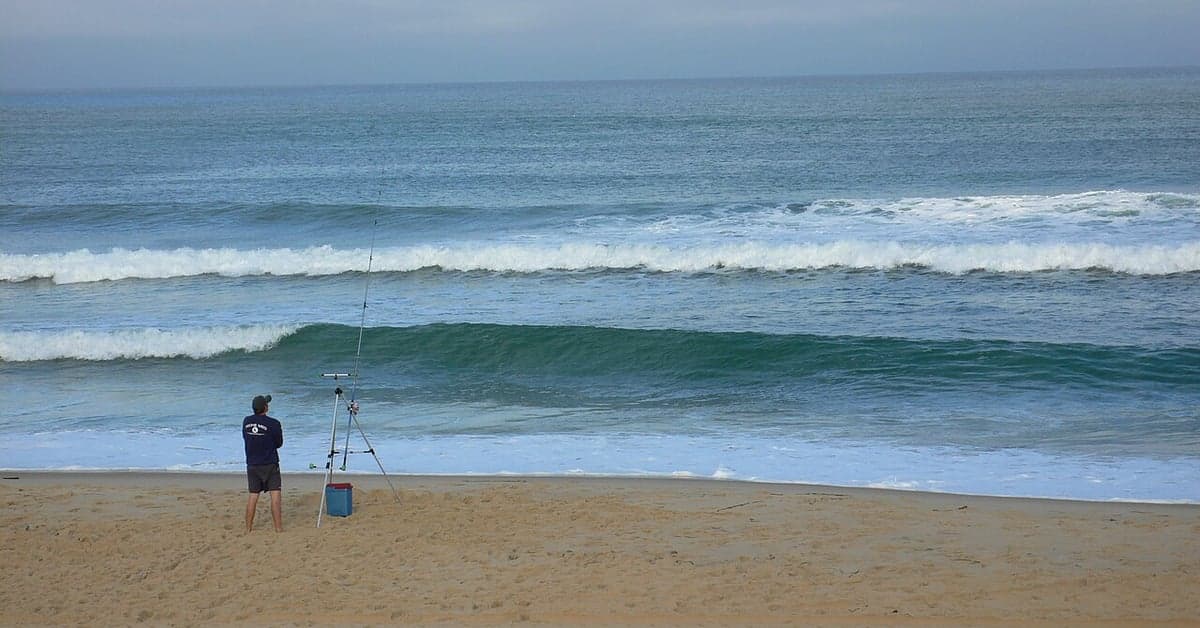
Beach fishing — also called surf fishing or shore casting — strips the sport to its fundamentals. No boat, no guide, no expensive sonar equipment. You stand on the sand, cast into the surf, and wait. The gear is simple, the technique is learnable in an afternoon, and the setting is the ocean itself. Whether you catch dinner or nothing, you spent the day on a beach with a rod in your hand, which is a reasonable way to spend a day regardless of the outcome.
Beach fishing is practiced on every inhabited continent, from the striper runs of Cape Cod to the shore-based game fishing of Namibia's Skeleton Coast. The species, the tackle, and the techniques vary enormously by location, but the core principles are universal: find where the fish are feeding, present a bait or lure at the right depth and distance, and have patience. This guide covers the essentials of beach fishing worldwide, with specific advice for the best destinations.
Gear Basics
Rod and Reel
A 10-12 foot surf rod paired with a spinning reel (4000-6000 size) loaded with 15-25 lb braided line is the standard setup for most beach fishing worldwide. The long rod generates the casting distance needed to reach fish beyond the breaking waves — experienced surf casters can reach 100+ meters, but most fishing happens within 50-80 meters of shore. Braided line is thinner and casts further than monofilament at the same breaking strength.
Travel-specific rods break down into 3-4 sections and fit in a rod tube that checks as airline luggage. Penn, Daiwa, and Shimano all make travel surf rods in the $80-150 range that perform well for occasional fishing. If you are serious about beach fishing while traveling, a dedicated travel rod is worth the investment.
Terminal Tackle
The two fundamental beach fishing rigs: the fish-finder rig (a sliding sinker above a leader with a single hook, used for bait fishing on the bottom) and the two-hook dropper rig (two hooks above a sinker, used for targeting fish feeding at different depths). Sinker weight depends on the surf — 2-4 ounces in calm conditions, 4-8 ounces in heavy surf. Pyramid sinkers dig into sand to hold position; round sinkers roll with the current and cover more ground.
Bait
Fresh bait almost always outperforms frozen or artificial. The universal beach fishing baits: sand crabs (mole crabs), sandworms, squid strips, cut fish, and shrimp. The best approach at any new beach is to visit the local tackle shop and ask what bait is working — local knowledge is worth more than any article, including this one.
Reading the Beach
Where the Fish Are
Fish do not distribute randomly along a beach. They concentrate where the food is, which means structure — any break in the uniform sandy bottom that creates a current change and a feeding opportunity. The key features to identify:
Troughs: deeper channels running parallel to the beach between sandbars. Fish cruise these troughs feeding on crustaceans and baitfish that collect there. Look for darker water (deeper) between lighter areas (shallower sandbars).
Cuts: gaps in sandbars where water flows between the beach and the deeper ocean. Fish use these as highways. Cast to the edges of cuts.
Points and jetties: any structure that extends into the water creates a current break where food accumulates. Rocky points, piers, jetties, and groins concentrate fish.
The best time to read beach structure is at low tide, when sandbars, troughs, and cuts are visible. Return to fish the same spots at the incoming tide, when water fills the troughs and brings fish in to feed.
Best Beach Fishing Destinations
Cape Hatteras, North Carolina, USA
The Outer Banks of North Carolina — particularly Cape Hatteras — are the premier beach fishing destination in the eastern United States. The point where the warm Gulf Stream and the cold Labrador Current collide creates a nutrient-rich mixing zone that attracts an extraordinary variety of species. Red drum (channel bass), bluefish, striped bass, flounder, pompano, and in summer, cobia and Spanish mackerel are all catchable from the surf.
Fall (September through November) is the prime season, when southern species moving south and northern species moving south overlap at the cape. The red drum run in October-November draws surf anglers from across the country — fish exceeding 40 inches and 30 pounds are regularly caught from the beach. Cape Point, where the island narrows to a spit of sand between the Atlantic and Pamlico Sound, is the most famous spot. A 4WD vehicle and an ORV (off-road vehicle) permit ($50 for 10 days) are needed to access the best fishing areas on the Cape Hatteras National Seashore.
K'gari (Fraser Island), Queensland, Australia
The world's largest sand island offers 75 miles of beach accessible only by 4WD, with fishing opportunities that range from dart and whiting in the gutters to tailor (bluefish equivalent), flathead, and the jewel of Australian beach fishing: mulloway (jewfish), which can exceed 30 kg. The eastern beach is the main fishing ground, with a series of rock formations (Indian Head, Waddy Point) that create structure and concentrate fish.
Fishing here is an expedition. A 4WD is mandatory, tire pressure must be adjusted for sand driving, and tides determine when sections of beach are passable. But the combination of a UNESCO World Heritage wilderness, dingoes wandering the beach, and fish that have seen minimal pressure makes K'gari a bucket-list surf fishing destination.
Skeleton Coast, Namibia
Namibia's Skeleton Coast is the most extreme beach fishing destination on the planet. The cold Benguela Current brings nutrient-rich water up from Antarctica, creating one of the most productive marine ecosystems on Earth. The target species from the beach include kob (a corvina-like fish that exceeds 30 kg), steenbras, galjoen (Namibia's national fish), and the big one — bronze whaler sharks, caught from the beach using heavy tackle and whole fish baits.
Fishing here means camping on a beach where the Namib Desert meets the Atlantic, with seal colonies, shipwrecks visible in the sand, and virtually no other humans. Guided fishing safaris run from Henties Bay and Swakopmund. This is not casual fishing — the conditions are harsh (cold, windy, fog), the casting distances are long, and the sharks require heavy-duty gear and knowledge. But for dedicated beach anglers, the Skeleton Coast is the ultimate destination.
South Padre Island, Texas, USA
The southern Texas coast offers year-round beach fishing for a variety of species. Spotted seatrout, redfish (red drum), pompano, and whiting are the bread-and-butter catches. In summer, jack crevalle and blacktip sharks prowl the surf. The beach is wide, flat, and accessible — you can drive directly onto the sand (free) in many areas. The water is warm enough for wade fishing much of the year, which adds a whole dimension to the surf fishing experience.
Bay of Plenty, New Zealand
The east coast of New Zealand's North Island offers beach fishing in stunning settings for snapper, kahawai, trevally, and kingfish. Mount Maunganui's main beach ("The Mount") is a popular spot where the surf breaks over a sandy bottom that attracts feeding fish. The Waihi Beach stretch further south is longer, less crowded, and produces consistent catches. The New Zealand fishing regulations are strict — check bag limits and minimum sizes before fishing.
Rules and Etiquette
Licensing
Most US states require a saltwater fishing license for beach fishing ($10-50 for a short-term non-resident license). Australia requires state-based recreational fishing licenses in some states. New Zealand has no license requirement for saltwater fishing but enforces bag limits strictly. In many Caribbean and Central American countries, no license is needed for shore fishing. Always check local regulations before fishing — ignorance of the rules is not an accepted excuse and fines can be substantial.
Catch and Release
If you are not going to eat the fish, use barbless hooks (or crimp the barbs), handle the fish as little as possible, keep it in the water while removing the hook, and release it quickly. A fish held out of water for a grip-and-grin photo suffers oxygen deprivation that can be fatal even if the fish swims away initially. Prioritize the fish's survival over your photograph.
Beach Etiquette
Cast away from swimmers. If you are fishing near a swimming area, you are in the wrong spot — move. Do not leave line, hooks, or bait on the beach. Cut line and hooks are the most dangerous litter on any beach, causing injuries to humans, dogs, and seabirds. Clean up everything, including the bait scraps that attract seagulls.
Frequently Asked Questions
What gear do you need for beach fishing?
A 10-12 foot surf rod, a spinning reel (4000-6000 size) with 15-25 lb braided line, pyramid or round sinkers (2-8 oz depending on surf), basic fish-finder or dropper rigs, and fresh bait. Travel-specific rods break into 3-4 sections for airline luggage. A basic setup costs $100-200 and covers most beach fishing situations worldwide.
Where is the best beach fishing in the world?
Cape Hatteras, North Carolina is the premier eastern US destination, with red drum runs in October-November that draw anglers from across the country. K'gari (Fraser Island), Australia offers expedition-style fishing on the world's largest sand island. Namibia's Skeleton Coast is the extreme choice, with kob and bronze whaler sharks from a wilderness beach where the desert meets the Atlantic.
How do you find fish from the beach?
Look for structure — troughs (darker water between sandbars), cuts (gaps in sandbars where water flows), and points or jetties. Fish concentrate where food accumulates due to current changes. Read the beach at low tide when features are visible, then fish the same spots on the incoming tide when water fills the troughs and brings feeding fish in.
Do you need a license for beach fishing?
In most US states, yes — a saltwater fishing license costs $10-50 for non-residents. Australia requires licenses in some states. New Zealand has no saltwater license but enforces bag limits strictly. Many Caribbean countries require no license for shore fishing. Always check local regulations before fishing; fines for unlicensed fishing can be substantial.
What is the best bait for beach fishing?
Fresh bait almost always outperforms frozen or artificial. Universal beach fishing baits include sand crabs (mole crabs), sandworms, squid strips, cut fish, and shrimp. The most effective approach is visiting a local tackle shop at your destination and asking what is working — local knowledge specific to current conditions is invaluable.
When is the best time to fish from the beach?
The two hours before and after a tide change (particularly the incoming tide) are generally the most productive times worldwide. Dawn and dusk are also prime feeding periods for most species. A combination — fishing the incoming tide at dawn — is often the most productive window. Full moon and new moon tides create stronger water movement and can improve fishing.