Charleston Beaches: Folly Beach, Sullivan's Island, and Lowcountry Charm
Table of Contents
Prices in this guide are approximate and change often. Check with the hotel, airline or operator before you book.
Lowcountry Coast Where History Meets the Atlantic
Charleston, South Carolina sits on a peninsula where the Ashley and Cooper Rivers meet and empty into the Atlantic. The city's beaches aren't on the peninsula itself -- they're on the barrier islands just east and south, each accessible by a short drive over a bridge. Folly Beach is 20 minutes south. Sullivan's Island and Isle of Palms are 20 minutes northeast. Kiawah Island is 40 minutes southwest.
What makes the Charleston beaches different from most Atlantic Coast beach towns is the Lowcountry backdrop. Salt marshes, live oaks draped in Spanish moss, pluff mud at low tide, dolphins surfacing in the creeks between islands. The beaches themselves are wide and sandy, but the surrounding landscape adds a texture that pure sand-and-surf destinations lack.
Folly Beach
Folly Beach is Charleston's most accessible and most popular beach island. The town calls itself "The Edge of America." The main beach is about 6 miles long with public access points scattered along the island. Parking at the county park on the west end costs $15 per car and includes lifeguards, restrooms, and chair rentals ($20-30/day).
The Folly Beach Pier, rebuilt after Hurricane Hugo in 1989 and refurbished again in 2023, extends 1,045 feet into the Atlantic. Fishing from the pier costs $8 ($5 for kids under 13). Rod rentals are available for $10. The pier is also a solid vantage point for watching the local surf break, which is the most consistent in the Charleston beaches area -- waist to head-high waves on most south and east swells.
The Morris Island Lighthouse
At the far northeast tip of Folly Beach, a 161-year-old lighthouse stands in the water about 300 yards offshore. The Morris Island Lighthouse was originally on dry land, but erosion moved the shoreline past it. At low tide, you can wade partway out (the water stays shin to knee-deep), though reaching the lighthouse requires swimming across a channel with strong currents. It's best photographed from the beach at sunset when the silhouette contrasts against the sky.
Sullivan's Island
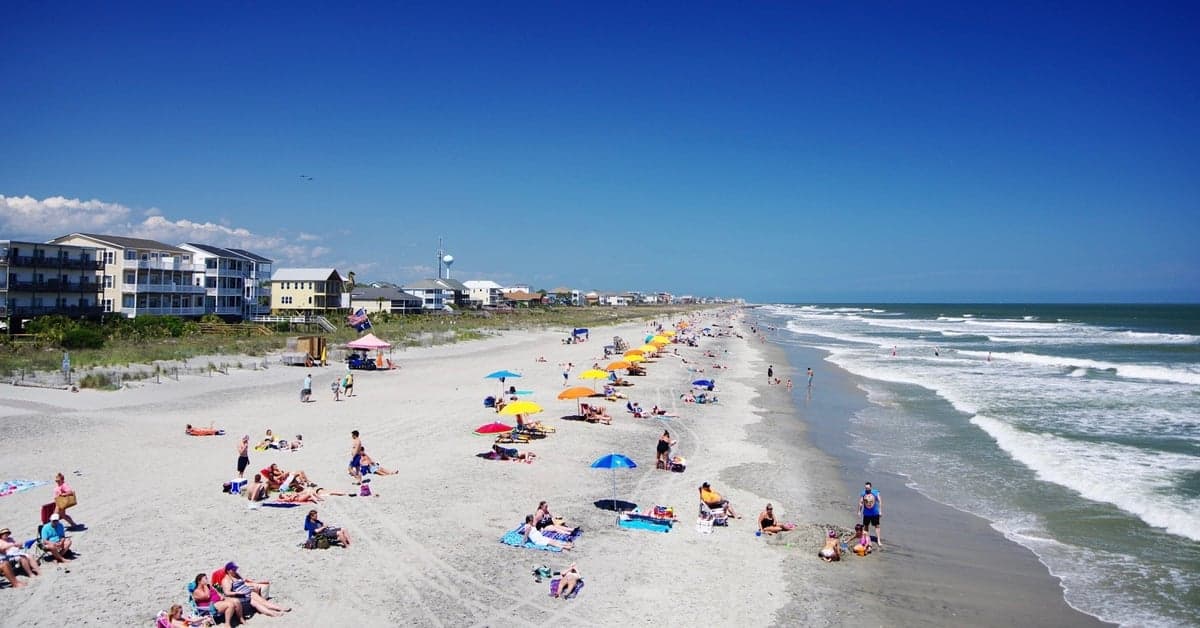
Sullivan's Island is the quiet, residential counterpart to Folly Beach. No hotels. No rental shops. No commercial boardwalk. Just a small cluster of restaurants on Middle Street and wide, tree-lined residential roads leading to beach access paths. The island has a 3.5-mile beach with free parking along the streets (though spots fill by mid-morning in summer).
The Charleston beaches on Sullivan's Island feel different from Folly. The sand is packed harder. The crowd is smaller and more local. The water is the same -- warm in summer (78-82°F), cooler but swimmable in spring and fall (65-75°F). Fort Moultrie, a National Park Service site at the west end of the island, preserves military fortifications spanning the Revolutionary War through World War II. Entry is $10 per person.
Where to Eat on Sullivan's Island
Poe's Tavern is named after Edgar Allan Poe, who was stationed at Fort Moultrie in 1827. The burger menu is themed around his works -- the Gold Bug ($14) with pimento cheese and bacon is the bestseller. The Obstinate Daughter on Middle Street does wood-fired pizza ($16-20) and creative small plates in a space that fills up fast on weekend evenings. Home Team BBQ at the base of the bridge has pulled pork sandwiches ($13) and frozen drinks that mask their strength.
Isle of Palms
Isle of Palms (IOP) sits just north of Sullivan's Island, connected by a short bridge. It's the more developed of the two -- vacation rental houses, a small commercial strip, and the Wild Dunes Resort at the north end. The beach is wide and the crowd is a mix of vacationing families and local day-trippers.
The county park at the front beach of IOP ($15 parking) has lifeguards, a snack bar, and chair/umbrella rentals. The Charleston beaches here are good for boogie boarding when the swell is up -- the sandbar formations create a decent shorebreak. For boat access, the IOP Marina rents fishing charters and runs dolphin tour cruises through the Intracoastal Waterway. See Surfline for current guidance.
Kiawah Island
Kiawah is 40 minutes southwest of Charleston and operates as a gated resort community. Day visitors can access Beachwalker County Park at the west end of the island ($15 parking, open seasonally March through November). The beach here is wide, windswept, and bordered by maritime forest. Dolphins regularly feed close to shore, and loggerhead sea turtles nest on Kiawah's beaches from May through October. See NOAA Fisheries sea-turtle program for current guidance.
The Kiawah Island Golf Resort is the main draw for non-residents, with the Ocean Course hosting the 2012 and 2021 PGA Championships. Green fees on the Ocean Course run $400+ during peak season. Even if golf isn't your thing, the Charleston beaches at Kiawah have a wilder, more natural feel than the islands closer to the city.
Downtown Charleston
The beaches are the draw, but downtown Charleston is the anchor. The historic district is one of the best-preserved colonial-era city centers in the United States. Rainbow Row (13 colorful Georgian houses on East Bay Street), the City Market, and the Battery waterfront park are all walkable within a square mile.
The restaurant scene is nationally recognized. Husk on Queen Street (from chef Sean Brock) changes its menu daily based on what's available from local farms and fishermen -- dinner entrees run $28-42. FIG on Meeting Street does Lowcountry fine dining with a focus on local ingredients ($30-45 entrees). For something quicker, Lewis Barbecue on Nassau Street serves Texas-style brisket ($15/half pound) and pulled pork in a no-frills setting. Charleston's visitor bureau maintains a full restaurant directory.
Getting Between the Beaches and Downtown
All Charleston beaches are 20-40 minutes from downtown by car. There's no meaningful public transit to the islands. The drive to Folly Beach crosses the James Island connector and the Folly Road bridge. The drive to Sullivan's Island and IOP goes through Mount Pleasant over the Ravenel Bridge, which has a pedestrian lane with views of the harbor and Fort Sumter. Budget for parking -- downtown meters cost $2/hour and hotel parking adds $25-40/night.
Practical Information
Best Time to Visit
April through June and September through October are ideal -- water temperatures of 70-82°F, manageable humidity, and lower hotel rates than summer peak. July and August are hot (90°F+ with high humidity) and crowded. Hurricane season runs June through November, with peak risk in August and September. See our 2026 Atlantic hurricane tracker for the season outlook. Winter (December-February) is mild by Northern standards (50-65°F daytime) but too cool for comfortable ocean swimming.
What to Know About Tides
Charleston has a significant tidal range -- about 5-6 feet between high and low tide. This dramatically changes the beach experience. At low tide, the Charleston beaches expand to reveal hard-packed sand perfect for walking and playing. At high tide, the beach narrows considerably, especially on Sullivan's Island. Check tide charts before your visit and plan beach days around low tide for the most space.
Budget
Charleston isn't cheap. Downtown hotel rooms average $200-400/night in summer. Vacation rental houses on Folly Beach start around $250/night or $1,500-3,000/week. A nice dinner downtown runs $50-80 per person with drinks. The free stuff is excellent though: walking the historic district, watching sunset from the Battery, exploring Fort Moultrie's grounds, and shelling at low tide on any of the barrier island beaches.
Frequently Asked Questions
Which Charleston beach is the best?
Folly Beach is the most popular with the best surfing, pier fishing, and restaurant scene. Sullivan's Island is quieter and more residential with no hotels or commercial strip. Kiawah has the wildest, most natural beach. Isle of Palms is the best all-around family option.
How far are the beaches from downtown Charleston?
Folly Beach is 20 minutes south. Sullivan's Island and Isle of Palms are 20 minutes northeast. Kiawah Island is 40 minutes southwest. All require a car -- there's no meaningful public transit to the islands.
What is the water temperature at Charleston beaches?
Water temperatures range from 55-60°F in winter to 78-82°F in summer. The most comfortable swimming months are June through September. Spring (April-May) and fall (September-October) offer swimmable temperatures of 65-78°F.
Is Folly Beach good for surfing?
Folly Beach has the most consistent surf in the Charleston area with waist to head-high waves on south and east swells. The break near the pier is the main spot. The Washout area further east draws more experienced surfers. Board rentals are available at shops on Center Street.
What is the best time to visit Charleston beaches?
April through June and September through October offer warm water (70-82°F), lower humidity, and better hotel rates. July and August are hot (90°F+) and crowded. Hurricane season peaks August through September. Winter is mild but too cool for ocean swimming.
How do tides affect Charleston beaches?
Charleston has a 5-6 foot tidal range that dramatically changes the beach. At low tide, hard-packed sand extends far from the dunes, ideal for walking and playing. At high tide, beaches narrow significantly, especially on Sullivan's Island. Check tide charts and plan beach days around low tide.
Where should you eat near Charleston beaches?
On Sullivan's Island, Poe's Tavern serves themed burgers ($14) and The Obstinate Daughter has wood-fired pizza ($16-20). On Folly Beach, Taco Boy does street-style tacos. Downtown, Husk changes its menu daily ($28-42 entrees) and Lewis Barbecue serves Texas-style brisket ($15/half pound).
Can you see dolphins at Charleston beaches?
Yes. Bottlenose dolphins are common in the waters around all Charleston barrier islands. They feed close to shore, especially at Kiawah Island. Dolphin tour cruises run from Isle of Palms Marina for $35 per person (90 minutes) through the Intracoastal Waterway.