Nude Beaches in Uruguay (2026): The Two Official Beaches
Table of Contents
The Reality of Nude Beaches in Uruguay
Uruguay has two officially designated nude beaches, both legal and government-sanctioned: Playa Chihuahua near Punta del Este, officially authorized in 2000 as the country's first naturist beach, and La Sirena in Rocha, two kilometres northeast of Aguas Dulces. Nudity is permitted at these designated beaches but nowhere else on the coast. For naturists, the nude beaches in Uruguay are among South America's most established and genuinely worth the trip.
This guide covers exactly where each beach is, how to reach it, what the atmosphere is really like, and where you must keep your swimsuit on. Uruguay is the rare Latin American country where naturism is officially recognized rather than merely tolerated, and that legal footing is the whole reason the two beaches endure.
Why Uruguay Is Different from the Rest of South America
Most South American beaches operate on informal tolerance at best; nudity is either technically illegal everywhere or confined to a single unmarked cove. Uruguay took a different path. Playa Chihuahua was authorized by the government of Maldonado Department and the Ministry of Tourism in 2000, and Rocha later designated La Sirena as an official clothing-optional beach. A third beach in Colonia Department was authorized in 2020 and later cancelled. Public nudity outside these designated areas is still prohibited and can bring legal consequences, so the freedom is real but bounded.
The organizing body behind this is Uruguay's naturist community, formalized through associations such as AUDEN and later AUNNA, the latter a correspondent member of the International Naturist Federation. Uruguay's small population, liberal social norms, and long Atlantic coastline made official naturist beaches politically possible in a way they simply aren't in most neighboring countries. For the wider legal and historical background, see the overview of naturism in Uruguay.
Playa Chihuahua: Uruguay's Original Nude Beach
Location and Access
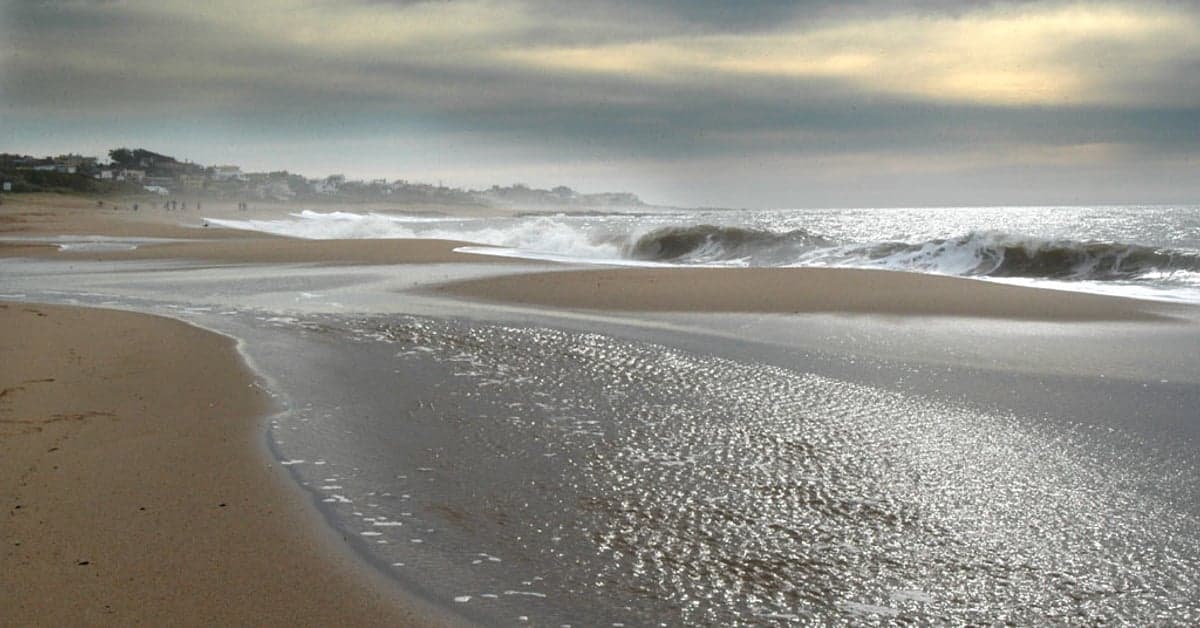
Playa Chihuahua sits on Portezuelo Bay at roughly kilometer 115.5 of the Interbalnearia coastal highway, about 15 minutes west of central Punta del Este and only five minutes from Laguna del Sauce International Airport. The beach is framed by tall sand dunes, with Punta Ballena and the whitewashed Casapueblo visible to the east. Access is easy by car, and the beach lies about a kilometer off the main Montevideo-Punta del Este motorway.
The Atmosphere
Chihuahua became Uruguay's first officially authorized naturist beach in 2000. It runs from the mouth of El Potrero stream to around kilometre 115.5 of National Route 10, backed by dunes, and the usual naturist etiquette applies: stay within the designated area and never photograph other people.
El Refugio and Where to Stay
Punta del Este and the Portezuelo area offer the full spread of hotels and rentals within a short drive, so Chihuahua works equally well as a day trip from a conventional Punta del Este holiday.
La Sirena: The Wild Naturist Beach in Rocha
Uruguay's second official nude beach, La Sirena, lies about 2.5 kilometers north of the small resort town of Aguas Dulces in the Rocha Department, well east of Punta del Este toward the Brazilian border. It was formally designated by the Rocha government and is backed by dunes, pine and acacia woods, marshes, and lagoons — a far wilder, emptier setting than Chihuahua. You reach it on foot from the end of Cachimba y Faroles street in Aguas Dulces, walking along the sand or over the dunes to the marked signs.
La Sirena has no lifeguard and almost no tourist infrastructure, so bring everything you need and plan to eat and sleep back in Aguas Dulces. The trade-off is solitude: this is the beach for naturists who want empty Atlantic coastline over amenities. The same etiquette applies as at Chihuahua — respect personal space and never photograph or film anyone without consent. Official details are on the Rocha tourism board's official La Sirena page, and there is a concise summary on the La Sirena Beach entry.
Where Nudity Is Not Allowed
Outside Chihuahua and La Sirena, going nude is illegal anywhere on Uruguay's coast. The marquee beaches of Punta del Este — Playa Brava, Playa Mansa, and the peninsula beaches — are strictly textile, family-oriented, and heavily policed in summer. The same is true of Montevideo's urban beaches such as Pocitos and Ramírez. Topless sunbathing is not a legal right either; full nudity anywhere but the two designated beaches risks a fine or worse.
Practical Tips for Visiting Uruguay's Nude Beaches
When to Visit
The Uruguayan beach season runs from December through March, with January the peak and warmest month, when air temperatures sit in the high 70s to mid-80s Fahrenheit and the Atlantic water reaches roughly 68-72°F. December and late February are quieter and cheaper. Outside summer the water is cold and the beaches largely empty, so a naturist trip really means December to early March.
Etiquette and Rules
Both beaches operate under a naturist code of ethics: no staring, no lewd behavior in the family areas, respect for personal space, and absolutely no photography or video of other people without explicit consent. This is enforced socially and is part of why the beaches have kept their designation. Treat it as non-negotiable.
What to Pack
Bring high-SPF reef-safe sunscreen, plenty of water, a wide-brim hat, and everything else you'll need for the day — Chihuahua has limited services and La Sirena has essentially none. Sturdy sandals help on the dune paths, and a light cover-up is useful for the walk to and from the parking areas, where textile rules resume.
Getting There
Fly into Montevideo's Carrasco International Airport, then drive or take a bus east along the coast: about 90 minutes to two hours to Punta del Este and Chihuahua, and roughly four hours to Aguas Dulces for La Sirena. Renting a car is by far the easiest way to reach both, especially the remote La Sirena.
Final Thoughts
Uruguay is one of the very few countries in South America where naturism is officially legal and openly practiced rather than hidden. Playa Chihuahua near Punta del Este is the accessible original, authorized in 2000, while La Sirena in Rocha is the wild, empty alternative for those who want solitude. Between them, the nude beaches in Uruguay offer a genuine, legally protected naturist experience that most of the continent can't match. If you're planning a wider South American naturist trip, compare Uruguay with the beaches across the border in our Brazil nude beach guide, and see how the Pacific coast compares in our guides to Peru and Colombia.
This series: The World's Best Nude Beaches
Frequently Asked Questions
Does Uruguay have nude beaches?
Yes. Uruguay has two officially designated, legal nude beaches: Playa Chihuahua near Punta del Este in the Maldonado Department, and La Sirena near Aguas Dulces in the Rocha Department. Both are government-sanctioned clothing-optional beaches, which makes Uruguay one of the few countries in South America where naturism is formally recognized rather than merely tolerated. Nudity anywhere else on the Uruguayan coast is illegal.
Where is Playa Chihuahua and how do you get there?
Playa Chihuahua is on Portezuelo Bay at about kilometer 115.5 of the Interbalnearia coastal highway, roughly 15 minutes west of central Punta del Este and five minutes from Laguna del Sauce airport. It is easily reached by car, lying about a kilometer off the main Montevideo-Punta del Este motorway. The beach is backed by large sand dunes with views of Punta Ballena and Casapueblo.
Is public nudity legal in Uruguay?
Only at the two designated naturist beaches, Chihuahua and La Sirena, where nudity is permitted as long as it is respectful. Public nudity anywhere else on the Uruguayan coast or in public is not allowed and can result in legal consequences.
What is La Sirena beach like?
La Sirena is Uruguay's second official nude beach, about 2.5 kilometers north of Aguas Dulces in the Rocha Department. It is wild and undeveloped, with no lifeguard and no food services. From the resort, take Cachimba y Faroles avenue north to the end of the street, and bring everything you need.
Which is better, Chihuahua or La Sirena?
It depends on what you want. Chihuahua near Punta del Este is the accessible original, authorized in 2000 and an easy drive from the resort city. La Sirena in Rocha is remote, empty and undeveloped, ideal for naturists who prioritize solitude over amenities.
Where should I stay to visit Playa Chihuahua?
Punta del Este and the Portezuelo area have hotels and rentals within a short drive of Chihuahua, so it works well as a day trip. For La Sirena, stay in Aguas Dulces or nearby Rocha towns, since the beach itself has no services.
When is the best time to visit Uruguay's nude beaches?
The beach season runs from December through March, with January the warmest and busiest month. Summer air temperatures reach the high 70s to mid-80s Fahrenheit and Atlantic water temperatures sit around 68-72°F. December and late February are quieter and better value, while outside summer the water is cold and the beaches largely deserted.
Can you take photos at Uruguay's naturist beaches?
No, not of other people. Both Chihuahua and La Sirena operate under a naturist code of ethics that strictly forbids photographing or filming anyone without their explicit consent, alongside rules against staring and lewd behavior. This etiquette is enforced socially, so treat it as non-negotiable.