Best Nude Beaches in Puerto Rico: The Honest Guide
Table of Contents
Sponsored
Planning a beach trip?
Compare flight and hotel prices from hundreds of providers.
Search Deals on Expedia→The Reality of Naturism in Puerto Rico
Puerto Rico has no officially designated nude beaches and a Catholic-majority conservative public beach culture, but a small number of remote west-coast and Vieques beaches see informal naturist tolerance at their quietest hours. The island is a US territory with its own Penal Code (Article 144 criminalizes public indecency, "ofensa al pudor"), the cultural framework is roughly 70% Catholic with active church attendance, and the main resort beaches at Condado, Isla Verde, Dorado, and Rincón are uniformly textile and well-patrolled. The honest verdict: the realistic naturist destinations are short flights away — Saint Martin's Orient Bay (the Caribbean's most established public naturist beach) is the cleanest option, with Saint Barths and Antigua's Eden Beach as the other practical Caribbean alternatives.
This guide covers the informally tolerated west-coast and Vieques stretches that do exist, the legal framework, the resort and private-villa culture, and the realistic regional alternatives.
Why Puerto Rico Is More Conservative Than the French Caribbean
Puerto Rico's beach-modesty framework rests on the island's own legal code and Catholic cultural framework. Article 144 of the Puerto Rico Penal Code criminalizes obscene acts in public, with possible fines and short prison sentences. Enforcement at the main resort and family beaches is handled by the Policía de Puerto Rico and the tourist-zone municipal authorities. Despite being a US territory, Puerto Rico's operational beach culture is closer to other Catholic-Caribbean islands (Dominican Republic, Grenada) than to the French overseas departments (Martinique, Guadeloupe, Saint Martin) or to mainland US naturist coasts.
The cultural framing is family-Catholic-tourism focused at the major beach destinations. Foreign-tourist topless sunbathing has been quietly tried at the foreign-tourist sections of Condado and at the wilder Rincón surf beaches over the years and has consistently drawn community attention. Full nudity at any populated beach will draw a police response.
The Informally Tolerated Beaches
Playa Sucia / La Playuela (Cabo Rojo)
Playa Sucia, the long crescent at the south-western tip of Puerto Rico inside the Cabo Rojo wildlife refuge, is the most commonly cited informally tolerated naturist spot on the island. The beach sits at the end of a dirt road, has no facilities, and is backed by the iconic Los Morrillos lighthouse on the limestone cliff. Informal naturist tolerance has held at the southern end of the crescent, away from the main visitor area, for at least two decades. The beach is part of a US Fish and Wildlife refuge and operates under refuge rules; visitors should respect the protected status and stay away from the salt-flat areas where breeding shorebirds nest.
Playa Caballo (Vieques)
Vieques is the smaller and quieter of the two main offshore Puerto Rican islands (the other is Culebra), with a long beach coastline that was used as a US Navy bombing range until 2003 and is now managed largely as the Vieques National Wildlife Refuge. Playa Caballo on the southern coast has occasional naturist tolerance at its quietest hours; the beach is reached by a short walk from the refuge access road, has no facilities, and is one of the least-visited stretches on the island. Similar quiet tolerance applies to Black Sand Beach and the Mosquito Pier area at their quietest times.
The Vieques and Culebra Refuge Beaches
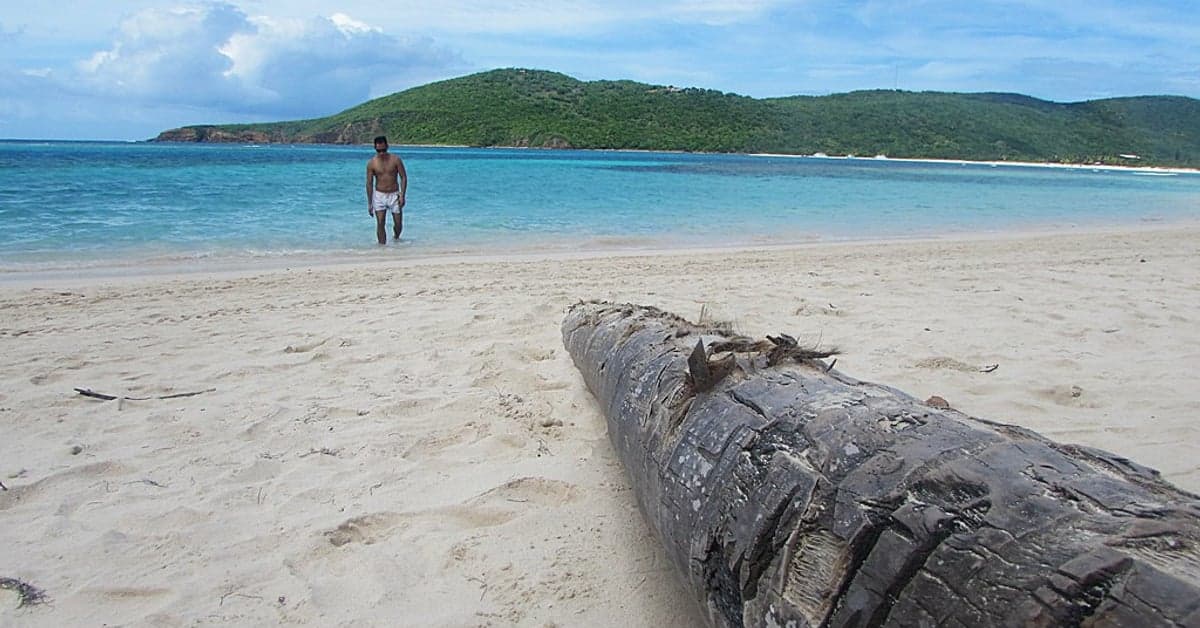
The Vieques National Wildlife Refuge and the Culebra National Wildlife Refuge together control most of the offshore islands' best beaches. The refuges operate strict visitor rules and the well-known Flamenco Beach on Culebra is textile-uniform with active tourist patrol. The quieter Zoni Beach on Culebra and the eastern Vieques refuge beaches see lighter foot traffic but still operate under the same general framework.
The Resort Beaches: Uniformly Textile
Condado and Isla Verde (San Juan)
The San Juan resort coast (Condado at the Vanderbilt and La Concha properties, Isla Verde at the Ritz-Carlton, Marriott, and Verdanza) is the most-developed urban resort coast in the Caribbean. The beaches are fully public under Puerto Rican law and are patrolled by the tourist-zone Policía. Behaviour is uniformly textile and the resort beach frontage maintains the same standard.
Dorado and the North Coast
The Dorado luxury cluster (Dorado Beach Ritz-Carlton Reserve) and the wider north coast operate as standard family-luxury resort beaches with textile-uniform behaviour.
Rincón and the West-Coast Surf Towns
Rincón is the country's main surf destination on the west coast, with a steady international foreign-tourist surf-tourism contingent. The atmosphere is more relaxed than the San Juan coast but the beach culture remains textile. Full nudity at any Rincón surf beach would draw community and police attention.
The Private-Villa Question
Puerto Rico's villa-rental market — concentrated in Dorado, Rincón, Vieques, and the small luxury villas around the Bahia Beach Resort and the Las Croabas area — operates similarly to other Caribbean villa-rental markets. Walled private-pool villas with no neighbouring guests in sightline accommodate discreet behaviour at the private deck as a matter of operational privacy rather than explicit accommodation. Property managers do not promote it as a feature.
The Closest Regional Alternatives
Saint Martin's Orient Bay
Orient Bay on the French side of Saint Martin is the Caribbean's most established public naturist beach and the cleanest alternative for a Puerto Rico-based traveller. Direct flights from San Juan to Princess Juliana take about 90 minutes. The French legal framework formally protects public nudity at designated beaches; Orient Bay has held the designation since the 1970s.
Antigua's Eden Beach
The fourth beach at Hawksbill has been informally clothing-optional for over forty years. Direct flights from San Juan take about 90 minutes. Detailed in our Antigua and Barbuda guide.
Bonaire's Sorobon Beach
The longest-running clothing-optional resort in the Caribbean is Sorobon Beach Resort on Bonaire, operating continuously since 1972. About three hours by air from San Juan with a connection through Curaçao or Aruba. Covered in our Aruba and Bonaire guide.
Saint Barths
Saint Barths' Grande Saline beach has long-tolerated informal naturist culture at its quieter sections, protected by the French overseas legal framework. About 90 minutes by air from San Juan via Saint Martin.
Practical Tips for Travellers
Plan Puerto Rico for What It Does Best
Puerto Rico is one of the Caribbean's strongest destinations for food (the San Juan restaurant scene is exceptional), bioluminescent bay tours (Mosquito Bay on Vieques, the bay at La Parguera), surf at Rincón, rainforest at El Yunque, and the historic walled city of Old San Juan. Plan around those — the beach-modesty question is irrelevant at the food, fort, and surf-day calendar — and add a Saint Martin or Antigua leg if open-beach naturism is part of the trip.
Combine Puerto Rico with Saint Martin or Antigua
The most logistically easy pairing is Puerto Rico plus Saint Martin. A common itinerary is five days in Puerto Rico (San Juan, Rincón, El Yunque, optionally Vieques) plus four days at Orient Bay. The 90-minute flight is the easiest connection. Antigua's Eden Beach is the other practical option.
What to Pack
Standard Caribbean beachwear, reef-safe SPF 50+ sunscreen (Puerto Rico bans oxybenzone and octinoxate at many public beaches), water shoes for the rocky entries at the wild west-coast beaches, dive certification card if diving at Culebra or Vieques, modest dress for Old San Juan walks and church visits.
When to Visit
December through April is the dry season with the most reliable weather and the highest prices. May, June, and November are excellent shoulder months. The hurricane season runs June through November and the Atlantic basin has been active in recent seasons; the island recovered slowly from Hurricane Maria (2017) and the more recent storms. Travel insurance with named-storm coverage is sensible for August-October trips. Discover Puerto Rico publishes seasonal advisories.
Final Thoughts
Puerto Rico is one of the Caribbean's strongest food and cultural travel destinations and one of its consistently textile-beach jurisdictions. The legal framework is real, the Catholic cultural framework reinforces it, and the only informal naturist tolerance — at Playa Sucia's southern end and at the quieter Vieques refuge beaches — is too remote and too patchy to be a primary trip plan. For travellers who want clothing-optional beach time as part of a Caribbean trip, anchor the Puerto Rico leg in Old San Juan, El Yunque, and the food, and add a short flight to Saint Martin, Antigua, or Bonaire for the naturist beach side. For wider regional context, see our complete Caribbean nude beach guide.
Sponsored
Looking for affordable beach resorts?
Find top-rated hotels near the best beaches worldwide.
Browse Beach Hotels→Frequently Asked Questions
Are there any nude beaches in Puerto Rico?
No officially designated nude beaches. A small number of remote stretches see informal naturist tolerance at their quietest hours — Playa Sucia at the south-western tip of the Cabo Rojo wildlife refuge and several of the quieter Vieques refuge beaches. Article 144 of the Puerto Rico Penal Code criminalizes obscene acts in public and is consistently enforced at the populated resort and family beaches.
Is Playa Sucia a nude beach?
Not officially. Playa Sucia (also called La Playuela) inside the Cabo Rojo wildlife refuge sees informal naturist tolerance at its southern end, away from the main visitor area. The beach is at the end of a dirt road, has no facilities, and is backed by the iconic Los Morrillos lighthouse. The naturist tolerance has held for at least two decades but the beach is part of a US Fish and Wildlife refuge and the protected status should be respected.
Why is Puerto Rico more conservative than Saint Martin or Saint Barths about beach nudity?
Puerto Rico is a US territory with its own Penal Code and a Catholic-majority cultural framework (roughly 70%). Saint Martin's French side and Saint Barths operate under French overseas-department law, which explicitly permits public nudity at designated beaches and supports informal tolerance at others. The legal frameworks are different even though the geography is similar.
Are San Juan's resort beaches naturist-friendly?
No. Condado, Isla Verde, and the wider San Juan resort coast are uniformly textile and well-patrolled by the tourist-zone Policía. The resort beach frontage at the Vanderbilt, La Concha, Ritz-Carlton, Marriott, and Verdanza properties maintains the public-beach standard. Topless sunbathing is unusual and draws attention. The same textile-uniform framework applies at the Dorado luxury cluster and at Rincón's surf beaches.
What is the closest legal nude beach to Puerto Rico?
Saint Martin's Orient Bay on the French side, the Caribbean's most established public naturist beach. Direct flights from San Juan to Princess Juliana take about 90 minutes. Saint Barths' Grande Saline beach and Antigua's Eden Beach on Hawksbill are the other 90-minute alternatives. Bonaire's Sorobon Beach Resort (the longest-running clothing-optional resort in the Caribbean) is about three hours by air with a Curaçao or Aruba connection.
When is the best time to visit Puerto Rico?
December through April is the dry season with the most reliable weather and the highest prices. May, June, and November are excellent shoulder months with better value. The hurricane season runs June through November and the Atlantic basin has been active in recent seasons. Travel insurance with named-storm coverage is sensible for August-October trips. Rincón's surf season runs October-April.
Can I combine Puerto Rico with a naturist destination on the same trip?
Yes. The most logistically easy pairing is Puerto Rico plus Saint Martin (90-minute flight). A common itinerary is five days in Puerto Rico (San Juan, Rincón, El Yunque, optionally Vieques) plus four days at Orient Bay. Antigua's Eden Beach is the other practical option. The US Virgin Islands are closer but operate the same general textile public-beach framework as Puerto Rico.