Best Nude Beaches in Europe: 10 Clothing-Optional Spots Worth the Trip
Table of Contents
Prices in this guide are approximate and change often. Check with the hotel, airline or operator before you book.
Europe's Best Nude Beaches
Organised beach naturism started in Germany, where the Freikörperkultur (FKK) movement opened the first official nude bathing beach on Sylt in 1920. France followed with the naturist village of Héliopolis on Île du Levant in 1931 and the Montalivet holiday centre in 1950, and Croatia's Koversada camp opened in 1961. The legal footing still differs a lot from country to country (see the country notes below), so the ten places here were chosen because nudity is either authorised or has a long, settled tradition, not just because the scenery is good.
The Ten at a Glance
| Place | Country | Legal footing | What it is |
|---|---|---|---|
| Pampelonne (Gros Vallat and Matarane), Ramatuelle | France | Authorised by municipal order | Public sand on a long bay; one naturist-affiliated beach club |
| Cap d'Agde naturist village | France | Naturist quarter with controlled entry | Gated resort town with its own beach; paid day entry |
| Île du Levant (Héliopolis) | France | Nudity obligatory on the naturist beaches | Car-free island village; rocky coves; ferry from Hyères or Le Lavandou |
| Es Trenc, Mallorca | Spain | No national ban; nude by long custom | Undeveloped beach in a natural park; paid car parks in summer |
| Playa de Bolonia (El Chorrito, Los Baños de Claudia), Tarifa | Spain | No national ban; nude areas by custom | Wild Atlantic beach beside Roman Baelo Claudia; exposed to the Levante wind |
| Valalta, Rovinj | Croatia | Designated FKK resort | Naturist camp and resort with a marina; rocky shore; day tickets |
| Koversada, Vrsar | Croatia | Designated FKK campsite since 1961 | Large naturist campsite with a traffic-free islet |
| Praia do Meco, Sesimbra | Portugal | Official naturist beach since July 1995 | Long Atlantic beach under cliffs; cool water and strong currents |
| Elia Beach, Mykonos | Greece | Tolerated by custom, not designated | The island's longest sandy beach; bus or caique access |
| Sylt (Buhne 16, Abessinien, Samoa) | Germany | Signed FKK sections; the first official nude beach opened here in 1920 | North Sea dunes and cool water; visitor tax covers beach access |
Pampelonne (Gros Vallat and Matarane), Ramatuelle, France
Pampelonne is the long bay south of Saint-Tropez, and its northern end, Plage de Tahiti, is the name everyone knows from the Bardot era. The naturist areas are not the famous Tahiti end, though. Ramatuelle's tourist office says a municipal order authorises naturism on two portions of the bay, Gros Vallat and Matarane, and that it is tolerated in the coves of Le Canadel. Neptune Plage, a beach establishment affiliated with the French naturism federation, operates on Pampelonne from April to the end of September.
Sunbeds at the Pampelonne beach clubs are priced for Saint-Tropez, so most nude sunbathers use the free public sand. Parking fills early in July and August; June and September are calmer and the sea is still warm.
Cap d'Agde Naturist Village, Hérault, France
The naturist quarter of Cap d'Agde is a gated part of a larger resort town on the Languedoc coast, with apartments, shops, restaurants and a long sand beach where nudity is the norm. Entry is controlled all year: the village's 2026 price list charges €11.50 per pedestrian for one day and €27 for a car with one or two people, and you need an original ID document to collect a named access card.
Be clear about what you are booking. By day the beach is ordinary family naturism. After dark, the bars and clubs around the port are known for a libertine and swinger scene, which is a long-running source of friction with traditional naturists. Book months ahead for July and August.
Île du Levant (Héliopolis), Var, France
Île du Levant is one of the Golden Isles off Hyères. Most of it (about 90%) is a military zone closed to the public; the rest is Héliopolis, the naturist village founded by the doctors Gaston and André Durville in 1931. According to the island's Wikipedia entry, nudity is formally obligatory on the naturist beaches (the Plage des Grottes and the Bain de Diane), while a minimal cover known as "le minimum" is expected around the harbour. There are no cars; ferries run from Hyères and Le Lavandou.
The beaches are rocky coves rather than sand. Accommodation is a small number of hotels and rentals, so book early for summer.
More of France: on the Atlantic coast, the big family-oriented naturist villages are CHM Montalivet (opened in 1950 and widely described as the first naturist holiday centre) and Euronat near Grayan-et-l'Hôpital. Both sit on long open-ocean beaches with real surf and rip currents, so swim between the lifeguard flags.
Es Trenc, Mallorca, Spain
Es Trenc is a long, undeveloped beach on Mallorca's south coast, protected as part of the Es Trenc-Salobrar de Campos natural park, with salt pans behind the dunes. The water is shallow and very clear and there is no hotel on the beach. Nudity has been common here for decades on the quieter stretches away from the main car parks; there are no signs, you just walk until the mix changes.
Facilities are limited to a few beach kiosks, so bring water and shade. Most visitors drive; the car parks charge a daily fee in summer and fill by late morning in July and August.
Playa de Bolonia, Tarifa, Spain
Bolonia is a wild Atlantic beach about 20 km west of Tarifa, inside the Strait natural park, with the Roman town of Baelo Claudia right behind the sand and a large protected dune at one end. The nudist areas are away from the village and its beach bars: El Chorrito, between Bolonia and Punta Paloma, and the small coves known as Los Baños de Claudia past the dune in the direction of Zahara.
Baelo Claudia is worth the stop: the Andalusian government's site page lists free entry for EU citizens and €1.50 for everyone else, and the site is closed on Mondays. Wind is the main variable here; the Levante can make the beach unpleasant, so check the forecast and pick a calm day.
Valalta, Rovinj, Croatia
Valalta is a large naturist camp and resort about 5 km north of Rovinj, with its own marina, pools and over 4 km of mostly rocky shoreline. It is organised and comfortable by design: campsites, mobile homes and apartments. Day visitors can come in on a ticket priced from the current price list, valid until 22:00 on the day of entry. Bring water shoes for the rocks.
Koversada, Vrsar, Croatia
Koversada, just outside Vrsar on the Istrian coast, opened in 1961 and is one of the oldest naturist resorts on the Adriatic. Maistra runs it as a naturist campsite with mobile homes and villas; the site covers about 120 hectares and includes a small traffic-free islet joined to the shore by a bridge. Like Valalta, it is a resort rather than a wild beach, which suits first-timers who want clear rules.
Croatia's rule is simple: nudity is for designated FKK areas. Outside them, nude bathing can be fined under the country's public-order law, so do not improvise on a town beach.
Praia do Meco, Sesimbra, Portugal
Meco, about 40 km south of Lisbon, has been the heartland of Portuguese naturism since the 1970s and its naturist section has been official since July 1995, according to the Portuguese Naturist Federation's list of official beaches. It is a long Atlantic beach under low cliffs, with cool water (high teens °C in summer) and strong currents. Portugal has nine official naturist beaches in all; Praia da Bela Vista at the southern end of the Costa da Caparica is the closest to Lisbon. See the Portugal guide for the full list.
Elia Beach, Mykonos, Greece
Mykonos built its reputation on nude beaches in the 1960s and 1970s, but Paradise and Super Paradise are now beach-club and party beaches. Elia, the island's longest sandy beach on the south coast, is where nudity is still common, mainly away from the busiest sunbed rows, with a mixed and gay-friendly crowd. KTEL buses run to the south-coast beaches, and in season a caique service runs from Ornos and Platis Gialos to Paradise, Super Paradise, Agrari and Elia.
Know the Greek legal position before you go. Law 1399/1983 allows naturist centres licensed by the Greek National Tourism Organisation, where nudity on the grounds and the beach in front is not an offence. Beaches like Elia are tolerated by long custom rather than designated, so keep nudity to the established areas.
Sylt, Schleswig-Holstein, Germany
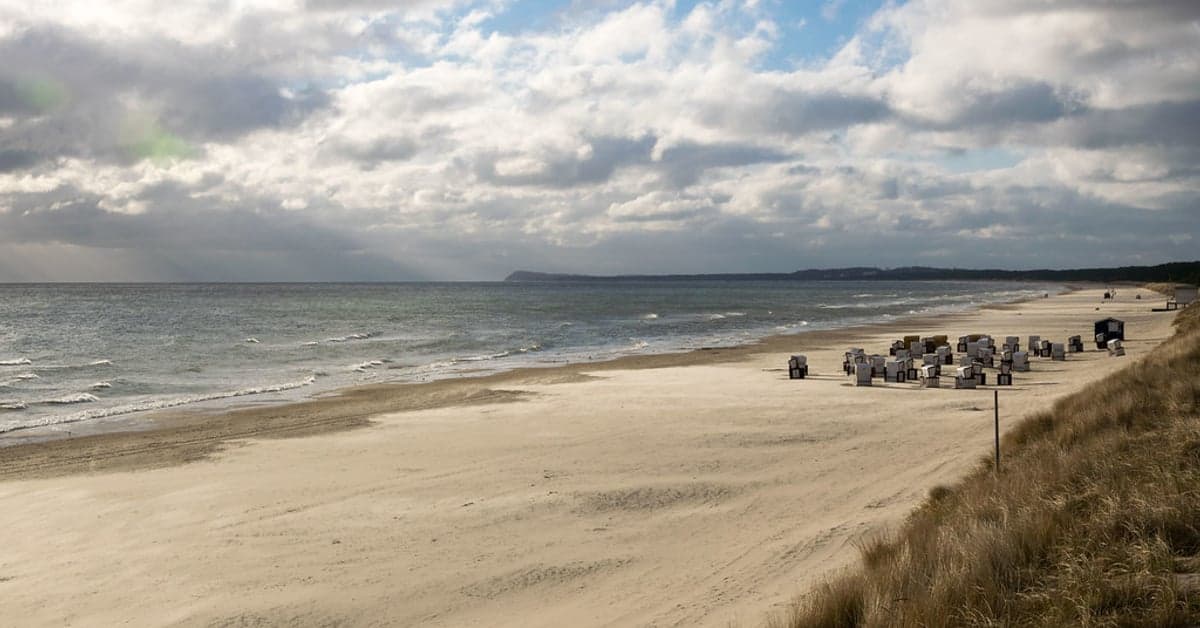
Sylt is where the nude beach as an official institution began: the first official nude bathing beach opened here in 1920, as the history of Freikörperkultur records. Today signed FKK sections run along the island's west coast. The best known is at Buhne 16 near Kampen, named after the beach bistro that opened there in 1981; others include Abessinien at Kampen and Samoa at Rantum.
This is the North Sea: wide sand, dunes, wind and cool water, usually below 20°C even in August. Sylt charges a visitor tax (Kurabgabe) that covers beach access, and the season for comfortable nude sunbathing is roughly June to early September.
Practical Guide to European Nude Beaches
Legal Status by Country
- Germany: no national ban on nudity; FKK beaches and lake shores are signed, and local rules apply elsewhere.
- France: naturism is authorised on designated beaches (often by municipal order, as at Pampelonne) and inside naturist centres. Outside them, nudity can be prosecuted, so treat the designated zones as the limit.
- Spain: public nudity has not been a national criminal offence since the late 1980s, and many beaches are nude by custom, but town councils can and do ban it by local ordinance.
- Portugal: naturism is legal on the nine officially designated beaches; a longer list of beaches is tolerated by custom.
- Croatia: designated FKK beaches and camps only; fines apply elsewhere.
- Greece: licensed naturist centres only, by law; many traditional nude beaches are tolerated in practice.
The safe rule: go where nudity is designated or has a well-known tradition, and stay dressed on town and family beaches even if the sand is empty.
What to Expect as a First-Timer
Most people find the novelty wears off quickly once they see that everyone else is reading, swimming or asleep. Bring a large towel to sit on, sunscreen for skin that rarely sees the sun, and sandals. Leave the camera in the bag unless you are photographing scenery with no people in it; photographing other bathers without consent breaches privacy and image-rights laws in several European countries. Our nude beach etiquette guide covers the rest.
When to Visit
For the Mediterranean beaches, June and September give warm water (low to mid 20s °C), thinner crowds and easier booking. July and August are warmer and much busier. The Atlantic beaches of Portugal and southern Spain, and the North Sea at Sylt, are noticeably cooler all summer.
Country-by-Country: Every Europe Guide in This Series
Each guide covers the legal reality, the beaches that actually exist, and the honest alternatives:
France is covered on this page (Pampelonne, Cap d'Agde, Île du Levant, Montalivet and Euronat). For the global picture, see the world's best nude beaches ranking and the guide to nude beach legality.
Frequently Asked Questions
What are the best nude beaches in Europe?
Strong choices include the authorised naturist zones at Pampelonne near Saint-Tropez, the Cap d'Agde naturist village, Île du Levant, Es Trenc in Mallorca, Playa de Bolonia near Tarifa, the Valalta and Koversada resorts in Croatia, Praia do Meco in Portugal, Elia Beach on Mykonos and the FKK beaches of Sylt in Germany.
Is nudity legal on beaches in Europe?
It depends on the country. Germany has no national ban and signs its FKK beaches. France, Portugal and Croatia allow it on designated beaches and in naturist centres. Spain has no national offence but lets town councils ban it locally. Greece licenses naturist centres and tolerates many traditional nude beaches. Stick to designated or well-established spots.
When is the best time to visit nude beaches in Europe?
June and September are best for Mediterranean beaches: warm water in the low to mid 20s °C and fewer people than July and August. Atlantic beaches in Portugal and southern Spain, and the North Sea at Sylt, stay cooler all summer.
Are European nude beaches family-friendly?
Many are. Montalivet, Euronat, Valalta, Koversada and the daytime beach at Cap d'Agde all draw families. Cap d'Agde's port area has an adult nightlife scene after dark, and Mykonos is a party island, so check a beach's reputation before taking children.
Do I have to be nude at a nude beach in Europe?
Usually not: most nude beaches are clothing-optional. Some naturist places do require nudity, for example the naturist beaches on Île du Levant. Check the rules of the specific beach or resort before you go.
What should I bring to a nude beach?
Sunscreen for skin that is normally covered, a large towel to sit on (always sit on your own towel), sandals or water shoes for rocky shores like Croatia's, and water and shade where facilities are minimal, as at Es Trenc or Bolonia.
Is photography allowed at nude beaches in Europe?
Photographing the scenery is generally fine. Photographing other people without their consent is not acceptable, and can breach privacy and image-rights laws in several European countries. Resorts such as Cap d'Agde, Valalta and Koversada enforce this.