The Best Beaches on the Gulf Coast
Table of Contents
Prices in this guide are approximate and change often. Check with the hotel, airline or operator before you book.
The Gulf Coast Advantage: Warm Water, White Sand, No Pretension
The Gulf of Mexico produces beach conditions that the Atlantic and Pacific coasts can't match: bath-warm water (82-88°F from June through September), minimal waves, and sugar-white quartz sand that stays cool underfoot. The sand along the Florida Panhandle, Alabama, and Mississippi coasts is composed of ground Appalachian quartz that washed down rivers over millennia. It doesn't absorb heat the way darker sand does, which means you can walk barefoot at high noon in July without flinching.
The Gulf Coast beach belt stretches from the Florida Keys to South Padre Island, Texas — roughly 1,600 miles of coastline across five states. The best sand is concentrated in a 200-mile stretch from Panama City Beach to Gulf Shores, Alabama. But there are worthy beaches from Clearwater to Corpus Christi, each with its own character and price point. For official planning information, see Visit Florida.
Florida's Gulf Coast
Siesta Key Beach, Sarasota
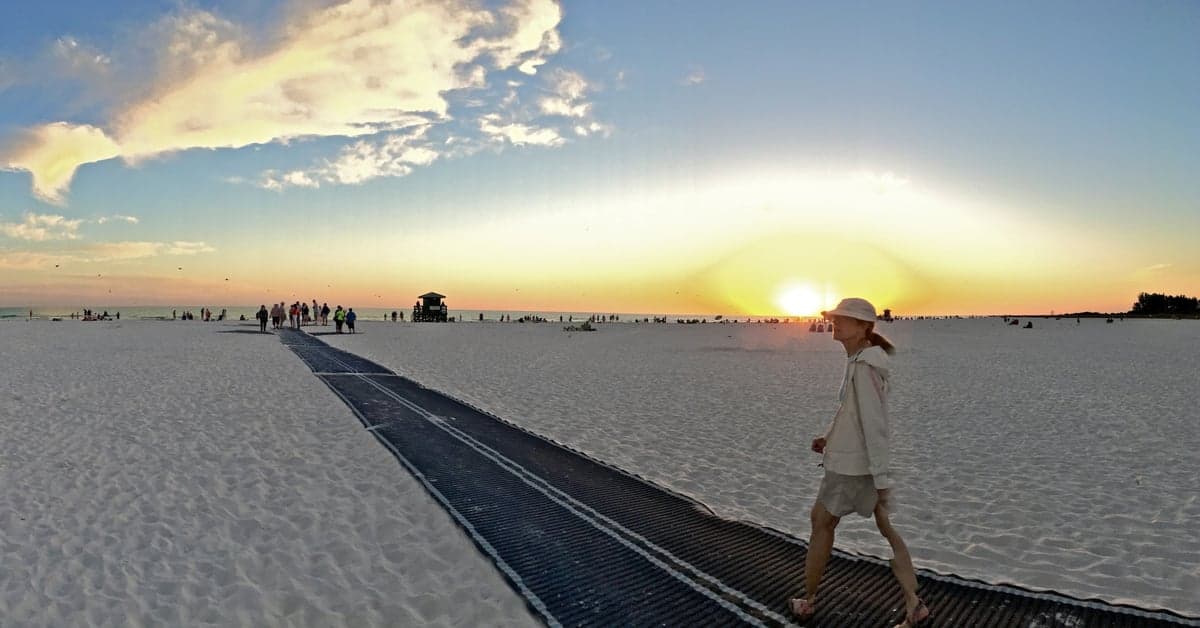
Siesta Key Beach wins "best beach" awards so regularly that listing them all would take a paragraph. The sand here is 99% pure quartz crystal — tested by a Harvard geology professor, if you believe the plaque near the pavilion — and it's the softest, whitest sand you'll find anywhere in the US. No exaggeration. Walking on it feels like walking on powdered sugar.
The public beach at the north end has free parking (a rarity on the Gulf Coast), clean restrooms, a concession stand, volleyball courts, and a wide open area with enough room for several thousand people. The beach faces west, producing reliable sunset views over the Gulf. Drum Circle happens every Sunday evening near the main pavilion — locals with bongos, djembes, and fire spinners gathering at dusk. It's been running since the 1960s and draws hundreds of people.
Siesta Key Village, a five-minute drive from the beach, has restaurants and bars along Ocean Boulevard. The Old Salty Dog does a solid grouper sandwich for $16. For quieter sand, drive south to Turtle Beach, which faces a different direction and attracts a fraction of the crowd.
Clearwater Beach
Clearwater is the most commercialized beach town on Florida's Gulf Coast. The sand is good — wide, white, and well-maintained — but the beach is flanked by high-rise hotels, the sidewalks are packed with tourists, and Beach Walk (the waterfront promenade) is a gauntlet of souvenir shops and seafood restaurants charging $28 for fish and chips.
That said, Clearwater works for families who want everything in one place. The Clearwater Marine Aquarium (home of Winter the dolphin, famous from the movie) is nearby, the water is calm and clear, and Pier 60 hosts a nightly sunset celebration with vendors and performers. Parking in the main lot runs $3-5/hour. For a better version of Clearwater, drive 20 minutes south to Indian Rocks Beach — same sand, fewer condos, actual parking.
Anna Maria Island
Anna Maria Island is what Clearwater Beach used to be before the developers arrived. A chain of three small towns — Anna Maria, Holmes Beach, and Bradenton Beach — on a seven-mile barrier island with a strict building code: nothing taller than three stories. The result is a low-rise, cottage-style beach town with local restaurants, free trolley service, and beaches that are wide, white, and uncrowded by Gulf Coast standards.
Bean Point, at the northern tip, is the prize. A 10-minute walk from the end of North Shore Drive through Australian pines leads to a sandbar that extends into Tampa Bay, with views of the Sunshine Skyway Bridge. At low tide, you can wade 200 yards from shore. It's the kind of beach where dolphins cruise the shoreline 50 feet out.
The Rod & Reel Pier in Anna Maria has a restaurant at the end serving fresh grouper and cold Landshark. Arrive by 5pm for a table with a sunset view.
Pensacola Beach
Pensacola Beach occupies Santa Rosa Island, a barrier island in Florida's westernmost corner. The sand is the same white quartz you find across the Panhandle, and the water is warm and emerald-green. What sets Pensacola apart is the Gulf Islands National Seashore, which protects long stretches of undeveloped beach on either side of the commercial strip.
Drive east from the main beach area past the Portofino condos and you'll reach miles of empty, preserved shoreline. Park at one of the pulloffs ($15 National Parks pass or $25 annual Gulf Islands pass) and walk. No buildings, no beach bars, no jet ski rentals — just sand, water, and sea oats. Fort Pickens, a Civil War-era brick fortification at the western end of the island, has a beach, campground ($40/night), and excellent snorkeling around the jetties.
Destin and the Emerald Coast
Destin markets itself as "The World's Luckiest Fishing Village," and the charter fleet along Destin Harbor is impressive — 100+ boats running half-day ($80-120/person) and full-day ($150-250/person) trips for red snapper, grouper, and king mackerel. The beach itself is typical Panhandle: white sand, green water, and wall-to-wall condos.
Henderson Beach State Park ($6 per vehicle) offers the best beach experience in the Destin area. A half mile of undeveloped shoreline with dune walkways, outdoor showers, and a nature trail through the coastal scrub. The sand is pristine because the state keeps it that way. No vendors, no umbrellas for rent — bring your own everything and enjoy the absence of commerce.
For dining, skip the tourist spots on Harbor Boulevard and drive to Boshamps Seafood & Oyster House on the harbor. Their chargrilled oysters ($18/dozen) are the best in the Panhandle.
Alabama: Gulf Shores and Orange Beach
Alabama has only 32 miles of coastline — the shortest Gulf frontage of any coastal state — but those 32 miles are packed with good beach. Gulf Shores and Orange Beach are sister cities that together form a mid-market beach destination popular with families from Birmingham, Atlanta, and Nashville.
Gulf State Park, between the two towns, has three miles of protected beach, a 900-acre park with a lodge ($170-250/night), campground ($45-65/night), and 28 miles of paved trails for biking and walking. The Hugh S. Branyon Backcountry Trail system winds through pine forests, wetlands, and along a freshwater lake — a welcome break from all-day sun on the beach.
The Wharf in Orange Beach is a shopping and entertainment complex with a Ferris wheel, movie theater, and concert amphitheater that books solid mid-tier acts in summer. Dining highlight: Fisher's at Orange Beach Marina, where the fried Gulf shrimp basket ($14) uses same-day catch from boats docked 50 feet away.
Mississippi: Ship Island
Mississippi's coastline is mostly muddy marsh — the mainland beaches along the Harrison County sand beach are man-made and backed by Highway 90 traffic. The real beach experience is 12 miles offshore at Ship Island, part of the Gulf Islands National Seashore.
Ship Island Excursions runs a passenger ferry from Gulfport Harbor ($30 adult round-trip, March through October). The ride takes an hour. On the island, you get pristine white sand beaches, clear water, and Fort Massachusetts — a brick fortification that Union forces used during the Civil War. Snorkel gear rental is available on the ferry. The beach is unspoiled, and because getting there requires effort, it's never crowded. Bring lunch, water, and sunscreen — there's a small concession stand but selection is limited.
Texas: South Padre Island
South Padre Island is the only serious beach destination in Texas. Galveston and Corpus Christi have beaches, but the water is brown and the sand is packed mud. South Padre, on a barrier island at the southern tip of the state, has clean sand and water that's at least green, if not the emerald clarity of the Florida Panhandle.
The island is 34 miles long, but development clusters at the southern end near the Queen Isabella Causeway. The main beach area has the usual setup: chair and umbrella rentals ($25-40/set), restaurants, bars, and spring break energy from February through mid-March. North of the developed area, Isla Blanca County Park ($12/day) has a good beach with jetties, a fishing pier, and a splash pad for kids.
The real draw is driving north on the beach. With a four-wheel-drive vehicle and an air compressor to reinflate tires after airing down, you can drive 20+ miles up the undeveloped national seashore. It's just you, the sand, and the Gulf. Beach camping is allowed in designated areas. Check tide tables before heading out — getting stuck at high tide in soft sand is a real possibility.
Snowbird Season and When to Visit
The Gulf Coast has two peak seasons. Spring break (March-April) brings college students and families. Snowbird season (November-March) brings retirees from the Midwest and Northeast who rent condos for weeks or months at a time.
The sweet spot is late April through May: water temperatures are already in the high 70s, spring breakers have left, and snowbirds are heading home. Rates drop 30-40% from peak. September and October are also underrated — water is at its warmest, crowds thin after Labor Day, and you can get beachfront condos for $100-150/night that cost $300 in July.
Hurricane season runs June 1 through November 30. Our 2026 Atlantic hurricane tracker covers Gulf Coast risk by month. The statistical peak is mid-August through mid-October. Most years, the Gulf Coast sees no direct hits, but storms in the Caribbean or Gulf can generate large swells and rip currents even when the hurricane is hundreds of miles away. Check NOAA forecasts and respect red flag warnings.
The Gulf Coast's Honest Pitch
These aren't glamorous beaches. The Gulf Coast doesn't have the celebrity cachet of the Hamptons, the surf culture of California, or the resort luxury of Hawaii. What it has is warm water, soft sand, affordable lodging, and an unpretentious attitude that makes a week at the beach feel easy. The food is better than it needs to be — fried Gulf shrimp, smoked mullet, raw oysters, and key lime pie are legitimate regional specialties. The people are friendly in that specific Southern way that includes sweet tea refills and unsolicited restaurant recommendations.
For families on a budget, couples wanting a low-stress getaway, or anyone who just wants to float in warm, calm water for a week, the Gulf Coast delivers. Just bring bug spray for the no-see-ums at dusk. Those tiny demons are the only real downside.
Frequently Asked Questions
What is the best beach on the Gulf Coast?
Siesta Key Beach in Sarasota consistently wins best-beach awards. Its sand is 99% pure quartz crystal — the softest, whitest sand in the US. It has free parking, clean facilities, and a weekly Sunday drum circle. For empty, undeveloped shoreline, the Gulf Islands National Seashore near Pensacola is unbeatable.
When is the best time to visit Gulf Coast beaches?
Late April through May and September through October offer the sweet spot — water temperatures in the high 70s to 80s, thin crowds, and rates 30-40% lower than peak. Summer is hottest (82-88F water) but brings afternoon thunderstorms. Hurricane season runs June through November.
Is Gulf Coast water warm enough for swimming in winter?
Gulf water temperatures range from 68-75F in winter, which is swimmable but not bath-warm. The water is warmest June through September at 82-88F. The Gulf is warmer year-round than the Atlantic side of Florida.
What is the best family beach on the Gulf Coast?
Anna Maria Island in Florida offers wide white beaches, a strict three-story building code, free trolley service, and a cottage-town atmosphere. Bean Point at the northern tip has shallow wading water where dolphins cruise the shoreline. Gulf Shores State Park in Alabama has three miles of protected beach, trails, and a lodge.
How does Destin compare to Panama City Beach?
Destin has the same white sand and emerald water as Panama City Beach but is more upscale and family-oriented. Henderson Beach State Park ($6/vehicle) offers pristine undeveloped shoreline. Panama City Beach is larger and more commercial. For the best Destin experience, skip the tourist strip and eat at Boshamps for chargrilled oysters ($18/dozen).
Are there good beaches in Texas?
South Padre Island at Texas's southern tip is the only serious beach destination in the state. It has clean sand and green water — not as clear as the Florida Panhandle, but decent. With a 4WD vehicle, you can drive 20+ miles up the undeveloped national seashore for empty beach camping.