The Best Beaches on the Amalfi Coast (With Secret Access Points)
Table of Contents
Prices in this guide are approximate and change often. Check with the hotel, airline or operator before you book.
The Lido System and How to Beat It
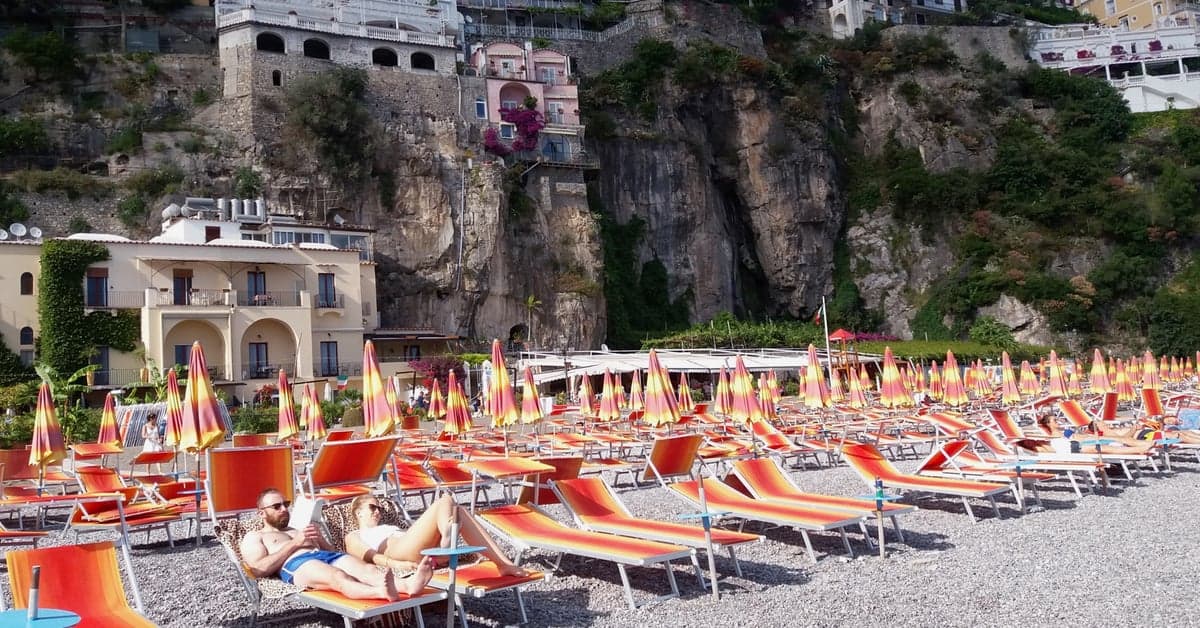
The Amalfi Coast's beaches are spectacular and small. Vertical limestone cliffs plunge into the Tyrrhenian Sea, and the beaches — really coves — are wedged into the gaps between. Space is limited, and Italians solved this problem by creating the lido system: private beach clubs that rent sunbeds (lettini) and umbrellas (ombrelloni) for €15-30 per person per day, with food and drink service included.
Here's what most guides don't mention: Italian law requires every beach to maintain a spiaggia libera — a free public section. Even the most exclusive-looking beaches have one. It might be a narrow strip at the edge, it might be the rocky section no one wants, but it exists. Look for the signs reading "Spiaggia Libera" or "Spiaggia Libera Attrezzata" (free beach with optional paid services). Arriving early (before 9 AM) is essential for claiming a spot in the free sections during July and August.
The coast runs 50 kilometers from Positano to Vietri sul Mare. The SS163 road — a single-lane carved into the cliff face — connects the towns and is simultaneously one of the most scenic and stressful driving experiences in Europe. Do not rent a car unless you enjoy mirrors folding against rock walls while tour buses force you backward to passing points.
Positano
Spiaggia Grande
Positano's main beach is the most photographed on the Amalfi Coast — the cascade of pastel-colored houses tumbling down the cliff to a strip of gray sand, with fishing boats pulled up on the shore and the islands of Li Galli visible on the horizon. It's a beautiful setting, and on a July afternoon it's also packed to the point where your towel touches your neighbor's on three sides.
The lido section dominates most of Spiaggia Grande. Expect to pay €20-25 for a lettino and ombrellone at Pupetto or Buca di Bacco. The spiaggia libera is at the far west end, nearest the ferry dock — a narrow stretch of free sand where the morning shade from the cliff provides natural sun relief until about 10 AM.
Water shoes are strongly recommended. The sand is coarse and mixed with pebbles, and the seabed drops off quickly. The water, however, is clean and clear — the coast's dramatic topography means there's deep water close to shore, and swimming conditions are generally excellent when the sea is calm.
Spiaggia di Fornillo
Fornillo is Positano's other beach, and it's the one locals prefer. A 10-minute walk west along a paved cliffside path from Spiaggia Grande (past the watchtower), Fornillo is smaller, less crowded, and has a larger free section relative to the lido area. The walk itself is pleasant — bougainvillea cascading over stone walls, views of the coast opening up with each turn.
Da Ferdinando, a restaurant built into a cave at the base of the cliff on Fornillo, serves grilled catch-of-the-day and cold Peroni with the sound of waves echoing off the rock walls. A fish lunch here runs €20-30 per person and ranks among the best meals on the coast for the setting alone.
The lidos at Fornillo charge slightly less than Spiaggia Grande — €15-20 for a full setup. Arriving by 8:30 AM virtually guarantees a free-section spot even in August.
Praiano
Marina di Praia
Marina di Praia is a fjord-like inlet between Positano and Amalfi where a tiny beach sits between two towering rock walls. The beach is small — maybe 50 meters of coarse sand and pebbles — but the setting is dramatic, and the water in the protected inlet is calm and clear.
The lido here is run by the hotel above, with sunbeds for €15-20. The spiaggia libera is the left side of the beach as you face the sea. Alfonso a Mare, the restaurant at beach level, does excellent seafood linguine and grilled octopus. Africana Famous Club, a nightclub built into a cave that opens directly over the water, was a celebrity haunt in the 1960s and still operates on summer nights — an unusual combination of dance floor and sea cave.
Secret Access: The Gavitella Path
Praiano's main beach, Spiaggia della Gavitella, is accessed by descending about 400 steps from the main road (near the church of San Gennaro). The walk down is beautiful; the walk back up is punishment. But the beach faces west, catching the afternoon sun when Positano's beaches are already in shadow, and the sunset views across to Capri are among the best on the coast. A water taxi back to the road level costs €10-15 and saves your knees.
Atrani
Atrani is the Amalfi Coast's smallest town — just 900 residents — and its beach is a tiny square of dark sand squeezed between the buildings of a village that hasn't changed much in 500 years. Houses stack on top of each other, connected by covered archways and stone staircases. The piazza behind the beach, Piazza Umberto I, has two or three restaurants and a gelateria, and that's essentially the entire town.
The beach is mostly free (spiaggia libera), with a small lido section. The advantage of Atrani is its location: a 10-minute walk from Amalfi town through a short tunnel, but bypassed by 90% of tourists who never leave Amalfi's main drag. If you want to swim near Amalfi without the Amalfi crowds, walk to Atrani.
Le Arcate restaurant on the piazza serves a seafood risotto for €14 and overlooks the beach. A Peroni costs €4. It's one of the few places on the coast where prices haven't been fully inflated by tourism.
Amalfi Town
Amalfi's main beach (Spiaggia di Amalfi) sits directly in front of the town, with the 9th-century Duomo rising above the rooftops behind it. The beach is narrow and heavily lido-ized — sunbed rentals run €20-25, and the free section is a small patch at the west end.
The beach is fine but not the reason to visit Amalfi. The town itself — the Duomo's Arab-Norman architecture, the Paper Museum (Museo della Carta) documenting Amalfi's medieval paper-making tradition, the Valle dei Mulini (Valley of the Mills) hike through a ruined paper mill canyon — is the draw. Amalfi also serves as the main transport hub for the coast, with SITA buses and ferries connecting to all major towns.
Maiori and Cetara
Maiori
Maiori has the longest beach on the Amalfi Coast — about 1 kilometer of sand, which sounds modest until you compare it to Positano's 300-meter strip. The extra space means lower density, lower lido prices (€10-15), and a more Italian-family, less international-tourist atmosphere.
The beach is sandy rather than pebbly — another rarity on this coast. The town behind it is less picturesque than Positano or Amalfi, which keeps the boutique-hotel crowd away and the prices more reasonable. A hotel room in Maiori costs 30-50% less than an equivalent room in Positano.
Cetara
Cetara is a working fishing village that's famous for one product: colatura di alici, an anchovy extract that's the direct descendant of the Roman garum fish sauce. The amber liquid is made by layering salt and fresh anchovies in wooden barrels and aging them for months. A small bottle costs €8-12 and transforms pasta in a way that's difficult to describe without sounding hyperbolic.
The beach at Cetara is tiny — a small strip of sand in front of the village, lined with fishing boats. The swimming is fine. The real reason to come is lunch at Acquapazza, chef Gennaro Castiello's seafood restaurant where a tasting menu of anchovy-focused dishes runs €50-65 per person and routinely appears on best-of lists for southern Italy. Less formally, the waterfront restaurants serve spaghetti alla colatura for €12-14.
Conca dei Marini
Grotta dello Smeraldo (Emerald Grotto)
Between Amalfi and Praiano, the Grotta dello Smeraldo is a sea cave where sunlight filters through an underwater opening and fills the interior with an eerie emerald-green glow. Stalactites hang from the ceiling, and the water inside is so clear and intensely colored that it looks artificial. Entry is €5, accessed either by elevator from the road above or by boat from the water.
The grotto is a 10-minute stop, not a beach, but it's directly along the coast road and worth the detour. Boat tours from Amalfi or Positano often include it as part of a coastal excursion.
Getting Around the Coast
SITA Buses
SITA buses are the public transport backbone of the Amalfi Coast, running along the SS163 between Sorrento, Positano, Amalfi, and Salerno. Tickets cost €2-4 depending on distance and must be purchased before boarding (at tabacchi shops or the SITA office in Amalfi). Buses run every 30-60 minutes. In summer, they fill up completely and sometimes pass stops without picking up passengers. The ride itself, while scenic, involves hairpin turns on a narrow road — sit down and don't look out the cliff side if motion sickness is a concern.
Ferries
TravelMar and NLG Jet operate ferry services between Salerno, Amalfi, Positano, and Capri from April through October. A Positano-Amalfi ferry takes 25 minutes and costs €8-10. The ferry avoids the bus's motion sickness problem and adds the bonus of seeing the coast from the water — the full cascade of villages becomes visible from sea level in a way that's impossible from the road.
The Parking Nightmare
Driving the Amalfi Coast in summer is an objectively bad idea. Parking in Positano is limited to a few lots at the top of the town (€5-8/hour, €30-40/day when available) with a long walk or shuttle to the beach. Amalfi has a parking garage (€5/hour) that fills by 10 AM. Praiano and the smaller towns have slightly more roadside parking but it's still competitive. The SITA bus or ferry from Sorrento or Salerno is the correct approach.
Practical Details
When to Go
May-June and September-October are the sweet spots. July and August bring maximum crowds, maximum prices, and maximum heat (90°F+). Water temperature peaks at 79-82°F in August and stays swimmable (72°F+) through October. April is pleasant on land but the water is still cold (63-66°F).
Getting There
Naples Airport (NAP) is the gateway. From Naples, take the Circumvesuviana train to Sorrento (75 minutes, €4.20), then a SITA bus to Positano or Amalfi. Alternatively, a SITA bus from Salerno (reachable by fast train from Naples in 35 minutes) accesses the coast from the south side. Private transfers from Naples to Positano cost €80-120 for the car.
Costs
The Amalfi Coast is expensive by Italian standards. A basic hotel room in Positano starts at €150-200/night in summer. A pizza costs €10-14, a seafood pasta €16-22, a glass of local Falanghina wine €6-8. The lido system adds €15-25/day per person for beach access. Budget travelers should base themselves in Maiori, Minori, or Cetara, where prices drop 30-50% compared to Positano.
Frequently Asked Questions
Are Amalfi Coast beaches free?
Italian law requires every beach to maintain a spiaggia libera (free public section), even at the most exclusive-looking beaches. Look for signs reading 'Spiaggia Libera.' The private lido sections charge EUR 15-30 per person for a sunbed and umbrella. Arrive before 9 AM in July-August to claim a free-section spot.
What is the best month to visit the Amalfi Coast?
May-June and September-October are ideal. July-August brings maximum crowds, peak prices, and 90F+ heat. Water temperature peaks at 79-82F in August and stays swimmable (72F+) through October. April is pleasant on land but the sea is still cold at 63-66F.
How do you get around the Amalfi Coast without a car?
SITA buses run along the SS163 between Sorrento, Positano, Amalfi, and Salerno for EUR 2-4. Ferries operated by TravelMar and NLG Jet connect the main towns from April through October — Positano to Amalfi takes about 25 minutes. Do not rent a car in summer; parking is a nightmare.
Which Amalfi Coast beach is least crowded?
Atrani, a 10-minute walk from Amalfi through a tunnel, is bypassed by 90% of tourists. Its tiny beach is mostly free (spiaggia libera). Fornillo in Positano is smaller and less crowded than the main Spiaggia Grande, with a larger free section. Praiano's Gavitella beach requires descending 400 steps, which filters out crowds.
How expensive is the Amalfi Coast?
Expensive by Italian standards. A basic hotel room in Positano starts at EUR 150-200/night in summer. Pizza costs EUR 10-14, seafood pasta EUR 16-22, and a glass of local Falanghina wine EUR 6-8. Budget travelers should base in Maiori, Minori, or Cetara, where prices drop 30-50% compared to Positano.
Is Positano worth the hype?
The setting is genuinely stunning — pastel houses cascading down cliffs to the sea. But in July-August, the main beach is packed shoulder-to-shoulder and restaurants charge premium prices. Visit in shoulder season (May-June or September-October) for the beauty without the worst crowds. Walk to Fornillo beach for a more local experience.