The Best Beaches in Okinawa, Japan
Table of Contents
Prices in this guide are approximate and change often. Check with the hotel, airline or operator before you book.
Japan's Tropical Secret
Okinawa sits 1,000 miles south of Tokyo, closer to Taiwan than to mainland Japan, and the difference is immediately apparent. Where Tokyo is concrete and speed, Okinawa is coral and slow pace. The prefecture comprises 160 islands stretching 700 miles across the East China Sea, with subtropical climate, turquoise water, coral reefs, and a distinct Ryukyuan culture that predates Japanese annexation. The water temperature stays above 70°F from May through November and peaks at 84°F in August. The beaches rival anything in Southeast Asia while offering Japanese infrastructure — clean facilities, reliable transportation, and safety standards you can count on.
Most visitors stick to the main island (Okinawa Honto), which has the airport, the American military bases (covering about 15% of the island), and the highest concentration of resorts and restaurants. But the outer islands — Kerama, Miyako, and Yaeyama — have the best beaches and the clearest water, requiring short flights or ferry rides that are straightforward to arrange.
Main Island (Okinawa Honto)
Manza Beach
Manza Beach on the west coast sits below the ANA InterContinental Manza Beach Resort, one of Okinawa's largest resort hotels. The beach is a curved bay with white sand, sheltered water, and a dramatic cliff formation (Cape Manzamo) visible to the north. The resort operates the beach with full facilities — snorkel gear rental (¥1,000-2,000), kayak rental, glass-bottom boats, and banana boat rides. The water is calm enough for families. Non-hotel guests can access the beach for a fee (¥500-1,000).
Nirai Beach
Part of the Hotel Nikko Alivila complex near Yomitan, Nirai Beach is one of the best natural beaches on the main island. Unlike many main-island beaches that have been artificially enhanced with imported sand, Nirai Beach maintains natural coral sand. The water is clear with visible coral formations close to shore. The hotel maintains the beach to high standards but public access exists at designated points. The west-facing orientation makes it one of the main island's best sunset beaches.
Okuma Beach
At the remote northern end of the main island, Okuma Beach is a 1-kilometer stretch of white sand within the JAL Private Resort Okuma. The northern location means fewer tourists — most visitors to Okinawa stay in the central and southern parts of the island near Naha. The beach has calm water, decent snorkeling on the reef edges, and a sense of escape that the more developed central beaches lack. The Yanbaru Forest, a UNESCO World Heritage subtropical rainforest, is accessible from Okuma for hiking and wildlife spotting.
Kerama Islands: The Snorkeling Paradise
Getting There
The Kerama Islands sit 20-40 kilometers west of the main island, reachable by high-speed ferry from Naha's Tomari Port (35-50 minutes, ¥3,000-4,000 round-trip). The three main islands — Tokashiki, Zamami, and Aka — form the Kerama Shoto National Park, designated for the clarity of its water ("Kerama Blue" is a recognized term in Japanese) and the diversity of its coral reefs.
Furuzamami Beach, Zamami Island
Furuzamami is a small crescent of white sand on Zamami Island, consistently rated among Japan's best beaches. The water is transparent to a degree that's hard to describe — you can see individual grains of sand on the bottom at 10-meter depth. Snorkeling from the beach puts you over healthy coral gardens with clownfish (Nemo fish), sea turtles, and colorful wrasses within a 50-meter swim. The beach has a small hut renting snorkel gear (¥1,000) and a changing room. No restaurants — bring lunch from the village, which is a 15-minute walk.
Aharen Beach, Tokashiki Island
Aharen Beach is a 800-meter stretch of white sand on Tokashiki, the largest Kerama island. The beach is more developed than Furuzamami — several minshuku (guesthouses) and dive shops line the road behind the sand, and glass-bottom boat tours depart from the beach. The snorkeling is excellent, with sea turtles frequent enough that you're likely to see one on any given swim. The beach faces west for sunset views across the open East China Sea.
Miyako Islands: The Instagram Beaches
Getting There
Miyako-jima is a 50-minute flight from Naha (¥8,000-15,000 one way on JTA or ANA). The island is flat — no mountains, no rivers — which means no sediment runoff and water clarity that may be the best in Japan. Several bridges connect Miyako-jima to neighboring islands, creating a drivable beach-hopping circuit.
Yonaha Maehama Beach
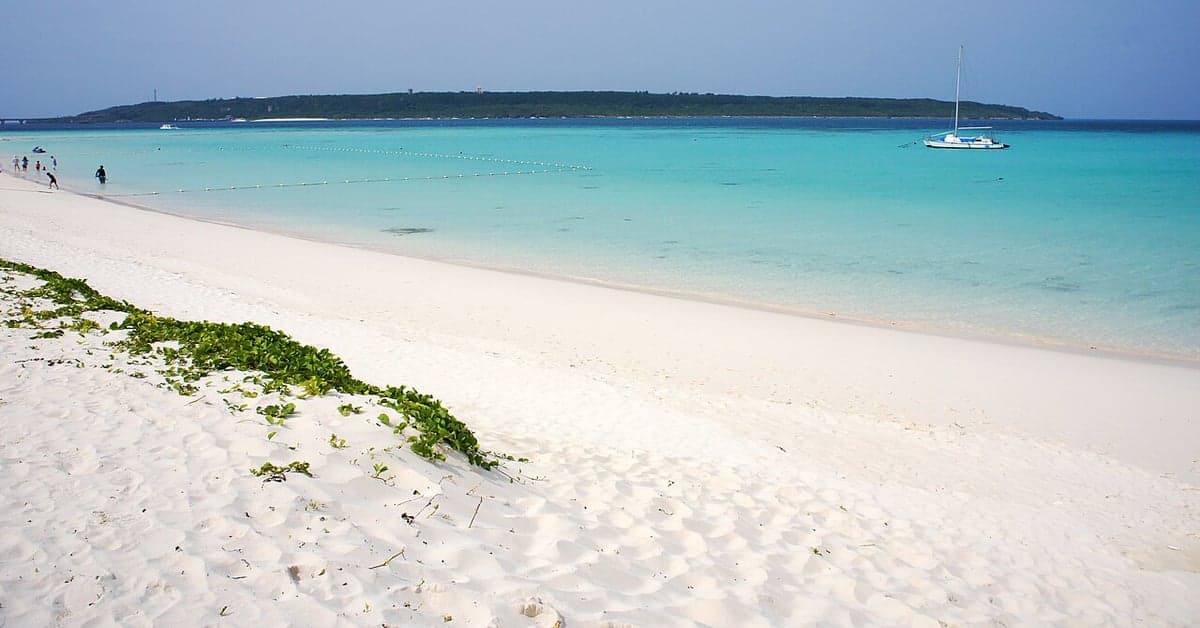
Yonaha Maehama is a 7-kilometer stretch of white sand on Miyako-jima's southwest coast, often called the most beautiful beach in Japan. The scale is striking for a Japanese island — the beach is wide, long, and backed by nothing but low vegetation and a few resort properties. The water is shallow and calm with a white sand bottom that creates the electric turquoise color Miyako is known for. The Tokyu Hotel resort at the south end provides water sports and dining. Public access points exist along the beach's length with free parking.
Sunayama Beach
A small beach accessed through a gap in a rock formation — you walk through a short tunnel of vegetation, pass through a natural stone arch, and emerge onto a compact crescent of sand with perfectly clear water. The arch frames the beach like a window, creating one of the most photographed beach scenes in Japan. The beach is small (maybe 100 meters of sand) and fills quickly in summer. Visit early morning for photos without crowds. Snorkeling is limited — this is a photography and swimming beach.
Irabu-jima and Shimoji-jima Beaches
Connected to Miyako by the 3.5-kilometer Irabu Bridge (one of Japan's longest toll-free bridges), Irabu and Shimoji islands have beaches that are less crowded than Miyako-jima's famous spots. Toguchi Beach on Irabu has white sand and a reef for snorkeling. The 17END Beach near Shimoji airport is a sandbar that appears at low tide — you walk across a shallow reef flat to reach a strip of sand surrounded by open water. The setting is otherworldly. See PADI for current guidance.
Yaeyama Islands: Tropical Edge
Kondoi Beach, Taketomi Island
Taketomi is a tiny island (6 square kilometers) reachable by a 10-minute ferry from Ishigaki. The island is famous for its preserved Ryukyuan village — traditional red-tile-roofed houses, coral-walled lanes, and water buffalo carts. Kondoi Beach, on the west coast, is a wide stretch of white sand with shallow water extending hundreds of meters at low tide. The beach has no commercial development — a few benches, a changing room, and nothing else. The combination of traditional village and pristine beach, reachable in 10 minutes from Ishigaki, makes Taketomi a must-visit.
Kabira Bay, Ishigaki Island
Kabira Bay is Ishigaki's most famous sight — a bay of startlingly green-blue water dotted with small forested islands and white sand shores. Swimming is prohibited (strong currents and pearl farming operations), but glass-bottom boat tours (¥1,030, 30 minutes) reveal the coral and marine life below. The bay is best viewed from the observation point above the beach. For swimming on Ishigaki, head to Sukuji Beach or Fusaki Beach on the west coast.
Practical Information
When to Visit
The best swimming months are June through September. The rainy season (tsuyu) typically runs mid-May through mid-June on the main island — expect daily rain showers but warm temperatures. July through September are hot (86-90°F) with occasional typhoons. October and November offer warm water (75-79°F) and lower prices. The main island beaches are usable year-round, though winter water temperatures (68-72°F) are cool for extended swimming. Outer islands follow similar patterns but have less infrastructure during off-season months.
Getting Around
Rental cars are the standard transport on the main island and Miyako-jima. International driving permits are recognized for most nationalities. Drive on the left. Rental costs ¥3,000-8,000/day. On smaller islands like Zamami, Tokashiki, and Taketomi, bicycles are sufficient — rental bikes cost ¥500-1,500/day. Compare transport options between islands before booking.
Budget
Okinawa is cheaper than mainland Japan for accommodation and food but still more expensive than Southeast Asia. Budget accommodation runs ¥3,000-5,000/night ($20-35) in guesthouses. Mid-range resort hotels cost ¥10,000-25,000/night ($70-175). Okinawan food — champuru (stir-fry), soki soba (pork rib noodles), and taco rice (an American-influenced local dish) — costs ¥600-1,200 ($4-8) at local restaurants.
Frequently Asked Questions
What is the best beach in Okinawa?
Yonaha Maehama on Miyako-jima is often called Japan's most beautiful beach — 7 kilometers of white sand with electric turquoise water. For snorkeling, Furuzamami Beach in the Kerama Islands offers the clearest water and best coral. On the main island, Nirai Beach near Yomitan has the best natural coral sand.
How do you get to Okinawa's outer islands?
The Kerama Islands are 35-50 minutes by ferry from Naha (¥3,000-4,000 round-trip). Miyako-jima and Ishigaki are 50-60 minute flights from Naha (¥8,000-15,000 one way). Taketomi is a 10-minute ferry from Ishigaki (¥730 one way). Inter-island flights and ferries run daily but book ahead in summer.
When is the best time to visit Okinawa beaches?
July through September offer the warmest water (80-84°F) and best swimming conditions, with occasional typhoon risk. June starts rainy season. October-November provides warm water (75-79°F) with lower prices and fewer crowds. The sweet spot is late September through October — warm enough for swimming, past typhoon peak, and before winter.
Is snorkeling good in Okinawa?
The Kerama Islands have the best snorkeling with transparent water, healthy coral gardens, sea turtles, and clownfish accessible from shore. Miyako-jima has excellent water clarity but less reef diversity close to beach. The main island's snorkeling is decent but less impressive. For serious snorkeling, the outer islands justify the extra travel time.
How much does an Okinawa beach trip cost?
Budget travelers can manage ¥5,000-8,000/day ($35-55) with guesthouse accommodation and local restaurant meals. Mid-range spending of ¥15,000-25,000/day ($100-175) gets resort hotels and dive/snorkel tours. Flights from Tokyo to Naha run ¥10,000-25,000 ($70-175) one way. Outer island transport adds ¥5,000-15,000 per island visited.
Do you need a car in Okinawa?
On the main island and Miyako-jima, a rental car is strongly recommended — beaches are spread across the coastline and public transport is limited. Cars rent for ¥3,000-8,000/day ($20-55). Drive on the left with an international driving permit. On small islands like Zamami, Tokashiki, and Taketomi, bicycles are sufficient.