Table of Contents
Prices in this guide are approximate and change often. Check with the hotel, airline or operator before you book.
Japan's Surprisingly Good Beach Culture
Japan isn't a country most people associate with beach vacations. The cultural focus on mountains, temples, and food tends to overshadow the fact that this is an island nation with over 18,000 miles of coastline. Between July and August, millions of Japanese workers take their limited vacation days and pack the beaches near major cities, creating a summer scene that's unlike beach culture anywhere else in the world.
The beaches near Tokyo and Osaka won't remind you of Southeast Asia or the Caribbean. Water clarity is moderate, sand is often dark, and the summer season is short (officially July through August, with beach houses operating on strict schedules). What makes Japanese beach-going special is the infrastructure and ritual around it: the umi no ie (literally "sea houses" — temporary beachside bars and restaurants rebuilt each summer), the precision of train-to-beach logistics, the beach BBQ culture, and the festival atmosphere on summer weekends.
Typhoon season runs from August through October. Keep an eye on forecasts during this period — typhoons bring dangerous surf and rip currents even to normally calm beaches. See National Weather Service rip-current safety guide for current guidance.
Beaches Near Tokyo
Kamakura: Yuigahama and Zaimokuza
Kamakura, an hour south of Tokyo by JR Yokosuka Line (¥950, about $6.50), is the default beach escape for Tokyoites. The town is famous for the Great Buddha (Daibutsu) and its Zen temples, but in summer the beach takes over.
Yuigahama Beach is the main stretch — wide, sandy, and lined with umi no ie that serve everything from yakisoba and kakigōri (shaved ice) to craft cocktails and wood-fired pizza. Each umi no ie has a different theme and vibe; some are simple food shacks, others are full-blown beachfront lounges with DJs, cabanas, and Instagram-ready decor. They're all temporary — built in late June and demolished by early September.
The water at Yuigahama is calm and shallow, suitable for wading and gentle swimming. Don't expect crystal clarity — Tokyo Bay's proximity means the water tends toward murky green. On weekends in peak summer (mid-July through mid-August), the beach is packed to capacity. Arrive by 8 AM to claim space, or go on a weekday.
Zaimokuza, the next beach east, is slightly less crowded and more family-oriented. The Kamakura surf scene, such as it is, centers around Inamuragasaki Point between Yuigahama and the smaller Shichirigahama Beach — longboarders ride gentle rollers on bigger swells.
Enoshima
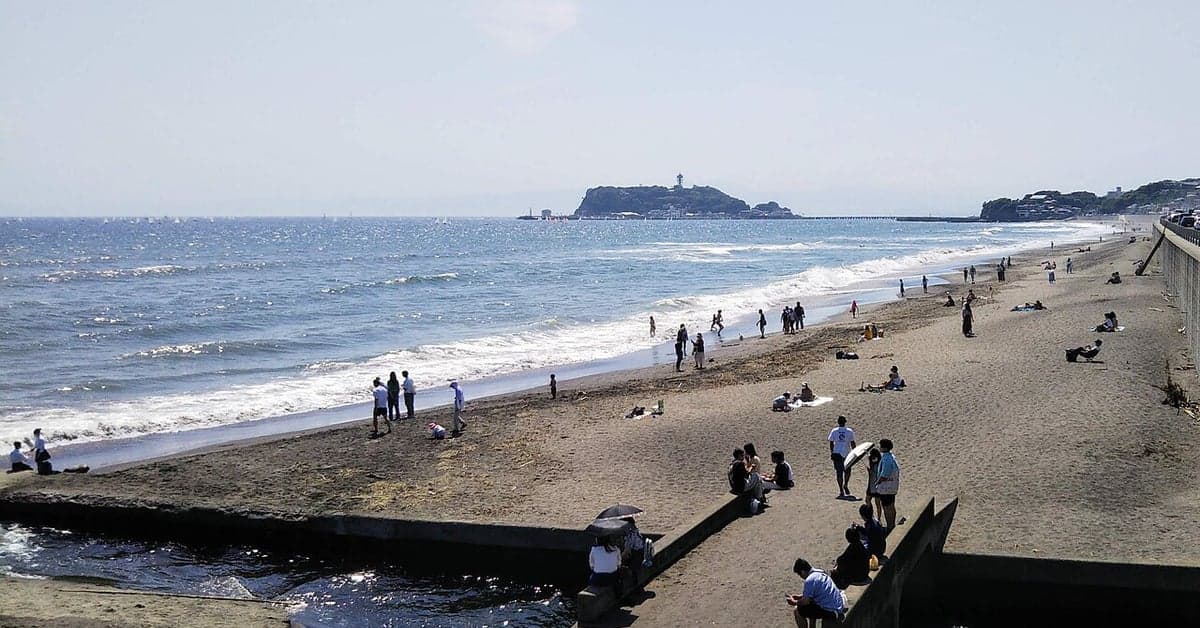
Enoshima is a small island connected to the mainland by a bridge, about 70 minutes from Shinjuku on the Odakyu Enoshima Line (¥630). The island itself is a compact tangle of shrines, seafood restaurants, and viewpoints — the observation tower at the top offers a clear-day view of Mount Fuji across the bay.
The beaches flank the bridge on either side of the mainland. Katase-Higashihama and Kugenuma are the main stretches, wide and sandy with the same umi no ie culture as Kamakura. Enoshima's advantage is the view — on clear days, the island and Fuji create a backdrop that makes the crowded sand and imperfect water forgettable.
The seafood on Enoshima island is excellent. Tobicchō, a tiny restaurant near the shrine entrance, serves shirasu-don (raw whitebait over rice) that draws hour-long queues on weekends. The raw shirasu are translucent, briny, and available only when the catch is fresh — off-season you'll get the boiled version instead. A bowl costs ¥800-1,200 ($5.50-8.50).
Zushi
Zushi is one station past Kamakura on the JR line and feels noticeably calmer. The beach is smaller and less developed, with a handful of umi no ie and a loyal local crowd that includes families from the neighboring residential hills and a small expat community.
Zushi's distinguishing feature is its no-tattoo tolerance. Many Japanese public beaches and pools ban visible tattoos (an association with yakuza culture), which creates an awkward situation for tattooed foreign visitors. Zushi has adopted a more relaxed enforcement attitude, making it one of the more foreigner-friendly beaches in the Tokyo area.
The Zushi Beach Film Festival in late summer screens movies on an outdoor screen on the sand — a genuinely lovely experience if your timing lines up. The Riviera Zushi Marina, just south of the beach, has upscale restaurants and a Mediterranean-resort vibe that feels out of place in Japan, in a good way.
The Shonan Coast
Shonan is the umbrella term for the string of beaches between Kamakura and Odawara along Sagami Bay. Chigasaki, Hiratsuka, and Oiso are the main towns, each with its own beach. The Shonan surfer identity — bleached hair, vintage vans, Aloha shirts — is a distinct Japanese subculture that's been thriving since the 1960s.
Chigasaki's beach, backed by the Southern Beach monument (named after the band Southern All Stars, not the compass direction), is a local favorite with good longboard waves on typhoon swells. The eboshi-iwa rock formation offshore is the town's landmark. Taco Bell and gas station aesthetics mix with traditional Japanese izakayas along the coast road in a distinctly Shonan way.
Kujukuri Beach (Chiba)
On the opposite side of Tokyo, Chiba prefecture's Kujukuri Beach runs for 60 kilometers along the Pacific coast — one of the longest beaches in Japan. It faces the open ocean (unlike the sheltered Sagami Bay beaches), which means bigger waves and stronger currents. Ichinomiya, at the southern end, hosted the surfing events at the 2020 Tokyo Olympics.
Kujukuri is less accessible by train — most visitors drive (90 minutes from central Tokyo without traffic, which is a fantasy on summer weekends). The surf here is the most consistent in the Tokyo area, with beach breaks producing 3-6 foot waves on regular Pacific swells. Murasaki Shonan (a chain surf shop) and local schools offer lessons for ¥5,000-8,000 ($35-55) including board and wetsuit.
The area around Kujukuri is rural, with rice paddies running almost to the dunes. It has none of Kamakura's historical atmosphere but also none of its crowds. If you want actual waves and space, this is the move.
Beaches Near Osaka
Shirahama (Wakayama Prefecture)
Shirahama — literally "white beach" — is the premier beach destination for Osaka and Kansai region residents. The 620-meter crescent of imported Australian white sand (the original sand eroded, so they shipped it in) sits on the Kii Peninsula, about 2.5 hours from Osaka by JR Kuroshio limited express (¥5,700, about $40).
The beach is genuinely beautiful, with water clearer than anything near Tokyo. The town doubles as an onsen (hot spring) resort, which creates a unique combination: swim in the ocean, then soak in a seaside hot spring. Saki-no-yu, an outdoor onsen perched on rocks above the ocean, charges ¥500 ($3.50) and offers soaking with wave spray on your face — one of the most memorable bathing experiences in Japan.
Adventure World, a combination zoo-aquarium-amusement park on the outskirts of town, houses giant pandas and is the main attraction for Japanese families visiting Shirahama. Entry is ¥5,300 ($37) for adults.
The Sandanbeki Cliffs south of town drop 50 meters to the ocean and contain a cave network accessible by elevator (¥1,300). Engetsu Island, a small rock arch just offshore, is the town's most photographed landmark, particularly at sunset.
Beach House Culture: The Umi no Ie
The umi no ie system deserves its own explanation because it shapes the entire Japanese beach experience. These temporary structures are erected on popular beaches in late June and dismantled by early September. Each one is independently operated, with its own food menu, drink selection, music, and aesthetic.
Entry typically costs ¥1,000-2,000 ($7-14) and includes use of a locker, changing room, shower, and a spot on the beach in front of the establishment. Some upscale umi no ie charge ¥3,000-5,000 ($21-35) and offer cabana seating, cocktail service, and lounge music. Food ranges from ¥500 yakisoba to ¥1,500 seafood plates. Cold draft beer is ¥500-800.
The system works because Japan's beaches are intensely seasonal. Outside of July-August, most of these beaches are empty. The umi no ie compress an entire summer's worth of energy into an eight-week window.
Beach BBQ Rules
Many Japanese beaches allow or even encourage BBQ (バーベキュー, often abbreviated BBQ). Designated BBQ zones are marked on the beach, and you can rent grills and buy charcoal at nearby shops. Some umi no ie offer full BBQ packages with meat, vegetables, and equipment for ¥3,000-5,000 per person.
Rules vary by beach: some require advance booking for BBQ spots, others operate first-come-first-served. Virtually all require you to clean up completely — leaving trash on a Japanese beach would be a serious social transgression. Alcohol is permitted on most beaches but public intoxication is frowned upon.
Practical Details
Getting There
Tokyo-area beaches are overwhelmingly accessible by train, which is a significant advantage. Use the JR Yokosuka Line or Odakyu Line for Kamakura/Enoshima/Shonan, the JR Sotobo Line for Chiba, and the Keikyu Line for Miura Peninsula. Suica or Pasmo IC cards work on all lines. Avoid driving on summer weekends — the Shonan roads become parking lots.
When to Go
The official beach season is July 1 through August 31. Many beaches restrict swimming outside these dates (lifeguards are only present during the season). Water temperatures reach 75-80°F in August. June is the rainy season (tsuyu) — avoid it. September sees the tail end of typhoon season but occasional warm, calm days.
What to Know
- Tattoo policies vary by beach — research in advance if this applies to you
- Glass bottles are banned on most beaches
- Drone flying is prohibited in most beach areas
- Jellyfish become more common in late August — some beaches set up netting
- Sun protection is a cultural priority — many beachgoers wear full UV-blocking rash guards, wide hats, and parasols
Frequently Asked Questions
Are there good beaches near Tokyo?
Yes. Kamakura and Enoshima are about 60-70 minutes from central Tokyo by train and have wide sandy beaches with summer beach houses (umi no ie), food stalls, and lively atmosphere. For better surf, Kujukuri Beach in Chiba offers 60 kilometers of Pacific coastline and hosted the 2020 Olympics surfing events.
When is beach season in Japan?
Japan's official beach season is July 1 through August 31. Lifeguards and umi no ie (temporary beach houses) only operate during these two months. Water temperatures reach 75-80F in August. June is rainy season — avoid it. Outside July-August, most beaches restrict swimming.
What is an umi no ie in Japan?
Umi no ie (sea houses) are temporary beachside bars and restaurants rebuilt from scratch each summer on Japanese beaches. Entry costs $7-14 and includes a locker, changing room, shower, and beach spot. Some offer cabana seating, cocktails, and DJ sets for $21-35. They are erected in late June and demolished by early September.
Can you visit Japanese beaches with tattoos?
Many Japanese beaches and pools ban visible tattoos due to their association with yakuza culture. Zushi Beach near Kamakura has adopted a more relaxed enforcement attitude, making it one of the more foreigner-friendly options. Research specific beach policies before visiting.
How do you get to Kamakura beach from Tokyo?
Take the JR Yokosuka Line from Tokyo Station to Kamakura Station — the ride takes about an hour and costs roughly $6.50 (950 yen). The beach is a short walk from the station. Use a Suica or Pasmo IC card for convenience. Avoid driving on summer weekends as coastal roads become parking lots.
Is Shirahama beach near Osaka worth visiting?
Yes. Shirahama is about 2.5 hours from Osaka by limited express train ($40) and has genuinely clear water and white sand. Its unique draw is combining ocean swimming with seaside hot springs — Saki-no-yu onsen ($3.50) offers outdoor soaking on rocks above the ocean with wave spray on your face.