The Best Beaches in Trinidad and Tobago
Table of Contents
Prices in this guide are approximate and change often. Check with the hotel, airline or operator before you book.
Two Islands, Two Personalities, One Country
Trinidad and Tobago sit at the bottom of the Caribbean chain, close enough to Venezuela that on a clear day you can see the mainland from Trinidad's southwest peninsula. The twin-island republic operates as a single nation, but the two halves could not be more different. Trinidad is industrial, culturally intense, and home to one of the most famous Carnivals in the world. Tobago is small, rural, and built for the kind of slow beach day that Trinidad's residents escape to on long weekends. Together, they offer a Caribbean experience that skips the resort-brochure formula entirely.
Getting between the islands takes either a 20-minute Caribbean Airlines flight or a 2.5-hour ferry from Port of Spain to Scarborough ($50 TT, about $7.50 USD). The ferry is cheap but unreliable — breakdowns and schedule changes happen with a regularity that locals treat as comedy material. The flight is worth it.
Tobago's Beaches
Pigeon Point
Pigeon Point is Tobago's postcard shot — a thatched-roof jetty extending over turquoise water, with the Buccoo Reef visible as a dark shadow in the distance. The beach charges a $20 TT entry fee ($3 USD), which keeps it maintained and gives access to showers, changing rooms, and a bar. The sand is white and powdery, the water is shallow for 50 yards out, and glass-bottom boat tours to the Buccoo Reef and Nylon Pool depart from the jetty throughout the morning.
The Nylon Pool, a shallow sandbar in the middle of the reef, sits in waist-deep water a mile offshore. Tour operators charge about $80 TT per person for a 90-minute trip that includes the reef, the pool, and a stop at No Man's Land, a sandbar with a makeshift bar. The coral has suffered bleaching damage, but you'll still see fan coral, parrotfish, and blue tang.
Store Bay
Right next to the airport and the ferry terminal, Store Bay does not look like much from the road. But walk past the food stalls and you'll find a small cove with good snorkeling along the rocky edges and some of the best cheap food in Tobago. Miss Jean's, Miss Esmie's, and Miss Joyce's — the legendary food stalls — serve crab and dumpling for about $40 TT ($6 USD). The crab is land crab, stewed in curry, and eaten with your hands over a sheet of brown paper. It is messy, spicy, and the single best meal you'll eat on the island.
Englishman's Bay
On Tobago's northern coast, past the village of Castara, the road winds through cocoa estates and rainforest before dropping to Englishman's Bay. The beach is a wide crescent of yellow sand bookended by jungle-covered headlands. There's one vendor selling drinks from a cooler and sometimes a guy renting snorkel gear for $20 TT. That's it.
The water is calm most of the year, though November and December can bring swells from the north Atlantic. Swimming is comfortable, the snorkeling along the left headland reveals sea fans and lobster hiding in the rocks, and the forest behind the beach is alive with hummingbirds and motmots. No facilities, no lifeguard, no phone signal. Bring water and sunscreen.
Castara
Castara is a fishing village with two beaches — Big Bay and Little Bay. Big Bay fronts the village, and in the late afternoon you can watch pirogues (wooden fishing boats) come in with the day's catch. Fishermen sell directly to locals, and several guesthouses in the village will cook your dinner from whatever came off the boat. A night in a Castara guesthouse runs $200-400 TT ($30-60 USD), making this one of the cheapest beach stays in the Caribbean.
Little Bay, a 10-minute walk over a trail through the woods, is more secluded and better for snorkeling. The trail is steep in places and slippery after rain. Shoes with grip, not flip-flops.
Trinidad's Beaches
Maracas Bay
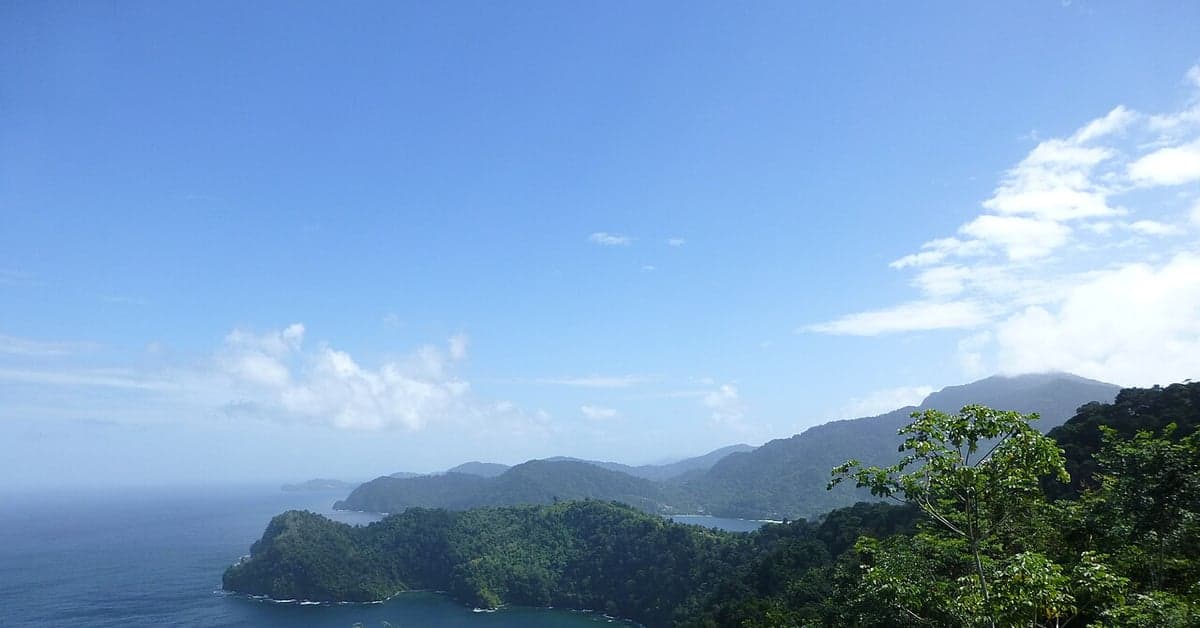
Maracas Bay is Trinidad's national beach. The drive from Port of Spain takes 45 minutes over the Northern Range on a road that twists through rainforest with views that drop straight to the Caribbean. The beach itself is a long sweep of coarse sand with consistent waves — body-surfable but occasionally rough, especially in the rainy season (June to November). Lifeguards patrol daily.
The real draw is Richard's Bake and Shark, a food stall at the entrance that has been serving the island's signature dish for decades. A bake (fried bread) stuffed with fried shark, topped with garlic sauce, tamarind chutney, pepper sauce, coleslaw, and pineapple runs about $30-40 TT ($4.50-6 USD). The line moves fast. Locals argue fiercely about which stall is best — Richard's and Natalie's are the perennial contenders. Try both if your appetite allows.
Maracas is busy on weekends and public holidays. Parking fills up by 10 AM on Sundays. Go on a Tuesday or Wednesday and you'll have space to breathe.
Las Cuevas
Five minutes past Maracas on the same north-coast road, Las Cuevas is longer, quieter, and backed by forested hills. The surf is slightly less aggressive, the sand is finer, and there's a cave (las cuevas means "the caves") at the eastern end that you can wade into at low tide. Changing facilities and a snack bar operate on weekends. During the week, the beach can be nearly empty.
Leatherback Turtle Nesting
Trinidad's north and east coast beaches — particularly Matura, Grande Riviere, and Fishing Pond — are critical nesting sites for leatherback sea turtles. Nesting season runs from March to August, with peak laying in April and May. Grande Riviere, a remote village on the far northeast coast, is the most accessible nesting site. On peak nights, over 100 turtles may come ashore on a beach barely 800 meters long.
The Nature Seekers community group at Matura Beach and the Grande Riviere Nature Tour Guide Association run permitted nighttime watches. Tours start around 8 PM and cost $100-150 TT. Flash photography and white lights are prohibited. Watching a leatherback that weighs more than a grand piano dig her nest by moonlight is one of the great wildlife encounters in the Americas.
Carnival and the Beach Connection
Trinidad Carnival falls on the Monday and Tuesday before Ash Wednesday (typically February or March). The event takes over Port of Spain for a week of fetes, soca competitions, J'Ouvert (a pre-dawn paint-and-mud street party), and the main Parade of the Bands. It is loud, physical, and completely consuming.
Most visitors combine Carnival with a few beach days on either side. The common pattern: fly into Port of Spain for Carnival week, then hop to Tobago for three or four days of recovery on the sand. Hotels in both islands book up months in advance during Carnival, and prices triple. Budget $150-300 USD per night in Port of Spain during Carnival week; Tobago stays more reasonable at $50-100 USD.
Street Food Beyond Bake and Shark
Doubles — two soft, turmeric-stained bara (fried flatbread) filled with curried chickpeas and topped with tamarind sauce, cucumber chutney, and scotch bonnet pepper — is Trinidad's signature street food. A doubles costs $5-8 TT (under $1.50 USD) and is eaten for breakfast, lunch, or 2 AM outside a nightclub. The best doubles vendors are the ones with the longest lines: George's on the Savannah, Sauce Doubles in Curepe, and the unnamed man who parks his cart outside Movietown in Chaguanas.
Corn soup, pholourie (fried chickpea-flour balls with mango chutney), and gyros from Syrian-Lebanese families who've been in Trinidad for generations round out the street-food circuit. A full day of eating costs less than a single resort lunch.
Getting Around and Logistics
Rent a car. Trinidad's public transport (route taxis and maxi-taxis) works but is hard to navigate as a visitor. Car rental runs $200-350 TT ($30-50 USD) per day. Drive on the left. Trinidad's drivers are aggressive; Tobago's roads are narrow and hilly. GPS works, but locals give directions using landmarks ("turn by the big mango tree, pass the white church, look for the blue house").
Currency is the Trinidad and Tobago dollar (TTD). $1 USD equals roughly $6.75 TT. ATMs are widespread in Port of Spain and Scarborough. Many places in Tobago are cash-only.
Direct flights reach Piarco International Airport (Port of Spain) from Miami (3.5 hours, Caribbean Airlines and JetBlue), New York-JFK (5 hours, Caribbean Airlines and JetBlue), Toronto (5 hours, Caribbean Airlines), and London Gatwick (9 hours, British Airways). Regional connections through Barbados and Grenada are frequent.
Best Time to Visit
Dry season runs from January to May. This overlaps with Carnival and turtle nesting, making March through May the sweet spot. The rainy season (June to December) brings afternoon showers that are heavy but brief, lower prices, and dramatically green scenery. Trinidad sits below the main hurricane belt, so storm risk is low but not absent. Water temperature is a constant 79-82°F.
Frequently Asked Questions
Which island is better for beaches, Trinidad or Tobago?
Tobago has far better beaches. Pigeon Point and Store Bay have calm Caribbean water and white sand. Englishman's Bay is a secluded gem backed by rainforest. Trinidad's best beach is Maracas Bay on the north coast, famous for its bake and shark food stalls, but Trinidad is generally more about culture, food, and nature than beach-lounging.
When is the best time to visit Trinidad and Tobago?
January through May is the dry season with the best beach weather. Water temperatures stay at 26-28°C year-round. Carnival in Trinidad (February/March) is the highlight if you want to combine beach time with one of the world's greatest festivals. June through December is the wet season, with short afternoon showers that rarely ruin a beach day.
Is Trinidad and Tobago safe for tourists?
Take crime seriously here. Canada's government advises a high degree of caution for Trinidad and Tobago (advice updated September 17, 2026), citing armed robberies, carjackings, assaults, kidnappings and murders, and warns visitors to stay alert in tourist areas as well as in Port of Spain. Tobago is quieter than Trinidad, but the same care applies. Stick to well-traveled areas, don't flash valuables, and use reputable taxi services. Go to beaches like Maracas Bay in daylight, and don't leave belongings unattended.
How much does a Trinidad and Tobago vacation cost?
Trinidad and Tobago is mid-range for the Caribbean. A hotel in Tobago costs $80-150 per night, and beachfront guesthouses start at $50-70. A doubles (street food) in Trinidad costs $1-2, and a restaurant meal runs $10-20. Tobago has good all-inclusive options from $150-250 per night. Inter-island flights cost $50-80 round trip.
How do you get from Trinidad to Tobago?
Caribbean Airlines flies between Port of Spain and Tobago (Crown Point) in 25 minutes, with fares around $50-80 round trip. The government inter-island ferry takes about 2.5 hours and costs $5-10 each way, but runs on an unreliable schedule. Most tourists fly, as the ferry can be cancelled or delayed. Book flights early for peak periods.
What is bake and shark in Trinidad?
Bake and shark is Trinidad's most famous beach food — fried shark meat in a fried dough pocket (the "bake") topped with various sauces, coleslaw, chadon beni (culantro) sauce, tamarind sauce, and pepper. The best stalls are at Maracas Bay, where Richard's Bake and Shark is the most famous. A serving costs $3-5 and is large enough for a full meal.
Is Tobago good for snorkeling and diving?
Tobago has excellent diving and snorkeling. Buccoo Reef is the most accessible snorkeling spot, reachable by glass-bottom boat ($15-20) or kayak. Speyside on the northeast coast has world-class diving with manta rays, brain coral the size of cars, and strong currents for drift dives. Dive packages cost $60-80 for two tanks.