The Best Beaches in Tonga and Samoa
Table of Contents
Prices in this guide are approximate and change often. Check with the hotel, airline or operator before you book.
Two Countries, One Region, Very Different Vibes
Tonga and Samoa sit side by side in the central South Pacific, but they operate as distinctly different travel destinations. Tonga is a monarchy — the only Pacific Island nation never formally colonized (it was a British protected state from 1900 to 1970) — with 170 islands spread across three main groups. Samoa (not to be confused with American Samoa, a US territory to the east) is an independent nation of two main islands with a strong communal culture governed by the matai (chief) system.
Both countries are deeply Christian, which shapes the visitor experience in concrete ways. Sundays in Samoa and Tonga are genuinely quiet: shops close, beaches empty, and the sound of hymn singing from churches carries across entire villages. In Samoa, it's considered disrespectful to swim, drive through villages during prayer time (roughly 6-7 PM daily), or make noise during Sunday services. Visitors who respect these rhythms are welcomed warmly. Those who don't are noticed.
The beaches in both countries are largely undeveloped compared to Fiji, the Cook Islands, or French Polynesia. Tourism infrastructure is basic. Roads vary from paved to potholed to unpaved. This is part of the appeal — these are Pacific Islands without the resort veneer — but it requires flexibility and a tolerance for things not working on schedule.
Ha'apai Group, Tonga: Empty Beaches, Empty Islands
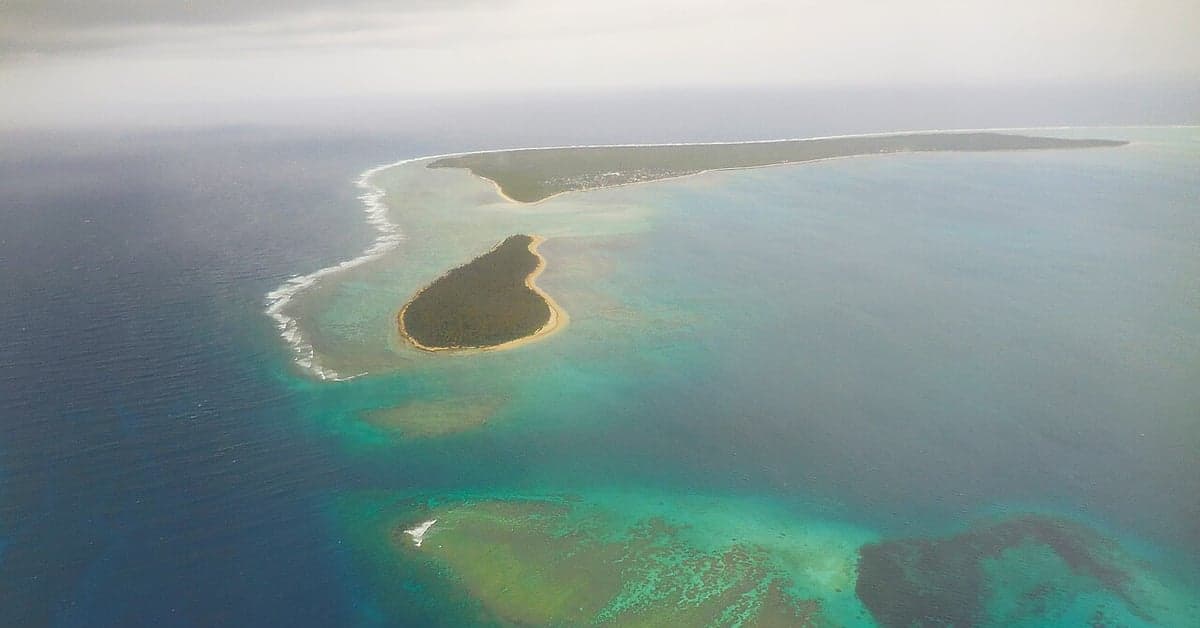
The Ha'apai Group is Tonga's middle island cluster — 62 islands of which only 17 are inhabited. The total population is around 6,500 people spread across those 17 islands, meaning large sections of the group are uninhabited coral islets with white sand beaches, coconut palms, and nobody on them.
Lifuka is the main island and the only one with an airport. The eastern coast of Lifuka has a long, wide white sand beach running several kilometers — empty on most days, with maybe a handful of other visitors at peak times. The water is clear, the reef is close enough for snorkeling, and the only buildings along the beachfront are a few scattered fale (traditional open-sided shelters).
Foa Island, connected to Lifuka by a causeway, has Sandy Beach Resort, a modest but functional beachfront property that serves as the main tourist accommodation in Ha'apai. The beach at Sandy Beach is the kind of empty white sand that resort developers in Fiji would charge $500/night to access. Here it's practically private because almost nobody comes to Ha'apai.
Getting to Ha'apai
Real Tonga Airlines flies Tongatapu (the main island) to Ha'apai two to three times per week. The ferry MV Pulupaki makes the run from Tongatapu in about 7 hours ($40-50 one way), departing twice weekly, weather permitting. Schedules change — confirm before booking onward connections.
Vava'u Islands, Tonga: Whale Swimming and Kayak Beaches
The Vava'u Group, Tonga's northernmost island cluster, is the country's tourism center — which in Tongan terms means a few dozen guesthouses, a handful of restaurants in the main town of Neiafu, and a charter yacht fleet that fills the harbor from July through October.
The islands form a drowned volcanic complex with steep limestone coastlines, sheltered bays, and dozens of anchorages. The beaches are small, cove-style, and scattered across the outer islands — many accessible only by boat or kayak. Mariner's Cave, a sea cave accessible by swimming underwater through a 2-meter submerged entrance, opens into a cathedral-sized cavern with a small beach inside. The light filtering through the water creates a blue glow on the cave walls. You need a boat operator who knows the location and conditions — don't attempt this without local guidance.
Swimming With Humpback Whales
Tonga is one of the few places in the world where you can legally swim with humpback whales. The whales migrate from Antarctic feeding grounds to Tonga's warm waters between July and October to breed and calve. Licensed operators in Vava'u take small groups (maximum 4 swimmers plus a guide) into the water with whales, maintaining respectful distances while allowing close encounters.
A full-day whale swim excursion costs TOP$600-800 ($250-350 USD) per person. Sightings are almost guaranteed during peak season (August-September). In-water encounters depend on whale behavior — mothers with calves are often curious and may approach swimmers, while lone males tend to keep moving. Operators like Whale Discoveries and Dolphins Pacific have years of experience reading whale behavior and positioning swimmers safely.
The ethics of whale swimming are debated. Tonga regulates the industry with permit requirements, swimmer limits, and distance rules. Reputable operators follow these strictly. The experience — floating in open ocean while a 15-meter humpback glides past at arm's length — is difficult to describe without resorting to superlatives.
'Eua Island, Tonga: The Untouched Interior
'Eua is Tonga's oldest and most geologically interesting island — a high, forested ridge rising 312 meters, just 18 kilometers from the main island of Tongatapu. It receives a fraction of the visitors that Vava'u and Ha'apai get, partly because its beaches are less accessible and partly because the draw is the interior: a tropical rainforest with endemic bird species (the Tongan whistler, the blue-crowned lorikeet), limestone cliffs, and cave systems.
The beaches on 'Eua's east coast are rugged — rocky shores with small sandy pockets accessed by steep trails through the forest. The western coast, facing Tongatapu, has calmer water and the few swimmable beaches. Taina's Beach Resort is the main accommodation option.
Real Tonga flies to 'Eua from Tongatapu in 8 minutes ($50 round trip). The ferry takes about 2.5 hours ($15 one way). 'Eua is for hikers and nature enthusiasts more than beach travelers, but the combination of 'Eua's forests with Ha'apai's or Vava'u's beaches makes for a well-rounded Tonga trip.
Lalomanu Beach, Samoa: The Southeast Coast Classic
Lalomanu is the most famous beach in Samoa and regularly appears on best-of lists for the Pacific region. It's a 2-kilometer stretch of white sand on Upolu's southeast coast, with offshore coral islets (Nu'utele, Nu'ulua, and Namua) breaking the horizon and creating a layered seascape of beach, turquoise lagoon, green islets, and open ocean.
The beach is divided into sections managed by different families — land ownership in Samoa is communal, controlled by the matai of each village. You pay an entrance fee (SAT$10-20 / $4-8 USD per person) to the family controlling the section you use. Open-sided beach fale (sleeping platforms with thatched roofs, mattresses, mosquito nets, and no walls) line the beachfront and cost SAT$80-150 ($30-60 USD) per person including meals. Sleeping in a fale — waves audible 10 meters away, ceiling fan optional, falling asleep to the sound of the reef — is the quintessential Samoa experience.
Lalomanu was severely damaged by the 2009 tsunami and has rebuilt. The memorial stone near the beach entrance commemorates those lost. The reconstruction demonstrates the resilience of Samoan communities and the practical realities of living on low-lying Pacific coastline.
To Sua Ocean Trench: Not a Beach, But Essential
To Sua is a 30-meter-deep natural swimming hole on Upolu's south coast, connected to the ocean by an underground lava tube. A steep wooden ladder descends from the cliff edge to the emerald-green water below. The pool is roughly 40 meters across, surrounded by vertical rock walls covered in moss and tropical vegetation.
It's an extraordinary geological feature and one of Samoa's most visited sites. Entry is SAT$20 ($8 USD) per person. The ladder is steep and can be slippery — secure footwear is recommended for the descent. Once in the water, the depth and the underground connection to the ocean create gentle surges that remind you this isn't a swimming pool. The water temperature hovers around 26°C year-round.
To Sua is about 45 minutes from Apia (Upolu's capital) on the south coast road. Combine it with Lalomanu Beach, which is another 20 minutes east on the same road.
Return to Paradise Beach, Samoa
Named after the 1953 Gary Cooper film that was shot here, Return to Paradise Beach is on Upolu's south coast, about 30 minutes from Apia. The beach is a mix of white sand and volcanic rock, set in a bay with strong surf. It's rougher than Lalomanu — less swimming-pool lagoon, more actual ocean — and the setting has a dramatic, wild quality that the east coast doesn't.
Beach fale accommodation is available (SAT$60-100 per person with meals). The surf break at Return to Paradise is a left-hander that works on south swells and draws a small crew of local and visiting surfers. Lefaga Village, behind the beach, is a functioning Samoan community — be respectful, ask before taking photographs of people or property, and wear a lavalava (sarong) when walking through the village.
Manono Island, Samoa
Manono is a tiny island (3 square kilometers) in the strait between Upolu and Savai'i. There are no cars, no dogs (village law), no paved roads, and roughly 900 residents. The island has several small white sand beaches with calm lagoon water, and the circumference walk takes about 90 minutes — through four villages, past taro gardens, breadfruit trees, and fale where families go about daily life.
Manono is reached by a 15-minute open boat ride from Manono-uta wharf on Upolu (SAT$10 return). Accommodation is limited to a few family-run fale operations (SAT$80-120 per person with meals). There is no ATM, no restaurant, and no shop beyond a small village store. Bring cash, a book, and the willingness to disconnect — Manono has cell coverage but no particular reason to use it.
Savai'i: The Big Island
Savai'i is Samoa's larger island but has half of Upolu's population, giving it a more rural, traditional character. The beaches along the southeast coast — particularly between Salelologa (the ferry port) and Lano — are wide, white, and see very few visitors. Lano Beach has turquoise lagoon water, beach fale accommodation, and a resident population that's happy to see tourists spend money in their village.
Savai'i's interior has lava fields from the 1905-1911 eruptions (the most recent volcanic activity in Samoa), blowholes at Alofaaga where seawater shoots 20 meters into the air through coastal rock formations, and Falealupo Rainforest Preserve on the western tip — a canopy walkway through old-growth tropical forest maintained by the village. The ferry from Upolu to Savai'i (Mulifanua to Salelologa) takes about 75 minutes and costs SAT$14 per person.
Getting Between Islands and Countries
Within Tonga
Real Tonga Airlines connects Tongatapu to Vava'u, Ha'apai, and 'Eua. Ferry services exist but are slow and schedule-dependent. Booking flexibility is essential — delays and cancellations happen.
Within Samoa
The Upolu-Savai'i ferry runs multiple times daily and is reliable. Internal flights exist but are not necessary given Samoa's small size — you can drive around Upolu in 3-4 hours and Savai'i in 5-6 hours. Car rental costs SAT$100-150/day ($40-60 USD). Samoa drives on the left (switched from right in 2009).
Between Tonga and Samoa
Fiji Airways connects Tonga and Samoa with regular flights (about 2 hours via a stop or connection in Fiji, or occasional direct). Direct flights are rare and seasonal. The practical route is to fly Tongatapu to Nadi (Fiji) to Apia (Samoa), building in a Fiji stopover if timing allows. Budget $300-500 for the Tonga-Samoa air routing.
The Sunday Question
Both Tonga and Samoa observe Sunday as a day of rest with a seriousness that secular travelers may not anticipate. In Samoa, swimming on Sundays is frowned upon in many villages. Shops and restaurants close. Bus services stop. In Tonga, the situation is similar — the constitution actually mandates Sunday observance, and commercial activity is restricted by law.
Practical advice: treat Sunday as a rest day, attend a church service if you're curious (visitors are welcomed and the harmonized singing is extraordinary), prepare Saturday-night leftovers for Sunday lunch, and don't plan travel connections on Sundays. If your flight lands on Sunday, confirm that your accommodation can receive you and that airport transfers are arranged in advance.
Frequently Asked Questions
When is the best time to visit Tonga and Samoa?
May through October is the dry season with pleasant temperatures of 23-27°C and lower humidity. July through October is whale watching season in Tonga, when humpback whales migrate to the warm waters to breed. November through April is the wet season with cyclone risk, higher humidity, and more rain, though beaches are still beautiful.
How much does a Tonga or Samoa vacation cost?
Both countries are more expensive than Southeast Asia but affordable compared to Fiji or French Polynesia. A mid-range beach fale (traditional open-air hut) in Samoa costs $40-80 per night including meals. Tonga guesthouses run $50-100. Flights from New Zealand or Fiji cost $300-600 round trip. Budget travelers can manage $60-80 per day in either country.
Can you swim with whales in Tonga?
Yes, Tonga is one of the few places in the world where you can legally swim with humpback whales. The season runs from July through October in Vava'u. Snorkeling tours cost $200-350 per person for a full day with a licensed operator. Sightings are highly likely, but close encounters depend on whale behavior that day.
How do you get to Tonga and Samoa?
Fiji Airways and Air New Zealand connect both countries to Auckland, Sydney, and Fiji (Nadi). Flights from Auckland take 3-4 hours. There are inter-island flights within Tonga on Real Tonga and within Samoa on Samoa Airways. No airlines fly direct from the US — you'll connect through Auckland, Fiji, or Honolulu (for American Samoa only).
Is Samoa or Tonga better for beaches?
Samoa generally has better beaches — wider, sandier, and more accessible. Lalomanu Beach in Upolu is one of the South Pacific's most beautiful. Tonga's appeal is more about the water — whale swimming, snorkeling, and secluded island-hopping in Ha'apai and Vava'u. If beaches are your priority, start with Samoa. If marine life is the draw, choose Tonga.
What is a beach fale in Samoa?
A beach fale is a traditional Samoan open-sided thatched hut directly on the beach. They range from basic (mattress on a platform with a mosquito net) to more comfortable (enclosed walls, en-suite bathroom). Prices typically include breakfast and dinner, running $40-80 per person per night. Sleeping in a fale with the ocean breeze and sound of waves is a quintessential Samoan experience.
Is Tonga safe for tourists?
Tonga is very safe for tourists. Violent crime is extremely rare, and the biggest concerns are petty theft (don't leave valuables on the beach) and road safety (many roads are unpaved and poorly lit). Tongan culture is conservative and deeply Christian — Sunday is strictly observed with most businesses closed. Dress modestly when visiting villages.