The Best Beaches in the Pacific Northwest: Oregon and Washington
Table of Contents
Prices in this guide are approximate and change often. Check with the hotel, airline or operator before you book.
Pacific Northwest Beaches: Not for Swimming
The beaches of Oregon and Washington are not swim beaches. The water temperature runs 48-56°F year-round. The currents are powerful, the waves break hard, and sneaker waves — sudden surges that race up the beach without warning — kill people every year. Signs along the Oregon coast warn of this in blunt terms. Heed them.
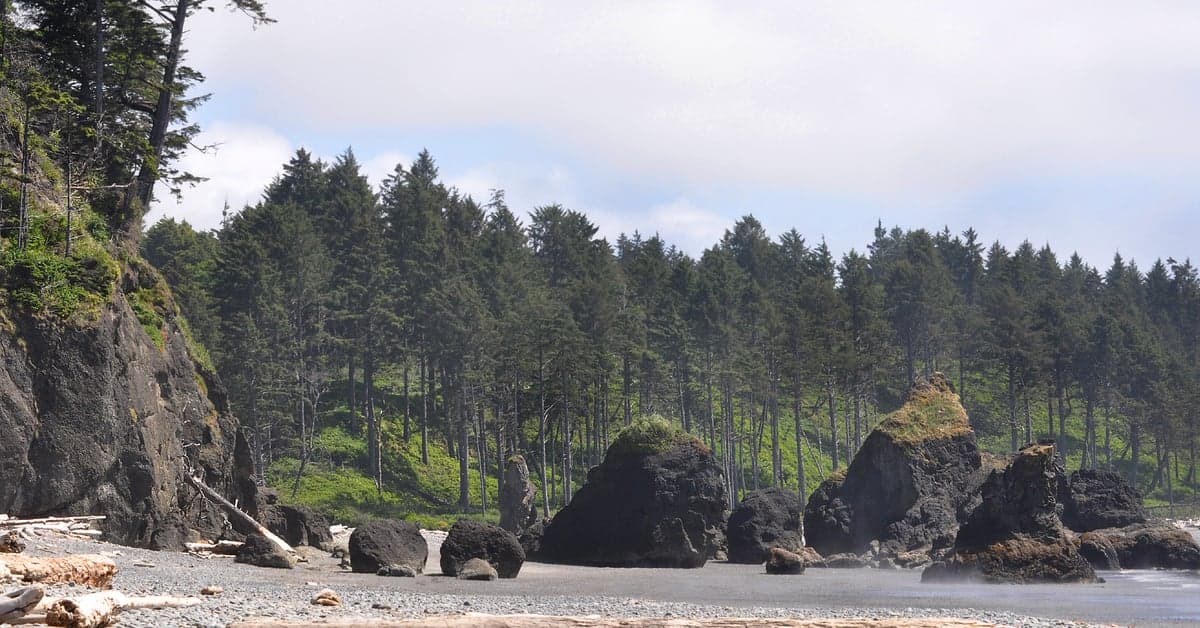
What these beaches offer instead is the most dramatic coastal scenery in the lower 48. Sea stacks rising from the surf, tide pools thick with anemones and starfish, old-growth forest tumbling down to black sand, and a moody, fog-wrapped atmosphere that makes the California coast look manicured by comparison. These are walking, exploring, photographing, and campfire beaches. Bring layers, not a bikini.
Oregon Coast
Oregon's entire 363-mile coastline is public. The 1967 Beach Bill guarantees free access to all dry sand beaches in the state — no private beaches, no restricted access, no parking stickers. Every beach in Oregon is your beach. This is not the case in Washington, California, or most other coastal states, and Oregonians are justifiably proud of it.
Cannon Beach and Haystack Rock
Haystack Rock is a 235-foot basalt sea stack sitting in the surf zone at Cannon Beach. It's the most photographed formation on the Oregon coast and the third-tallest intertidal structure in the world. At low tide, you can walk to its base and explore the tide pools — look for ochre sea stars, green anemones, and tufted puffins nesting on the rock's face from April through August.
Cannon Beach town is polished for the Oregon coast: galleries, boutique shops, and restaurants that charge Portland prices. The Wayfarer Restaurant does a solid Pacific Northwest dinner (grilled salmon, razor clam chowder, local pinot noir) with a direct view of Haystack Rock. Expect $30-50 per person for dinner.
The beach itself is wide, flat, and dark gray. Walk south from Haystack Rock toward Tolovana Park for fewer people. Walk north to reach Indian Beach at Ecola State Park ($5/vehicle), a cove framed by Sitka spruce forest that served as a filming location for both "The Goonies" and "Point Break." The trail from Ecola Point to Indian Beach (1.5 miles one way) is one of the best short coastal hikes in Oregon.
Ecola State Park
Ecola State Park deserves its own section. The park encompasses Tillamook Head, a forested headland between Cannon Beach and Seaside. The Tillamook Head Trail (6.3 miles one way, strenuous) follows the route Lewis and Clark took in 1806 and passes through old-growth spruce forest before emerging at views of the Tillamook Rock Lighthouse, a decommissioned light station sitting on a rock a mile offshore. The lighthouse is now privately owned and used as a columbarium — an ash repository. Only in Oregon.
Indian Beach, accessible by car from the southern park entrance, is a pocket beach popular with surfers. The break is a right-hand point that works best on a northwest swell. Water temp: 52°F. You'll need a 4/3mm wetsuit, boots, and gloves. See Surfline for current guidance.
Pacific City and Cape Kiwanda
Cape Kiwanda is a sandstone headland that you can hike up — carefully — for views of Chief Kiawanda Rock, another massive sea stack. The dune face on the cape's south side is steep and popular with sandboarders. The beach below is wide and flat, and it's one of the few places in Oregon where the dory fleet still launches directly from the sand. Fishermen drive their flat-bottomed boats into the surf at dawn to fish for salmon and halibut, then ride the waves back onto the beach to sell their catch.
Pelican Brewing Company, right on the beach, is one of the best brewpubs on the coast. Their Kiwanda Cream Ale and Beak Breaker IPA have won multiple Great American Beer Festival medals. The fish and chips ($18) use local rockfish. Sit on the deck if it's not raining — you're 50 feet from the surf.
Bandon Beach
Bandon, on the southern Oregon coast, has a concentration of sea stacks and rock formations that rivals anything on the West Coast. Face Rock, Elephant Rock, Table Rock, and a dozen smaller formations rise from the beach like a sculpture garden. The beach is accessible from multiple points along Beach Loop Drive, with the Face Rock Viewpoint being the most popular.
At low tide, the tide pools among the rocks at Bandon are exceptional. Hermit crabs, purple sea urchins, sculpins, and giant green anemones populate the pools. The beach itself is a mix of sand and rock — water shoes are useful.
Bandon town is small and slightly artsy. Cranberry production is the local industry (you'll see the bogs along Highway 101), and Bandon Dunes Golf Resort, five miles north, is one of the top golf destinations in the world — links-style courses on coastal bluffs, green fees starting at $125 in winter, $395 in summer.
Washington Coast
Olympic National Park: Shi Shi, Ruby, and Rialto Beaches
The wilderness beaches of Olympic National Park are the most remote and pristine on the West Coast. No roads, no facilities, no cell service. Getting to some of them requires multi-mile hikes through old-growth rainforest. The reward is coastline that looks essentially unchanged from pre-contact times.
Shi Shi Beach
Shi Shi Beach (pronounced "shy shy") is an 8-mile round-trip hike from the trailhead on the Makah Reservation. You need a Makah Recreation Pass ($20 at the Makah Museum in Neah Bay or the general store) and, if you camp overnight, an Olympic National Park wilderness permit, reserved online through Recreation.gov. The trail drops 200 feet through muddy forest — expect the trail to be wet and slippery year-round. Wear boots, not sneakers.
The beach itself is a mile-long crescent of sand and cobble ending at Point of the Arches, a collection of sea stacks and arches that ranks among the most dramatic coastal formations in North America. At low tide, you can walk among the arches and explore tide pools. Camping is allowed on the beach (backcountry permit required) — sleeping to the sound of waves crashing against sea stacks in the dark is a particular kind of experience.
Ruby Beach
Ruby Beach is the most accessible wilderness beach in Olympic National Park — a short, steep trail from the Highway 101 parking lot drops to the sand. The "ruby" name comes from garnet crystals in the sand, visible as reddish specks among the gray. The beach is a mix of sand, cobble, and driftwood, with sea stacks offshore and Abbey Island anchoring the southern view.
The driftwood here is massive — whole old-growth logs, 4-6 feet in diameter, tossed onto the beach by winter storms. They make convenient benches and windbreaks. Don't climb on wet logs near the waterline — a wave can roll a thousand-pound log onto you without warning.
Rialto Beach
Rialto Beach, near the town of La Push on the Quileute Reservation, is another driftwood-strewn wilderness beach. The main draw is the 1.5-mile walk north to Hole-in-the-Wall, a natural sea arch you can walk through at low tide. The tide pool area around the arch is rich — sea stars, mussels, barnacles, and anemones coat every surface. Check the tide tables before hiking — the area around Hole-in-the-Wall is impassable at high tide.
La Push, the village at the mouth of the Quillayute River, has a small beach (First Beach) with tribal-operated cabins and a campground. The Quileute Oceanside Resort offers basic but clean rooms starting at $100/night with direct ocean views. Second Beach and Third Beach, south of La Push, require short hikes and offer more secluded sand.
Practical Information
Weather and What to Bring
The Pacific Northwest coast gets 60-90 inches of rain annually. Summer (July-September) is the driest period, with daytime temperatures in the 60s and occasional sun. The rest of the year, expect rain, fog, and wind. Layers are essential:
- Base layer: Moisture-wicking synthetic or merino wool
- Mid layer: Fleece or down jacket
- Outer layer: Waterproof shell (Gore-Tex or equivalent)
- Feet: Waterproof boots or hiking shoes for trails; sandals for beach walking in summer
- Extras: Hat, gloves in shoulder season, binoculars for whale watching
Sneaker Waves
Sneaker waves are unpredictable surges that rush far higher up the beach than the regular wave pattern suggests. They are caused by wave interference — multiple swells combining to produce a single large wave. They hit the Oregon and Washington coasts with regularity, especially in winter. People die every year, often while standing on logs near the waterline or walking on flat rock shelves.
Rules: Never turn your back on the ocean. Don't walk on wet sand near the waterline when waves are large. Don't climb on driftwood logs in the wave zone. If you see water rushing toward you, run uphill immediately — don't try to outrun it along the beach.
Camping
Oregon State Parks campgrounds along Highway 101 are excellent and book out in summer. Reserve at oregonstateparks.org up to six months in advance. Cape Lookout ($34/night, yurts available at $56/night), Nehalem Bay ($28/night), and Sunset Bay ($28/night) are among the best. In Washington, Kalaloch Campground in Olympic National Park sits on a bluff above the beach; book ahead for summer, because the sites with ocean views go first.
The Pacific Northwest coast is not a conventional beach vacation. There's no warm water, no tan lines, no frozen daiquiris served beachside. What there is: a raw, powerful ocean meeting a wild, forested coastline in ways that remind you the planet doesn't exist for your comfort. If that appeals to you more than 85°F and a swim-up bar, these are your beaches.
Frequently Asked Questions
Can you swim at Pacific Northwest beaches?
You can, but the water is cold — typically 48-55°F (9-13°C) even in summer. Most visitors walk the beaches, fly kites, build bonfires, and explore tide pools rather than swim. Surfers wear 4/3mm or thicker wetsuits year-round. The rare exceptions are inland lake beaches and the Columbia River, which warm up to swimmable temperatures in August.
What is the best beach in Oregon?
Cannon Beach is the most iconic, with Haystack Rock rising 235 feet from the sand. For solitude, Bandon Beach on the southern coast has dramatic sea stacks and far fewer visitors. Short Sand Beach (Smuggler's Cove) near Oswald West State Park is popular with surfers. Indian Beach, also near Cannon Beach, has excellent tide pools.
When is the best time to visit Oregon and Washington beaches?
July through September offers the driest weather, with temperatures of 60-75°F (15-24°C). August is the most reliably sunny month. Winter storms from November through March create dramatic waves and beachcombing opportunities but expect rain, wind, and temperatures in the 40s°F. The Oregon coast gets about 70 inches of rain per year.
Are Pacific Northwest beaches sandy?
Yes, most Oregon and Washington beaches have wide, flat sand. Oregon has 363 miles of coastline, all publicly accessible by law, with long sandy beaches between the rocky headlands. The sand ranges from golden-brown at Cannon Beach to gray-black at some southern Oregon beaches. Washington's Long Beach Peninsula has 28 miles of uninterrupted sand.
Is Cannon Beach Oregon worth visiting?
Cannon Beach is worth visiting for the dramatic scenery — Haystack Rock is one of the most photographed landmarks on the West Coast. The town has good galleries, restaurants, and shops. It's touristy in summer, especially on weekends. For a less crowded alternative, visit Manzanita or Pacific City, both within an hour and equally scenic.
Can you have a bonfire on Oregon beaches?
Yes, beach bonfires are allowed on most Oregon beaches. Some popular beaches like Cannon Beach have designated fire pits. State law requires fires be below the vegetation line, attended at all times, and fully extinguished before leaving. Driftwood is abundant and legal to burn. Some beaches restrict fires during high fire danger periods in late summer.
Are Oregon beaches free to visit?
Yes, all Oregon beaches are publicly owned by law — the 1967 Oregon Beach Bill guarantees free public access to the entire coastline. There are no private beaches in Oregon. State park day-use parking costs $5 at some locations, but the beach itself is always free. Washington beaches are also mostly public but with some private sections.