The Best Beaches in the Outer Banks
Table of Contents
Prices in this guide are approximate and change often. Check with the hotel, airline or operator before you book.
The Outer Banks: A Thin Ribbon of Sand Between Two Bodies of Water
The Outer Banks is a chain of barrier islands off the North Carolina coast, stretching 200 miles from Corolla in the north to Ocracoke in the south. At its narrowest, the land is barely 500 feet wide — ocean on one side, Pamlico Sound on the other. A single two-lane road, NC-12, threads the islands together and washes out in storms with frustrating regularity.
This isn't a resort destination. There are no high-rise hotels, no boardwalks, no amusement parks. The Outer Banks is a rental-house beach — families book a five-bedroom stilted house for a week, cook most meals in, and spend their days on the beach a short walk from the front door. That's the appeal: domestic, unhurried, and sand-between-the-floorboards casual.
The beaches themselves are wide, flat, and largely undeveloped. The sand is tan and medium-grain, the waves are consistent enough for surfing, and the water temperature hits the mid-70s from June through September. Here's a north-to-south breakdown of where to go.
Northern Beaches: Corolla and Duck
Corolla and the Wild Horses
Corolla sits at the end of NC-12 where the pavement stops. North of here, the road turns to sand, and the only way forward is by four-wheel drive. That's where the wild Colonial Spanish mustangs live — a herd of roughly 100 horses descended from livestock that swam ashore from shipwrecks in the 1500s. Wild Horse Adventure Tours runs Hummer excursions into the 4WD zone. You can also drive yourself if you have a capable vehicle — air down your tires to 20 PSI and stay off the dunes.
The beach at Corolla is wide and uncrowded. The Currituck Beach Lighthouse (1875, 214 steps, $12 admission) offers panoramic views from the top. The village has a few restaurants and shops, but it's quiet — the main activity is the beach.
Duck
Duck is the upscale town on the OBX. A boardwalk along Currituck Sound has shops, restaurants, and a kayak launch. Duck Donuts, which originated here before franchising nationally, still operates its original location on NC-12 — expect a 20-minute wait on summer mornings. The beach is accessed via neighborhood walkovers and is notably less crowded than Nags Head or Kill Devil Hills.
The soundside at Duck is excellent for kayaking, paddleboarding, and watching sunsets. Kitty Hawk Kites rents kayaks ($25/hour) and SUPs ($30/hour) from their soundfront location.
Central Beaches: Kitty Hawk, Kill Devil Hills, Nags Head
Kitty Hawk and Kill Devil Hills
These twin towns form the commercial core of the Outer Banks. Kill Devil Hills has the Wright Brothers National Memorial ($10/person, free for under-16), marking where Orville and Wilbur made their first powered flights in 1903. The actual flight distances — 120 feet for the first, 852 feet for the fourth — are marked with stones in a field. Standing there, the scale of what they accomplished with a hand-built flyer and a headwind feels absurd.
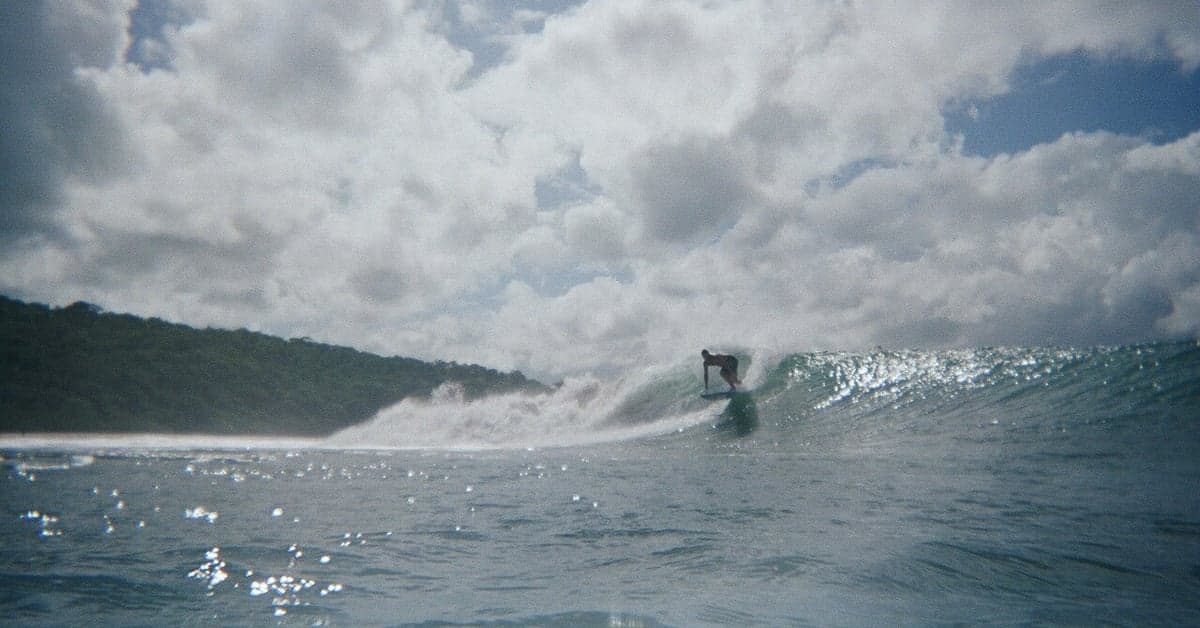
The beaches here are wide and accessible, with public parking and walkovers every few blocks along the Beach Road (NC-12). Waves average 2-4 feet in summer, suitable for beginner and intermediate surfers. Board rentals run $20-35/day from Whalebone Surf Shop or Cavalier Surf Shop. The water is warmer than you'd expect — 75-80°F from mid-June through September — thanks to the Gulf Stream passing relatively close to shore.
Nags Head
Nags Head is the OBX's most popular beach town. Jennette's Pier ($14 fishing, $2 just to walk), a 1,000-foot concrete pier rebuilt after Hurricane Isabel, is the main landmark. The beach is wide with moderate waves and a gradual slope — good for bodysurfing and boogie boarding.
Jockey's Ridge State Park
Jockey's Ridge, on the sound side of Nags Head, is the tallest active sand dune system on the East Coast — about 80 feet at its peak, though the height shifts with wind. It's free to enter and the climb to the top takes 15 minutes. The view from the summit spans the Atlantic to the east and Roanoke Sound to the west. Hang gliding lessons launch from the dunes ($100 for a beginner session with Kitty Hawk Kites). At sunset, the dune field goes golden and half the OBX shows up to watch.
Cape Hatteras National Seashore
South of Nags Head, the development thins dramatically and Cape Hatteras National Seashore begins. This is 70 miles of federally protected beach — no buildings, no concessions, just sand, sea, and the occasional fishing truck parked at the waterline.
Beach Driving Permits and Rules
Beach driving is a core Outer Banks tradition. Off-road vehicle (ORV) permits cost $50 for a 10-day pass or $120 for an annual pass, purchased at NPS visitor centers or recreation.gov. You need a real 4WD vehicle (not AWD), a tow strap, a shovel, a jack, and a board to place under the jack on sand. Tire pressure should be around 20 PSI. Don't drive on the dunes or above the high-tide line. Speed limit is 15 mph near people.
The designated ORV ramps (numbered access points) lead onto the beach. Some sections close seasonally for bird nesting — piping plovers and least terns have the right of way from April through August. Check the NPS website for current closures before planning a fishing trip to a specific spot.
Cape Hatteras Lighthouse
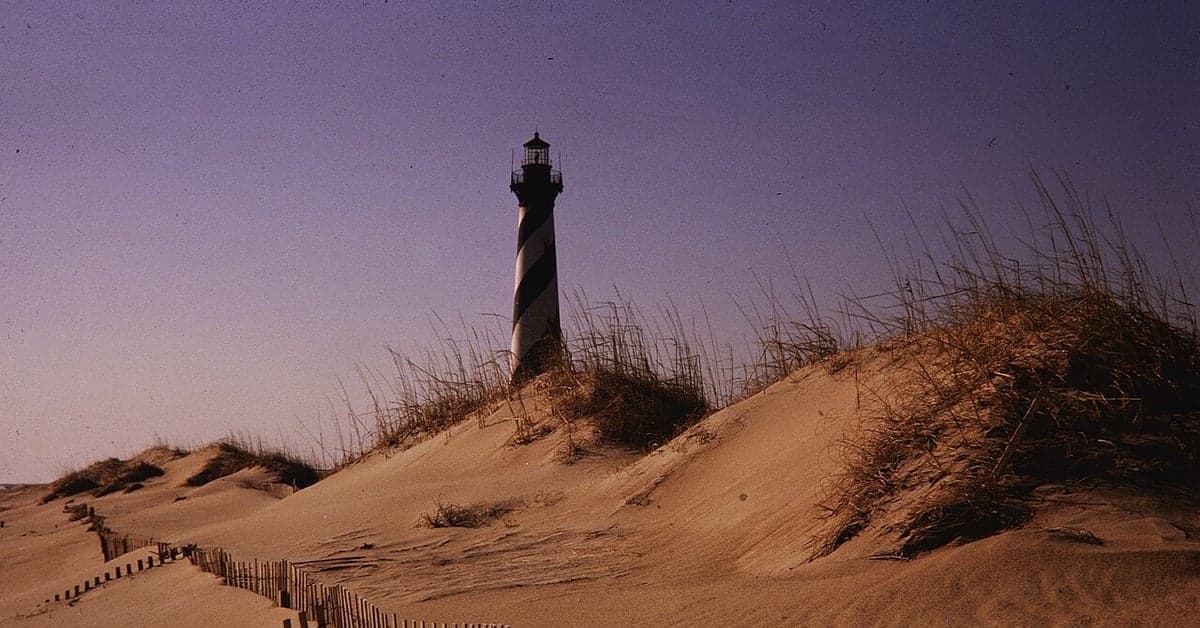
The Cape Hatteras Lighthouse is the tallest brick lighthouse in North America at 208 feet. The black-and-white spiral pattern is iconic. Climb the 257 steps ($8 adult, open mid-April through Columbus Day) for views of the cape. In 1999, the National Park Service moved the entire 4,830-ton structure 2,900 feet inland to save it from erosion. The engineering feat is documented in the visitor center.
Hatteras and Ocracoke Villages
Hatteras Village, at the southern tip of Hatteras Island, is a small fishing community with charter boats, a few restaurants, and the free ferry terminal to Ocracoke Island. The ferry runs every 30 minutes in summer (hour-long crossing) and is one of the most pleasant commutes in the country — bring a sandwich, stand on the upper deck, and watch for dolphins in the wake.
Ocracoke Island
Ocracoke is the end of the line. No bridge — the only access is by ferry from Hatteras (free, about 1 hour), or from Swan Quarter or Cedar Island (both tolled, about 2.5 hours, and worth reserving in summer). The village at the southern end has a few hundred year-round residents, a handful of inns and restaurants, and a harbor full of working fishing boats.
Ocracoke Beach, 16 miles of undeveloped National Seashore, is consistently rated among the best beaches in the country by Dr. Beach's annual rankings. The sand is clean, the crowds are minimal (the ferry limits visitor numbers naturally), and the swimming is excellent. Lifeguards staff a small section near the village from Memorial Day through Labor Day. The rest of the beach is unguarded and empty.
Howard's Pub, with cold beer and decent burgers, is the closest thing to nightlife Ocracoke offers. Eduardo's Taco Stand, a food truck near the harbor, is the sleeper hit: fish tacos with fresh mahi for $5.
Rental House Culture
The Outer Banks revolves around the weekly rental. Most houses rent Saturday-to-Saturday in summer, with check-in at 4pm and checkout at 10am. Agencies like Sun Realty, Twiddy, and Resort Realty manage thousands of properties. A four-bedroom oceanfront house runs $3,000-6,000/week in July, while a soundside three-bedroom goes for $1,500-2,500/week.
Most rentals include a private pool (heated or not), a hot tub, and a gas grill. Mid-island houses between the beach road and the bypass are the value play — you're a 5-minute walk from the ocean but pay 40% less than oceanfront. Many houses have game rooms with pool tables, foosball, and arcade games, because when you've got 12 family members under one roof, indoor entertainment matters.
Grocery: stock up at Food Lion or Harris Teeter in Kill Devil Hills before heading south. Stores get smaller and more expensive as you go toward Hatteras.
Off-Season Deals
October through April, rental rates drop 50-70%. The weather is cooler (50s-60s in fall, 40s-50s in winter) but still beach-walkable. The water stays swimmable through mid-October. Fall fishing is the best of the year — red drum run along the beach in October and November, and the pier fishing for bluefish and sea mullet is excellent.
Many restaurants and shops close November through March. The ones that stay open — like The Blue Point in Duck and Oden's Dock in Hatteras — become locals-only spots with a completely different energy. If you don't need swimming weather and you like empty beaches, the Outer Banks in October is one of the best coastal experiences on the East Coast.
Storm Preparedness
The Outer Banks gets hit by hurricanes and nor'easters regularly. NC-12 floods and closes — sometimes for days, sometimes for weeks. If a storm is forecast during your rental week, don't wait for an evacuation order. Leave early. The single road out becomes a parking lot when everyone tries to leave at once. Rental agencies offer trip insurance that covers weather cancellations. Take it. The Outer Banks is beautiful, remote, and exposed. That's the trade-off.
Frequently Asked Questions
What is the best time to visit the Outer Banks?
Late May through early October is beach season, with water temperatures reaching 75-80°F (24-27°C) from June through September. June is ideal — warm enough for swimming, fewer crowds than July. September and October offer warm water, thinner crowds, and lower rental prices. Spring (April-May) is pleasant but the ocean is still cool at 60-65°F.
Where should I stay in the Outer Banks?
Corolla is best for large vacation homes and wild horse sightings. Duck and Southern Shores are upscale and quiet. Kill Devil Hills and Nags Head are centrally located with more restaurants and shops. Hatteras Island is wilder, less developed, and best for surfing and fishing. Ocracoke Island, reached only by ferry, is the most secluded.
Can you drive on the beach in the Outer Banks?
Yes, with a permit. You can drive on designated beach areas in Corolla (to reach the wild horses), on parts of Cape Hatteras National Seashore, and on Ocracoke Island. A 4WD vehicle is required — cars get stuck in soft sand regularly. Permits cost $50 for 10 days at Cape Hatteras. Tire pressure should be lowered to 20 psi for sand driving.
Are there sharks in the Outer Banks?
Yes, sharks are present in Outer Banks waters — it's the open Atlantic. Species include sand tigers, blacktips, and occasionally great whites further offshore. Shark attacks are rare, with only a handful of non-fatal incidents per year across all North Carolina beaches. Avoid swimming at dawn, dusk, near fishing piers, or in murky water.
How much does an Outer Banks vacation cost?
A beachfront vacation home (4-6 bedrooms) rents for $2,500-5,000 per week in peak summer. Smaller condos and hotels run $150-250 per night. Restaurant meals cost $15-30 per person. The Outer Banks is best value when splitting a large house among multiple families. Off-season (October-April) rates drop 40-60%.
Is Ocracoke Island worth the ferry ride?
Yes, if you want a quieter, more authentic Outer Banks experience. The free Hatteras-Ocracoke ferry takes about an hour, and the island has a charming village with restaurants, shops, and uncrowded beaches. Ocracoke Beach consistently ranks among the best in the US. The trade-off is limited dining options and no major attractions beyond the beach and lighthouse.
Can you see wild horses in the Outer Banks?
Wild horses roam the northern beaches of Corolla, descendants of Spanish mustangs from the 1500s. You can see them on a 4WD beach tour ($50-60 per person, 2 hours) or by driving the beach yourself with a 4WD vehicle. The horses are wild — maintain at least 50 feet of distance. Sightings are not guaranteed but tours report seeing them on most trips.