The Best Beaches in Sardinia: Italy's Other Island Paradise
Table of Contents
Prices in this guide are approximate and change often. Check with the hotel, airline or operator before you book.
The Mediterranean's Best-Kept Big Secret
Sardinia is the second-largest island in the Mediterranean, roughly the size of New Hampshire, with a coastline that runs nearly 2,000 kilometers. The beaches here routinely appear on "best in the world" lists, and for once the hype is justified. The water color — an absurd spectrum of turquoise, emerald, and sapphire — comes from white sand bottoms, granite seabeds, and a clarity that rivals the Caribbean.
The island has been Italian since the unification but feels culturally distinct. The language (Sardo) is different, the food traditions are pastoral rather than maritime (despite being surrounded by sea), and the interior is wild, mountainous, and sparsely populated. Sardinia's beaches draw the crowds; the inland roads, stone villages, and shepherd culture keep things interesting between swims.
The northeast Costa Smeralda is where the Aga Khan developed a luxury enclave in the 1960s, and it remains one of the most expensive stretches of coastline in Europe. But the rest of Sardinia is surprisingly affordable for Italy, and many of the best beaches are free and uncrowded — particularly if you avoid August, when the entire Italian peninsula decamps to the sea.
Northwest Sardinia
La Pelosa (Stintino)
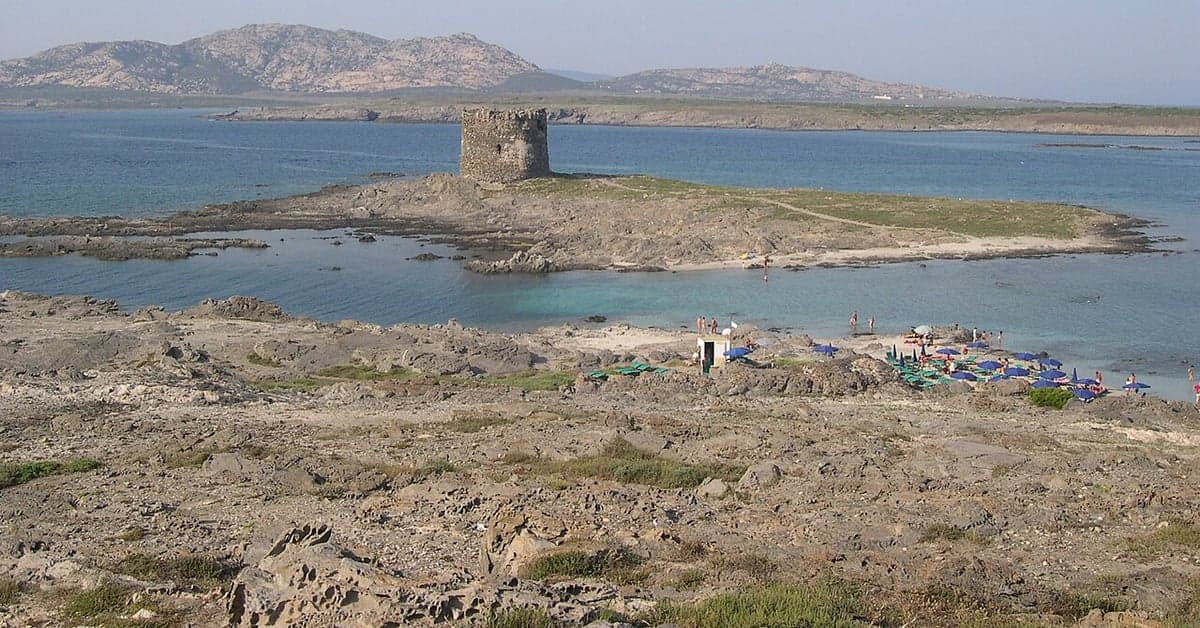
La Pelosa is arguably Sardinia's most famous beach, and the photos don't lie: a shallow lagoon of transparent turquoise water, fine white sand, and a 16th-century Aragonese watchtower on the tiny islet of La Pelosa visible from the shoreline. The water is so shallow that you can wade 100 meters out and it barely reaches your waist.
La Pelosa's popularity created problems. The sand was literally disappearing — carried away on visitors' feet and towels. Since 2020, the beach has been regulated: a maximum of 1,500 visitors per day, advance booking required (through the Stintino municipality website, €3.50 entry fee), and mandatory use of a beach mat over your towel to prevent sand removal. These measures have preserved the beach's quality, but you need to plan ahead in summer.
Stintino, the nearest town (3 kilometers south), is a small fishing village with a handful of restaurants. Ristorante da Antonio serves Sardinian seafood — fregola con arselle (a couscous-like pasta with clams) for €16, spaghetti ai ricci (sea urchin pasta) for €18 when in season (winter months). The town has hotels and B&Bs from €80-150/night in summer.
La Pelosa is a 30-minute drive from Alghero, the nearest city with an airport. Parking near the beach costs €8-10/day and fills early. A shuttle bus runs from Stintino in summer.
Alghero and Surrounds
Alghero is a Catalan-influenced city on the northwest coast — the old town's street signs are bilingual Italian-Catalan, a remnant of 400 years of Aragonese rule. The city beaches (Lido San Giovanni, Maria Pia) are decent, wide sand beaches within walking distance of the old town.
The real draw is the Grotte di Nettuno (Neptune's Grotto), a sea cave accessible by boat from Alghero's port (€16-18 round trip, plus €13 cave entry) or by descending the Escala del Cabirol — 656 stone steps carved into the cliff face. The cave's interior is a cathedral of stalactites reflected in a saltwater lake. It's touristy and absolutely worth it.
East Coast
Cala Luna
Cala Luna is a crescent beach at the base of the Supramonte cliffs, accessible only by boat or a demanding hike. The beach is framed by sea caves eroded into the limestone — the largest cave, at the south end, creates a natural grotto that provides shade for dozens of people. The sand is fine and white, the water is transparent, and the vertical cliff walls towering above create a sense of enclosure that amplifies the beauty.
Boat services run from Cala Gonone (€15-20 round trip, 20 minutes) and Arbatax. The hike from Cala Fuili is about 3 hours each way along a rocky coastal trail — bring water, sturdy shoes, and sun protection. There's a basic beach bar serving panini and drinks during summer months.
Cala Gonone, the departure point for boat trips, is a pleasant small town with a harbor, several hotels, and restaurants serving grilled catch of the day. Hotel L'Oasi offers sea-view rooms for €90-130 in summer.
Cala Goloritzé
Cala Goloritzé is a national monument, and it looks like one. A limestone pinnacle (Aguglia) rises 143 meters from the water at the south end of the beach, flanked by white marble cliffs. The beach itself is small — maybe 30 meters of white pebbles and sand — with water so clear it looks like the boats offshore are floating in air.
Access is by hiking only. The trail descends from the Altopiano del Golgo (a plateau above the coast) and takes about an hour going down and 90 minutes climbing back up. The trailhead is near the church of San Pietro on the Golgo plateau, reached by car from Baunei. Parking is €5. Bring everything you need — there are no facilities on the beach.
Between May and October, a daily visitor cap applies. Arrive at the trailhead before 9 AM to ensure entry. The hike is steep and exposed in sections — not suitable for small children or those with mobility issues.
Cala Brandinchi ("Tahiti")
Cala Brandinchi earned its nickname "Tahiti" from the absurd color of the water — a gradient from pale aquamarine in the shallows to deep blue further out, set against fine white sand and a backdrop of Mediterranean pines. The beach is on the northeast coast near San Teodoro, about 30 minutes from Olbia airport.
Unlike the hiking-access beaches of the east coast, Cala Brandinchi has a parking lot (€5-8), a beach bar, and sunbed rentals (€12-15). This makes it popular — by 10 AM in August, the parking lot is full and the beach is crowded. June and September visits are dramatically more pleasant.
San Teodoro, the nearest town, has a lively summer scene with restaurants, bars, and a weekly market. La Terrazza serves wood-fired pizzas for €8-12 with a terrace overlooking the lagoon.
Northeast: Costa Smeralda
Porto Cervo and Spiaggia del Principe
The Costa Smeralda is where the global wealthy park their yachts. Porto Cervo is the epicenter — a purpose-built village of designer boutiques, €30 cocktail bars, and a marina filled with boats that cost more than most houses. The Billionaire Club (yes, that's its name), founded by Flavio Briatore, is the nightlife anchor. Unless you're spending freely, Porto Cervo is more of a spectator sport than a destination.
Spiaggia del Principe (Prince's Beach), however, is free and open to everyone. Named after the Aga Khan, who declared it his favorite, it's a medium-sized cove of fine sand with water that cycles through three shades of blue before your eyes adjust. Parking is a 10-minute walk from the beach (€3-5). There's a small bar but no lido infrastructure — bring supplies.
The beaches of the Costa Smeralda are genuinely beautiful, and outside of the hotel-beach-club circuit, they're no more expensive to visit than anywhere else in Sardinia. The landscape — pink granite boulders, wind-sculpted juniper trees, and impossibly clear water — justifies the detour even if you're not shopping for a Hermès scarf.
South Sardinia
Tuerredda
Tuerredda, near Teulada on the southern coast, is a semicircular beach with a small island offshore that you can swim to (about 200 meters). The water is Caribbean-clear and the sand is white and fine. A single beach bar operates in summer, and sunbed rentals cost €10-12.
The southern coast gets significantly less traffic than the northeast, and Tuerredda — while not empty in summer — feels spacious compared to La Pelosa or Cala Brandinchi. The drive from Cagliari takes about 90 minutes along the SS195, passing through the former mining landscapes of the Sulcis-Iglesiente region.
Is Arutas
Is Arutas, on the Sinis Peninsula near Oristano, has a beach made of quartz grains rather than sand. The "sand" is actually tiny, rounded quartz pebbles in shades of white, pink, and green — pick up a handful and it looks like a jar of decorative beads. The texture is unusual underfoot, somewhere between fine gravel and coarse sand.
The quartz grains made Is Arutas a target for souvenir-hunting tourists who pocketed handfuls, prompting Sardinia to make removing sand or stones from beaches illegal. Fines range from €500 to €3,000. The Sinis Peninsula also has several archaeological sites, including Tharros, a Phoenician-Roman coastal city whose ruins sit on a headland overlooking the sea. Entry is €5, and the site is largely uncrowded — a pleasant contrast to mainland Italy's mobbed ruins.
Food and Drink
Sardinian food is Italy's most underrated regional cuisine. The beaches bring you seafood — bottarga (cured mullet roe, shaved over pasta or bread), fregola con arselle, and grilled orata (sea bream) are coastal staples. But the interior delivers the island's soul food: porceddu (spit-roasted suckling pig), pecorino sardo (aged sheep's milk cheese with a flavor range from mild to intensely sharp), culurgiones (handmade ravioli stuffed with potato, mint, and pecorino), and seadas (fried pastry filled with fresh cheese and drizzled with honey).
Cannonau, Sardinia's native red grape, produces wines that are robust, high in antioxidants, and linked to the island's reputation as a Blue Zone (one of the world's longevity hotspots). A bottle of good Cannonau costs €8-15 at a restaurant. Vermentino is the white wine of the coast — dry, mineral, and perfect with seafood. Ichnusa, the local beer, is a solid lager available everywhere for €3-4.
Practical Details
Car Rental
A car is essential. Sardinia's public transport connects major cities but doesn't reach most beaches. Rental cars from Olbia or Cagliari airports start at €30-50/day in summer (book early — prices spike in July-August). Roads are generally good, though some beach access roads are unpaved. The SS125 along the east coast is one of Italy's great driving roads — winding through the Supramonte mountains with gorge and sea views.
August vs. Everything Else
August is when all of Italy goes on vacation. Sardinia's beaches, ferries, hotels, and restaurants hit maximum capacity. Prices for accommodation double or triple compared to June. Roads to popular beaches jam by 9 AM. If you can travel in June or September, do it — the water is warm (72-78°F), the beaches are uncrowded, and hotel rates drop to half their August peak.
Getting There
Three airports serve Sardinia: Olbia (OLB) in the northeast, Alghero (AHO) in the northwest, and Cagliari (CAG) in the south. Direct flights from mainland Italy (Rome, Milan, Pisa) on Ryanair, easyJet, and ITA Airways run €30-100 each way. Ferries from mainland ports (Civitavecchia, Genoa, Livorno) take 5-10 hours and cost €40-80 per person plus €60-120 for a car — Tirrenia and Moby are the main operators. The ferry is worth it if you want to bring your own car and avoid rental prices.
Costs
Outside the Costa Smeralda, Sardinia is mid-range by Italian standards. A pizza costs €8-12, a pasta dish €10-16, a seafood main €14-22. Hotel doubles run €80-150 in summer (non-August). Beach parking is €3-10/day. The almuerzo-style "menù turistico" at many restaurants offers a primo, secondo, and water for €12-18.
Frequently Asked Questions
When is the best time to visit Sardinia beaches?
June and September offer the best balance of warm water (22-25°C), manageable crowds, and lower prices. July and August are peak season with scorching heat, packed beaches, and hotel prices that double or triple. May and October have pleasant weather but water temperatures around 18-20°C can feel cool for swimming.
How much does a Sardinia beach vacation cost?
Sardinia is one of Italy's more expensive destinations in summer. A mid-range hotel costs €100-200 per night in peak season, half that in shoulder months. Beach clubs charge €15-30 for two loungers and an umbrella. A seafood pasta lunch runs €12-18. Costa Smeralda in the northeast is the priciest area — budget travelers should base in Alghero or the south.
What is the best beach in Sardinia?
La Pelosa near Stintino in the northwest is Sardinia's most famous beach, with Caribbean-like turquoise water and white sand. Cala Goloritzé on the east coast is an iconic cove at the base of a limestone pinnacle. Spiaggia del Principe on Costa Smeralda has emerald water and granite boulders. Each coast has a different character.
Do you need a car in Sardinia?
A rental car is strongly recommended. Public buses exist but are infrequent and don't reach many of the best beaches. Many top beaches are down unpaved roads or require drives through the interior. Rental cars cost €30-60 per day in summer. Book well in advance for July and August as cars sell out.
Is Sardinia better than Sicily for beaches?
Sardinia generally has better beaches — the water is clearer, the sand is whiter, and the coastline is less developed. Sicily has more cultural attractions, better food variety, and cheaper prices. Sardinia is the choice for pure beach quality, while Sicily offers a richer overall travel experience with decent beaches as a bonus.
Can you fly direct to Sardinia?
Sardinia has three airports: Cagliari (south), Olbia (northeast, near Costa Smeralda), and Alghero (northwest). Budget carriers like Ryanair and EasyJet fly direct from many European cities. From the US, you'll connect through Rome, Milan, or another European hub. Olbia has the most international connections in summer.
Is La Pelosa beach free?
Access to La Pelosa requires a reservation and a €3.50 entry fee during peak season (June-September) to limit visitors to about 1,500 per day. You book a time slot online in advance. Outside peak season, access is free and unrestricted. Arrive early even with a reservation, as the small parking lot fills up fast.