Table of Contents
Prices in this guide are approximate and change often. Check with the hotel, airline or operator before you book.
The Adriatic's Cheaper Side
Montenegro has 295 kilometers of Adriatic coastline squeezed between Croatia and Albania. The country is tiny — you can drive the entire coast in three hours — but it packs in medieval walled towns, dramatic mountain backdrops, and beaches that range from packed party strips to quiet coves accessible only by boat or footpath. The key advantage over its northern neighbor: Montenegro is roughly 30-40% cheaper than Croatia for accommodation, food, and drinks. That gap has narrowed in the past five years, especially in Budva and Sveti Stefan, but it's still real in the shoulder season and in towns south of Budva.
The currency is the euro (Montenegro adopted it unilaterally without joining the EU), so there's no exchange rate anxiety. An espresso in Budva costs about €2.50, compared to €4-5 in Dubrovnik. A seafood risotto at a waterfront restaurant runs €10-14. A double room at a mid-range hotel costs €60-100 in July, half that in May or October.
Sveti Stefan
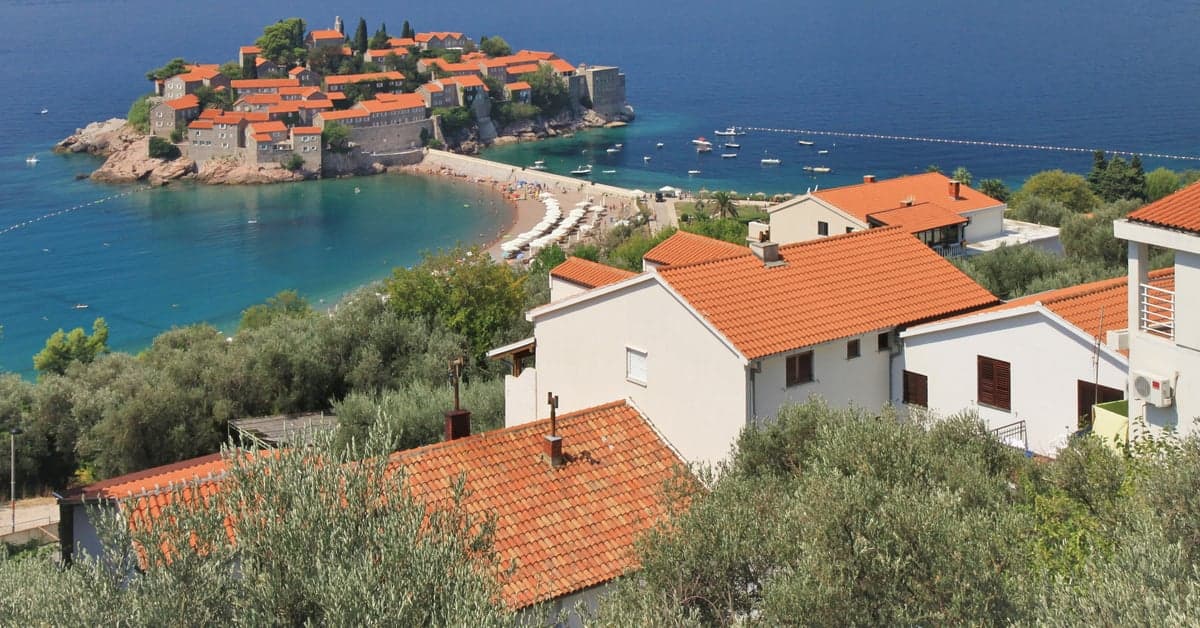
Sveti Stefan is the image on every Montenegro tourism poster — a small fortified island connected to the mainland by a narrow sandy isthmus, with terracotta-roofed stone buildings covering every inch of the island's surface. The island itself is now an Aman resort, and access is restricted to hotel guests paying upward of €1,000 per night. But the beach on the mainland side of the isthmus is public, and the view of the island from that beach is what you came for.
The beach is divided into a free public section (south side, rocky) and a paid beach club section (north side, loungers and umbrellas for €30-50 per pair). The sand is coarse and mixed with pebbles. The water is clear and gets deep quickly. The real value is the setting: the fortified island filling your entire forward view, with mountains dropping steeply behind.
Queen's Beach
Walk south along the coastal path from Sveti Stefan for about 15 minutes and you'll reach Queen's Beach (Kraljicina Plaza) — a small, secluded cove with fine pebbles and exceptionally clear water. It's one of the more peaceful spots on this stretch of coast. A beach bar sells drinks and basic snacks. Entry is free, though there's a charge for loungers (€10-15).
Jaz Beach
Jaz Beach is a 1.2-kilometer stretch of sand and fine gravel about five kilometers west of Budva, backed by a valley of olive groves and farmland. It's one of the few genuinely sandy beaches on the Montenegrin coast (most are pebble) and one of the largest. The beach has hosted music festivals — Sea Dance Festival was held here for years — and has a party reputation, but on a normal day in June or September, it's spacious and relaxed.
The water is shallow for a good distance, making it practical for families. Beach clubs at the center charge €15-20 for a pair of loungers. Walk to the far east or west ends for free space on the sand. A small restaurant behind the beach does grilled cevapi (Balkan minced meat sausages) in flatbread for €4 and cold Niksicko beer for €3.
Getting There
A taxi from Budva costs €8-10. In summer, a local bus runs from Budva bus station every 30 minutes for €1. You can also walk the coastal path from Budva — about 45 minutes through pine forest along the cliffs, with several viewpoints along the way.
Mogren Beach
Mogren is Budva's secret — or it was, until it appeared on every travel blog. Two small coves connected by a short tunnel cut through the rock, sitting just below the walls of Budva's old town. You access it through a pedestrian tunnel from the Stari Grad (old town) promenade, which adds to the feel of discovering something. The beach is pebble, the water is clear, and the cliffs above create natural shade in the afternoon.
The drawback: space is limited, and in July-August it gets packed by mid-morning. The beach club charges €20 for loungers. Bringing your own towel and wedging onto the free section is the budget play. Early morning — before 9 a.m. — is when you'll have the coves mostly to yourself and can swim without dodging paddle boats.
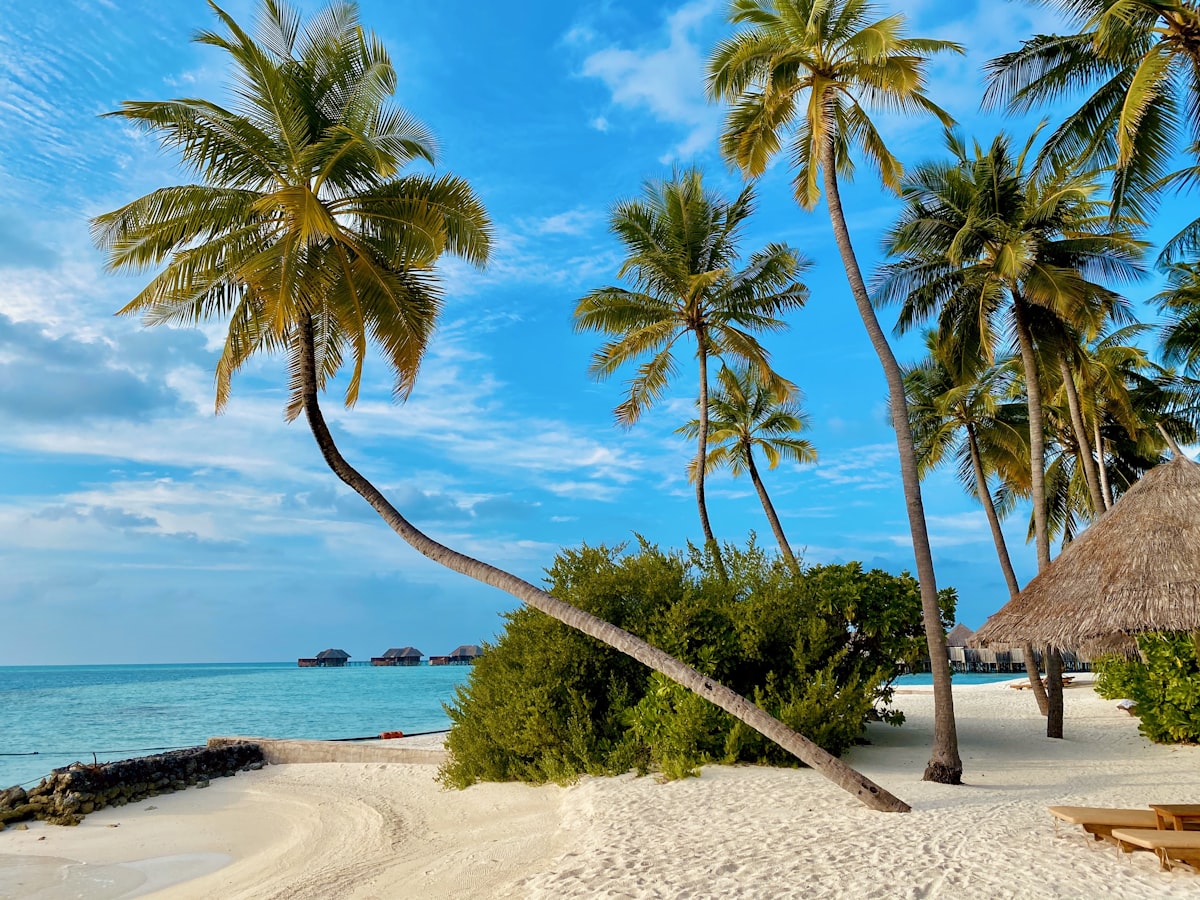
Becici Beach
Becici runs east from Budva for about two kilometers — a long strip of sand and fine gravel backed by hotels ranging from Soviet-era concrete towers to modern boutique properties. It won "most beautiful beach in Europe" at some tourism fair in 1935 and has been dining out on the claim ever since. The beach is fine — good sand, clear water, decent infrastructure — but the hotel development behind it has stripped away much of the charm.
Where Becici works: as a practical base. Hotel Splendid (a large, modern property right on the sand) has rooms from €80 in shoulder season and a pool that compensates for the beach's crowds. The promenade connecting Becici to Budva old town is a pleasant 20-minute walk along the waterfront.
Lustica Peninsula
The Lustica Peninsula juts into the Adriatic south of Tivat, and its northern coast — facing the Bay of Kotor — has a string of small pebble beaches that see far fewer visitors than the Budva Riviera. Zanjic Beach, accessible by a winding road from the village of Rose or by water taxi from Herceg Novi (€5-8 each way), is the standout: a small crescent of white pebbles with water so clear you can count stones on the bottom at three meters deep.
Blue Cave (Plava Spilja), a sea cave that glows electric blue in morning light, is a short boat ride from Zanjic. Tour boats from Herceg Novi include it on their coastal trips (€15-25 for a half-day excursion that hits several beaches and the cave).
Miriste Beach
Further along the peninsula's outer coast, Miriste Beach is accessed by a 20-minute walk through olive groves from the road. It's rocky, undeveloped, and empty most days. Bring everything you need — there are no facilities. The water is transparent and the snorkeling around the rocks is good, with sea urchins, small octopuses, and schools of bream.
Ada Bojana
Ada Bojana is a river island at Montenegro's southern tip, where the Bojana River meets the Adriatic near the Albanian border. The island's seaward side has a long, sandy beach — rare for Montenegro — with warm, shallow water. The island is known for two things: kiteboarding (the river mouth creates thermal winds that blow consistently in the afternoon) and naturism (the north end of the beach has been clothing-optional since the Yugoslav era).
The fish restaurants on the river side of the island are the real draw. Konoba Ostrvo and several other wooden-deck restaurants built over the water serve whole grilled carp, eel, and sea bass, pulled from the river or the sea that morning. A whole grilled sea bass for two with salad and house wine runs about €25. The setting — tables on stilts over the river, storks nesting in nearby trees — is hard to beat at any price.
Budva Old Town
Budva's Stari Grad (old town) is a compact walled peninsula jutting into the Adriatic. It's smaller and less architecturally grand than Dubrovnik, but also less crowded and less expensive. Narrow stone streets wind between restaurants, bars, and small shops. The Citadel at the town's tip costs €3.50 to enter and offers views across the bay to Sveti Stefan.
Ricardova Glava, a tiny beach wedged against the old town walls, is free and intimate — about 30 meters of sand with the medieval fortifications rising directly above. It gets crowded fast, but the atmosphere of swimming beside a 15th-century Venetian wall is worth the early wake-up. Konoba Stari Grad, a family-run konoba inside the walls, serves Montenegrin home cooking and seafood, including black risotto made with cuttlefish ink, a staple along this coast; mains run about €12 to €20.
Practical Information
- Best time: June and September. July-August is hot, crowded, and pricier. May and October are pleasant but some beach facilities close.
- Currency: Euro (€). Montenegro uses the euro despite not being in the EU or Eurozone.
- Flights: Tivat (TIV) is the coastal airport, with seasonal flights from across Europe. Podgorica (TGD), the capital, has year-round connections. Dubrovnik (DBV) in Croatia is a common entry point — the border crossing to Montenegro takes 30 minutes to two hours depending on season.
- Transport: Local buses connect coastal towns for €1-3. Taxis are metered in theory but negotiate the price in advance. Renting a car (€25-40/day) gives the most flexibility, especially for Lustica Peninsula and Ada Bojana.
- Budget: €40-60/day is comfortable for a room, three meals, and a beach or two. Budva and Sveti Stefan are the most expensive areas. Ulcinj and Ada Bojana in the south are the cheapest.
- Tip: Montenegro's coast is short enough to base yourself in one town and day-trip to everything else. Budva is central but busy. Herceg Novi is quieter and has easy boat access to Lustica's beaches.
Montenegro is the Adriatic at a discount, and it knows it. The country is developing rapidly — new marina developments at Tivat (Porto Montenegro) and Lustica Bay are pushing the luxury end — but for now, the coast still offers genuine value alongside the clear water and medieval stone. The window of affordability is closing. The beaches themselves aren't going anywhere.
Frequently Asked Questions
Is Montenegro safe for tourists?
Montenegro is very safe for tourists. Petty crime exists in busy areas like Budva during peak summer, but violent crime against visitors is rare. The biggest risks are aggressive taxi drivers overcharging and the occasional pickpocket on crowded beaches in July and August.
What is the best month to visit Montenegro beaches?
June and September are the best months for Montenegro beaches. Water temperatures reach 22-24°C, crowds are manageable, and hotel prices drop 30-40% compared to July and August. May and October are pleasant but some beach bars and water sports operators close for the season.
How much does a beach vacation in Montenegro cost?
Budget travelers can manage on €40-60 per day including a double room, three meals, and beach access. A mid-range trip runs €80-120 per day. Budva and Sveti Stefan are the priciest areas, while Ulcinj and Ada Bojana in the south are significantly cheaper.
Does Montenegro have sandy beaches?
Most Montenegro beaches are pebble or fine gravel, but a few have genuine sand. Jaz Beach near Budva, Ada Bojana at the southern tip, and the Long Beach (Velika Plaza) near Ulcinj are the main sandy options. Jaz is the most accessible sandy beach from the main tourist areas.
Is Montenegro cheaper than Croatia for a beach holiday?
Yes, Montenegro is roughly 30-40% cheaper than Croatia for accommodation, food, and drinks. An espresso in Budva costs about €2.50 versus €4-5 in Dubrovnik. A seafood risotto runs €10-14 compared to €18-22 across the border. The gap is shrinking but still significant, especially in shoulder season.
Can you visit Sveti Stefan beach without staying at the resort?
The island itself is restricted to Aman resort guests paying €1,000+ per night, but the beach on the mainland side of the isthmus is public. The south side is free and rocky, while the north side has a beach club with loungers for €30-50 per pair.
How do you get from Dubrovnik to Montenegro?
Dubrovnik is the most common entry point. The drive to Budva takes about 2-2.5 hours including the border crossing, which can add 30 minutes to 2 hours in summer. Buses run several times daily from Dubrovnik to Budva and Kotor for €15-20. Rental cars cost €25-40 per day.