The Best Beaches in Georgia's Golden Isles
Table of Contents
Prices in this guide are approximate and change often. Check with the hotel, airline or operator before you book.
Georgia's Barrier Islands Have Beaches Worth the Drive
Georgia's coastline runs only 100 miles — the shortest of any Atlantic state — but that compressed stretch of barrier islands, salt marsh, and tidal creeks holds some of the most distinctive beach landscapes in the Southeast. The Golden Isles, a cluster of four barrier islands between Savannah and the Florida border, are the main draw: Jekyll Island, St. Simons Island, Sea Island, and Little St. Simons Island, plus Cumberland Island further south and Tybee Island up near Savannah.
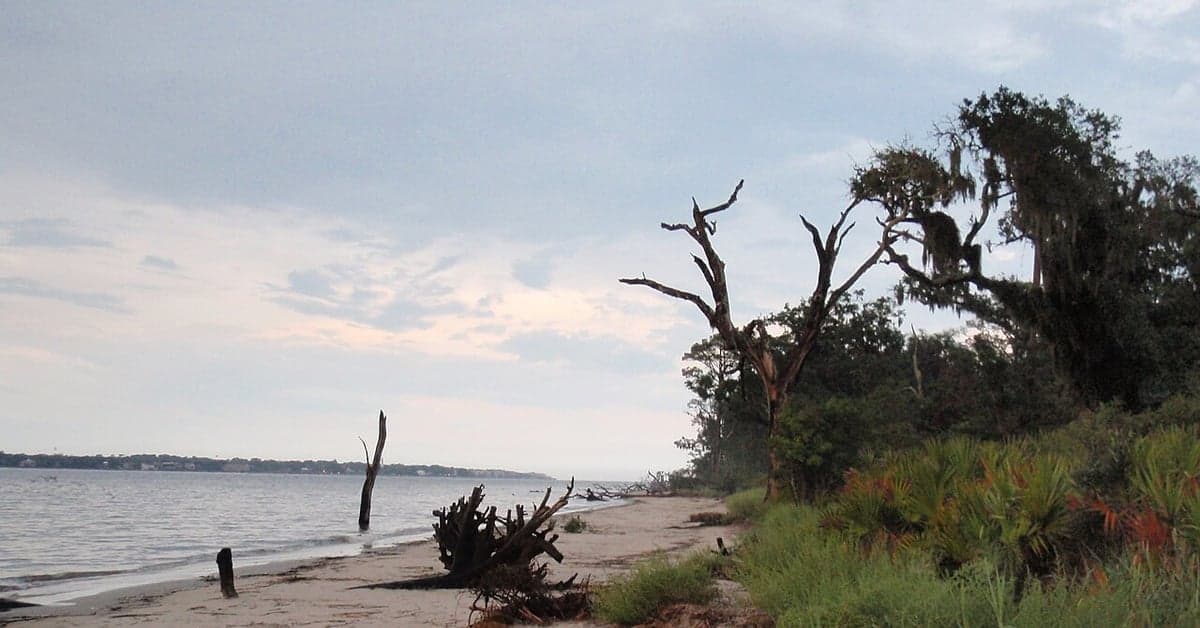
The beaches here don't look like Florida. They're wide and flat, backed by maritime forest draped in Spanish moss, with dark sand that ranges from tan to gray depending on the mineral content. The water is warm — 78-84°F from June through September — but murky from the tidal rivers that empty into the ocean through the marshes. Visibility is measured in inches, not feet. You come to Georgia's beaches for the atmosphere, the wildlife, and the sense that the coast hasn't been entirely paved over yet. For official planning information, see Visit Florida.
Jekyll Island: Driftwood Beach and Gilded Age Ghosts
Jekyll Island was a private retreat for the Rockefellers, Morgans, and Vanderbilts from 1886 to 1942. The state of Georgia bought it in 1947 and turned it into a public park with a mandate that no more than 35% of the island can ever be developed. That means two-thirds of Jekyll remains forest, marsh, and undeveloped beach.
Driftwood Beach, on the island's north end, is the signature attraction. Decades of erosion have toppled live oaks and pines onto the sand, creating a graveyard of bleached, sculptural tree skeletons stretching along the waterline. It photographs like a film set. Early morning and late afternoon light are best — midday is flat and harsh. The beach is walkable but not great for swimming; the bottom is uneven and the current near the inlet can be strong.
Where to Swim on Jekyll
For actual swimming, head to Great Dunes Beach on the east side of the island. It has a bathhouse, outdoor showers, a small picnic area, and relatively gentle surf. The beach is wide at low tide and has a gradual entry — fine for kids. South Dunes Beach, a quarter mile further south, is less developed and less crowded.
Jekyll charges a $8 parking fee per vehicle to enter the island (daily pass, no exceptions). The island has a 20-mile paved bike path system, and renting bikes from Jekyll Island Bike Rentals ($15/half day) is the best way to get between beaches. The Jekyll Island Club Resort, housed in the original 1886 clubhouse, serves brunch in the Grand Dining Room for $35-45 — white tablecloths, shrimp and grits, and a sense of faded grandeur.
St. Simons Island: The Social Beach
St. Simons is the most developed and populated of the Golden Isles, with about 13,000 year-round residents, a walkable village, and a beach that functions as the social hub of the Georgia coast. The beach runs along the island's east side, accessible from multiple points, but the main area near the St. Simons Lighthouse and pier is where most visitors congregate.
East Beach, on the southern end, is broad and family-friendly with a large parking area ($2/hour or $10/day). Massengale Park, about a mile north, has a smaller beach with picnic tables, grills, and playground equipment — it's the local family spot. The surf is calm most days, with waves rarely exceeding two feet unless a storm is pushing in from the east.
The Village and Food
St. Simons Village, at the south end of the island near the pier, has restaurants and shops within walking distance of the beach. Southern Soul Barbeque on Demere Road is the standout — a converted gas station smoking brisket, ribs, and pulled pork over oak and pecan. A two-meat plate with sides runs $18. For seafood, The Half Shell on Mallery Street does a fried shrimp basket for $16 and steamed local oysters at market price (usually $14-18/dozen).
St. Simons is connected to the mainland by a causeway — no ferry required. Hotels range from the Holiday Inn Resort on the beach ($180-280/night in summer) to the King and Prince Resort ($250-450/night), which has been operating since 1935 and has a beachfront pool.
Cumberland Island: Wild Horses and Empty Beaches
Cumberland Island is the largest barrier island in Georgia — 17.5 miles long, 36,000 acres — and it's accessible only by ferry from the town of St. Marys, near the Florida border. The National Park Service manages the island and limits daily visitors to 300, which means you'll walk beaches that feel genuinely empty.
The beach runs the full length of the island's east side: 17 miles of unbroken, undeveloped sand. No buildings, no boardwalks, no lifeguards, no concessions. Just sand, dunes, and the Atlantic. Wild horses — descendants of horses left by early settlers and Carnegie family estates — graze in the dunes and sometimes walk the beach. Armadillos root through the maritime forest. Loggerhead sea turtles nest on the south end from May through August.
Getting There and Planning
- The Cumberland Island Ferry departs from St. Marys at 9:00 AM and 11:45 AM, returns at 10:15 AM and 4:45 PM. Round trip: $30 adults, $18 children under 12
- Park entrance fee: $10 per person (in addition to ferry)
- There's no food on the island. Pack everything you'll need, including water — at least a liter per person
- The ferry books out weeks in advance during spring and fall. Reserve at recreation.gov as early as possible
- Backcountry camping is available ($22/night for a site) if you want to experience the island at sunset and dawn, when the horses are most active
From the ferry dock, it's about a half-mile walk through the forest to the beach. The Dungeness ruins — the roofless shell of Thomas Carnegie's mansion, destroyed by fire in 1959 — sit near the south end and are worth the detour. The island's interior roads are unpaved sand, passable on foot or by bike (you can bring your own on the ferry).
Sea Island: The Private One
Sea Island is a private resort community accessible only to guests of The Cloister, a Forbes Five-Star resort that has operated here since 1928. If you're not staying at The Cloister or one of the private residences, you're not getting on the island. There's a guarded gate.
That said, The Cloister is a genuinely special property if your budget allows. Rates start around $600/night in summer and climb to $1,200+ for ocean-view suites, but that includes access to five miles of private beach, three pools, a spa, and most activities. The beach is immaculate, staffed with attendants who set up chairs and umbrellas, and limited to resort guests, so it never feels crowded even at peak capacity.
Sea Island has hosted G8 summits and generations of old-money Southern families. The dress code at dinner is jackets required for men — this is not a flip-flops-and-tank-tops resort. If that sounds appealing, it's one of the finest beach resort experiences in the country. If it sounds stiff, you'll be happier on Jekyll or St. Simons.
Tybee Island: Savannah's Beach
Tybee Island sits 18 miles east of Savannah and functions as the city's public beach. It's a small island — three miles long — with a mix of beach cottages, rental houses, and a few low-rise hotels. The beach faces south and east, with a fishing pier and pavilion at the center and a lighthouse (one of the oldest in the US, dating to 1736) at the north end.
The vibe on Tybee is casual and slightly funky — more Key West than Hilton Head. The North Beach area near the lighthouse is quieter and has better shelling at low tide. Mid Beach near the pier is the most active area with lifeguards, restrooms, and concessions. South Beach near the jetty has the best surf (such as it is) and tends to attract a younger crowd.
Tybee Practicalities
- Parking: $5/hour or $25/day in the main lots near the pier. Free street parking exists but fills immediately
- The Crab Shack on Chimney Creek is the classic Tybee seafood stop — a sprawling outdoor restaurant where you eat boiled shrimp and crab over newspaper-covered tables. A Low Country boil plate runs $28
- Tybee is a 25-minute drive from Savannah's historic district, making it easy to combine a beach day with a city visit
- Dolphin tour boats depart from Lazaretto Creek Marina and run $30-40/person for a 90-minute trip. Captain Mike's Dolphin Tours has the longest track record
Southern Beach Culture: What Makes Georgia Different
Georgia's beach culture runs on a different frequency than Florida or the Carolinas. It's slower, quieter, and rooted in a particular brand of Southern coastal identity. A few things to know:
The salt marsh is everywhere. Between the islands and the mainland, vast expanses of Spartina grass flatten and shimmer with the tides. The smell — briny, organic, faintly sulfurous at low tide — is the signature scent of the Georgia coast. Some people find it unpleasant. Locals call it "pluff mud" and consider it perfume.
Bikes are the dominant transportation on Jekyll and St. Simons. Both islands have extensive paved path systems, and cycling between the beach, lunch, and your hotel is part of the routine. You'll see families of four pedaling single-file along the live oak corridors, Spanish moss brushing their helmets.
Shrimp and grits appears on most restaurant menus here, usually made with local wild-caught shrimp. ECHO, the oceanfront restaurant at the King and Prince Beach & Golf Resort on St. Simons, lists a dinner version with fried Georgia shrimp, collard greens, tasso ham and andouille gravy.
Planning a Golden Isles Beach Trip
The closest airports are Jacksonville International (JAX), about 70 miles south of Jekyll Island, and Savannah/Hilton Head International (SAV), about 80 miles north. Both have rental car desks. You need a car for the Golden Isles — there's no public transit connecting the islands.
Summer (June-August) is peak season with the warmest water and highest prices. Spring (March-May) and fall (September-November) are ideal: water temperatures in the 70s, smaller crowds, and room rates 30-40% lower. Winter is mild by Northern standards (highs in the 50s-60s) but too cool for most beach activities.
Budget accommodation on St. Simons runs $120-200/night; Jekyll Island hotels and vacation rentals are $100-180/night. Cumberland requires advance planning for the ferry. If you have a week, spend two days on Cumberland, two on Jekyll, and three on St. Simons/Tybee. If you have a weekend, pick one island and settle in.
Frequently Asked Questions
What are the Golden Isles of Georgia?
The Golden Isles are a chain of barrier islands off Georgia's southern Atlantic coast, about halfway between Savannah and Jacksonville. The four main islands are St. Simons Island, Sea Island, Jekyll Island, and Little St. Simons Island. The mainland town of Brunswick serves as the gateway.
What is the best month to visit the Golden Isles?
April through May and September through October offer the best weather with temperatures of 70-85°F, lower humidity, and fewer crowds. Summer (June-August) is hot and humid (90°F+) but popular with families. Winter is mild (50-65°F) and quiet, good for birdwatching and off-season rates.
Which Golden Isle is best for beaches?
Jekyll Island has the most accessible public beaches with miles of flat, wide sand, free parking, and no entrance fee beyond the $8 parking pass. St. Simons Island has a livelier village and East Beach is good for families. Driftwood Beach on Jekyll is one of the most photographed beaches in Georgia.
How much does a Golden Isles vacation cost?
The Golden Isles range from affordable to ultra-exclusive. Jekyll Island hotels run $120-250/night, with vacation rentals from $150/night. St. Simons is slightly more expensive. Sea Island's Cloister resort starts at $500+/night. Jekyll Island requires an $8/day parking pass for all visitors. Dining averages $15-30 per meal.
Can you visit Driftwood Beach on Jekyll Island?
Yes, Driftwood Beach is free and open to the public. It's on the north end of Jekyll Island, accessible by car or bike. The beach is covered with sun-bleached, sculptural driftwood trees -- remnants of a receding shoreline. Best for photos at sunrise or sunset. Swimming is possible but the bottom is uneven.
Are there alligators on the Golden Isles beaches?
Alligators live in the marshes, ponds, and freshwater areas of the Golden Isles but rarely appear on ocean beaches. You may spot them in Jekyll Island's interior ponds or along marsh boardwalks. Keep a safe distance (at least 20 feet), never feed them, and supervise children near freshwater areas.