Best Beaches in Cyprus (2026): The Honest Guide
Table of Contents
Prices in this guide are approximate and change often. Check with the hotel, airline or operator before you book.
The best beaches in Cyprus for 2026, ranked by use case: Nissi Beach in Ayia Napa (party crowd, daybeds), Fig Tree Bay in Protaras (family-friendly turquoise shallows), Lara Beach on the Akamas Peninsula (protected sea turtle nesting site), Aphrodite's Rock at Pissouri (legend-laden cove), and Coral Bay in Paphos (calm reef-protected shallows). Cyprus is split between the southern Republic and the Turkish-administered north — almost all tourist beaches are in the south. Beach season runs April through November with water at 21-27°C.
An Island Split in Two, Unified by Coastline
Cyprus has been divided since 1974 — the Republic of Cyprus in the south, the Turkish-controlled north separated by a UN buffer zone. Most tourists visit the south, where the resort towns of Ayia Napa, Protaras, Paphos, and Limassol dominate the package-holiday market. But crossing to the north is straightforward (bring your passport, drive through a checkpoint), and the northern beaches are often emptier and rougher around the edges in a good way.
What unifies both sides is the water. The eastern Mediterranean around Cyprus is warm (25-28°C from June to October), calm, and remarkably clear. Jellyfish are rare, sharks rarer still. The swimming season runs from late April through November, which is longer than most of Greece.
Nissi Beach, Ayia Napa
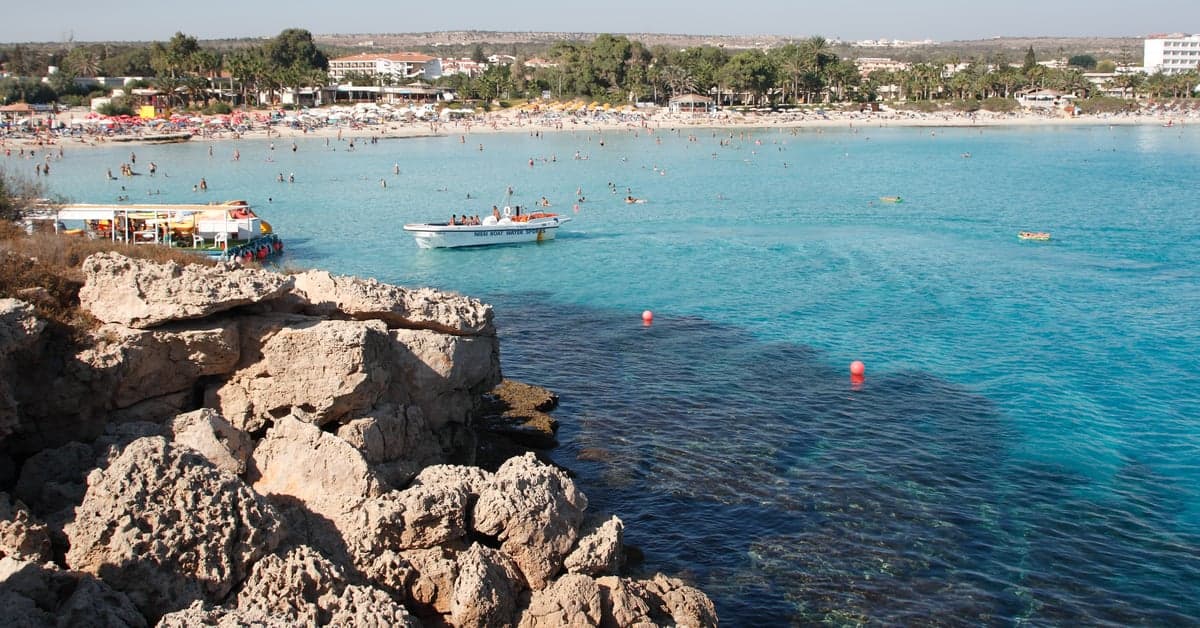
The most famous beach in Cyprus is a 500-meter curve of white sand on Ayia Napa's western edge, connected to a small rocky islet (Nissi Island) by a sandbar you can wade across at low tide. The water is shallow and turquoise, the sand is fine and pale, and the beach bars pump music from noon until sunset.
Nissi is a party beach. The crowd skews young — 18-to-30-year-olds from the UK, Scandinavia, and Russia dominate in summer. Sunbed rentals run €7.50 for a set of two plus an umbrella. Water sports operators offer parasailing (€40-50), jet skis (€50 per 15 minutes), and banana boats (€10). The DJs at Nissi Bay Beach Bar and nearby bars start sets around 1pm, and the volume increases as the afternoon progresses.
If that sounds exhausting, come before 10am or in the shoulder months (May, October). Early morning Nissi Beach, without the crowds and music, is genuinely beautiful — the water is glass-calm and the color is electric.
Fig Tree Bay, Protaras
Consistently rated among the top beaches in Europe on TripAdvisor (for what that's worth), Fig Tree Bay is a 500-meter sandy beach in the resort town of Protaras, about 10 minutes' drive from Ayia Napa. A small island sits about 100 meters offshore — strong swimmers reach it easily, and the shallow water between the island and shore is perfect for snorkeling over scattered rocks and seagrass.
The atmosphere here is more family-oriented than Nissi. Hotels and apartments line the road behind the beach, and there are several restaurants within walking distance. Sunbed prices are comparable to Nissi (€7.50 per pair). The beach faces east, so it gets morning sun and some afternoon shade from the buildings behind — a layout that actually works well in the 35°C+ heat of July and August.
Protaras Beyond the Beach
The Cape Greco National Forest Park starts just south of Protaras and extends to the southeastern tip of Cyprus. A network of walking trails follows the cliff edge past sea caves, natural rock bridges, and the Kamara tou Koraka (Crow's Arch). The Blue Lagoon at Cape Greco — not to be confused with Malta's — is a deep swimming cove accessible on foot or by boat from Ayia Napa harbor (tours run €15-20).
Coral Bay, Paphos
On the western coast, 12 km north of Paphos, Coral Bay is a 600-meter arc of golden sand flanked by rocky headlands. The beach faces west, meaning spectacular sunsets and warm afternoon light. The sand is coarser than eastern Cyprus beaches but still comfortable, and the water entry is gradual and safe for children.
Coral Bay has a slightly more upmarket feel than Ayia Napa. The restaurants along the beach road serve Cypriot meze (€15-20 for a full spread with 15-20 small dishes), grilled halloumi, and souvlaki. The Sea Caves, about 3 km north, are worth a stop — weathered limestone formations with natural arches and pools accessible by a short walk from the road.
Lara Bay: Where Turtles Nest
Remote, undeveloped, and protected. Lara Bay sits on the Akamas Peninsula, northwest of Paphos, and serves as one of the most important nesting sites for green and loggerhead turtles in the Mediterranean. The beach is a long crescent of hard-packed sand with no sunbeds, no restaurants, and no shade.
Getting there requires a 4x4 or a sturdy car with good clearance — the final 4 km of road is unpaved and rutted. Alternatively, boat tours from Latchi harbor (about €25-30) stop at Lara Bay and Blue Lagoon as part of a day trip. Between June and August, metal cages protect turtle nests on the sand. The Lara Bay Turtle Conservation Station operates during nesting season, and volunteers monitor the beach at night.
Swimming is good but there are no lifeguards and the beach can be windswept. Bring all supplies including water — there's nothing for sale within several kilometers.
Konnos Bay
A small cove between Ayia Napa and Cape Greco, sheltered by pine-covered cliffs on both sides. The beach is only about 200 meters long, with soft sand and water that shades from pale green at the edges to deep blue in the center where the seabed drops off. This depth variation makes Konnos particularly good for snorkeling — there's more to see here than on the flatter, sandier beaches nearby.
A paved road leads to a parking lot above the beach, and concrete steps descend to the sand. A seasonal beach bar serves cold drinks and basic food. The cove is surrounded by the Cape Greco park, so there's no development beyond the small facilities. Bus 711 from Ayia Napa stops at the top of the cliff — it's a 5-minute walk down from the road.
Governor's Beach
Between Limassol and Larnaca, Governor's Beach is actually a series of small sandy coves separated by dramatic white chalk cliffs. The contrast between the white rock, dark volcanic sand, and blue water makes it one of the most visually distinctive beaches in Cyprus. Each cove is small — 50 to 100 meters wide — which means even moderate crowds can fill them up.
The eastern coves have darker, coarser sand (volcanic material mixed with chalk), while the western ones are lighter. A fish tavern called Kalymnos sits on the cliff between two of the coves and serves excellent grilled sea bream and octopus at reasonable prices (fish by the kilo, typically €30-40/kg). Governor's Beach is popular with locals from Limassol on weekends but rarely overrun with foreign tourists.
Petra tou Romiou (Aphrodite's Rock)
According to Greek mythology, Aphrodite rose from the sea foam at this spot on the southwestern coast between Paphos and Limassol. The beach itself is narrow and pebbly, backed by tall cliffs, with several large sea stacks rising from the water. As a swimming beach, it's mediocre — the stones underfoot are uncomfortable and the water can be rough. As a photo opportunity and cultural site, it's hard to beat.
A parking lot and tourist pavilion sit on the cliff above, connected to the beach by an underpass beneath the coastal highway. The light is best in late afternoon, when the setting sun turns the cliffs golden. Local legend claims that swimming around Aphrodite's Rock three times guarantees eternal beauty, though the currents and sharp rocks make this a dubious proposition.
Planning a Cyprus Beach Trip
British Sovereign Bases
A quirk of history: Britain retained two military base areas when Cyprus gained independence in 1960 — Akrotiri and Dhekelia. Several good beaches (including Ladies' Mile, near Limassol) fall within these zones. Access is unrestricted for civilians, but the areas are administered by the British Sovereign Base Areas Administration under their own laws, so observe any signs restricting access near military sites.
Getting Around
- Public buses connect major towns (Intercity buses: €4-7 one-way) but are slow and infrequent to beaches
- Car rental is the standard approach: €20-30/day in summer from local agencies, more from internationals
- Driving is on the left (British legacy), which confuses continental European visitors regularly
- Taxis are metered in cities; agree on a price for longer journeys
Meze Culture
A Cypriot meze meal is one of the best food experiences on the island. A typical fish or meat meze includes 15-25 small dishes served in sequence: dips (hummus, taramosalata, tahini), salads, grilled halloumi, sheftalia (pork sausages), kleftiko (slow-cooked lamb), grilled fish, and more. Budget €15-25 per person, and come hungry. Most village tavernas serve meze; the ones in Troodos mountain villages and the Paphos interior are particularly good.
Frequently Asked Questions
What is the best month to visit Cyprus beaches?
May through October is beach season, with water temperatures ranging from 72°F in May to 84°F in August. June and September offer the best balance of warm water, sunshine, and thinner crowds. July and August peak at 95-100°F air temperature, which can be oppressive midday.
Which part of Cyprus has the best beaches?
The Ayia Napa and Protaras area on the southeast coast has the clearest turquoise water and finest white sand, including Nissi Beach and Fig Tree Bay. The Paphos region on the west coast has more rugged, dramatic beaches. The Akamas Peninsula in the northwest offers secluded, undeveloped coves.
Is Cyprus expensive for a beach holiday?
Cyprus is moderately priced for the Mediterranean. Hotel rooms average 80-150 euros/night in summer. Meals at tavernas cost 10-18 euros. Beach sunbeds and umbrellas rent for 5-7 euros each per day. Car rental runs 25-40 euros/day. It's cheaper than Greece's popular islands but pricier than Turkey.
Can you visit North Cyprus beaches?
Yes, you can cross between the Republic of Cyprus and North Cyprus at several checkpoints with just a passport. North Cyprus has excellent, less-crowded beaches like Golden Beach (Karpaz Peninsula) and Alagadi Turtle Beach. Prices are lower in the north, and the beaches tend to be less developed.
Is Nissi Beach worth visiting?
Nissi Beach in Ayia Napa has stunning turquoise water and white sand, but it gets extremely crowded in July-August with a party atmosphere and loud music. Visit in June or September for the same beautiful water with fewer people. Early morning (before 10am) is the best time in peak season.
Do you need a car in Cyprus?
A rental car is the best way to explore Cyprus's beaches, especially remote spots on the Akamas Peninsula and Karpaz Peninsula. Cars cost 25-40 euros/day. Note that Cyprus drives on the left (British legacy). Buses connect major resort towns but don't reach the best secluded beaches.