Table of Contents
Prices in this guide are approximate and change often. Check with the hotel, airline or operator before you book.
The Beaches That Time Forgot
Before you plan a trip (October 2026): Cuba is in a severe economic crisis. Canada's government advises avoiding non-essential travel there (advice updated September 28, 2026), citing shortages of fuel, food, medicine and water, and long daily power cuts that sometimes black out the whole island for more than a day. All Canadian airlines have suspended flights to Cuba. Check your own government's current travel advice, and confirm that your flights and accommodation are actually operating, before you book anything in this guide.
Cuba has over 3,500 miles of coastline and some of the most pristine beaches in the Caribbean. The same isolation that has defined the country's politics for six decades has also preserved its coast. Where other islands built mega-resorts and cruise ship terminals, Cuba's beaches mostly stayed empty. The reefs stayed healthy. The sand stayed clean. Cuba's beaches remain remarkably undeveloped compared to the rest of the region.
Getting there is the complicated part -- at least for Americans. But the beaches themselves are simple. White sand, warm water, palm trees, and a cold Cristal beer from a beach bar that charges $2. Cuba does beach tourism the old-fashioned way.
Varadero
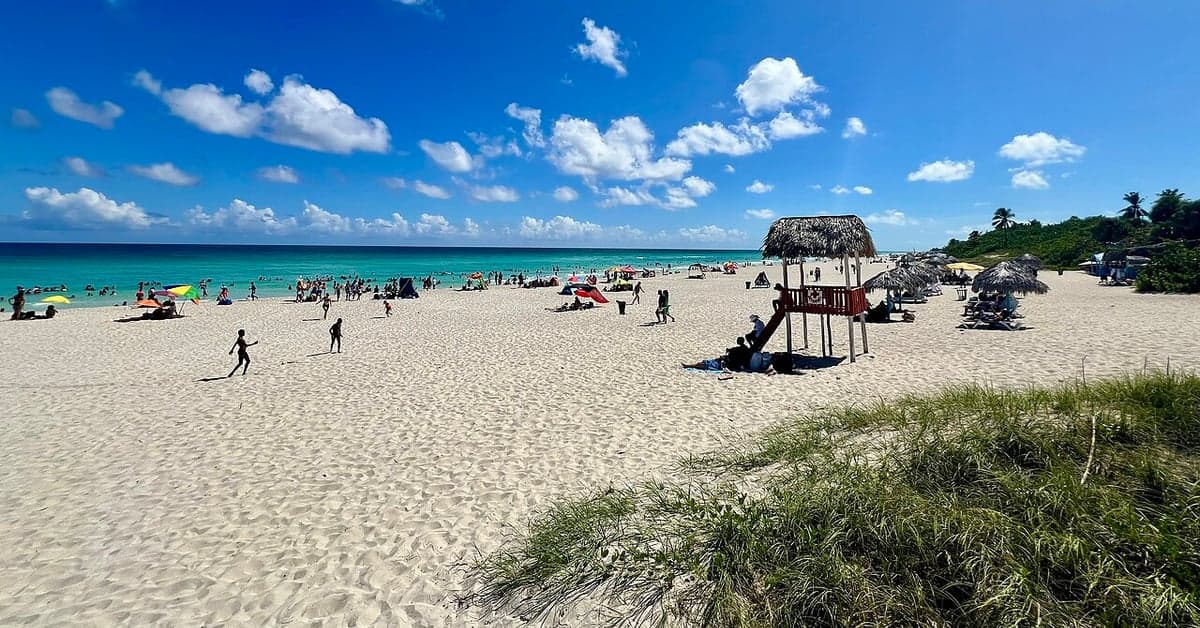
Varadero is Cuba's resort beach, a 12-mile peninsula of white sand that juts into the Straits of Florida about 90 miles east of Havana. It's where the all-inclusive hotels cluster -- Melia, Iberostar, Paradisus -- serving mostly Canadian, European, and Latin American tourists. The beach is long, wide, and consistently beautiful along its entire length.
The water is warm and clear, with a gradual sandy bottom. Waves are minimal thanks to the offshore reef. It's an easy, uncomplicated beach -- the kind where you can walk for an hour and never run out of sand.
Beyond the Hotels
Varadero has a town at its western end that most resort guests never see. Calle 62 and the surrounding streets have paladares (private restaurants) where the food is better and cheaper than the hotel buffets. Varadero 60 on Calle 60 does an excellent lobster dinner for about $15 CUP. Kiki's Club, closer to the beach, is a rooftop bar with mojitos for $3 and a view of the sunset.
The Saturno Cave, about 15 minutes east of Varadero, is a cenote-like swimming hole inside a limestone cave. Entry is $5 and you can snorkel in the crystal-clear freshwater. It's a good break from the beach on a cloudy day.
Playa Pilar (Cayo Guillermo)
Playa Pilar is, by most accounts, the most beautiful beach in Cuba. Named after Ernest Hemingway's fishing boat (he spent time in these waters), it's a wide swath of sand backed by dunes up to 50 feet high -- the tallest in the Caribbean. The sand is powder-fine and the water graduates from pale green to deep turquoise as you wade out.
Cayo Guillermo is connected to the mainland by a long causeway. Most visitors are staying at one of the few hotels on the cay, but Playa Pilar is accessible to day-trippers who drive across. A small thatched-roof bar on the beach sells beer, mojitos, and simple grilled fish plates. That's the extent of the development.
The Hemingway Connection
Hemingway fished these waters in the 1940s and 50s, hunting marlin and German U-boats (seriously -- he equipped his boat with grenades and a machine gun during WWII and patrolled the northern Cuba coast). The Papa Hemingway legend is thick here. His former home in Havana, Finca Vigia, is now a museum, and the Floridita bar in Old Havana still serves the frozen daiquiris he favored ($6 each, in a room plastered with Hemingway photos).
Playa Ancon
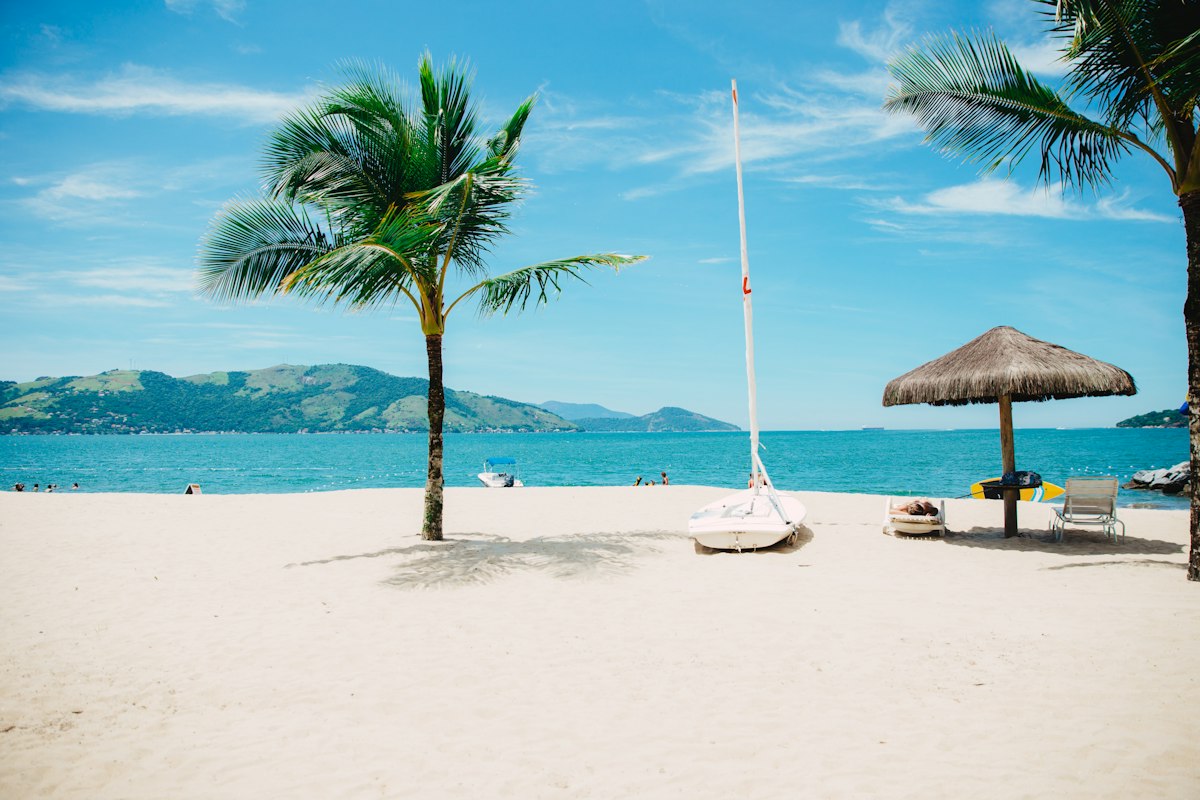
Playa Ancon sits on a peninsula south of Trinidad, one of Cuba's most beautiful colonial cities. The beach itself is a 2.5-mile arc of white sand with calm, clear water and a reef offshore that offers good snorkeling. A few state-run hotels line the beach, but it's far less developed than Varadero.
The real draw is the combination of beach and city. Trinidad is a UNESCO World Heritage site with cobblestone streets, pastel-colored colonial mansions, and a music scene that spills out of every doorway after dark. Spend the morning at Playa Ancon, then the afternoon and evening in Trinidad's Plaza Mayor, where live son music plays in the open-air Casa de la Musica and rum cocktails cost $2.
Trinidad Essentials
- La Redaccion restaurant: Cuban-international cuisine in a colonial courtyard, mains $8-15
- Casa de la Musica: open-air salsa dancing on the main steps, free entry, drinks $2-3
- Taberna La Botija: craft beer in a country where beer options are otherwise limited, $3/pint
- The bus to Playa Ancon: departures from Trinidad's bus station, $2 round trip, 20 minutes
Guardalavaca
Guardalavaca is on the northeast coast in Holguin province, far from the tourist circuits of Havana and Varadero. Christopher Columbus, who landed nearby in 1492, is said to have called it the most beautiful land human eyes had ever seen, and while that quote gets recycled in every guidebook, the beaches back it up. The coast here is a series of small, sheltered bays with white sand and water protected by offshore reef.
The snorkeling is excellent. The reef at the far ends of the main beach is healthy and accessible. Sea turtles nest on the sand from May through September. A few all-inclusive resorts (Paradisus Rio de Oro, Sol Rio de Luna y Mares) operate along the coast, but the overall feeling is quieter and more remote than Varadero.
Nearby: Bahia de Naranjo
A natural harbor a few miles west of Guardalavaca, Bahia de Naranjo has a small aquarium on an offshore cay and boat trips that combine snorkeling, lunch, and swimming. The snorkel sites here are some of the least visited in Cuba. The reef is in remarkably good shape.
Cayo Coco
Cayo Coco is a large cay off the north coast of central Cuba, connected to the mainland by a 17-mile causeway that crosses shallow lagoons full of flamingos. Yes, actual wild flamingos -- thousands of them, standing in the shallows on both sides of the road. The drive across the causeway is worth doing slowly with the windows down.
The beaches on Cayo Coco are wide, white, and lightly developed. Playa Larga on the north shore is the standout -- a long stretch of sand backed by low dunes and Australian pines. The water is bath-warm and shallow for a hundred yards out. A few all-inclusive resorts operate on the cay (Melia, Iberostar, Tryp), but the beach-to-hotel ratio is much more favorable than Varadero.
Cayo Paredon Grande
Connected to Cayo Coco by a short bridge, Cayo Paredon Grande is even less developed. The Diego Velazquez lighthouse at the eastern tip -- built in 1859 -- offers views of open ocean and empty coastline. The beaches here are deserted most days. It's one of the most remote, beautiful places you can drive to in Cuba.
Cayo Santa Maria
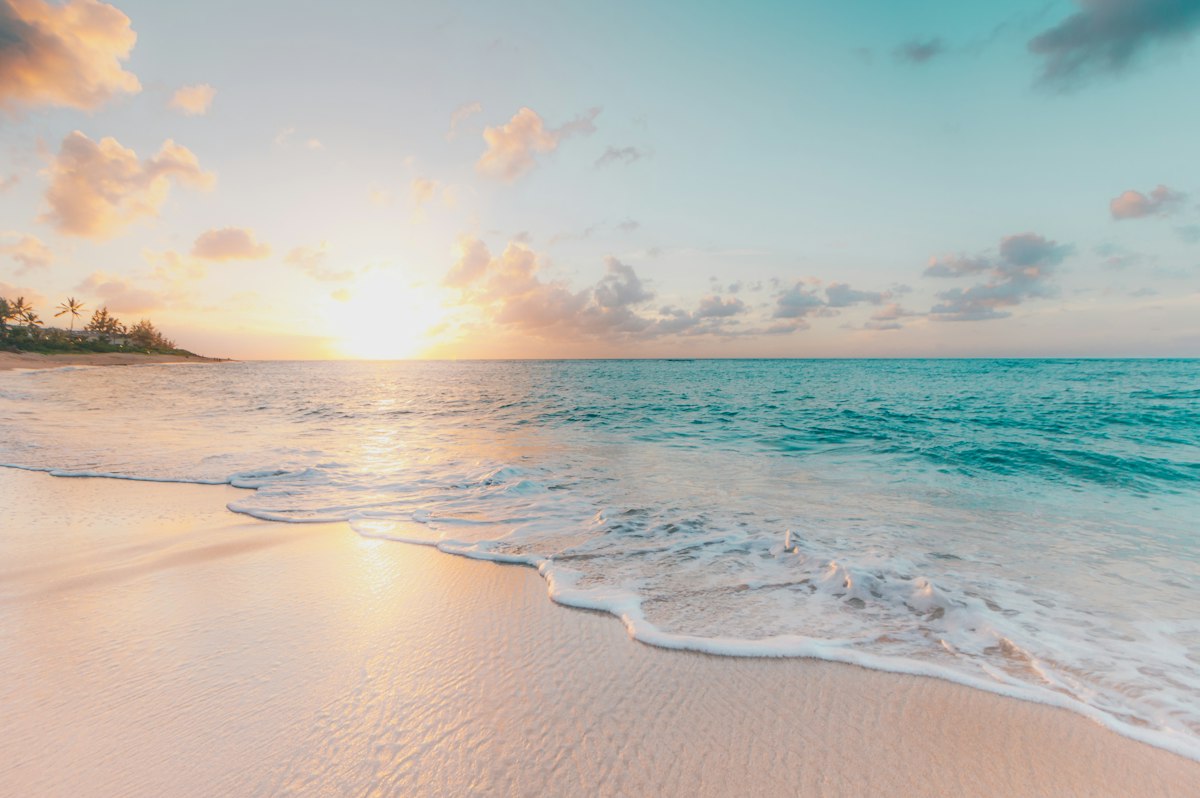
Cayo Santa Maria is the newest resort development in Cuba, connected to the mainland by a 30-mile causeway (the longest in Cuba). The beaches are pristine -- wide white sand, clear water, minimal wave action. The development here is more recent and more spread out than Varadero, so it feels less congested even at capacity.
The cay has about a dozen all-inclusive resorts, a small commercial village (Pueblo La Estrella) with restaurants and shops, and a dolphin encounter facility. The restaurants at the village are a step up from hotel buffet food -- try the La Taberna del Bucanero for grilled seafood ($10-15).
Travel Logistics for Americans
Legal Travel
U.S. citizens cannot legally travel to Cuba as tourists. However, travel is permitted under 12 categories of authorized activity, including "Support for the Cuban People" -- the most commonly used category. This requires that your activities directly engage with Cuban entrepreneurs and private businesses. Staying in casas particulares, eating at paladares, and hiring private guides all qualify.
Regulations have shifted with each administration and may change again. Check the current OFAC (Office of Foreign Assets Control) guidelines before booking. U.S. airlines have flown direct to Havana from Miami, Fort Lauderdale, Tampa, and New York, but Cuba's fuel shortages have disrupted air service, so confirm your flight is still scheduled before booking anything else.
Currency
Cuba uses the Cuban peso (CUP). The dual currency system (CUP and CUC) was officially unified in 2021, though in practice, pricing can still be confusing. As of recent rates, $1 USD buys roughly 120-250 CUP on the informal market, versus the official rate of 24 CUP. Most tourist-facing businesses quote prices in USD or EUR. Bring cash -- U.S. credit and debit cards do not work in Cuba due to the embargo.
Casa Particulares
Casas particulares (private homestays) are the backbone of independent travel in Cuba. Families rent out rooms in their homes for $25-50/night, usually with breakfast included. The quality varies enormously, but the best casas offer clean rooms, excellent home-cooked meals, and hosts who function as fixers -- arranging taxis, restaurant reservations, and local tips.
Book through platforms like Airbnb (which operates in Cuba) or Cuba Junky. In Havana, the neighborhoods of Vedado and Centro Habana have the most options. In Trinidad, most casas are in the colonial center within walking distance of everything.
Practical Tips
- Wi-Fi is available at ETECSA hotspots and most hotels, but it's slow and costs $1-2/hour. Buy ETECSA cards at hotels or the ETECSA offices.
- Tap water is not safe to drink. Buy bottled water ($1-2 for 1.5L at shops).
- Taxis between cities are the main transport. Havana to Varadero runs about $80-100 in a shared classic car taxi. Viazul buses are cheaper ($10-25 between major cities) but slower and less reliable.
- Bring everything you might need -- sunscreen, medications, specific toiletries. Supply shortages are real and pharmacies are poorly stocked.
- Cuban food at state restaurants is often bland. Paladares are almost always better. Ask your casa host for recommendations.
Cuba's beaches are exceptional, and the lack of mass development means they look more or less the way Caribbean beaches looked 40 years ago. The trade-off is that getting there -- especially for Americans -- requires more planning, more cash, and more flexibility than a typical beach trip. The infrastructure is aging, the internet barely works, and the logistics can be frustrating. But when you're standing on Playa Pilar with sand dunes behind you and turquoise water ahead and not another soul in sight, none of that matters much.
Frequently Asked Questions
Can Americans travel to Cuba for beach vacations?
Americans cannot legally travel to Cuba purely for tourism. You must qualify under one of 12 authorized travel categories, with "Support for the Cuban People" being the most commonly used. This requires staying at private casas particulares and eating at private restaurants (paladares), not government-owned resorts.
What is the best beach in Cuba?
Varadero is Cuba's most famous beach, a 12-mile strip of white sand and turquoise water on a narrow peninsula east of Havana. For a less developed alternative, Playa Pilar in Cayo Guillermo has powdery sand dunes and fewer tourists. Playa Ancon near Trinidad offers a good beach close to a historic colonial town.
How much does a Cuba beach vacation cost?
Cuba is affordable once you arrive. Casas particulares (private homestays) cost $25-50/night. Meals at paladares run $8-15. All-inclusive resorts in Varadero start around $80-150/night. The main expense is getting there -- flights from Miami are $250-400 round trip. Bring cash, as US credit and debit cards do not work in Cuba.
Is Cuba safe for tourists?
The bigger risk right now is the crisis, not crime. Canada advises avoiding non-essential travel to Cuba (updated September 28, 2026) because of severe shortages of fuel, food, medicine and water and long, unpredictable power cuts, and all Canadian airlines have suspended flights. Violent crime against tourists has historically been low; petty theft and scams (overcharging, unofficial taxis) are the usual concerns. Check your own government's current advice before booking.
What is the best month to visit Cuba beaches?
November through April is the dry season with temperatures of 75-85°F, low humidity, and calm seas. This is peak tourist season with higher prices. June through October is hotter, rainier, and falls within hurricane season. September and October carry the highest storm risk.
How do you get from Havana to Varadero beach?
Varadero is about 90 miles east of Havana, roughly a 2-2.5 hour drive. The Viazul tourist bus runs the route for about $10 one-way. Private taxis (colectivos) cost $25-40 per person. Organized transfers through your casa particular are the easiest option, typically $30-50 per person each way.