Table of Contents
Prices in this guide are approximate and change often. Check with the hotel, airline or operator before you book.
A Country of 15 Islands and 17,000 People
The Cook Islands are a self-governing territory in free association with New Zealand, scattered across 2 million square kilometers of South Pacific ocean. The total land area is 236 square kilometers — smaller than most cities. The population hovers around 17,000, with about 10,000 living on Rarotonga, the main island. More Cook Islanders live in New Zealand and Australia than in the Cook Islands themselves.
This tiny scale is the point. The Cook Islands offer Pacific Island beaches, lagoons, and reef snorkeling without the resort density of Fiji, the cost of French Polynesia, or the long-haul logistics of reaching Tonga or Samoa. The New Zealand dollar is the currency (supplemented by collectible Cook Islands coins), English is widely spoken, and the infrastructure — while modest — functions reliably.
Two islands matter for beach travelers: Rarotonga (volcanic, mountainous, with a fringing reef) and Aitutaki (a raised coral atoll with one of the Pacific's most photographed lagoons). Most visitors split their time between both.
Muri Beach: Rarotonga's Lagoon Beach
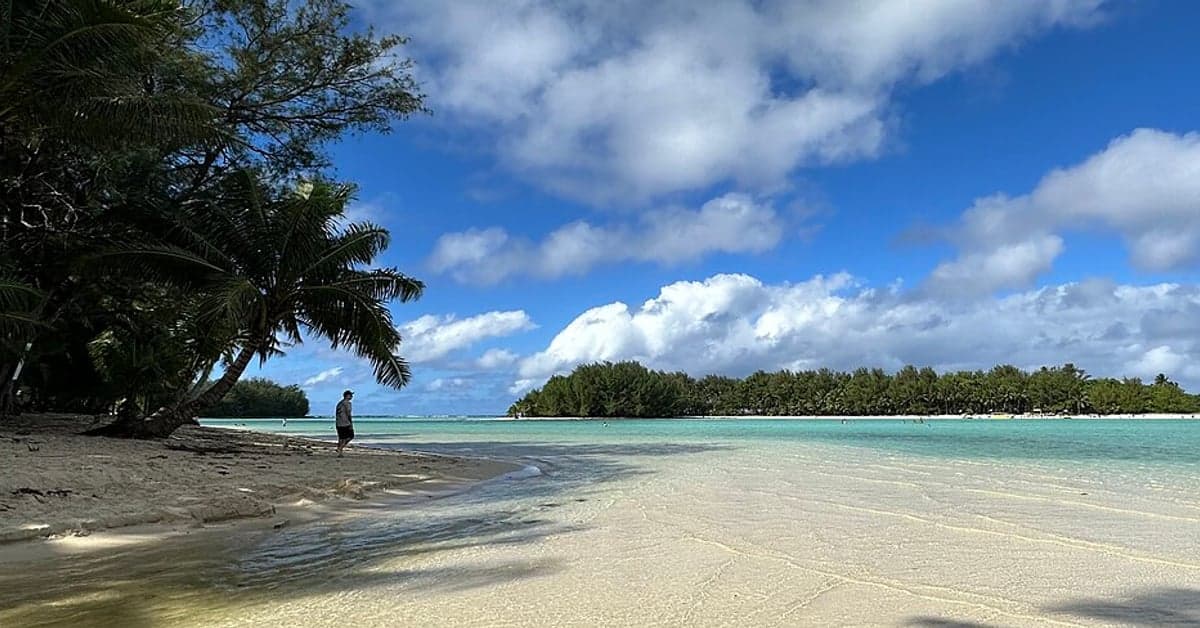
Muri Beach stretches along Rarotonga's southeast coast, facing a wide lagoon dotted with four small motu (islets): Taakoka, Koromiri, Oneroa, and Motutapu. The lagoon is shallow — knee to waist deep at low tide — with a sandy bottom, scattered coral heads, and water that ranges from pale turquoise to glass-clear depending on cloud cover and tide.
Muri is Rarotonga's primary tourist beach, and the accommodation, restaurants, and activity operators cluster here accordingly. Pacific Resort Rarotonga and Muri Beach Club Hotel sit directly on the sand. Budget options like Muri Beach Hideaway (from NZ$80/night) are a short walk inland.
Lagoon Cruises and Kayaking
Captain Tama's Lagoon Cruizes (the spelling is intentional) is a Rarotonga institution — a half-day catamaran trip (NZ$89 per adult) that includes snorkeling in the lagoon, a stop on one of the motu for a fish barbecue, and a demonstration of how to open coconuts and weave palm fronds. It's touristy and entertaining in equal measure. The snorkeling over the coral gardens inside the lagoon reveals giant clams (some over a meter across), blue starfish, and parrotfish.
Kayak rental (NZ$20-30 for a half day) lets you paddle to the motu independently. Taakoka, the closest, takes about 15 minutes of easy paddling. Bring reef shoes — the coral around the motu edges is sharp, and the water is shallow enough that you'll wade the last stretch.
Titikaveka: The Snorkeling Beach
Titikaveka, on Rarotonga's south coast about 3 kilometers west of Muri, has the island's best shore-entry snorkeling. The lagoon here is wider than at Muri, and the coral is more developed — the reef starts just 30-50 meters from the beach and extends in a broad band toward the outer reef edge.
The marine life includes Moorish idols, butterflyfish (at least five species), parrotfish, triggerfish, and the occasional sea turtle cruising along the reef edge. Visibility on calm mornings reaches 20-25 meters. The beach itself is a narrow strip of white sand with palm trees and a few houses behind it — less developed than Muri, with a more local feel.
The Fruits of Rarotonga cafe, on the inland road behind Titikaveka, serves fresh fruit smoothies and locally grown coffee. Crown Beach Resort occupies the prime beachfront spot and has a respected restaurant, Oceans, open to non-guests for dinner.
Aroa Beach: Marine Reserve
Aroa Beach, on Rarotonga's west coast near the airport, fronts the Aroa Marine Reserve — a protected lagoon section where fishing is prohibited. The result is denser fish populations than other lagoon areas, with schools of convict tangs, sergeant majors, and parrotfish visible from shore.
The Aroa Beachside Inn provides snorkel gear to guests. The beach is narrow and the sand coarser than Muri's, but the snorkeling compensates. An evening snorkel at Aroa, when the light goes golden and the fish become more active, is one of Rarotonga's underrated experiences.
One Foot Island (Aitutaki): The Postcard
One Foot Island — Tapuaetai in Cook Islands Maori — is a small, uninhabited motu on the southern rim of Aitutaki's lagoon. It is, without exaggeration, one of the most photographed beaches in the Pacific. The sand is white, the water surrounding it transitions from pale green to deep sapphire over a 50-meter span, and the motu is barely above sea level — a low curve of sand and a few coconut palms against an enormous sky.
One Foot Island is accessible only by boat as part of Aitutaki lagoon cruises. The standard full-day tour (NZ$120-150 per person) departs from the main island at 10 AM, visits several motu for snorkeling and swimming, includes a barbecue lunch on One Foot Island, and returns by 3 PM. The island has a novelty post office (open during tours only) where you can get your passport stamped with a footprint-shaped Cook Islands entry stamp — it's gimmicky but fun.
The snorkeling around One Foot Island's edges is excellent. Giant clams — some 50-60 years old, with vivid blue and green mantles — sit in the shallow water near shore. Reef fish are abundant and unafraid of humans. The water is warm (26-28°C) and so clear that you can see the bottom at 10 meters depth.
Getting to Aitutaki
Air Rarotonga flies the Rarotonga-Aitutaki route daily (45 minutes, from NZ$350 round trip). There's no ferry service. The flight itself is worth the price — the approach over Aitutaki's triangular lagoon, with its impossible blue colors and scattered motu, is one of the great aerial views in the Pacific.
Accommodation on Aitutaki ranges from the Aitutaki Lagoon Private Island Resort to modest guesthouses in the main village of Arutanga. Most visitors come for two or three nights — enough for the lagoon tour, a day of independent beach time, and a bicycle ride around the island (the circumference road is 8 kilometers).
Rarotonga's Inner Island
Rarotonga is 32 kilometers in circumference, ringed by a single road (the Ara Tapu coastal road and the Ara Metua inland road). The island's interior is dense tropical forest rising to Te Manga peak (653 meters). The Cross-Island Track, a 2-3 hour hike from the north coast to the south coast through the mountain interior, is the most popular walk. It passes through jungle with banyan trees, ferns, and the occasional Cook Islands fruit dove, reaching a ridge with views across the entire island.
The lack of a beach at the end of the Cross-Island Track (it exits at Papua Waterfall, inland from the south coast) is slightly anticlimactic, but combining the hike with an afternoon at Titikaveka or Muri makes for a full day. The waterfall has a swimming hole at its base — cold, freshwater, and refreshing after the humid jungle walk.
Island Time Culture
The Cook Islands operate on island time in the literal sense. Buses run approximately on schedule (the clockwise and counterclockwise buses circling Rarotonga depart roughly every hour). Restaurants open roughly when they say they will. Nothing happens in a hurry.
This is not disorganization — it's a cultural rhythm that visitors need to match. If you're the kind of traveler who gets stressed when lunch arrives 25 minutes after ordering, the Cook Islands will test your patience. If you're the kind who orders another beer and watches the lagoon while waiting, you'll fit right in.
Friday night on Rarotonga means the Punanga Nui Market (which operates Saturday morning) and the Island Night cultural shows at various resorts and restaurants. The Highland Paradise cultural village (NZ$99 including dinner) runs a show that covers Cook Islands history, dance, and music with a spit-roast dinner. Alternatively, the Te Vara Nui cultural village (NZ$109) offers an overwater stage show that's more polished and theatrical.
Local Food: Ika Mata and the Underground Oven
Ika mata is the Cook Islands version of ceviche — raw tuna marinated in lime juice and mixed with coconut cream, onion, tomato, and chili. It appears on every restaurant menu and at every market stall, and the quality varies enormously. The best versions use sashimi-grade yellowfin tuna caught that morning, with coconut cream freshly squeezed from grated coconut rather than from a can. Trader Jack's restaurant in Avarua serves a reliable version for NZ$18.
The umu (underground oven) cook-up is a Sunday tradition. Pork, chicken, taro, breadfruit, and bananas are wrapped in banana leaves and slow-cooked in a pit oven over hot stones for several hours. Some accommodations arrange umu experiences for guests; otherwise, the Sunday lunch at the Rarotongan Beach Resort includes umu-cooked dishes.
Getting There
Rarotonga Airport (RAR) has direct flights from Auckland (3.5 hours, Air New Zealand, multiple flights weekly) and Los Angeles (9.5 hours, Air New Zealand, once weekly on Fridays). Seasonal flights from Sydney operate during the Southern Hemisphere summer. The Auckland routing is by far the most frequent and cheapest — round trips from Auckland run NZ$400-600 in shoulder season.
The Cook Islands use the New Zealand dollar. ATMs exist in Avarua (Rarotonga's main town) but not on Aitutaki — bring cash for the outer island. Credit cards are accepted at hotels and larger restaurants but not at market stalls, small shops, or most local eateries. A daily budget of NZ$100-150 covers guesthouse accommodation, two meals out, a scooter rental (NZ$25-35/day), and a beer or two. Double that for resort accommodation and lagoon tours.
Frequently Asked Questions
How do you get to the Cook Islands?
Air New Zealand flies direct from Auckland to Rarotonga (about 3.5 hours) with multiple weekly flights. From Los Angeles, Air New Zealand offers a direct flight to Rarotonga (roughly 9.5 hours). There are no flights from Europe, so you'll connect through Auckland or LA.
What is the best month to visit the Cook Islands?
May through October is the dry season with lower humidity, cooler temperatures (72-80°F), and the calmest lagoon conditions. The wet season from November through April brings higher temperatures and occasional cyclones, but also fewer tourists and lower prices.
How much does a Cook Islands vacation cost?
The Cook Islands are mid-range for the South Pacific. Budget guesthouses on Rarotonga start at $80-120/night, while beachfront resorts run $250-500/night. Aitutaki is more expensive with fewer options. Meals at restaurants cost $15-30. A lagoon cruise on Aitutaki costs around $100-150 per person.
Is Aitutaki worth visiting from Rarotonga?
Absolutely. Aitutaki's lagoon is one of the most beautiful in the Pacific, with turquoise water and tiny uninhabited motus (islets) with white sand. Air Rarotonga flies there in 45 minutes ($250-350 round trip). A day trip is possible but an overnight stay of 2-3 nights is better.
Do you need a visa for the Cook Islands?
Most nationalities get a free 31-day visitor permit on arrival. You need a passport valid for at least 6 months and a return or onward ticket. Extensions up to 6 months are possible through the Immigration Office in Rarotonga for a small fee.
Can you snorkel from the beach in Rarotonga?
Yes, Rarotonga is surrounded by a lagoon with reef access from shore. Muri Beach and Aroa Beach are the best spots for snorkeling directly off the sand, with coral gardens and tropical fish in waist-to-chest-deep water. Bring reef shoes as the coral bottom can be sharp.