The Best Beaches in Brazil: Tropical Coast to Party Shores
Table of Contents
Prices in this guide are approximate and change often. Check with the hotel, airline or operator before you book.
Brazil's Coastline Is Absurdly Long
Brazil has 4,600 miles of Atlantic coastline. That's roughly the distance from New York to Lisbon. The beaches here range from urban party strips where caipirinhas flow before noon to empty tropical bays that take a boat and a hike to reach. The water temperature rarely drops below 75°F, even in the south during winter.
What makes Brazil's beaches different from the Caribbean or Southeast Asia is the culture surrounding them. Beaches in Brazil are social spaces. Vendors walk the sand selling everything from grilled cheese on a stick (queijo coalho) to acai bowls to bikinis. There's always music. There's always a cold beer within arm's reach. It's infectious.
Here's where to find the best stretches of sand, from Rio down to the deep south and up to the Amazon.
Rio de Janeiro: Copacabana and Ipanema
Copacabana
Copacabana is four kilometers of wide, flat sand lined with the iconic black-and-white wave-patterned promenade. The beach is divided into numbered postos (lifeguard posts) that function as informal neighborhoods. Posto 6, near the Copacabana Fort, is quieter and favored by older locals. Posto 2 and 3 are the busiest, packed with tourists and beach vendors.
The scene is pure spectacle. Pickup football games run all day. Vendors sell caipirinhas for 10-15 reais ($2-3), coconut water straight from the shell, and biscoito Globo — those puffy, flavorless tapioca crackers that somehow taste perfect with salt air. Rent a beach chair and umbrella from one of the barraqueiros for about 20 reais ($4) for the day.
Eat at Cervantes on Avenida Prado Júnior for their legendary steak-and-pineapple sandwich — open late, perfect after a night out. For something fancier, Colombo Confeitaria inside the Fort has pastries and espresso with ocean views.
Ipanema
Ipanema is the cooler, slightly more upscale sibling. The water is rougher here — strong shore break — but the people-watching is world-class. Each posto has its own crowd: Posto 9 is the bohemian/counterculture section, Posto 8 draws the LGBTQ+ community, and the area near Posto 7 is popular with families.
The sunset behind the Dois Irmãos (Two Brothers) mountains is a daily event. People actually applaud when the sun dips below the peaks. Walk to Arpoador Rock at the Copacabana end of Ipanema for the best vantage point — get there 30 minutes before sunset to claim a spot on the rocks.
Safety on Rio's Beaches
Real talk: petty theft is common on Rio's beaches. Don't bring valuables. Leave your phone at the hotel or carry it in a waterproof pouch close to your body. Don't bring a bag you can't keep between your legs while seated. The "flash robbery" — where a group grabs and runs — does happen, mostly at the ends of the beaches near the streets. Stay between the postos during daylight and you'll be fine. After dark, stick to Ipanema and the well-lit stretches of Copacabana.
Fernando de Noronha: Baía do Sancho
Baía do Sancho has been voted the best beach in the world by TripAdvisor multiple times, and it's one of those rare cases where the ranking is justified. The bay is a crescent of golden sand backed by dramatic cliffs, accessible only by climbing down a narrow crevice between two rock faces using fixed metal ladders. At the bottom, you're in a natural amphitheater of turquoise water with sea turtles and spinner dolphins visible from the shore.
Fernando de Noronha is a marine national park 350 kilometers off the northeast coast. Access is controlled — only a limited number of tourists can be on the island at any time. You'll pay an environmental preservation fee of about 100 reais ($20) per day, plus a park access fee of about 350 reais ($70). Flights run from Recife or Natal (about $200-400 round trip).
Accommodation is expensive by Brazilian standards — expect $150-300 per night for a pousada (guesthouse). But the snorkeling and diving are among the best in the South Atlantic. Visibility regularly exceeds 40 meters. Book well ahead for July through December, when conditions are best.
Jericoacoara
Jeri — as everyone calls it — is a former fishing village on the coast of Ceará that has evolved into one of Brazil's most beloved beach destinations. The town has sand streets (no pavement), a famous dune where everyone gathers for sunset, and consistent wind that makes it a world-class spot for kitesurfing and windsurfing.
The main beach is good for swimming when the wind is light, but the real attractions are the surrounding lagoons. Lagoa do Paraíso and Lagoa Azul are freshwater lagoons with hammocks strung over the water where you can order caipirinhas and açaí from floating bars. A day trip to both costs about 80-120 reais ($16-24) by buggy.
Getting to Jeri is part of the adventure. Fly to Jijoca de Jericoacoara or Fortaleza, then take a jardineira (open-sided 4x4 truck) over the dunes. The ride from Jijoca takes about an hour. Budget accommodations start around $25 per night; mid-range pousadas with pools run $60-120. Try the fresh lagosta (lobster) at Restaurante do Nené — half a lobster with rice and beans for about 70 reais ($14).
Praia do Espelho, Bahia
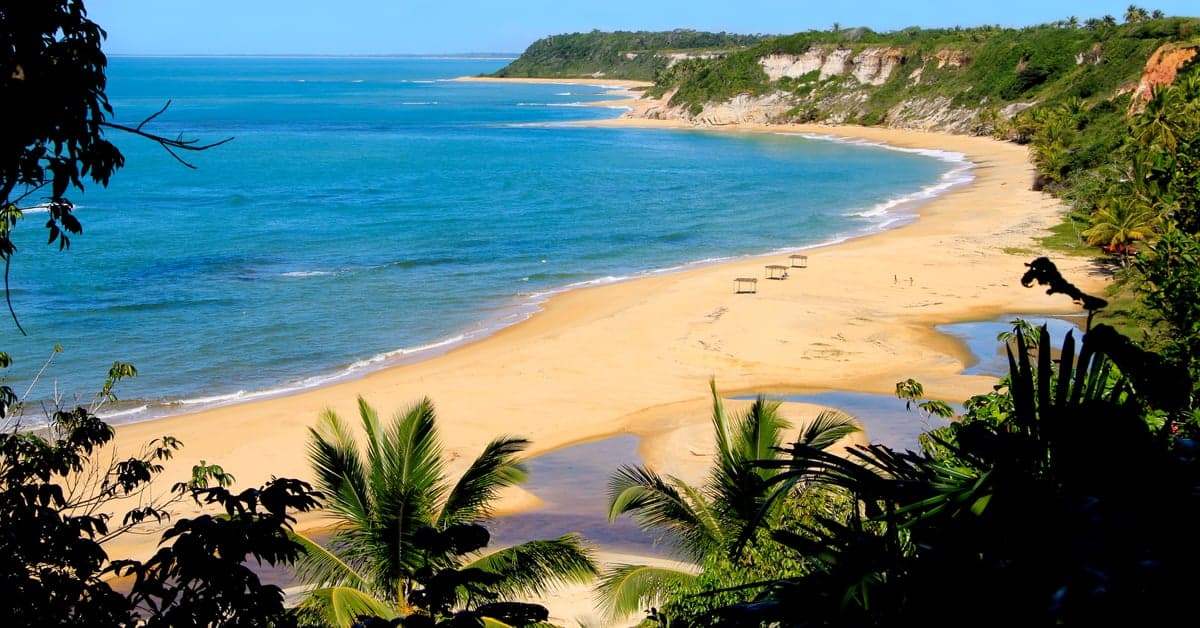
Praia do Espelho (Mirror Beach) is named for the reflective tidal pools that form at low tide along its shoreline. Located between Trancoso and Caraíva on Bahia's south coast, it's one of those places that feels almost too picturesque. Low red cliffs line the shore, palm trees lean over the sand, and the water is calm and clear.
Time your visit for low tide — the pools and the exposed coral formations are the whole point. At high tide it's still beautiful but the beach shrinks significantly. The drive from Trancoso takes about 45 minutes on a rutted dirt road (a 4x4 helps after rain). Several beach clubs along the shore serve lunch; Silvinha's has been there the longest and does excellent moqueca (coconut fish stew) for about 80 reais ($16).
The broader Trancoso-Caraíva-Espelho triangle is one of Bahia's best stretches. Trancoso has the Quadrado, a beautiful colonial square with boutique restaurants. Caraíva is reached by canoe across a river and has no cars — just sand paths and candlelit bars. You could easily spend a week moving between the three.
Florianópolis: The Southern Surf Capital
Floripa — the island city off Brazil's southern coast — has 42 beaches and every one is different. The east coast faces the open Atlantic with powerful surf. The north has calm bays popular with families. The south is wilder and less developed.
Joaquina
Joaquina is the main surf beach. The waves are consistent, the sand dunes behind the beach are massive (you can rent sandboards for about 30 reais), and the beach bar culture is strong. During the Brazilian Surf Championship each spring, the crowds are huge. On a regular day, it's a great place to watch competent surfers and eat a pastel (fried pastry) from one of the stands.
Lagoinha do Leste
This is Floripa's prize for those willing to work for it. Lagoinha do Leste requires a 1.5-hour hike through Atlantic Forest from the trailhead at Pântano do Sul. The trail is steep, muddy after rain, and rewarding — it opens onto a wild, untouched bay backed by green mountains with a freshwater lagoon feeding into the sea. Bring food, water, and sunscreen. There are no facilities.
Floripa is generally cheaper than Rio. A solid pousada runs $40-80 per night. The food scene is strong — try Bar do Arante in Pântano do Sul for fried shrimp and cold Bohemia beer, surrounded by thousands of handwritten notes covering every wall and ceiling.
Alter do Chão: The Amazon's Caribbean
Alter do Chão sits on the Tapajós River in Pará state, deep in the Amazon. From July through December, when river levels drop, white sand beaches emerge along the riverbanks that look like they belong in the Caribbean — except the water is fresh, warm, and tea-colored from tannins. Ilha do Amor (Love Island) is a short canoe ride from the town beach and has food vendors, beach chairs, and swimming in the gentle current.
The town is small and relaxed. Eat açaí here — the real thing, unsweetened and thick, served with fish or farinha (toasted cassava flour). It bears no resemblance to the sugary smoothie bowls sold in American cities. A bowl costs about 10 reais ($2). Fly to Santarém from Manaus or Belém, then take a bus or taxi the 30 kilometers to Alter do Chão.
Arraial do Cabo
Called the "Brazilian Caribbean" for its absurdly clear water, Arraial do Cabo is a two-hour drive from Rio and works as a weekend trip. Prainhas do Pontal do Atalaia, a pair of small beaches accessed by a staircase cut into the cliff, is known for some of the clearest water on Brazil's coast: cold upwelling from the deep South Atlantic keeps it clear, and visibility often reaches 10 meters or more on calm days. Boat tours from the harbor (about 100-150 reais per person) hit multiple beaches and snorkeling spots. Praia do Forno, accessible by a short trail from the harbor, is another standout — a sheltered cove with calm green water.
Porto de Galinhas
South of Recife in Pernambuco, Porto de Galinhas is known for its natural pools that form at low tide on the reef flats just offshore. Jangada (traditional raft) operators paddle you out to the pools for about 40 reais ($8), where you can snorkel among colorful fish in waist-deep water over the coral.
The town itself is touristy but fun — the main street is lined with shops selling colorful chicken statues (galinhas means chickens — a reference to the town's name and history). Stay at one of the pousadas along Muro Alto beach to the north, where a natural reef creates a calm swimming lagoon. Beijupirá restaurant does creative seafood — try the grilled octopus — for about 80-120 reais ($16-24) per entrée.
Best Months by Region
- Rio de Janeiro and Southeast: December through March is summer and beach season. January and February are hottest (35°C+) and busiest. April through June brings milder weather and fewer crowds.
- Northeast (Fernando de Noronha, Jeri, Porto de Galinhas): September through February is dry season with the best conditions. March through June can bring rain, though showers are usually brief.
- Bahia coast (Espelho, Trancoso): December through March is peak season. April through June has occasional rain but is less crowded and still warm.
- Florianópolis: December through March for beach weather. Water temperature is warmest in February (around 24°C). Winter months (June-August) are too cool for swimming but good for hiking.
- Amazon (Alter do Chão): July through December when river levels are low and beaches emerge. January through June the beaches are underwater.
Caipirinha Culture
You can't write about Brazilian beaches without talking about caipirinhas. The national cocktail — cachaça, lime, sugar, ice — is available at every beach, every bar, and most restaurants. A beach caipirinha costs 10-20 reais ($2-4). The quality varies wildly. The best ones use fresh limes muddled hard, good cachaça (ask for Leblon, Ypióca, or Novo Fogo if available), and not too much sugar.
Variations are everywhere: caipiroskas use vodka instead of cachaça, caipirinhas de maracujá use passion fruit, and caipirinhas de caju use cashew fruit. At beach kiosks in Rio, the fruit versions are often better because they mask cheap cachaça. At a proper bar, stick with the classic lime.
One practical note: caipirinhas are strong. Two or three and you'll feel it. Stay hydrated — the combination of tropical sun, alcohol, and salt water dehydrates fast. Drink a coconut water between rounds. Your future self will thank you.
Frequently Asked Questions
What is the best beach in Brazil?
Baia do Sancho on Fernando de Noronha has been voted the world's best beach multiple times — golden sand backed by cliffs, accessed by climbing through a rock crevice, with sea turtles visible from shore. Jericoacoara offers kitesurfing, dune sunsets, and freshwater lagoon bars.
Is it safe to go to Copacabana Beach?
Petty theft is common on Rio's beaches. Don't bring valuables, leave phones at the hotel or use a waterproof pouch, and don't carry bags you can't keep between your legs. Stay between the postos (lifeguard posts) during daylight. After dark, stick to well-lit areas of Ipanema and Copacabana.
What is the best time to visit Brazilian beaches?
Rio and the southeast are best December through March (summer). The northeast (Fernando de Noronha, Jericoacoara) is best September through February (dry season). Florianopolis peaks December through March. Amazon beaches at Alter do Chao emerge July through December when river levels drop.
How much does a beach trip to Brazil cost?
Brazil is affordable outside resort areas. Beach caipirinhas cost $2-4, a plate of stewed chicken with rice is $4-6, and pousadas run $25-80/night. Fernando de Noronha is the exception at $150-300/night plus a $20/day environmental fee.
How do you get to Fernando de Noronha?
Fly from Recife or Natal (about $200-400 round trip, 1 hour). The island limits tourist numbers, so book ahead. You'll pay a daily environmental preservation fee of about 100 reais ($20/day) plus a park access fee of about 350 reais ($70). Snorkeling visibility regularly exceeds 40 meters.
What is a caipirinha?
Brazil's national cocktail — cachaca (sugarcane spirit), fresh lime, sugar, and ice. A beach caipirinha costs 10-20 reais ($2-4). Ask for Leblon, Ypioca, or Novo Fogo cachaca when available. Variations include passion fruit (maracuja) and cashew fruit (caju). They're strong — drink coconut water between rounds.