
The Best Beaches in Australia: Coast to Coast
Table of Contents
36,000 Kilometers of Coastline and the Problem of Choice
Australia has more than 10,000 beaches. You could visit a new one every day for 27 years and still not see them all. The practical challenge isn't finding a good beach — it's narrowing down which stretch of this massive coastline deserves your limited time. The east coast from Sydney to Cairns gets the most visitors, but Western Australia, South Australia, and Tasmania have beaches that rival anything on the popular route, often with nobody on them.
Distances here are real. Sydney to Byron Bay is a 10-hour drive. Perth to Broome takes 24 hours of highway. Flying between coastal cities is often the only practical option — Jetstar and Virgin Australia run frequent routes, and booking a month ahead can get you a Sydney-to-Gold Coast flight for AUD $49.

Whitehaven Beach, Whitsundays (Queensland)
Whitehaven is the beach that breaks the curve. Seven kilometers of 98% pure silica sand so white it doesn't get hot under your feet, lapped by water that shifts between turquoise and deep blue depending on the tide. The sand at Hill Inlet, at the northern end, swirls with the tidal flow in patterns that look digitally altered but aren't.
Access is by boat from Airlie Beach (the mainland gateway to the Whitsundays). Day trips run AUD $160-250 and include snorkeling stops on the fringing reef. ZigZag Whitsundays does a solid full-day trip with a bush tucker-inspired lunch for around AUD $200. For the Hill Inlet lookout — the iconic swirling sand viewpoint — you need a trip that includes a Tongue Point landing. Not all do, so check before booking.
Stinger Season Warning
Box jellyfish and Irukandji inhabit Queensland waters from November through May. Stinger suits (full-body lycra) are provided on boat trips and should be worn. The stings range from painful to potentially lethal. This isn't scare-mongering — it's Australian reality. Outside stinger season (June-October), you swim freely.
Bondi Beach, Sydney (New South Wales)
Bondi is Australia's most famous beach and its most debated. Locals either love it with tribal loyalty or dismiss it as overhyped and overcrowded. Both positions have merit. The beach is a near-perfect crescent of golden sand, 1 kilometer long, with reliable waves at the south end and calmer swimming near the flags in the center. The problem is that on a summer Saturday, 40,000 people might have the same idea.
Go on a weekday morning. Swim between the flags (the yellow-and-red ones — Bondi's rips are serious and the lifeguards aren't decorative). Walk the Bondi to Coogee coastal path — six kilometers along sandstone cliffs, past Tamarama and Bronte beaches, with ocean pools carved into the rock. Afterward, get a flat white at Gertrude & Alice on Hall Street (AUD $5) or a fish taco at Chur Burger (AUD $16).
Icebergs Dining Room, perched above the Bondi Icebergs ocean pool at the south end, serves a three-course lunch for around AUD $90. The view from the terrace — across the full sweep of Bondi — is worth every dollar even if the food were mediocre, which it isn't.
Turquoise Bay, Exmouth (Western Australia)
Turquoise Bay sits inside Ningaloo Reef, the world's largest fringing coral reef and Australia's answer to the Great Barrier Reef. The difference: at Ningaloo, the reef starts 20 meters from shore. You wade in off the beach and you're immediately above coral gardens thick with tropical fish, reef sharks, and sea turtles.
The drift snorkel is the move. Enter at the south end of the bay, and the current carries you slowly north along the reef for 200-300 meters. When you reach the sandy gap, walk back along the beach and do it again. No boat required, no tour operator necessary. Just a mask and fins from the Exmouth Dive & Whalesharks shop (AUD $25 rental).
From March to July, whale sharks congregate at Ningaloo. Swimming with them — guided by spotter planes — costs AUD $380-450 for a full day with Ningaloo Discovery or Three Islands Whale Shark Dive.
Byron Bay (New South Wales)
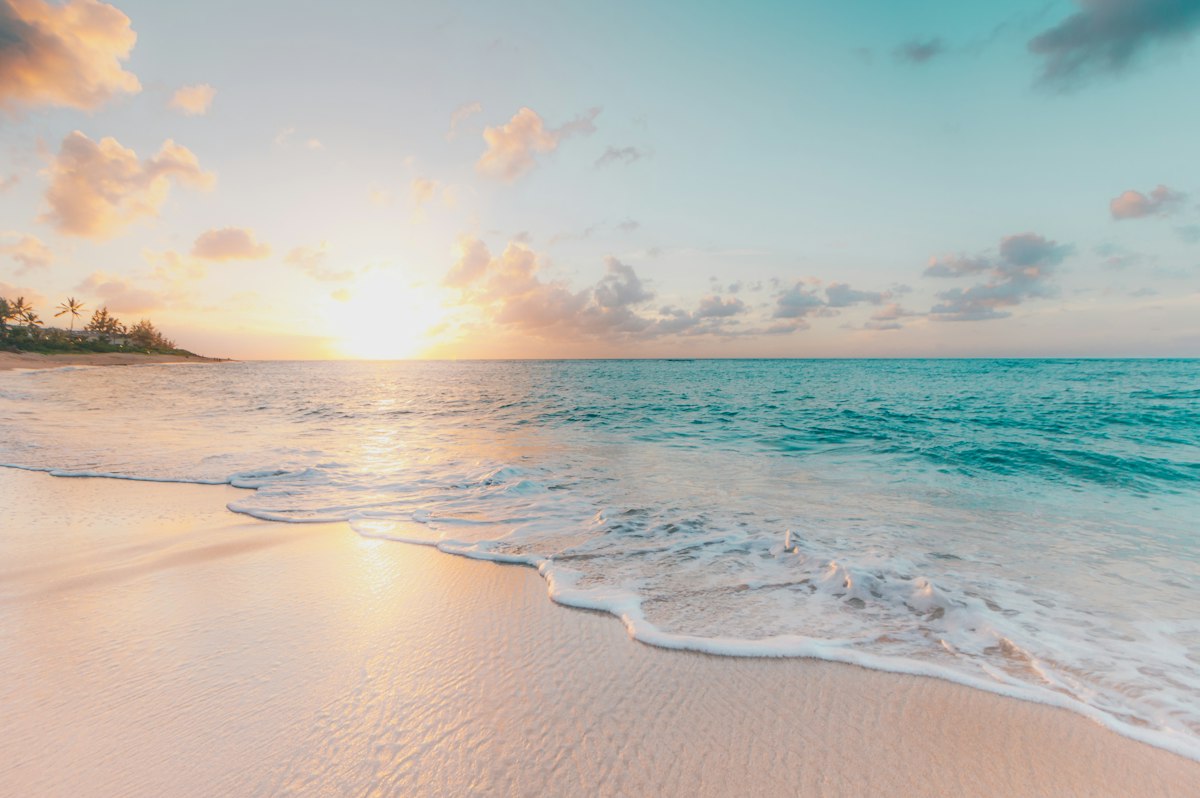
Byron Bay is a surf town that became a wellness retreat that became a property investment phenomenon. The beaches remain excellent despite the gentrification. Main Beach has a reliable right-hand break. The Pass, accessed from Clarkes Beach, is a long right-hander that peels along the headland on north swells — one of Australia's best waves when it's working.
The town is expensive by Australian standards. A flat white costs AUD $6, a pub meal runs AUD $25-30, and accommodation under AUD $150 per night requires a hostel or significant advance booking. Arts Factory Lodge, the legendary backpackers in the industrial estate, has dorm beds from AUD $38 and an atmosphere that hasn't changed much since the 1990s.
Cape Byron Lighthouse, a 3.7-kilometer loop walk from the town center, is the most easterly point on the Australian mainland. Dolphins are visible from the headland almost daily. Humpback whales pass through from June to November.
Noosa (Queensland)
Noosa Main Beach is the rare Australian beach that faces north, giving it shelter from the prevailing southerly winds. The result: calm, warm water that's swimmable more days of the year than almost anywhere else on the east coast. The sand is golden, the Hastings Street restaurant strip is 50 meters back from the waterline, and Noosa National Park — a headland of coastal bushland with koalas in the eucalyptus trees — starts at the beach's east end.
The national park walking tracks are free and lead to a series of small coves — Tea Tree Bay (popular with longboarders), Granite Bay (a nudist beach), and Hell's Gates at the headland's tip. Budget about two hours for the full loop. Bring water — there's no shade on some sections.
Cable Beach, Broome (Western Australia)
Cable Beach is 22 kilometers of wide, flat sand on the Indian Ocean in Western Australia's remote Kimberley region. The sunsets here are in a category of their own — the sky turns from gold to orange to deep red as the sun drops into the ocean, and during certain months, the "Staircase to the Moon" phenomenon creates a reflection across the exposed mudflats that looks like a golden stairway rising to the horizon.
Camel rides along the beach at sunset are Broome's signature tourist activity. Red Sun Camels charges AUD $70 for a one-hour ride. It's touristy, yes, but the scale of the beach — that enormous flat expanse with the red Kimberley pindan cliffs behind — makes it work.
Hyams Beach (New South Wales) and Lucky Bay (Western Australia)
Hyams Beach
Hyams Beach, in Jervis Bay south of Sydney, has sand that the Guinness Book of Records once listed as the whitest in the world. The claim is disputed, but the beach is legitimately brilliant white against blue-green water. It's a two-and-a-half-hour drive from Sydney and gets packed on weekends and holidays. Visit midweek.
Lucky Bay
Lucky Bay in Cape Le Grand National Park, near Esperance in Western Australia, is famous for one thing: kangaroos on the beach. They genuinely lie around on the white sand, apparently enjoying the warmth, and are relaxed enough around humans to tolerate close photographs. The beach itself is spectacular — white sand, clear water, and almost nobody here because Esperance is a seven-hour drive from the nearest city (Kalgoorlie is closer but still remote).
The Great Ocean Road
The Great Ocean Road from Torquay to Warrnambool in Victoria isn't a beach destination in the swimming sense — the Southern Ocean water temperature rarely exceeds 16°C, and the waves along this stretch are powerful and cold. But as a coastal drive, it's one of the world's finest. The Twelve Apostles (limestone stacks rising from the sea), Loch Ard Gorge, and Bells Beach (home to the world's longest-running surf competition) are the highlights along 243 kilometers of cliff-top road.
Practical Information
- East coast season: October-April (warm). Queensland is swimmable year-round but has stinger season Nov-May.
- West coast season: Year-round in the north (Broome, Exmouth). Perth beaches are best October-April.
- Transport: Domestic flights on Jetstar, Virgin, and Rex. Greyhound buses for the east coast. Car rental is essential for WA.
- Budget: Australia is expensive. Expect AUD $80-120/day for a hostel, groceries, and public transport. Add AUD $50-80 for a rental car.
- Safety: Swim between the flags. Always. Rip currents kill more people than sharks, crocs, and jellyfish combined.
- Sunscreen: The UV index in Australia is genuinely dangerous. SPF 50+ is standard, not optional. The ozone layer is thinner here.
Australia's beaches are the reason the country consistently tops quality-of-life surveys, and Australians build their weekends and holidays around them. The coast defines the culture. Getting to grips with it takes time — more than one trip, probably more than ten. Start somewhere, follow the coastline, and let it unspool.
Frequently Asked Questions
What is the best beach in Australia?
Whitehaven Beach in the Whitsundays is widely considered Australia's best — 7 kilometers of 98% pure silica sand that doesn't get hot. Turquoise Bay near Exmouth has the best snorkeling, with reef starting 20 meters from shore. Bondi Beach is the most famous but crowded.
Is it safe to swim in Australia?
Always swim between the red-and-yellow flags on patrolled beaches. Rip currents kill more people than sharks, crocs, and jellyfish combined. Queensland has dangerous box jellyfish from November to May — wear stinger suits. UV exposure is genuinely dangerous year-round; SPF 50+ is standard, not optional.
Can you see kangaroos on an Australian beach?
Yes — Lucky Bay in Cape Le Grand National Park near Esperance, Western Australia, is famous for kangaroos lounging on white sand. They're relaxed around humans and tolerate close photographs. The beach is remote (7-hour drive from the nearest city) but worth the effort.
What is the best time to visit Australian beaches?
October through April is warm for the east coast and southern beaches. Queensland is swimmable year-round but has stinger season November-May. Western Australia (Broome, Exmouth) is best year-round in the north. The Great Barrier Reef has the best visibility December through May.
How do you get to Whitehaven Beach?
Day trips depart from Airlie Beach on the mainland, costing AUD $160-250 including snorkeling stops. For the iconic Hill Inlet swirling sand viewpoint, book a trip that includes a Tongue Point landing — not all do. The Whitsundays are 2.5 hours by direct flight from Sydney.
Is Bondi Beach overrated?
Bondi is genuinely a near-perfect crescent of golden sand with reliable waves. The issue is crowds — 40,000 people on a summer Saturday. Go on a weekday morning for the best experience. The Bondi to Coogee coastal walk (6 km along sandstone cliffs) is worth doing regardless.


