The Best Beach Destinations for Retirees and Slow Travel
Table of Contents
Prices in this guide are approximate and change often. Check with the hotel, airline or operator before you book.
What Makes a Beach Destination Work for Slow Travel
Slow travel means staying longer, spending less per day, and actually living in a place rather than touring it. For retirees — whether fully retired or semi-retired with location flexibility — the ideal beach destination isn't just pretty sand. It needs affordable long-stay accommodation, reliable healthcare access, a walkable town center, mild enough climate to enjoy year-round, and a community of other long-term visitors or expats who can help you navigate the initial weeks.
The destinations below aren't resorts. They're places where you rent an apartment for one to three months, develop a morning coffee routine, learn which market vendor has the best tomatoes, and swim at the same beach until you know the tide patterns by heart. That kind of familiarity is what separates travel from tourism.
Algarve, Portugal: The European Gold Standard
Why It Works
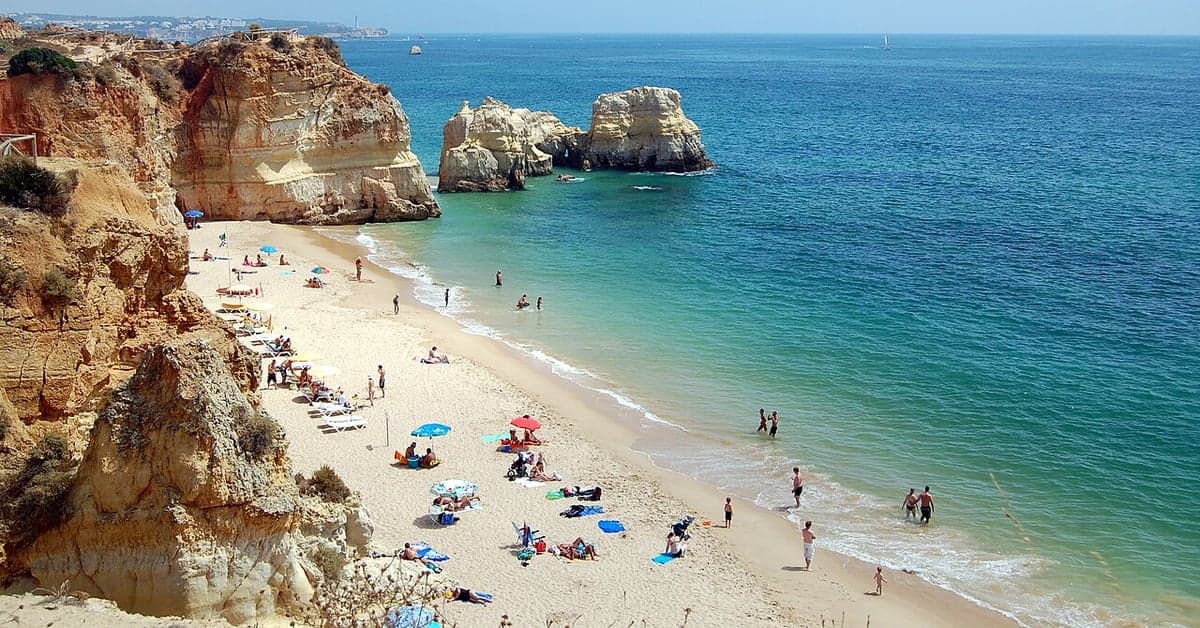
Portugal's southern coast has become the default recommendation for retirees seeking a European beach base, and the reputation is earned. The Algarve offers 300+ days of sunshine per year, dramatic sandstone cliffs over turquoise water, excellent and affordable healthcare (public and private), widespread English proficiency, and a cost of living that's 40-50% below Northern Europe. Portugal's Non-Habitual Resident (NHR) tax program, though modified in recent years, still attracts foreign retirees with favorable tax treatment on foreign pensions.
Where to Base
Lagos is the most popular town for long-stay visitors — a manageable size (32,000 residents), a historic old town with cobblestone streets, a marina, and walking access to some of the Algarve's best beaches including Praia Dona Ana and Praia do Camilo. Monthly apartment rentals run €800-1,500 for a one-bedroom in the old town or €600-1,000 in surrounding areas. Tavira, farther east, is quieter and cheaper with a more traditional Portuguese feel and barrier island beaches reached by ferry. Faro, the regional capital, has the airport, a university hospital, and lower rents than the tourist towns.
Monthly Budget
A comfortable retirement lifestyle in the Algarve costs €1,800-2,800 per month for a single person or €2,500-3,800 for a couple, covering rent, groceries, dining out 3-4 times per week, healthcare, and local transport. Wine in restaurants costs €3-5 per glass. A full seafood lunch at a local tasca runs €8-12. The Algarve is significantly cheaper than the Amalfi Coast, the French Riviera, or coastal Spain's resort zones.
Penang, Malaysia: Southeast Asia's Most Livable Island
Why It Works
Penang combines Southeast Asian affordability with infrastructure that approaches Western standards. Georgetown, the island's capital, is a UNESCO World Heritage city with colonial architecture, one of Asia's best street food scenes, modern hospitals (Penang Adventist Hospital and Gleneagles Penang are internationally accredited), and a large English-speaking population. The island's north coast has resort beaches at Batu Ferringhi, while the south coast offers quieter stretches.
Where to Base
Georgetown's inner city puts you within walking distance of hawker centers, markets, temples, and the waterfront — but the beaches are a 30-minute drive north. Batu Ferringhi has beachfront condos and a tourist-oriented strip but less cultural depth. Tanjung Bungah, between the two, offers a middle ground — beach access with Georgetown convenience. Monthly condo rentals with a pool run RM2,000-4,000 ($430-860) for a furnished one-bedroom.
Monthly Budget
Penang is remarkably affordable for the quality of life it delivers. A single retiree can live well on $1,200-1,800/month; a couple on $1,800-2,800. Street food meals cost $1-3. Restaurant dinners run $5-15. Private healthcare visits cost $15-30 without insurance. Malaysia's MM2H (Malaysia My Second Home) visa program allows long-term stays, though the financial requirements were raised significantly in 2021 — check current minimums before planning.
Crete, Greece: History and Health on the Mediterranean
Why It Works
Crete is Greece's largest island and one of the Mediterranean's most complete destinations for extended stays. The Mediterranean diet — olive oil, fresh fish, vegetables, legumes — originated here and remains the daily reality in Cretan villages. The island has two international airports (Heraklion and Chania), two public hospitals, a university, and a cultural density that prevents boredom during a long stay. Crete's beaches range from the famous pink-sand Elafonisi to the palm-lined lagoon at Vai to dozens of unnamed coves along the south coast.
Where to Base
Chania's old town is the most atmospheric base — a Venetian harbor, narrow streets, excellent restaurants, and beach access within a 15-minute drive in any direction. Winter rents for a one-bedroom apartment in Chania start at €400-700. Rethymno, between Chania and Heraklion, is smaller and quieter with a beach directly below the old town fortress. Agios Nikolaos on the east coast has a milder winter climate and access to the Mirabello Bay beaches.
Monthly Budget
Crete is one of the more affordable Greek islands for long stays. Budget €1,500-2,500/month for a single person or €2,200-3,500 for a couple, covering rent, food, and entertainment. Taverna meals cost €8-15. Greek healthcare is accessible to EU residents through the EHIC card and to non-EU residents through private insurance (€80-200/month depending on age and coverage). Crete's main limitation: winter temperatures drop to 50-60°F, which is mild by Northern European standards but means swimming season runs May through October only.
Hua Hin, Thailand: The Thai Retirement Town
Why It Works
Hua Hin is where Thai royalty has vacationed since the 1920s, and the town has evolved into Thailand's most popular long-stay destination for retirees. It sits on the Gulf of Thailand, 2.5 hours south of Bangkok by car or train. The beach is a 5-kilometer stretch of sand backed by a seafood-heavy night market, golf courses (7 courses within 30 minutes), and increasingly sophisticated restaurants. Bangkok's hospitals — some of the best in Asia — are accessible for specialized care.
Where to Base
The town center near the Hilton Hua Hin and the night market offers walkability and beach access. Condos with sea views rent for 15,000-30,000 baht ($430-860) per month. Khao Takiab, the southern end of the beach, is quieter with newer condo developments and lower rents. Pranburi, 30 minutes south, is increasingly popular with retirees who want more space and lower costs — houses with gardens rent for 10,000-20,000 baht ($290-575).
Monthly Budget
Thailand remains one of the world's most affordable retirement destinations. A comfortable lifestyle in Hua Hin costs $1,000-1,600/month for a single person or $1,500-2,500 for a couple. Thai food at local restaurants costs $1-4 per meal. Western food costs more ($5-15) but is widely available. Thailand's retirement visa (Non-Immigrant O-A) requires proof of $25,000 in savings or $2,100/month income. Private health insurance is mandatory for the visa and runs $500-2,000/year depending on coverage and age.
Alicante and the Costa Blanca, Spain
Why It Works
The Costa Blanca around Alicante has one of the largest expat retiree populations in Spain, and the numbers reflect genuine advantages: 320 days of sunshine, mild winters (average January temperature 52°F), an international airport with cheap flights across Europe, excellent public healthcare, and a cultural offering that goes beyond beach-and-bar. Alicante itself is a mid-size Spanish city with a castle, a waterfront promenade (the Explanada), and authentic Spanish life alongside the tourist infrastructure.
Where to Base
Alicante city gives you urban amenities plus beach access — Postiguet Beach sits directly below the Santa Bárbara castle. Monthly rents for a furnished one-bedroom apartment run €550-900. Jávea, an hour north, is a popular expat hub with three distinct beach areas (sandy, pebble, and rocky cove) and a large English-speaking community. Altea, between Alicante and Jávea, is a white-washed hilltop town with a quieter, more artistic character. Torrevieja, south of Alicante, is the budget option — lower rents, larger expat community, but less cultural depth.
Monthly Budget
The Costa Blanca costs €1,600-2,600/month for a single person or €2,300-3,500 for a couple. Spain's public healthcare system ranks among the world's best. EU citizens access it through the EHIC/GHIC card. Non-EU retirees need private health insurance (€100-250/month) or can join the convenio especial (special agreement) to access public healthcare for approximately €60/month. Spain's non-lucrative visa allows non-EU retirees to reside in Spain with proof of sufficient income (approximately €28,000/year).
Practical Tips for Beach Retirement Travel
Healthcare Abroad
Never relocate long-term without understanding the healthcare system. Visit for 2-4 weeks first, see a local doctor for a routine checkup, fill a prescription at a local pharmacy, and assess the experience. Carry an international health insurance policy (World Nomads, SafetyWing, or Cigna Global, $100-400/month depending on age) until you're established in the local system.
Try Before You Commit
Rent for 1-3 months before signing a long lease or buying property. Every destination has an adjustment period where the novelty wears off and daily realities emerge — bureaucracy, language barriers, missing specific foods or services, seasonal weather changes you didn't experience during a short visit. The one-month trial reveals whether a place works for you.
Stay Connected
Slow travel can be isolating, especially for solo retirees. Every destination above has expat groups, Facebook communities, and regular meetups. Joining a local activity — a walking group, a language class, a volunteer organization — provides social connection faster than waiting for friendships to develop organically. In places like Hua Hin and the Algarve, the long-stay expat community is large enough to offer instant social infrastructure.
Financial Planning
Open a local bank account when possible — ATM withdrawal fees from foreign cards add up over months. Notify your home bank of your location to prevent fraud blocks. Use a no-foreign-transaction-fee credit card (Charles Schwab, Wise, or Revolut debit cards work well internationally). Keep 2-3 months of living expenses in local currency and the rest in your home currency to manage exchange rate fluctuations.
Frequently Asked Questions
What is the cheapest beach destination for retirees?
Hua Hin, Thailand offers the lowest monthly costs at $1,000-1,600 for a single person, covering a beachfront condo, food, healthcare, and entertainment. Penang, Malaysia is similarly affordable at $1,200-1,800/month. Both offer excellent healthcare, warm year-round climates, and established expat communities.
Is the Algarve good for retirement?
The Algarve is one of Europe's best retirement destinations with 300+ sunny days, excellent affordable healthcare, widespread English, and beach access year-round. Monthly costs run €1,800-2,800 for a single person. Portugal's favorable tax treatment of foreign pensions and the Non-Habitual Resident program add financial incentive.
Do you need a visa to retire abroad?
Most countries require a specific visa for long-term stays. Portugal offers the D7 passive income visa. Thailand has the Non-Immigrant O-A retirement visa (requires $25,000 in savings). Malaysia has the MM2H program. Spain offers a non-lucrative visa. EU citizens can live freely across Europe. Each visa has financial requirements — research current minimums before committing.
How is healthcare for retirees abroad?
Portugal, Spain, and Greece offer excellent public healthcare accessible to residents. Thailand and Malaysia have world-class private hospitals at a fraction of US costs — a doctor visit in Penang costs $15-30. International health insurance ($100-400/month depending on age) is essential for the transition period before accessing local systems.
What is the best beach retirement destination in Europe?
The Algarve (Portugal) and Costa Blanca (Spain) are the top two. The Algarve offers better beach scenery and lower costs. The Costa Blanca has better flight connections across Europe and a larger English-speaking expat community. Crete (Greece) is a strong third option with Mediterranean diet, lower costs, and rich cultural history.
How long should you try a place before committing?
Rent for at least one month, ideally 2-3 months, before signing long leases or buying property. A one-month stay reveals daily realities that short vacations miss — bureaucracy, language barriers, seasonal weather, healthcare quality, and whether the expat community suits your personality. Visit during the off-season too, as many beach towns change character significantly.
Can you retire on $2,000 a month at the beach?
Yes, comfortably in Thailand ($1,000-1,600/month) and Penang ($1,200-1,800/month). In Europe, $2,000/month is tight but possible in parts of the Algarve, rural Crete, or smaller Costa Blanca towns if you live modestly. This assumes rent of $400-700/month, cooking most meals at home, and using public healthcare systems.