The Best Beach Day Trips from Major European Cities
Table of Contents
Prices in this guide are approximate and change often. Check with the hotel, airline or operator before you book.
You Do Not Need to Choose Between City and Beach
One of Europe's underappreciated advantages is that many of its major cities sit close enough to the coast that a beach day requires nothing more than a train ticket and a towel. London to Brighton. Lisbon to Cascais. Athens to the Athenian Riviera. Rome to Santa Marinella. The infrastructure is old, reliable, and cheap, and the beaches range from good to extraordinary. If you are visiting a European city in summer and spending every day on museum floors when you could be spending half of them on sand, you are doing it wrong.
This guide covers the best beach day trips from ten major European cities, with train or metro logistics, approximate costs, and honest assessments of what you will find when you get there.
Barcelona to Sitges
Train: R2 Sud Rodalies, 35 minutes, €4.60 each way. Frequency: every 20-30 minutes.
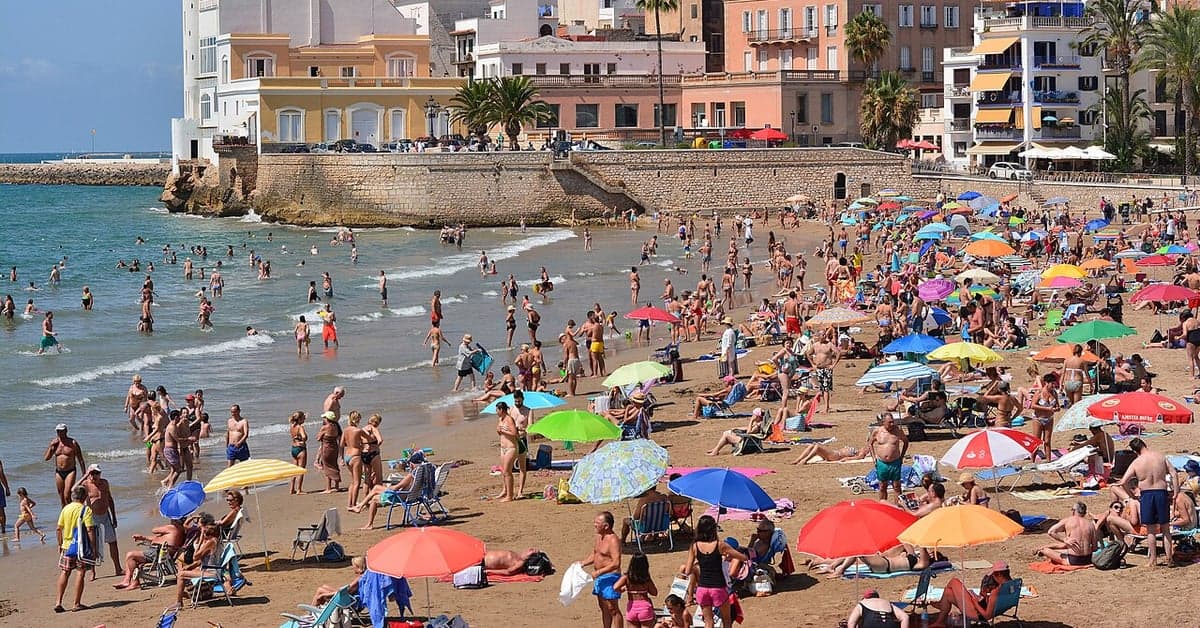
Sitges is the default day-trip beach from Barcelona, and it deserves the status. A string of 17 beaches along a 4-kilometer promenade, backed by a whitewashed old town with a clifftop church. The sand is cleaner and the water clearer than Barceloneta, and the atmosphere — LGBTQ+-friendly, relaxed, European without trying — is everything Barcelona's main beach is not. Chiringuitos serve fideuà and cold vermouth. Budget €15-20 for a beachfront lunch. The late-afternoon return train gets crowded; catch the 5 PM or wait until 7 PM.
Lisbon to Cascais and Costa da Caparica
Cascais
Train: Cais do Sodre to Cascais, 40 minutes, €2.25 each way. Frequency: every 20 minutes.
The Lisbon-Cascais train line runs along the Tagus estuary and then the Atlantic coast, with several beach stops along the way. Cascais itself is a former fishing village turned upscale commuter town with a pleasant old center, several small beaches, and the dramatic Boca do Inferno (Mouth of Hell) blowhole a short walk from town. The main beach (Praia da Conceição) is small and gets crowded. Praia da Rainha, tucked into a cove, is prettier.
For the best beach, continue by local bus from Cascais to Praia do Guincho — a wide, Atlantic-facing beach with waves, dunes, and Sintra's mountains as a backdrop. It is windier (popular with surfers and kiteboarders) and colder than the Cascais town beaches, but the setting is spectacular.
Costa da Caparica
Ferry from Cais do Sodre to Cacilhas (10 minutes, €1.30), then TST bus 161 to Costa da Caparica (20-30 minutes). A seasonal tram runs along the coast from the main town to beaches further south.
The Lisboetas' beach — a 30-kilometer strip of Atlantic sand south of the Tagus, where locals go on summer weekends. The beaches closest to town are busiest; the further south you go via the tram, the emptier they get. Beach 19 is the LGBTQ+ beach. The southernmost beaches near the Fonte da Telha forest are nearly deserted. The water is cold (62-68°F even in August) because this is the open Atlantic, not the Mediterranean. Seafood restaurants in the town serve excellent grilled fish for €10-15.
London to Brighton
Train: London Victoria or London Bridge to Brighton, 55-70 minutes, £12-20 return with advance booking. Frequency: every 15-30 minutes.
Brighton is pebbles, not sand — an important distinction for anyone expecting a Mediterranean experience. What it lacks in sand it makes up for in character: a Victorian pier with amusement rides, a vibrant LGBTQ+ scene, the Royal Pavilion (an absurd Indo-Saracenic palace built for George IV), and the Lanes — a tangle of narrow streets filled with independent shops, pubs, and restaurants.
The beach experience is sitting on pebbles (bring a cushion), swimming in the English Channel (16-18°C in summer — bracing is the polite word), and eating fish and chips from one of the seafront shops. It is not the Amalfi Coast. It is its own thing, and on a warm English summer day, with the sea sparkling and the pier silhouetted against the sky, it has genuine appeal.
Athens to the Athenian Riviera
Tram: from Syntagma Square, 40-70 minutes depending on the stop. €1.20 single ticket.
The Athenian Riviera — the stretch of coast from Faliro south to Cape Sounion — is the most underrated beach escape from any major European city. The tram from central Athens reaches Glyfada in about 50 minutes, and from there the coast road runs south past a string of beach clubs and free public beaches.
Vouliagmeni Lake, a natural thermal lake fed by underground hot springs (€12 entry), is the most unusual swimming spot — warm, mineral-rich water surrounded by limestone cliffs, with small fish that nibble your feet (a natural spa experience). The nearby Astir Beach is a premium beach club (€30 entry on weekends) with loungers, full bar service, and water clean enough that you forget Athens is 20 kilometers behind you.
For a day trip, the bus from Athens to Cape Sounion (KTEL bus, 1.5 hours, €6.50) takes you to the Temple of Poseidon — a 5th-century BC temple on a cliff above the Aegean — and there is a small beach below the temple where you can swim after the ruins. Sunset at Sounion is legendary.
Rome to Santa Marinella and Sperlonga
Santa Marinella
Train: Roma Termini to Santa Marinella, 50 minutes, €5.50 each way. Frequency: every 30-60 minutes.
The closest good beach to Rome. The station is a 10-minute walk from the sand. The beach is sandy, the water is clean and warm (74-80°F in summer), and the town has a medieval castle overlooking the shore. Beach clubs charge €10-15 for a sunbed and umbrella. The free section is adequate. It is not Sardinia, but for a day trip from Rome with minimal logistics, Santa Marinella works well.
Sperlonga
Train: Roma Termini to Fondi-Sperlonga, 90 minutes, €8-12 each way, then a shuttle bus to Sperlonga. Less frequent trains, so check the schedule.
Sperlonga is worth the extra effort. A white-washed hill town perched on a rocky headland between two sandy beaches, it looks like a Greek island dropped onto the Italian coast. The old town is a maze of narrow alleys and stairways with views of the sea from every turn. The beaches on either side of the headland are sandy, clean, and long. The Grotto of Tiberius, a Roman-era cave at the base of the cliff, houses a small archaeological museum with sculptures from Emperor Tiberius's seaside villa. A full lunch of pasta and grilled fish in the old town costs €15-25.
Paris to Deauville and Dieppe
Deauville
Train: Paris Saint-Lazare to Trouville-Deauville, 2 hours, €20-35 each way.
Deauville is the Parisian beach — a long boardwalk (Les Planches) with colorful parasols and beach cabins, Art Deco architecture, a casino, and an atmosphere that mixes old-money elegance with weekend escapism. The beach is wide and sandy, though the water temperature (60-66°F in summer) requires determination. The town is worth the trip for the architecture and the seafood alone — moules frites and a glass of cider at a boardwalk brasserie is quintessentially Norman.
Dieppe
Train: Paris Saint-Lazare to Dieppe, 2-2.5 hours, €15-25 each way.
A pebble beach backed by white chalk cliffs — less glamorous than Deauville but more dramatic. The port town has excellent seafood, a Saturday market, and a genuinely French (not tourist-French) atmosphere. The cliffs are walkable and provide views of the English Channel on clear days.
Amsterdam to Zandvoort
Train: Amsterdam Centraal to Zandvoort aan Zee, 30 minutes, €5.80 each way. Frequency: every 30 minutes.
Zandvoort is a wide, North Sea beach 30 minutes from Amsterdam. The Dutch go here in droves on sunny summer weekends, setting up windbreaks (the North Sea wind is constant) and drinking beer at the strandpaviljoens (beach pavilions) that line the shore. The water is cold (59-64°F in summer), the sky is enormous, and the beach stretches for kilometers in both directions. Nudist sections exist at the south end near the national park.
Dublin to Portmarnock and Bray
DART train: Dublin to Portmarnock, 25 minutes, €3.30 each way; Dublin to Bray, 40 minutes, €3.80 each way.
Portmarnock has a long, sandy beach known as the Velvet Strand, and on a rare warm Dublin day (it happens), the setting is beautiful. Bray, to the south, has a Victorian promenade and a pebbly beach, plus the start of the Bray Head cliff walk with views along the Wicklow coast. Neither will remind you of the Mediterranean. Both are enjoyable on the right day, and the DART ride itself — coastal views of Dublin Bay — is part of the experience.
Copenhagen to Amager Strandpark
Metro: to Amager Strand station, 15 minutes from the city center, one metro ticket (24 DKK / €3.20).
An artificial island and lagoon created in 2005, Amager Strandpark is the most convenient city beach in Northern Europe. The lagoon side is calm and sheltered (better for families), while the seaward side has small waves and a more natural feel. Danes are enthusiastic about cold-water swimming, so you will see people in the water from April onwards, often immediately after exiting one of the beachfront saunas. The beach is sandy, clean, and 15 minutes from the city center. Copenhagen in a nutshell: functional, well-designed, and surprisingly pleasant.
Nice to Villefranche-sur-Mer
Train: Nice-Ville to Villefranche-sur-Mer, 7 minutes, €1.80 each way.
Nice's own beaches are pebbly and crowded. Seven minutes east by train, Villefranche-sur-Mer has one of the prettiest small harbors on the Cote d'Azur — a deep, sheltered bay with colorful buildings rising steeply from the water. The Plage des Marinières is sandy (unusual for this coast), the water is deep and clear for swimming, and the town has excellent restaurants without Nice's tourist markup. The afternoon light on the painted facades is the kind of thing that made the Impressionists relocate to the south.
Frequently Asked Questions
What is the best beach day trip from Barcelona?
Sitges, 35 minutes south by Rodalies train (€4.60 each way), offers 17 beaches, a charming old town, and cleaner water than Barceloneta. For a more dramatic setting, Tossa de Mar on the Costa Brava is 90 minutes by bus with a medieval walled town and crystal-clear coves.
Can you do a beach day trip from London?
Brighton is 55-70 minutes by train from London Victoria (£12-20 return with advance booking). The beach is pebbles, not sand, and the water is cool (16-18°C in summer), but the Victorian pier, the Lanes shopping area, and the seafood make it a worthwhile day out on a warm English day.
What is the closest beach to Athens?
The Athenian Riviera starts at Glyfada, reachable by tram from Syntagma Square in about 50 minutes for €1.20. Vouliagmeni Lake (€12 entry) is a unique thermal lake surrounded by cliffs. For a more dramatic trip, the bus to Cape Sounion (1.5 hours, €6.50) combines the Temple of Poseidon with a beach below the ruins.
What is the best beach near Rome?
Santa Marinella is the most convenient — 50 minutes by train, €5.50 each way, with a sandy beach and warm water. Sperlonga is worth the 90-minute train ride for its stunning white hill town, two sandy beaches, and the Roman-era Grotto of Tiberius. Both offer beachfront lunches for €15-25.
Are Northern European beaches worth visiting?
Zandvoort near Amsterdam and Amager Strandpark in Copenhagen are genuinely enjoyable on warm summer days. Water temperatures are cool (59-66°F) but the beach culture — windbreaks, beach pavilions, cold-water swimming — is part of the experience. Go on a sunny weekend when the locals are out in force.
Which European city has the best nearby beach?
Lisbon offers the best combination of quantity and quality. The train to Cascais (40 minutes, €2.25) reaches several beaches. The ferry and bus to Costa da Caparica accesses 30 kilometers of Atlantic sand. And the bus to Guincho beach combines surf, dunes, and Sintra mountain views. All are under an hour from the city center.